
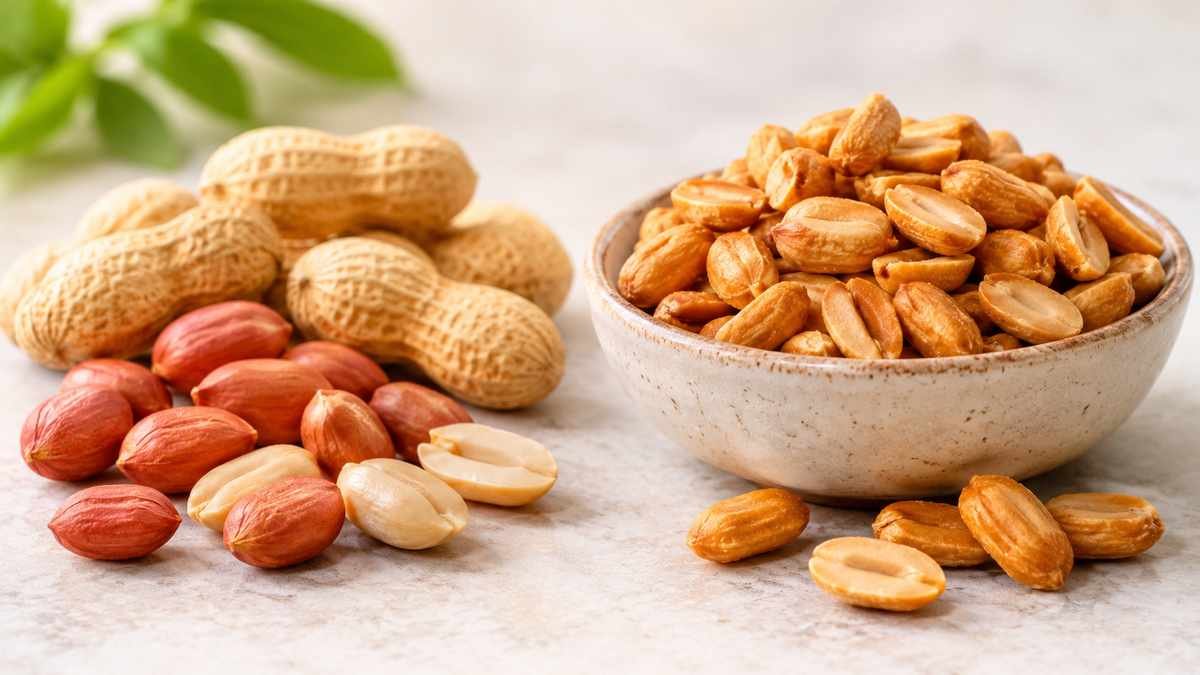

Are raw peanuts healthier than roasted peanuts, or does roasting make them a better choice? The short answer is that both can be nutritious. In the raw vs. roasted peanuts debate, the healthier option depends less on the label and more on how the peanuts were roasted, whether salt, oil, or sugar was added, how much you eat, and how peanuts fit into your overall diet.
Peanuts are a nutrient-dense food that provides protein, mostly unsaturated fats, fiber, vitamins, and minerals. They are sold raw, dry-roasted, oil-roasted, salted, honey-roasted, and flavored. Heat can change certain nutrients and plant compounds, so it is fair to ask whether roasting meaningfully changes their value.
This guide compares the two forms using food-composition data and published research. It explains what roasting does to peanut nutrients, how raw, dry-roasted, and oil-roasted peanuts differ, and which food-safety points matter. It also separates laboratory findings from evidence about health outcomes in people, so you can choose with realistic expectations.
Important: This article offers general nutrition education, not personal medical advice. If you or your child has a peanut allergy or a medical condition that affects your diet, talk with a healthcare professional first.
Raw vs. Roasted Peanuts: What’s the Difference?
What Are Raw Peanuts?
Raw peanuts have not been roasted. They have a milder, slightly “beany” flavor and a softer texture than roasted peanuts. They are sold shelled or in the shell.
Raw does not necessarily mean freshly harvested, untouched by processing, or free of microorganisms. Peanuts are usually dried, cleaned, sorted, and stored before you buy them, and like other agricultural products they can carry bacteria or molds. We cover this in the food-safety section below.
What Are Roasted Peanuts?
Roasting uses heat to develop flavor, aroma, and a crunchy texture. Dry-roasted peanuts are heated in an oven or roaster without added oil. Oil-roasted peanuts are cooked in oil, which can change their fat and calorie content slightly.
Many roasted products also include salt, sugar, honey, or seasonings. Roasting temperature and time matter too, since both affect flavor and the chemistry of the nut.
The comparison is therefore not simply raw food versus cooked food. The type of roasting and the ingredients added afterward matter just as much. For a broader overview, see our guide on whether peanuts are good for you.
Raw vs. Roasted Peanuts Nutrition Facts
The table below compares approximate values for a 1-ounce (28-gram) serving, using USDA-based data for raw peanuts, unsalted dry-roasted peanuts, and salted dry-roasted peanuts.
| Nutrient (per 1 oz) | Raw | Dry-roasted, unsalted | Dry-roasted, salted |
|---|---|---|---|
| Calories | About 161 | About 166 | About 167 |
| Protein | About 7.3 g | About 6.7 g | About 7 g |
| Total fat | About 14 g | About 14 g | About 14 g |
| Carbohydrates | About 4.6 g | About 6.1 g | About 6 g |
| Fiber | About 2.4 g | About 2.3 g | About 2.3 g |
| Sodium | Naturally very low (about 5 mg) | About 2 mg | About 116 mg |
The numbers are close. Small differences between database entries, such as protein of 7.3 versus 6.7 grams, reflect different samples, varieties, and moisture levels. They do not show that one preparation is meaningfully healthier.
Protein. Both forms provide plant-based protein, which supports growth, tissue maintenance, and repair. Healthy fats. Most of the fat in both is unsaturated, though peanuts contain about 2 grams of saturated fat per ounce. Fiber. Both provide roughly 2 to 2.5 grams per ounce, which contributes to digestive health.
Calories. Raw and roasted peanuts are both energy-dense. Roasting drives off some moisture, so per-100-gram values can look slightly different even when the nutrient content per peanut has not changed. Sodium. Plain peanuts contain little sodium, but salted varieties can contain considerably more. Read the label.
5 Potential Benefits of Raw and Roasted Peanuts
Most of the benefits below apply to both forms. Roasting does not erase them, and it does not clearly enhance them.
1. Provide Plant-Based Protein
Peanuts are a convenient source of plant protein, with about 7 grams per ounce. Protein plays a role in normal body functions and tissue maintenance. Peanuts can complement beans, lentils, dairy, eggs, and other nuts or seeds in a varied diet. Neither raw nor roasted peanuts should be treated as a complete nutritional solution on their own. See our list of high-protein foods for more ideas.
2. Supply Unsaturated Fats
Peanuts contain substantial amounts of monounsaturated and polyunsaturated fats. Replacing some foods rich in saturated fat with foods that contain unsaturated fat can improve the quality of the fat in your diet. Both raw and roasted peanuts can contribute these fats, though added oils may alter the overall composition of oil-roasted products.
This does not mean eating peanuts automatically lowers cholesterol or prevents heart disease. Our guides to healthy fats and the best nuts for heart health explain the context.
3. Contribute Dietary Fiber
Fiber supports normal digestive function. Peanuts add a modest amount, and your total fiber intake across the day matters more than the small differences between peanut products. Pair peanuts with vegetables, fruits, legumes, and whole grains. Our guide to high-fiber foods for digestive health offers more options.
4. Provide Vitamins and Minerals
Peanuts supply vitamin E (an antioxidant), niacin and other B vitamins involved in energy metabolism, magnesium for muscle and nerve function, and phosphorus. Both forms contribute useful amounts. Processing can alter some nutrient levels, and effects vary by nutrient and roasting conditions. For example, one study of Sudanese peanut cultivars found that thermal processing reduced vitamin E content while improving protein digestibility.
5. Supply Beneficial Plant Compounds
Peanuts contain polyphenols and other bioactive compounds, and the skin is a notable source. Roasting can change the measured concentrations and antioxidant activity of some of them.
A 2021 study found that roasting, frying, and pressure cooking all significantly changed total polyphenols, flavonoids, and antioxidant activity compared with raw peanuts, with different effects on individual compounds. These are laboratory results. They do not show that roasted peanuts lead to better long-term health outcomes than raw peanuts, or the reverse. To learn more about antioxidants in food, see our guide to antioxidant-rich foods.
Raw and roasted peanuts share many of the same benefits. Differences in single nutrients or plant compounds do not make one form the overall winner.
How Does Roasting Affect Peanut Nutrients?
Does Roasting Reduce Nutrient Content?
Heat can affect some heat-sensitive nutrients and compounds. The degree depends on temperature, roasting time, peanut variety, and storage. Protein and total fat do not disappear when peanuts are roasted.
A 2024 study comparing boiling and roasting found that roasting had a relatively small effect on basic nutrient components. A Food Chemistry study reported that cooking reduced some sugars, amino acids, and unsaturated fatty acids.
Moisture loss can also make nutrients look more concentrated per 100 grams. A higher number after roasting does not always mean roasting created more of a nutrient. Sometimes it just means there is less water.
Can Roasting Increase Some Antioxidant Measurements?
Sometimes. Heating can alter polyphenols and trigger reactions that create new flavor compounds, and some measured antioxidant activity can rise while other compounds fall. Results differ between studies. A 2024 study in the Journal of Oleo Science found that oven and microwave roasting reduced phenolic compounds in peanut kernels, while the 2021 study above found changes in both directions.
Laboratory antioxidant tests do not measure how much a food improves human health. The fair summary is that roasting changes the composition of peanuts rather than uniformly improving or damaging their nutritional value.
The same Food Chemistry study also found that frying and roasting promoted the formation of potentially harmful compounds such as acrylamide, furan, and HMF. This is a reason to roast peanuts at moderate temperatures and avoid over-browning, not a reason to avoid peanuts.
What about people? A randomized trial of 118 adults gave 56 grams a day for four weeks of raw unsalted, roasted unsalted, roasted salted, or honey-roasted peanuts, or peanut butter. Overall, the form of the peanuts did not differentially affect body weight or blood lipids. Total cholesterol, LDL cholesterol, and triglycerides fell in participants who started with elevated lipid levels. It was a short study, so it does not settle the question, but it suggests that roasting does not cancel the potential lipid benefits of peanuts.
Does Roasting Affect Food Safety?
Raw agricultural products can carry microorganisms, and raw peanuts can harbor Salmonella. The FDA has recommended that peanuts and peanut ingredients be subjected to a validated process to reduce Salmonella, and dry or oil roasting is one such step. Roasted peanuts can still be contaminated afterward if the plant is not clean, as several recalls have shown.
Peanuts can also be vulnerable to aflatoxins, which are produced by certain molds. The 2021 study above found that roasting and frying reduced aflatoxin in the samples tested, but this should not be read as a guarantee that contaminated peanuts become safe. MedlinePlus notes that the FDA tests peanuts and peanut butter rigorously. Good sourcing, dry storage, and quality control still matter.
Roasting changes peanut composition in several ways, its nutritional effects are mixed, and food safety depends on more than the raw-versus-roasted distinction.
Raw, Dry-Roasted, or Oil-Roasted: Which Is Healthier?
| Peanut type | Potential advantages | What to consider |
|---|---|---|
| Raw peanuts | No roasting-related changes; naturally provides protein and unsaturated fats | Raw does not guarantee microbiological safety |
| Dry-roasted peanuts | Roasted flavor without necessarily adding oil | Composition changes with roasting conditions |
| Oil-roasted peanuts | Familiar texture and flavor; still provide protein and unsaturated fats | Added oil can change fat and calorie content |
| Unsalted roasted peanuts | Peanut benefits without added salt | Check the ingredient list |
| Salted roasted peanuts | Convenient and flavorful | Sodium can be much higher |
| Flavored peanuts | Variety | May include added sugar, sodium, or other ingredients |
Plain raw and roasted peanuts can both be nutritious. Dry-roasted peanuts are a practical choice for people who like a roasted taste without added roasting oil. Oil-roasted peanuts are not automatically unhealthy, because per-ounce calories in USDA entries are similar to dry-roasted peanuts. What matters is the oil used and the added ingredients.
Unsalted varieties make it easier to manage sodium, which matters for people watching blood pressure. Our guide to how to lower blood pressure covers sodium in more detail. For flavored peanuts, judge the product by its label.
For everyday eating, plain unsalted peanuts, whether properly prepared raw peanuts or dry-roasted peanuts, are both reasonable choices. Personal preference, safe handling, and added ingredients matter more than assuming one preparation is superior.
How to Choose and Eat Peanuts for Better Nutrition
- Read ingredient labels. Choose products that match your preferences, especially if you want to limit added salt, sugar, or oil.
- Think about your whole diet. Peanuts work well alongside fruits, vegetables, whole grains, and legumes.
- Try simple combinations. Add peanuts to oatmeal, mix them with fruit, or sprinkle chopped peanuts on vegetable and grain dishes.
- Store them properly. Keep peanuts in a clean, dry, tightly closed container and follow package instructions. Throw away peanuts that look moldy, shriveled, damp, or smell unusual.
- Buy from reliable sources. Handling and quality control matter, especially for raw agricultural products.
- Compare products, not just labels. The words “raw” or “roasted” do not tell you everything about a product’s nutritional quality.
- Watch your portion. A small handful (about 1 ounce) is a typical serving, as Mayo Clinic describes. See how many nuts you should eat every day.
Aim for sustainable habits, not strict rules. No preparation method is essential for good health. If you enjoy other nuts too, our guides to cashews, pistachios, and walnuts can help you vary your snacks.
Who Should Be Careful About Eating Peanuts?
- People with a peanut allergy. Peanut allergy can cause serious, sometimes life-threatening reactions. Roasting does not make peanuts safe for allergic people, and research on how heat affects allergenicity is mixed. Follow your healthcare professional’s advice, and see the Cleveland Clinic for background on nut allergies.
- People at higher risk of foodborne illness. Raw peanuts should come from reliable sources and be handled according to food-safety guidance. Young children, older adults, pregnant people, and those with weakened immune systems may want to ask a healthcare professional whether raw nuts are appropriate.
- People limiting sodium. Check labels on salted and flavored peanuts.
- People watching added ingredients. Some products contain extra oils, sugar, or seasonings.
- Anyone with spoiled peanuts. Discard peanuts that show mold or spoilage.
For people who can safely eat them, peanuts can be part of a balanced diet. Call 911 for signs of a severe allergic reaction, such as trouble breathing or throat swelling.
Frequently Asked Questions
Are raw peanuts healthier than roasted peanuts?
Both can be nutritious. Roasting changes some nutrients and plant compounds, but these changes vary by processing conditions and do not establish that one form is universally healthier. In a trial of 118 adults, raw and roasted peanuts did not differ in their overall effects on body weight or blood lipids.
Do roasted peanuts lose nutrients?
Roasting can reduce some heat-sensitive compounds while increasing or changing the measured levels of others. Protein and fat remain, and the effects depend on the roasting conditions and the nutrient examined. Vitamin E, for instance, was lower after thermal processing in one study.
Are dry-roasted peanuts healthier than oil-roasted peanuts?
Dry-roasted peanuts do not require additional roasting oil, but both types provide protein and unsaturated fats. Compare ingredient lists and nutrition labels to see which suits your needs.
Are raw peanuts safe to eat?
Raw peanuts may carry food-safety risks, as can other agricultural products, including Salmonella and aflatoxin. Buy peanuts from reliable sources and follow storage guidance rather than assuming raw means safe. People at higher risk of foodborne illness should ask a healthcare professional.
Do roasted peanuts contain more antioxidants?
Roasting can raise certain measured antioxidant compounds or activities while lowering others, depending on the process. Laboratory measurements do not necessarily predict better health outcomes in people.
Which peanuts are best for everyday eating?
Plain, unsalted peanuts, either appropriately prepared raw peanuts or roasted ones, can both fit into a balanced diet. Consider food safety, added ingredients, and your personal needs. For more help, see our guides to peanut benefits and healthy snacking with nuts.
Conclusion: Which Peanuts Should You Choose?
Raw and roasted peanuts both provide protein, unsaturated fats, fiber, vitamins, minerals, and plant compounds. Roasting changes flavor, composition, and antioxidant measurements, but its effects are not uniformly good or bad. Added salt, oils, and flavorings can change the nutritional profile of commercial products, and food safety, storage, and individual needs matter too.
For most people who can safely eat peanuts, the choice between raw and roasted does not need to be complicated. Rather than assuming that raw peanuts are always healthier or that roasting improves every nutrient, look at how the peanuts were prepared, check the ingredients, and consider how they fit into your overall eating pattern.
If you have questions about peanuts and your health, a registered dietitian or doctor can help.
Sources
- University Hospitals. Nutrition facts: Peanuts, all types, raw, 1 oz (USDA data).
- University Hospitals. Nutrition facts: Peanuts, all types, dry-roasted, without salt, 1 oz (USDA data).
- MyFoodData. Nutrition facts: Peanuts, all types, dry-roasted, with salt (USDA data).
- Salve AR, Leblanc JG, Arya SS. Effect of processing on polyphenol profile, aflatoxin concentration and allergenicity of peanuts. Journal of Food Science and Technology. 2021.
- Zhang Y, et al. Effect of boiling and roasting treatments on the nutrients, lipid quality, and flavor of peanuts. Food Science & Nutrition. 2024.
- Influence of different cooking methods on the nutritional and potentially harmful components of peanuts. Food Chemistry. 2020.
- Ahmed IAM, et al. The role of heating treatments on bioactive compounds, fatty acid compositions, phenolic compounds and mineral contents of peanut kernels. Journal of Oleo Science. 2024.
- Eltom HAE, et al. Effect of boiling and roasting processing on nutritional quality of two Sudanese peanuts cultivars. Legume Science. 2023.
- McKiernan F, et al. Effects of peanut processing on body weight and fasting plasma lipids. British Journal of Nutrition. 2010.
- Peanut Science. Roasting and Salmonella reduction in peanuts.
- MedlinePlus. Aflatoxin
- Mayo Clinic. Nuts and your heart: Eating nuts for heart health
- Cleveland Clinic. Tree nut allergy
Medical Disclaimer: This article is for general information and education only. It is not medical advice and does not diagnose, treat, or prevent any condition. Nutrition needs and allergies differ from person to person, so please talk with your doctor, allergist, or a registered dietitian before changing your diet.