
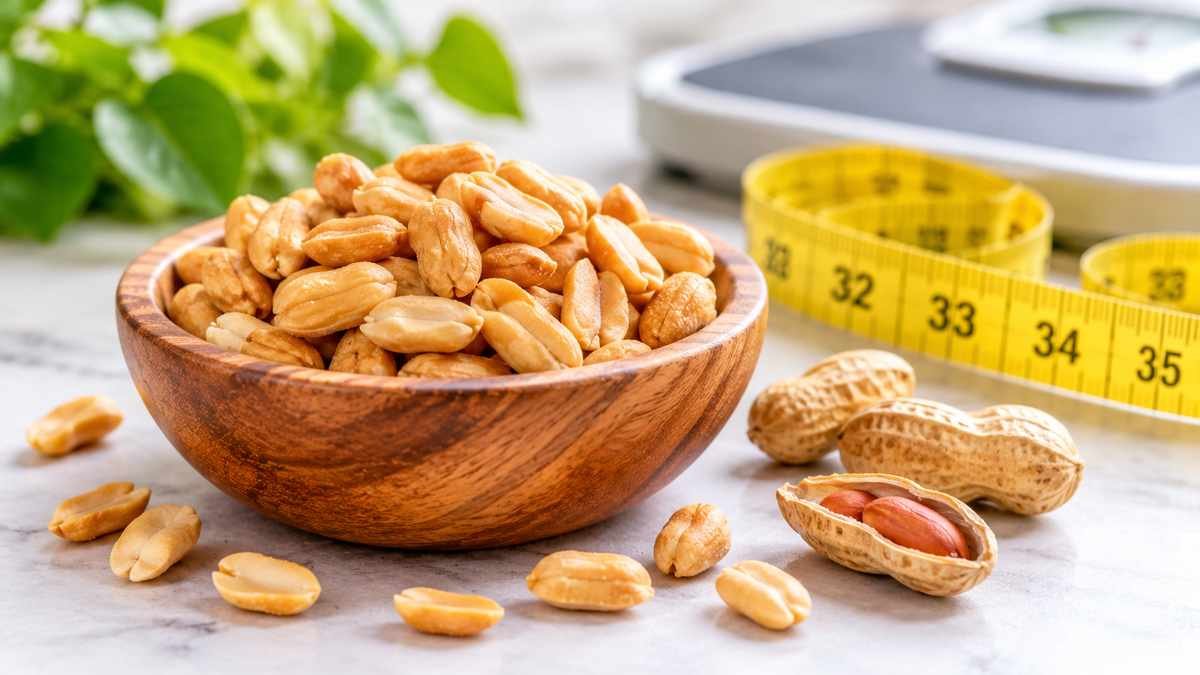

Are peanuts fattening? It is one of the most common nutrition questions, and the answer is more nuanced than their calorie count suggests. Peanuts are energy-dense and contain a significant amount of fat, so many people avoid them when they are trying to manage their weight. However, fat content alone does not determine whether a food leads to weight gain.
Peanuts provide protein, fiber, and mostly unsaturated fats, along with vitamins and minerals such as magnesium, vitamin E, and niacin. Research on nuts, including peanuts, generally finds that eating them in moderate amounts does not cause significant weight gain. Some studies even suggest that people naturally eat less of other foods after a satisfying nut snack.
This article explains how many calories peanuts contain, what clinical research says about peanuts and body weight, and why portion size still matters. It also compares raw, roasted, boiled, and sweetened peanuts, and offers practical tips for enjoying them. Peanuts are not a weight-loss treatment, and anyone with a peanut allergy should avoid them. For a general overview, see our guide to the health benefits of peanuts.
Are Peanuts Fattening? The Short Answer
Peanuts are not automatically fattening. Although they are relatively high in calories and fat, they also provide protein, fiber, and unsaturated fats. Research generally shows that moderate peanut and nut consumption does not cause significant weight gain when included in a balanced diet. Portion size still matters.
Peanuts are calorie-dense, which means a small amount contains a lot of energy. But calorie density alone does not decide whether a food causes weight gain. Over time, weight gain happens when you regularly take in more energy than your body uses, and that depends on your whole diet, activity level, sleep, and other factors.
Peanuts can make snacks more satisfying, which may help some people eat less later in the day. At the same time, eating large quantities on top of your usual meals can easily add several hundred extra calories. The overall dietary pattern matters more than any single food, as emphasized by the Dietary Guidelines for Americans.
Peanut Nutrition: Why Are Peanuts So High in Calories?
Peanuts are rich in fat, and fat provides 9 calories per gram, compared with 4 calories per gram for protein and carbohydrates. That is why a small handful contains so much energy. The table below shows approximate values for a one-ounce (28-gram) serving of dry-roasted peanuts.
| Nutrient | Approximate amount |
|---|---|
| Calories | 165 to 170 kcal |
| Protein | 7 g |
| Total fat | 14 g |
| Carbohydrates | 6 g |
| Fiber | 2 to 3 g |
Values vary by variety, preparation, and brand. Verify exact figures in USDA FoodData Central.
- Fat: Most peanut fat is unsaturated, including monounsaturated and polyunsaturated fats. Learn more in our guide to healthy fats.
- Protein: Provides building blocks for body tissues and helps make a snack more satisfying. See our list of high-protein foods.
- Fiber: Supports digestion and contributes to dietary quality. Explore more in our article on high-fiber foods for digestive health.
- Micronutrients: Peanuts provide magnesium, vitamin E, niacin, and other nutrients.
Dietary fat is not automatically unhealthy, and calories from nutritious foods still count toward total energy intake. That is why portion awareness is useful, even with healthy foods.
Do Peanuts Cause Weight Gain? What Scientific Research Says
The best way to test whether a food causes weight gain is through randomized controlled trials, where researchers compare people who eat the food with those who do not. Systematic reviews then combine the results of many such trials. Much of the available research looks at nuts as a group, so not every finding applies to peanuts alone.
Research Does Not Show Consistent Weight Gain
A 2021 systematic review and meta-analysis in Advances in Nutrition examined 55 randomized trials of nuts and nut products. It found no significant changes in body weight, body mass index (BMI), or waist circumference overall, whether or not participants were instructed to replace other foods with nuts. You can search for it on PubMed.
A larger systematic review and meta-analysis in Obesity Reviews included 86 randomized trials with 5,873 participants. It found no adverse effect of nut consumption on body weight. The review also examined observational studies, which can show associations but cannot prove cause and effect. See the PubMed record for details.
Peanut-Specific Studies Offer More Insight
A small 2002 controlled study in the International Journal of Obesity examined regular peanut consumption and energy balance. Participants compensated for some of the extra energy from peanuts by eating less of other foods. The study was small and should not be treated as proof that peanuts cannot cause weight gain. Search for it on PubMed.
A later peanut intervention study found that participants gained substantially less weight than the amount predicted from the calories supplied by peanuts. Again, this suggests that people tend to adjust their eating, but individual responses vary.
What the Evidence Really Means
- Peanuts do not appear to cause weight gain automatically.
- They are not proven to produce weight loss by themselves.
- Results depend on serving size, eating habits, and individual energy needs.
- Replacing less nutritious snacks with peanuts is a practical approach.
The Harvard Nutrition Source also reviews research on nuts, health, and weight. For more detail, see our article on whether nuts are good for weight management.
Why Peanuts May Not Lead to Weight Gain
Researchers have proposed several possible explanations. These are still being studied, and none of them guarantees an outcome for any individual.
Protein and Fiber May Help With Appetite
Protein and fiber slow digestion and can contribute to a satisfying snack. Some people feel less hungry between meals after eating peanuts. A 2018 systematic review of nuts, hunger, and fullness found that nuts were associated with reduced hunger, but pooled results did not show an overall effect on fullness or body weight. Peanuts do not suppress appetite in everyone.
Peanuts May Encourage Energy Compensation
Energy compensation means that some people naturally eat less later after a satisfying snack. A 2023 systematic review in Advances in Nutrition found that energy compensation occurred after nut consumption, although results varied considerably depending on the nut’s form and how it was eaten. This may help explain why nut consumption does not consistently increase body weight. You can find the paper through PubMed.
The Body May Not Absorb All Measured Calories
Whole peanuts and other nuts have a firm cellular structure. During digestion, some fat may remain trapped inside plant cells and pass through the body without being absorbed. Studies on several nuts suggest the energy the body actually uses can be lower than the figure estimated from standard food-label calculations.
This does not mean peanuts are calorie-free or that you can ignore their calories. The effect appears to be partial, and it is smaller when nuts are ground or made into butter.
Can You Eat Peanuts While Trying to Lose Weight?
Yes, peanuts can fit into a weight-loss eating plan. Their protein, fiber, and unsaturated fats make them a nutrient-rich snack. They tend to work best when they replace a less nutritious snack, such as chips or sweets, rather than being added on top of an already adequate meal plan.
Try combining peanuts with fruit or vegetables to build a more balanced snack. Do not rely on peanuts as a weight-loss treatment, because a sustainable calorie deficit, balanced meals, physical activity, and other lifestyle factors matter more than any one food. See our guides to weight management and walking for weight loss for additional ideas.
Some snack combinations to consider:
- A measured serving of peanuts with an apple
- Plain yogurt with a small amount of chopped peanuts
- Peanuts with fresh guava or orange
- A small portion of peanuts with vegetable sticks
If you have diabetes or another medical condition, ask your healthcare team how nuts fit into your meal plan. Our article on the best nuts for type 2 diabetes offers more background.
Are Different Types of Peanuts More Fattening?
Preparation can change calories, sodium, and added sugar. Plain peanuts are not automatically fattening just because they are roasted. For a deeper comparison, see our article on raw vs. roasted peanuts.
Raw peanuts naturally contain protein, fat, and fiber and usually have no added salt or sugar. They are suitable if you prefer minimally processed foods.
Dry-roasted peanuts are a convenient snack and have a calorie profile similar to raw peanuts. Check the label for added salt, oil, or flavorings.
Boiled peanuts contain more water than dry peanuts, so they typically have fewer calories per 100 grams. Sodium can be high in heavily salted preparations, which matters for people watching their blood pressure; see the American Heart Association’s sodium guidance.
Honey-roasted or sugar-coated peanuts often contain added sugar and extra calories. They are better treated as an occasional sweet snack.
Peanut butter provides protein and unsaturated fats, but it is calorie-dense and easy to over-serve. Two tablespoons contain roughly 190 calories. Choose products with minimal added sugar, and measure your portion.
The key takeaway is that preparation changes the nutritional profile, but plain peanuts are not inherently more fattening in one form than another.
How Many Peanuts Should You Eat a Day?
About one ounce (28 to 30 grams) is a useful reference serving for many adults. This is roughly a small handful, or approximately 28 to 30 shelled peanuts, depending on size. Plain peanuts provide about 160 to 170 calories per ounce.
Individual calorie needs and dietary patterns vary, and this is a reference serving rather than a required daily target. For comparisons with other nuts, read our guide on how many nuts you should eat every day.
Practical tips for managing portions:
- Put one serving into a small bowl instead of eating from a large bag.
- Avoid distracted eating, such as while watching television.
- Check peanut butter serving sizes on the nutrition label.
- Choose unsalted peanuts if sodium intake is a concern.
Common Mistakes That Can Make Peanuts Contribute to Weight Gain
Peanuts are not the problem by themselves. The amount and overall eating pattern matter. These habits are the most common ways peanuts can add up:
- Eating several handfuls without noticing
- Adding peanuts to meals without adjusting other snacks or portions
- Using large amounts of peanut butter
- Frequently choosing sugar-coated or heavily flavored varieties
- Assuming healthy foods can be eaten in unlimited amounts
- Ignoring total daily calorie intake
If you have a peanut allergy, avoid peanuts completely and follow your clinician’s advice. The FDA provides more information on food allergies and labeling.
Frequently Asked Questions
Do peanuts make you gain belly fat?
No single food specifically causes belly fat. Changes in body fat depend on overall energy balance, activity, genetics, sleep, and other factors. Reasonable portions of peanuts can fit into a balanced diet. See our guide on how to lose belly fat for broader context.
Can I eat peanuts every day without gaining weight?
Many people can enjoy peanuts daily without gaining weight, especially when they eat a measured serving as part of a balanced pattern. However, individual calorie needs and total food intake still matter. Research from the Harvard Nutrition Source supports moderate nut intake.
Are roasted peanuts fattening?
Plain roasted peanuts are not inherently more fattening than raw peanuts, and their calorie content is often similar. Flavored varieties may contain extra salt, oil, or sugar. Compare labels using USDA FoodData Central.
Are peanuts good for weight loss?
Peanuts can fit into a weight-loss diet because they provide protein, fiber, and unsaturated fats. They are not a weight-loss treatment, and portion control remains important.
Is peanut butter more fattening than whole peanuts?
Peanut butter and whole peanuts have similar calories by weight, but peanut butter is easier to eat in large portions. Whole peanuts may also be absorbed slightly less completely because of their cell structure. Measure servings and check for added sugar or other ingredients.
Should I stop eating peanuts if I want to lose weight?
Not necessarily. If you enjoy peanuts, you can include them in a weight-management plan. Focus on a sensible serving and use them in place of less nutritious snacks.
Are boiled peanuts healthier than roasted peanuts?
Neither is clearly better. Boiled peanuts have fewer calories per 100 grams because of their water content, but they can be high in sodium. Roasted peanuts are more concentrated in calories, so portion size matters more.
Are peanuts good for your heart?
Peanuts provide unsaturated fats, fiber, and other nutrients that fit into a heart-conscious eating pattern. The American Heart Association includes unsalted nuts as part of a heart-healthy diet. See our guide to the best nuts for heart health.
Conclusion
Peanuts are calorie-dense, but they are not automatically fattening. Research generally does not show significant weight gain from moderate nut consumption, and their protein, fiber, and unsaturated fats make them a nutritious snack. Portion sizes and overall dietary habits still matter, and it helps to choose plain peanuts in measured servings. For other options, compare them in our guides to almonds vs. walnuts and the health benefits of nuts.
You do not need to avoid peanuts to manage your weight. You need to understand portions and how they fit into your overall diet.
Sources
- U.S. Department of Agriculture. FoodData Central
- U.S. Department of Agriculture and U.S. Department of Health and Human Services. Dietary Guidelines for Americans
- Harvard T.H. Chan School of Public Health, The Nutrition Source. Nuts for the Heart
- American Heart Association. Nuts and Your Heart: Eating Nuts for Heart Health
- American Heart Association. Sodium
- U.S. Food and Drug Administration. Food Allergies
- PubMed. Nut consumption, body weight, BMI, and waist circumference: randomized trials meta-analysis (Advances in Nutrition, 2021)
- PubMed. Nut consumption and body weight: systematic review of randomized controlled trials (Obesity Reviews)
- PubMed. Peanut consumption and energy balance (International Journal of Obesity, 2002)
- PubMed. Energy compensation and energy expenditure after tree nut and peanut consumption: systematic review (Advances in Nutrition, 2023)
Medical Disclaimer: This article is for general educational purposes only and is not medical advice. It does not diagnose, treat, or replace guidance from a qualified healthcare professional who knows your health history. Talk with your doctor or a registered dietitian before changing your diet, especially if you have diabetes, high blood pressure, or are managing your weight for a medical reason. If you have a peanut allergy, avoid peanuts and ask an allergist for guidance.
1 thought on “Are Peanuts Fattening? The Truth About Peanuts and Weight”
Comments are closed.