
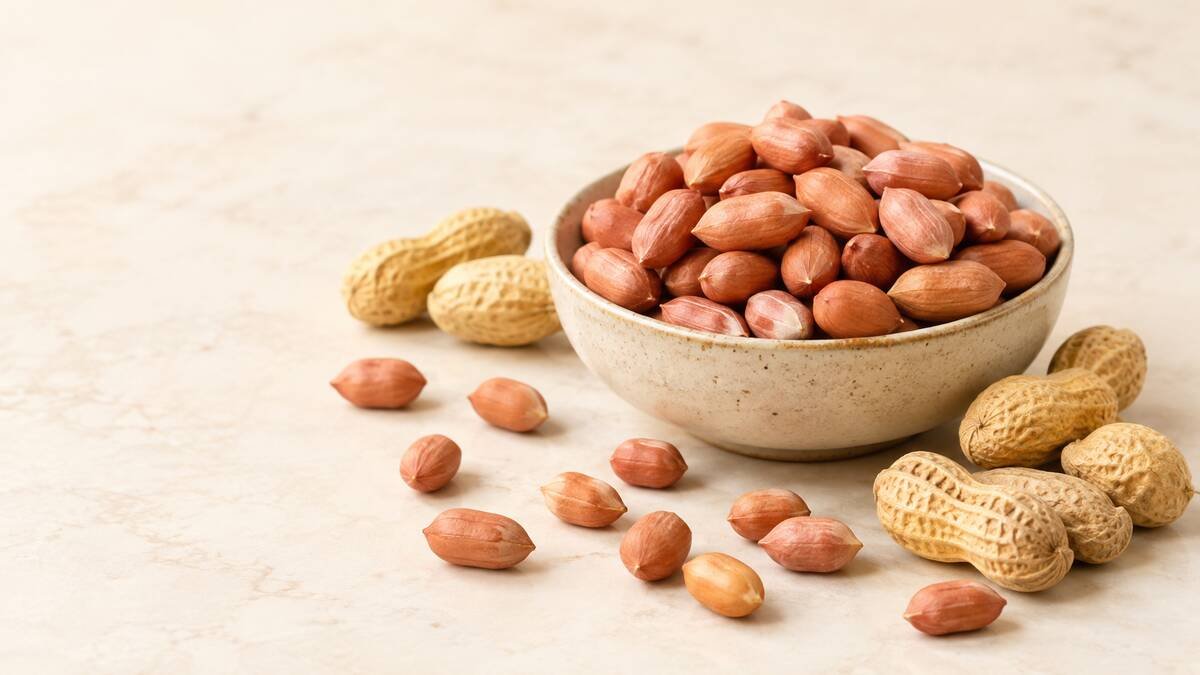

Plain peanuts generally have only a modest effect on blood sugar. They contain some carbohydrate, but they are mostly fat and protein, with a little fiber, so they raise glucose far less than most sugary or starchy snacks. That means monitoring your blood sugar does not automatically mean avoiding peanuts.
Peanuts are not a treatment for high blood sugar, and not every peanut product behaves the same way. Honey-roasted, candy-coated, or sweetened peanut butter products can contain added sugar that changes the picture. Portion size and your own response also matter.
This guide explains how peanuts affect blood glucose, what research on peanuts and blood sugar shows, and how to choose between raw, roasted, salted, and sweetened products. You will also find serving ideas, advice on peanut butter, safety notes, and answers to common questions. This article is general information, not personal medical advice.
Do Peanuts Raise Blood Sugar?
For most people, plain peanuts have a small effect on blood glucose compared with carbohydrate-rich foods. The main reason is their composition. A one-ounce (28 g) serving of dry-roasted, unsalted peanuts provides about 164 calories, with roughly 11% of those calories from carbohydrate, 17% from protein, and 73% from fat, according to the nutrient data reported in a randomized trial.
Why Peanuts Usually Have a Modest Effect on Blood Glucose
A food’s effect on blood sugar depends partly on its carbohydrate content and how quickly that carbohydrate is digested and absorbed. Peanuts are not primarily a carbohydrate food. Their protein and fat contribute to their nutritional profile, and their fiber supports digestive health.
The National Institute of Diabetes and Digestive and Kidney Diseases (NIDDK) explains that carbohydrates have the biggest effect on blood glucose. Protein, fat, and fiber can slow how fast a meal is digested, which can soften the rise. Compared with sugary snacks or refined starches, plain peanuts generally produce a smaller immediate glucose response. See our guide to blood sugar for more on how glucose works.
Can Peanuts Cause a Blood Sugar Spike?
It is possible, but unlikely with a typical portion of plain peanuts. The effect depends on the serving size, what else you eat with them, and your own body’s response. A handful of plain peanuts is unlikely to cause the same rise as a similar-sized serving of a carbohydrate-rich snack. Individual results still vary.
Peanuts do not prevent blood sugar spikes, and they do not lower glucose right away. If you track your readings, your own numbers are the best guide. Our article on blood sugar levels explains what the numbers mean.
What Does the Research Say About Peanuts and Blood Sugar?
Research gives a reassuring but limited picture. The studies below look at different outcomes, so it helps to keep them separate. Fasting glucose measures blood sugar after a period without food. HbA1c reflects your average blood glucose over roughly the past two to three months. Our guide to the A1C test explains it further.
Findings From a Systematic Review
A 2019 systematic review and meta-analysis in the American Journal of Clinical Nutrition pooled 40 randomized controlled trials with 2,832 participants. It examined how tree nuts and peanuts affect markers of glycemic control, with a median study length of three months.
The review found no significant effect of nut consumption on fasting blood glucose or HbA1c. It did find favorable changes in fasting insulin and in HOMA-IR, a measure of insulin resistance. The authors concluded that nut consumption may improve insulin sensitivity, and they called for better-designed trials.
Importantly, the review combined peanuts and tree nuts. Its findings should not be read as proof that peanuts alone improve every aspect of glucose control. Our guide to the best nuts for type 2 diabetes compares different nuts.
What Did a Study of People With Elevated Fasting Glucose Find?
A randomized crossover trial in the Journal of Nutrition tested 50 adults with slightly elevated fasting glucose (about 100 mg/dL on average). For six weeks, participants ate 28 grams a day of dry-roasted, unsalted peanuts as an evening snack. For another six weeks, they ate an isocaloric snack of whole-grain crackers and low-fat cheese, with a four-week break between.
Fasting glucose was not different between the two snacks. In other words, the peanuts and the lower-fat, higher-carbohydrate snack had similar effects on fasting glucose in this group. The study was short, and it does not show that peanuts lower glucose.
What Can Readers Conclude?
- Available evidence does not show that ordinary peanut intake consistently raises fasting glucose or HbA1c.
- Peanuts can be a reasonable snack within a balanced eating pattern.
- Research does not establish peanuts as a treatment for diabetes, or show that they will lower your own blood sugar.
The research on peanuts specifically is smaller than the research on nuts as a group. For more on the topic, see our article on peanuts and diabetes.
Why Peanuts May Be a Good Choice for Blood Sugar Management
Several features of plain peanuts make them a practical snack for many people. These are nutrition facts, not guaranteed effects on glucose.
Protein
Peanuts provide plant-based protein, roughly 7 grams per ounce. Protein contributes to feeling full and supports a balanced diet. It is not a medication, and it does not directly lower blood sugar. See our list of high-protein foods for other options.
Unsaturated Fats
Most of the fat in peanuts is unsaturated, which is part of why they are energy-dense. Unsaturated fats are a normal part of a healthy diet, and our guide to healthy fats explains how they fit. Claims that peanuts directly improve insulin sensitivity in every person go beyond the evidence.
Fiber
An ounce of dry-roasted peanuts has about 2.4 grams of fiber. Fiber supports digestive health and is not digested like sugar. A small portion of peanuts will not cancel out the carbohydrates in the rest of your meal, though. Our guide to high-fiber foods offers more ideas.
Nutrient Density
Peanuts also provide magnesium, vitamin E, niacin, and other nutrients. Their value comes from this overall package, not from a guaranteed effect on glucose. Learn more in our overview of the health benefits of peanuts and whether peanuts are good for you.
What Is the Glycemic Index of Peanuts?
The glycemic index (GI) ranks carbohydrate-containing foods by how much they raise blood glucose compared with a reference food under standardized testing conditions. Foods are generally grouped as low, medium, or high GI. The University of Sydney’s glycemic index database is a common reference.
Plain peanuts are generally considered a low-glycemic food, largely because they contain little carbohydrate. I have not listed a precise GI value, since published numbers vary by study and preparation, and fat and protein-rich foods often have limited GI data.
The glycemic load (GL) adds another layer. It accounts for both a food’s GI and the amount of carbohydrate in a serving. This is why a small portion of a food can have a different practical effect than a large one.
GI is useful context, but it cannot predict your exact blood glucose response to peanuts.
Are Raw, Roasted, or Salted Peanuts Better for Blood Sugar?
Preparation affects peanuts less than added ingredients do. For blood sugar, what matters most is whether anything sweet has been added.
Raw Peanuts
Plain raw peanuts provide protein, fat, fiber, and carbohydrates without added sweeteners. They are not categorically healthier than roasted ones. Our guide to raw vs. roasted peanuts compares them.
Dry-Roasted Peanuts
Dry-roasted peanuts can also be a reasonable option, and they are the type used in the trial above. Roasting, added ingredients, and portion size can change the overall nutritional profile. Small studies in healthy adults have compared glucose responses to different peanut preparations, but they were too small to show that one form is best for blood sugar management.
Salted Peanuts
Sodium does not cause a blood sugar spike the way digestible carbohydrates do. However, people who need to limit sodium, for example because of blood pressure, may prefer unsalted peanuts.
Honey-Roasted and Sugar-Coated Peanuts
Coatings made with sugar, honey, or syrup add carbohydrates and may increase a product’s effect on glucose. Compare nutrition labels rather than assuming every peanut snack is the same. Our guide to reading nutrition facts can help.
Plain raw or roasted peanuts are sensible defaults if you want to limit added sugar. Portion size and the rest of your diet also matter.
How Many Peanuts Can You Eat If You Have Diabetes?
There is no universal serving for people with diabetes. A common reference portion is about 1 ounce (28 grams), which is roughly a small handful. This is an illustration, not a prescription or a strict limit.
The six-week trial above used 28 grams a day, but it does not prove that this is the ideal amount for everyone with diabetes. Your needs depend on your calorie goals, meal pattern, preferences, and any dietary recommendations from your clinician.
Portion size matters because peanuts are energy-dense. It is easy to eat several servings when snacking from a large bag. Measuring a portion into a small bowl can help. Our article on how many nuts to eat every day discusses portions further, and our guide to whether peanuts are fattening covers calories.
If you count carbohydrates as part of your diabetes plan, check the nutrition label and account for your portion. The amount differs by product, so do not rely on a single number. Follow the recommendations in your individualized meal plan.
Is Peanut Butter Good for Blood Sugar?
Peanut butter can fit into a balanced eating pattern, depending on the product and the portion.
Natural Peanut Butter
Peanut butter made mainly from peanuts provides protein, fat, and some fiber. A typical serving of two tablespoons has a modest amount of carbohydrate, but this varies by brand. See our comparison of peanuts vs. peanut butter.
Sweetened Peanut Butter
Some commercial peanut butters contain added sugar, syrups, or other ingredients. Check the label for:
- Total carbohydrates per serving
- Added sugars
- Serving size
- Sodium, if relevant
- The ingredient list
What About Peanut Butter on Toast?
The whole snack matters. Peanut butter on bread gets most of its carbohydrate from the bread, and the amount depends on the slice size and type. Pairing protein or fat with carbohydrate foods can slow glucose absorption, but it does not eliminate the carbohydrate’s effect.
Peanut butter is a practical option for many people, but evaluate the entire snack, not the spread alone.
Best Ways to Eat Peanuts Without Unnecessary Added Sugar
These ideas keep things simple without becoming a strict diet.
- Eat a measured portion of plain peanuts as a snack.
- Pair peanuts with a piece of whole fruit.
- Add chopped peanuts to plain yogurt, and check the yogurt’s added sugar.
- Sprinkle peanuts over vegetables or a balanced meal.
- Choose peanut butter without added sugar if that suits your taste.
- Compare labels on packaged peanut snacks.
Combining different food groups supports a balanced eating pattern, but no combination guarantees stable glucose. The NIDDK recommends paying attention to carbohydrate amounts, food choices, and portions. Our guide to the diabetes diet offers broader meal ideas.
Who Should Be Careful About Eating Peanuts?
For most people, peanuts are a safe food. A few groups need extra care.
People With Peanut Allergies
Peanut allergy can cause serious, sometimes life-threatening reactions. Anyone with a known peanut allergy should avoid peanuts and follow their clinician’s emergency plan.
People Following Individualized Medical Diets
Some people have specific dietary needs because of other conditions or prescribed meal plans. If you are unsure whether peanuts fit, ask your healthcare professional or a registered dietitian.
People Monitoring Glucose Closely
Responses vary from person to person. If you check your blood sugar, discuss your readings with your healthcare team instead of judging a single measurement. Our overview of insulin resistance and our guide to prediabetes explain related background.
Common Myths About Peanuts and Blood Sugar
Myth 1: Peanuts Contain Fat, So They Must Raise Blood Sugar
Dietary fat does not automatically cause a direct glucose spike. The carbohydrate content of a food is a major factor in its immediate glucose effect.
Myth 2: People With Diabetes Must Avoid All Nuts
Nuts can fit into many balanced eating patterns, although allergies, portions, and individual medical needs matter. Our overview of the health benefits of nuts covers the broader category.
Myth 3: All Peanut Products Have the Same Effect
Plain peanuts and sugar-coated peanut snacks can differ a lot in carbohydrate content and ingredients.
Myth 4: Peanuts Lower Blood Sugar
Research does not establish that eating peanuts reliably lowers an individual’s blood glucose. They should not replace prescribed diabetes treatment.
Myth 5: If Peanuts Are Low in Carbohydrates, Portion Size Does Not Matter
Portion size still matters for total calories and the amount of carbohydrate you eat. Our article on nuts and weight management discusses this.
Frequently Asked Questions
Do peanuts raise blood sugar quickly?
Plain peanuts generally have a modest immediate effect on blood glucose because they contain relatively little carbohydrate compared with many grain-based or sugary snacks. The amount eaten, accompanying foods, and your own response can change the result.
Can people with diabetes eat peanuts every day?
Many people with diabetes can include peanuts regularly as part of a balanced eating pattern. The right amount depends on your nutritional needs, preferences, allergies, and any medical dietary recommendations.
Are roasted peanuts bad for blood sugar?
Plain roasted peanuts are generally a reasonable option for people monitoring glucose. Check the ingredient list for added sugars and the serving size, since different packaged varieties can have different nutritional profiles.
Does peanut butter raise blood sugar?
Peanut butter contains some carbohydrate, but versions made mainly from peanuts generally have a modest immediate effect in an appropriate portion. Added sugar and carbohydrate foods eaten with it, such as bread, can change the overall result.
Can eating peanuts lower blood sugar?
There is not enough evidence to recommend peanuts as a glucose-lowering treatment. The 2019 meta-analysis found no effect of nuts on fasting glucose or HbA1c, though it found improvements in insulin-related measures.
Are peanuts better than other nuts for blood sugar?
There is no universal winner. Peanuts and tree nuts have different nutritional profiles, and responses depend on serving size, preparation, and your overall diet. Our comparison of almonds and walnuts shows how nuts differ.
The Bottom Line: Peanuts and Blood Sugar
Plain peanuts generally have a modest immediate effect on blood glucose, and their protein, unsaturated fats, and fiber add to their nutritional value. Research does not show a significant overall effect of nuts on fasting glucose or HbA1c, though findings should not be overstated. Unsweetened or minimally processed peanut products are useful options, and portion size and individual needs still matter.
Monitoring blood sugar does not automatically mean eliminating peanuts. If you manage diabetes, follow your personalized treatment and nutrition plan, and ask your healthcare team if you are unsure.
For more on how peanuts fit into heart health, see our article on peanuts and heart health.
Sources
- American Journal of Clinical Nutrition: The Effect of Nuts on Markers of Glycemic Control, a Systematic Review and Meta-Analysis of Randomized Controlled Trials (Tindall et al., 2019)
- Journal of Nutrition: Peanuts or an Isocaloric Lower Fat, Higher Carbohydrate Nighttime Snack Have Similar Effects on Fasting Glucose in Adults With Elevated Fasting Glucose Concentrations (Sapp et al., 2022)
- National Institute of Diabetes and Digestive and Kidney Diseases: Diet, Eating, and Physical Activity
- University of Sydney: Glycemic Index Database
- U.S. Department of Agriculture: FoodData Central
Medical Disclaimer: This article is for educational purposes only and is not a substitute for professional medical advice, diagnosis, or treatment. If you have diabetes, a peanut allergy, or specific dietary restrictions, talk with a doctor, registered dietitian, or other qualified healthcare provider about your individual needs before changing your diet. If you think you are having a medical emergency, call 911 or your local emergency number right away.