
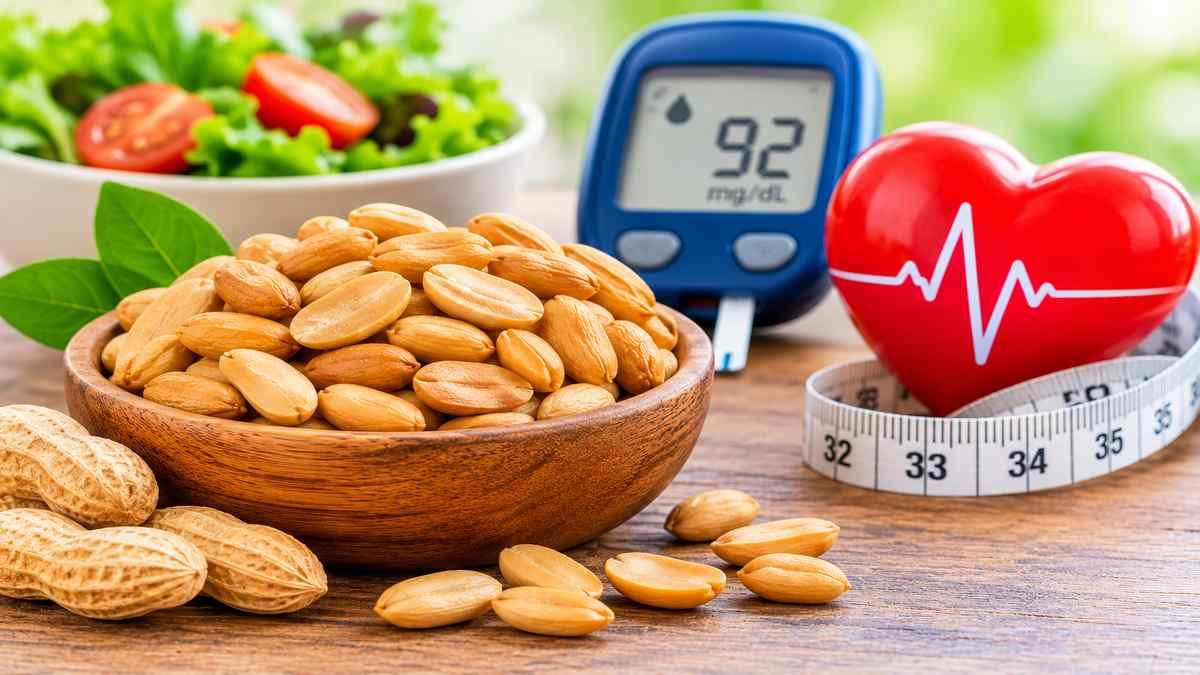

Peanuts are a popular snack, but are they a good choice for people with type 2 diabetes? The question of peanuts and diabetes comes up often, because many people worry that any snack can send blood sugar higher. Unlike many processed snacks, plain peanuts provide protein, fiber, and unsaturated fats with relatively little carbohydrate.
Peanuts are technically legumes, though their nutritional profile is similar to tree nuts. That mix of nutrients may help make them a practical option for people who are watching their blood sugar. Research also suggests that diets including peanuts and tree nuts may improve some markers of insulin resistance and support heart health, which matters because heart disease is more common in people with diabetes.
This guide explains how peanuts affect blood sugar, what clinical research says about insulin sensitivity and HbA1c, and how much to eat. It also covers peanut butter, salted peanuts, and precautions. Peanuts are not a diabetes treatment, and individual responses vary, so people with diabetes should work with their care team. If you want to compare peanuts with other nuts, see our guide to the best nuts for type 2 diabetes.
Can People With Type 2 Diabetes Eat Peanuts?
Yes, most people with type 2 diabetes can eat peanuts in moderation. Peanuts contain relatively little carbohydrate and provide protein, fiber, and unsaturated fats. Plain, unsalted peanuts can be a satisfying snack when included in a balanced, diabetes-friendly eating plan.
A typical serving contains only about 4 to 6 grams of carbohydrate, compared with 15 to 30 grams in many chips, crackers, or sweet snacks. The protein, fiber, and fat also slow digestion and contribute to fullness. The American Diabetes Association includes nuts and legumes among the nutrient-dense foods that can fit into an individualized eating pattern.
Portion size and preparation matter. Honey-roasted, candy-coated, or heavily salted peanuts have a different nutritional impact than plain ones. Blood glucose responses also differ from person to person, so it can help to check your own readings if you use a glucose meter. Our overview of blood sugar explains why responses vary.
Nutritional Benefits of Peanuts for People With Diabetes
The table below shows approximate values for a 28-gram (one-ounce) serving of plain peanuts. Values vary by variety and preparation, so verify them in USDA FoodData Central.
| Nutrient | Approximate amount per 28 g |
|---|---|
| Calories | 161 to 170 kcal |
| Protein | 7 g |
| Total fat | 14 g |
| Carbohydrates | 4 to 5 g (up to about 6 g if roasted) |
| Dietary fiber | 2 to 2.5 g |
| Magnesium | 45 to 50 mg |
For a broader overview of peanut nutrition, see our guide to the health benefits of peanuts.
Protein for Better Satiety
Protein slows digestion and contributes to a feeling of fullness. A snack with protein may be more satisfying than one built on refined carbohydrates alone. Peanuts provide about 7 grams per ounce, so they can help round out a snack or meal.
Fiber for Digestive and Metabolic Health
Fiber supports digestion and is part of a balanced diabetes-friendly diet. Higher fiber intake is associated with better overall metabolic health, as described by the Harvard Nutrition Source. Peanuts contribute some fiber, but they should be combined with vegetables, legumes, whole grains, and fruit; see our list of high-fiber foods for digestive health.
Healthy Fats for Cardiovascular Health
Most of the fat in peanuts is monounsaturated or polyunsaturated. People with type 2 diabetes have a higher risk of cardiovascular disease, so the type of fat in the diet is important. Replacing foods high in saturated fat with sources of unsaturated fat can support heart health, but simply adding peanuts on top of an unchanged diet adds calories.
Learn more in our guides to heart-healthy foods and peanuts and heart health.
Do Peanuts Raise Blood Sugar Levels?
Carbohydrates are generally the main nutrient that affects blood glucose after a meal. Because plain peanuts contain very little carbohydrate, they are unlikely to produce the same glucose response as a similarly sized serving of sugary snacks. Protein, fat, and fiber also influence how quickly food is digested and absorbed.
Large portions and sweetened peanut products can change the picture. A big bowl of honey-roasted peanuts can add meaningful carbohydrate and calories. For reference ranges and what blood sugar numbers mean, see our guide to blood sugar levels.
Understanding the Glycemic Index of Peanuts
The glycemic index (GI) ranks carbohydrate-containing foods by how quickly they raise blood glucose compared with a reference food. Peanuts have a very low GI, largely because they have so little available carbohydrate. The Glycemic Index Foundation provides searchable values for many foods.
GI is not a complete measure of a food’s effect on blood glucose. Total carbohydrate intake, portion size, and the other foods in a meal still matter, so use it as one piece of information, not a rule.
Can Peanuts Prevent Blood Sugar Spikes?
Adding peanuts to a meal that contains carbohydrate changes the overall composition of the meal, and some small studies suggest this may lead to a smaller rise in blood glucose than the same meal without nuts. Results are not consistent, and peanuts do not reliably prevent glucose spikes. If you monitor your blood sugar, you can test how your own body responds when you eat peanuts with different foods.
How Peanuts May Affect Insulin Sensitivity and Type 2 Diabetes
Peanuts and Insulin Resistance
Insulin is a hormone that helps move glucose from the blood into cells. In insulin resistance, cells respond less well to insulin, so the body needs more of it to keep blood sugar in range. Over time this can contribute to type 2 diabetes. You can read more in our guide to insulin resistance.
Researchers are interested in nuts because their unsaturated fats, fiber, magnesium, and plant compounds may influence insulin sensitivity. These are plausible mechanisms, but mechanisms alone do not prove clinical benefit.
What Clinical Research Says About Peanuts and Insulin
A 2019 systematic review and meta-analysis published in the American Journal of Clinical Nutrition looked at 40 randomized controlled trials involving 2,832 participants. It found that diets containing peanuts or tree nuts were associated with improvements in fasting insulin and HOMA-IR, a measure of insulin resistance. However, the analysis did not find significant improvements in fasting blood glucose or HbA1c. You can locate the study through PubMed.
The practical takeaway:
- The results are promising for insulin-related markers.
- They do not prove that peanuts lower blood sugar.
- The studies examined peanuts and tree nuts together, so the findings cannot be attributed to peanuts alone.
- More research is needed to establish peanut-specific benefits.
Can Eating Peanuts Help Lower HbA1c?
HbA1c reflects your average blood glucose over roughly the past two to three months, while a fasting glucose test measures your level at a single point after fasting. They provide different information, and our guide to the A1C test explains the difference.
The 2019 review above did not find a significant HbA1c improvement across trials of peanuts and tree nuts. Some earlier analyses focused on people with type 2 diabetes, such as one published in PLOS ONE in 2014 that mostly examined tree nuts, reported small improvements in HbA1c and fasting glucose. Overall, the evidence is mixed. You can search for this analysis on PubMed.
Peanuts should not be considered an HbA1c-lowering treatment. If you want to improve your HbA1c, work with your care team on medicines, activity, sleep, and an overall eating plan.
How Many Peanuts Should a Person With Diabetes Eat Daily?
A typical serving is about one ounce (28 grams), roughly a small handful, which provides approximately 160 to 170 calories. This is a reference serving, not a prescription.
A practical serving example:
- 28 grams of unsalted shelled peanuts
- Approximately one small handful
The right amount depends on your total calorie needs, diabetes medicines, overall dietary pattern, and your clinician’s advice. Peanuts are energy-dense, so they work best when they replace a less nutritious snack rather than being added on top of regular meals. Choose unsalted or minimally processed varieties. For more on portions, see our guides on how many nuts to eat daily and whether peanuts are fattening.
Which Peanuts Are Best for Type 2 Diabetes?
The ingredient list, sodium content, added sugars, and serving size are more important than whether the peanuts are raw or roasted. For a closer comparison, see raw vs. roasted peanuts.
Raw Peanuts
Raw peanuts are minimally processed and provide protein, fat, and fiber. Store them in a cool, dry place, and avoid peanuts that look moldy or smell musty.
Dry-Roasted Peanuts
Roasting does not automatically make peanuts unsuitable for diabetes. Check the label for added salt, sugar, oils, or flavorings, and choose plain versions.
Boiled Peanuts
Boiled peanuts provide similar nutrients and contain more water. Added salt in the cooking water can make them high in sodium, so keep portions moderate.
Unsalted Peanuts
Unsalted peanuts are a sensible everyday option, especially because many people with diabetes also need to manage blood pressure.
Is Peanut Butter Good for People With Type 2 Diabetes?
Peanut butter provides protein, unsaturated fats, and some fiber, and natural peanut butter can fit into a diabetes-friendly eating pattern. Some commercial varieties contain added sugar, salt, and extra oils, which change the nutritional profile. Check the total carbohydrates, added sugars, and serving size on the label.
Two tablespoons of peanut butter provide roughly 190 calories, and it is easy to eat more than that without noticing. Our comparison of peanuts vs. peanut butter goes deeper into the differences.
How to Choose Diabetes-Friendly Peanut Butter
- Choose products with peanuts as the main ingredient.
- Look for little or no added sugar.
- Compare sodium levels.
- Avoid unnecessary additives.
- Measure a manageable serving size.
Sugar-free peanut butter is not automatically healthier than every regular product, so compare labels. The FDA explains how to read the Nutrition Facts label.
Are Salted Peanuts Bad for Diabetes?
Salt does not directly cause a blood glucose spike. The concern is cardiovascular health: people with diabetes are at higher risk of high blood pressure and heart disease, and excess sodium can raise blood pressure. The American Heart Association recommends limiting sodium to 2,300 mg per day, with an ideal limit of 1,500 mg for most adults.
Compare sodium on food labels, and consider unsalted peanuts as an everyday choice. A small amount of lightly salted peanuts is not a problem for most people. Our article on high blood pressure offers more background.
Potential Risks of Eating Peanuts With Diabetes
High Calorie Content
Peanuts are energy-dense, and regularly eating large portions can contribute to a calorie surplus and weight gain. Weight management is an important part of type 2 diabetes care for many people, so keep portions sensible.
Added Sugar and Sodium
Flavored peanuts, such as honey-roasted or candy-coated varieties, contain added sugar. Salted varieties may contain considerable sodium. Read ingredient and nutrition labels.
Peanut Allergies
Peanuts are a common food allergen, and serious allergic reactions can cause anaphylaxis. People with peanut allergy should avoid peanuts completely and get advice from a qualified clinician. The FDA provides more information on food allergies.
Digestive Discomfort
Large portions may cause bloating or digestive discomfort in some people. Moderate intake and gradual changes can help. People with diabetes and kidney disease should also ask their healthcare team about potassium and phosphorus in nuts.
Easy Ways to Include Peanuts in a Diabetes-Friendly Diet
- Enjoy a small serving of unsalted peanuts as a snack.
- Add crushed peanuts to vegetable salads.
- Pair peanuts with plain yogurt.
- Use natural peanut butter on whole-grain toast.
- Add peanuts to vegetable stir-fries.
- Combine a small portion of peanuts with fresh fruit.
Meals should include a balance of nonstarchy vegetables, whole grains, appropriate protein sources, and healthy fats, according to your individual needs. The NIDDK offers general guidance on eating with diabetes, and our guide to the diabetes diet and best vegetables for diabetes can help you plan meals.
Frequently Asked Questions About Peanuts and Diabetes
Can diabetics eat peanuts every day?
Most people with type 2 diabetes can include moderate portions of plain peanuts regularly, provided they fit their nutritional needs and there are no allergies or other contraindications. Ask your care team about the amount that is right for you.
Do peanuts increase blood sugar?
Plain peanuts contain relatively little carbohydrate and generally have a modest effect on blood glucose compared with sugary snacks. Individual responses and portion sizes still matter, as discussed by the American Diabetes Association.
Are roasted peanuts good for type 2 diabetes?
Dry-roasted peanuts can be a suitable option when they contain little or no added sugar and excessive sodium. Check the label for flavorings and coatings.
Is peanut butter good for diabetics?
Natural peanut butter can fit into a diabetes-friendly diet, but check labels for added sugar, sodium, and serving size. It is calorie-dense, so measure portions.
Are almonds better than peanuts for diabetes?
Both provide protein, fiber, and unsaturated fats, and neither is universally better. Individual preferences, nutritional requirements, and budget matter. See our comparison of almonds vs. walnuts for more on choosing nuts.
Can eating peanuts help prevent type 2 diabetes?
Some large observational studies link regular nut and peanut intake with a lower risk of developing type 2 diabetes, but they cannot prove cause and effect. Prevention depends on many factors, including weight, activity, and overall diet. See our guide on how to prevent diabetes.
Are peanuts good for insulin resistance?
Research suggests that diets including peanuts or tree nuts may improve some markers of insulin resistance, but results are not conclusive for peanuts alone. They should be one part of a broader approach that includes activity and a balanced diet.
Are peanuts okay for people with prediabetes?
Plain peanuts can generally fit into a prediabetes eating plan in moderate portions. See our guide to the prediabetes diet for more.
Final Verdict: Are Peanuts Good for Type 2 Diabetes?
Most people with type 2 diabetes can eat peanuts. Their low carbohydrate content makes plain peanuts a practical snack, and their protein, fiber, and unsaturated fats add nutritional value. Research suggests possible improvements in insulin-related markers, but evidence for lowering blood glucose and HbA1c is not conclusive. Unsalted and minimally processed varieties are sensible choices, and portion control and an overall balanced eating pattern remain essential.
Peanuts are not a diabetes treatment, but they can be a nutritious, satisfying, and practical addition to a balanced diabetes-friendly diet.
Sources
- American Diabetes Association. Food and Nutrition
- National Institute of Diabetes and Digestive and Kidney Diseases. Diet, Eating, and Physical Activity for Diabetes
- U.S. Department of Agriculture. FoodData Central
- Harvard T.H. Chan School of Public Health, The Nutrition Source. Fiber
- Glycemic Index Foundation. Glycemic Index
- American Heart Association. Sodium
- U.S. Food and Drug Administration. How to Understand and Use the Nutrition Facts Label
- U.S. Food and Drug Administration. Food Allergies
- PubMed. Effect of nuts on markers of glycemic control: systematic review and meta-analysis of randomized controlled trials (American Journal of Clinical Nutrition, 2019)
- PubMed. Tree nuts and glycemic control in type 2 diabetes: meta-analysis (PLOS ONE, 2014)
Medical Disclaimer: This article is for general educational purposes only and is not medical advice. It does not diagnose, treat, or replace guidance from a qualified healthcare professional who knows your health history. People with type 2 diabetes should talk with their healthcare provider or a registered dietitian before making significant dietary changes, especially if they take insulin or other glucose-lowering medicines. If you have a peanut allergy, avoid peanuts and ask an allergist for guidance.