

Acid reflux happens when stomach contents flow back up into the esophagus. The most common symptoms are heartburn and regurgitation, and the discomfort can make eating feel stressful. Food choices and eating habits can influence symptoms, which is why many people look for a diet that feels both healthy and comfortable.
The DASH diet is an eating pattern originally developed to support healthy blood pressure. It emphasizes vegetables, fruits, whole grains, lean proteins, and low-fat dairy, and it encourages minimally processed, balanced meals. That focus makes it interesting for people with reflux, especially those who want to move away from fried, fatty, and heavily processed foods.
Still, a diet can be nutritious and contain foods that trigger heartburn in some people. This guide explains how the DASH diet may fit into a reflux-friendly plan, which foods may be easier to tolerate, which may cause trouble, and how portions, cooking methods, and meal timing can help. It also looks at what the research does and does not show, because DASH is not an established treatment for acid reflux.
What Is the DASH Diet?
DASH stands for Dietary Approaches to Stop Hypertension. The NHLBI DASH eating plan was developed to help people manage blood pressure through food, not to treat digestive conditions.
The plan emphasizes vegetables, fruits, whole grains, and low-fat dairy. It also includes legumes, nuts, seeds, fish, and lean poultry. At the same time, it limits excess sodium, saturated fat, and added sugars.
DASH encourages balanced meals rather than strict food elimination, which makes it flexible. For a full overview, see our DASH diet for beginners guide and our DASH diet food list.
Is the DASH Diet Good for Acid Reflux?
It may be a useful starting point for some people, but evidence that DASH specifically treats acid reflux is limited. A balanced eating pattern supports overall health, and choosing less fatty meals may suit people who notice reflux after high-fat foods.
The research that does exist is early. A 2023 cross-sectional study in BMC Public Health of 5,141 adolescents aged 13 to 14 in Iran found that those with the highest adherence to a DASH-style diet had lower odds of reported GERD symptoms than those with the lowest adherence. Cross-sectional studies capture a single point in time, so they cannot show cause and effect. The authors themselves called for prospective research, and the findings should not be applied directly to adults.
Some common DASH foods, such as citrus fruits and tomatoes, are also commonly linked to reflux symptoms. That is why individual tolerance matters more than following a rigid food list. DASH should never replace a medical assessment or prescribed reflux treatment.
To learn more about the condition itself, see our guides on what causes acid reflux and acid reflux treatment options.
Potential Benefits of the DASH Diet for People With Acid Reflux
Encourages More Minimally Processed Foods
DASH emphasizes fresh and minimally processed ingredients. Replacing heavily processed meals with simpler home-cooked dishes gives you more control over fat content, portion sizes, and what goes into your food. That control can make it easier to spot and avoid your personal triggers.
Supports Balanced, Lower-Fat Meal Choices
DASH favors lean proteins such as fish and skinless poultry over fatty or heavily fried meats. High-fat meals can aggravate symptoms in some people, and the NIDDK lists high-fat foods among those commonly linked to GERD symptoms. Fat does not affect everyone with reflux in the same way, so pay attention to your own response.
May Support Healthy Weight Management
Excess body weight is associated with GERD symptoms, and NIDDK notes that doctors may recommend weight loss for people with overweight or obesity. Balanced meals and appropriate portions may support sustainable weight management. This does not mean everyone with acid reflux needs to lose weight. See our guide on weight management for general strategies.
Provides a Framework for Heart-Healthy Eating
DASH was built for blood pressure support, and it can help you create a balanced diet beyond reflux management. Cardiovascular benefits and reflux relief are separate outcomes, so do not expect one to guarantee the other. Our article on heart-healthy foods offers more ideas.
Best DASH Diet Foods to Consider With Acid Reflux
Food tolerance varies a lot from person to person. The options below are practical ideas, not guarantees that any food will prevent reflux.
Non-Acidic Fruits
Bananas, melons, pears, and apples (if tolerated) are fruits that many people with reflux find easier than citrus. Individual responses differ, so test them in small amounts. Our guide on the health benefits of bananas has more detail.
Vegetables
Broccoli, carrots, green beans, spinach, zucchini, and cucumber are good DASH vegetables. Cooking vegetables can make them easier to tolerate for some people, especially if raw vegetables cause discomfort. Learn more in our guides on the benefits of eating vegetables daily and how to eat more vegetables.
Whole Grains
Oatmeal, brown rice, barley, and whole-wheat bread provide fiber. Keep portions reasonable, because large meals may worsen reflux regardless of the type of food. Our list of high-fiber foods for digestive health may help.
Lean Proteins
Skinless chicken, fish, tofu, lentils, and beans (if tolerated) fit well. Baking, steaming, grilling, or poaching is generally gentler than deep-frying. Beans can cause gas or bloating in some people, so introduce them gradually.
Low-Fat Dairy and Healthy Fats
Plain low-fat yogurt, low-fat milk, small portions of unsalted nuts, and moderate amounts of olive oil can fit. Dairy tolerance varies, and high-fat foods may aggravate symptoms for some people. See our articles on yogurt for acid reflux and healthy fats.
DASH Diet Foods That May Trigger Acid Reflux
The DASH plan includes several foods that can be a problem for some people with reflux. NIDDK and the American College of Gastroenterology (ACG) mention these common triggers:
- Citrus fruits: Oranges, lemons, and grapefruit may worsen symptoms in some individuals.
- Tomatoes: Tomato sauces and tomato-based dishes can be triggers.
- High-fat foods: Fried foods, fatty meats, creamy sauces, and rich desserts may aggravate reflux.
- Chocolate and mint: Commonly reported triggers.
- Coffee and caffeinated drinks: May worsen symptoms in some people.
- Spicy foods: Can be uncomfortable for some people.
- Carbonated beverages: May increase symptoms for some individuals.
- Alcohol: Also commonly linked to symptoms.
Not everyone with GERD needs to avoid all of these. The 2022 ACG clinical guideline suggests avoiding trigger foods for symptom control, but it rates the evidence as low and notes that triggers vary by person. The practical approach is to identify your own triggers instead of cutting out many foods at once.
How to Adapt the DASH Diet for Acid Reflux
Choose Foods Based on Personal Tolerance
- Keep a food and symptom diary to find patterns between meals and symptoms.
- Test suspected triggers carefully rather than eliminating many foods unnecessarily.
- Replace problem foods with alternatives from the same food group, such as pears instead of oranges.
Eat Smaller, Balanced Meals
- Avoid very large meals.
- Use moderate portions of grains and proteins.
- Spread your food across the day if that works better for you.
- Eat slowly rather than quickly.
Choose Lower-Fat Cooking Methods
- Bake, grill, steam, or poach foods.
- Use smaller amounts of added oils.
- Limit deep-fried foods and heavy sauces if they trigger symptoms.
Adjust Meal Timing
- Finish meals at least 2 to 3 hours before lying down or going to bed. NIDDK notes that eating at least 3 hours before bed may improve nighttime symptoms.
- Stay upright after eating.
- Avoid large late-night meals.
These habits match established GERD guidance from NIDDK and the ACG.
Sample One-Day DASH-Style Meal Plan for Acid Reflux
This is an illustration, not a prescribed GERD treatment plan. Adjust it to your appetite, nutritional needs, and triggers.
| Meal | Example |
|---|---|
| Breakfast | Oatmeal with banana slices and a small portion of unsalted almonds |
| Morning snack | A small pear |
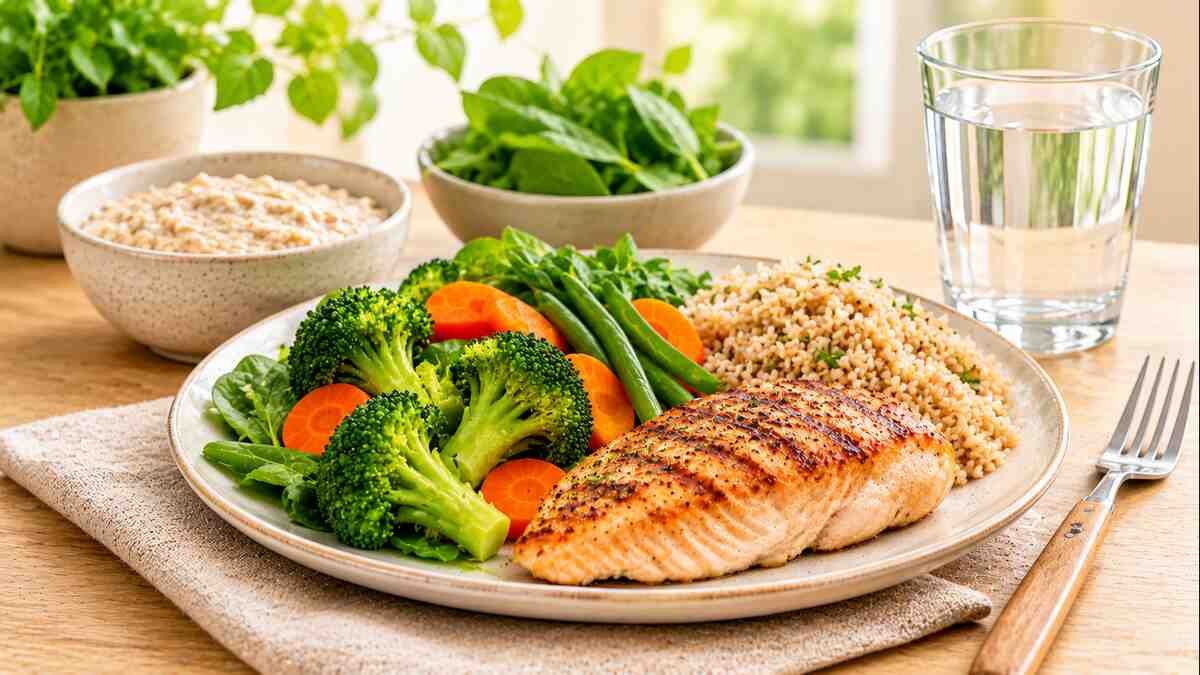
| Lunch | Grilled skinless chicken, brown rice, and steamed carrots and green beans |
| Afternoon snack | Plain low-fat yogurt, if tolerated |
| Dinner | Baked fish, quinoa, and cooked zucchini with spinach |
| Optional snack | A small portion of melon, if needed and tolerated |
A few notes on this plan:
- Meals emphasize DASH-style food groups.
- Cooking methods avoid excessive added fat.
- Fruit choices avoid common acidic triggers.
- Portions should be adjusted to your own needs.
- Meal timing matters, particularly if you have nighttime reflux, so finish dinner well before bed.
Eating Habits That May Help Reduce Acid Reflux
Beyond food selection, some lifestyle habits are part of standard GERD guidance. The ACG recommends weight loss for people who are overweight, avoiding meals within 2 to 3 hours of bedtime, avoiding tobacco, and elevating the head of the bed for nighttime symptoms. The guideline notes that the data behind these recommendations are limited and variable.
Habits that may help include:
- Avoid lying down soon after meals.
- Leave 2 to 3 hours between your last meal and bedtime.
- Choose smaller portions if large meals trigger symptoms.
- Elevate the head of the bed if advised by your clinician.
- Discuss weight management with a healthcare professional if appropriate.
- Avoid smoking.
- Identify your personal food and drink triggers.
Some of these have stronger support than others, and what helps one person may not help another. For more everyday strategies, see our guide on how to manage acid reflux at home.
Is the DASH Diet Safe for Everyone With Acid Reflux?
DASH is generally a balanced pattern, but some people need adjustments.
- People with GERD may need to modify certain DASH foods, such as citrus and tomatoes.
- People with food intolerances or other digestive conditions may need further changes.
- People with kidney disease or other conditions may need individualized dietary guidance, since standard DASH is rich in potassium. See our article on whether the DASH diet is safe long term.
- Avoid overly restrictive diets that remove several food groups without professional advice.
Diet changes are not a substitute for medical treatment, and you should not stop prescribed reflux medication without talking to your clinician. Frequent, persistent, or worsening symptoms should be assessed by a healthcare professional. Our guide on when to see a doctor for acid reflux explains warning signs.
Frequently Asked Questions
Can the DASH diet cure acid reflux?
No. DASH is a heart-healthy eating pattern, not a proven cure or specific treatment for GERD. Some people may find it a helpful base for choosing foods, but treatment should be guided by a healthcare professional.
Are bananas good for acid reflux on the DASH diet?
Bananas are a non-citrus fruit that many people tolerate well, although individual responses vary. If bananas bother you, there is no need to include them.
Can I eat tomatoes on the DASH diet if I have GERD?
Tomatoes are part of the general DASH pattern, but tomato products can trigger reflux symptoms in some people, and NIDDK lists them among commonly reported triggers. Consider alternatives if you notice a consistent reaction.
Is oatmeal good for acid reflux?
Oatmeal is a whole grain that may fit well into a balanced eating pattern. Portion size and personal tolerance still matter, and toppings such as citrus or chocolate may cause problems for some people.
Should I avoid citrus fruits if I have acid reflux?
Only if they trigger or worsen your symptoms. Citrus fruits are not a universal trigger, and the ACG guideline supports individualized trigger avoidance.
Can the DASH diet help with nighttime acid reflux?
There is no strong evidence that DASH specifically treats nighttime reflux. Finishing meals 2 to 3 hours before bed and other individualized lifestyle changes may help, according to NIDDK. Talk with your healthcare provider if nighttime symptoms persist.
Conclusion
The DASH diet offers a nutritious foundation built around vegetables, fruits, whole grains, lean proteins, and balanced meals. Because some DASH foods, such as citrus fruits and tomatoes, may trigger acid reflux, the pattern should be adapted to your personal tolerance. Meal size, food preparation, and timing matter as much as the foods themselves.
If you have frequent or persistent symptoms, seek professional advice. A healthcare provider or registered dietitian can help you build a plan that supports both your digestive comfort and your overall health.
Sources
- NHLBI: DASH Eating Plan
- NIDDK: Acid Reflux (GER & GERD) in Adults
- NIDDK: Eating, Diet, & Nutrition for GER & GERD
- Katz PO, et al. ACG Clinical Guideline for the Diagnosis and Management of Gastroesophageal Reflux Disease. Am J Gastroenterol (2022)
- Beigrezaei S, et al. Dietary approaches to stop hypertension (DASH)-style diet in association with gastroesophageal reflux disease in adolescents. BMC Public Health (2023)
Medical Disclaimer: This article is for general educational purposes only and is not a substitute for professional medical advice, diagnosis, or treatment. Food triggers and nutrition needs differ from person to person. Always talk with your doctor or a registered dietitian before changing your diet or stopping any medication. Seek medical care promptly if you have trouble swallowing, unexplained weight loss, vomiting, black stools, chest pain, or symptoms that are frequent or getting worse.