
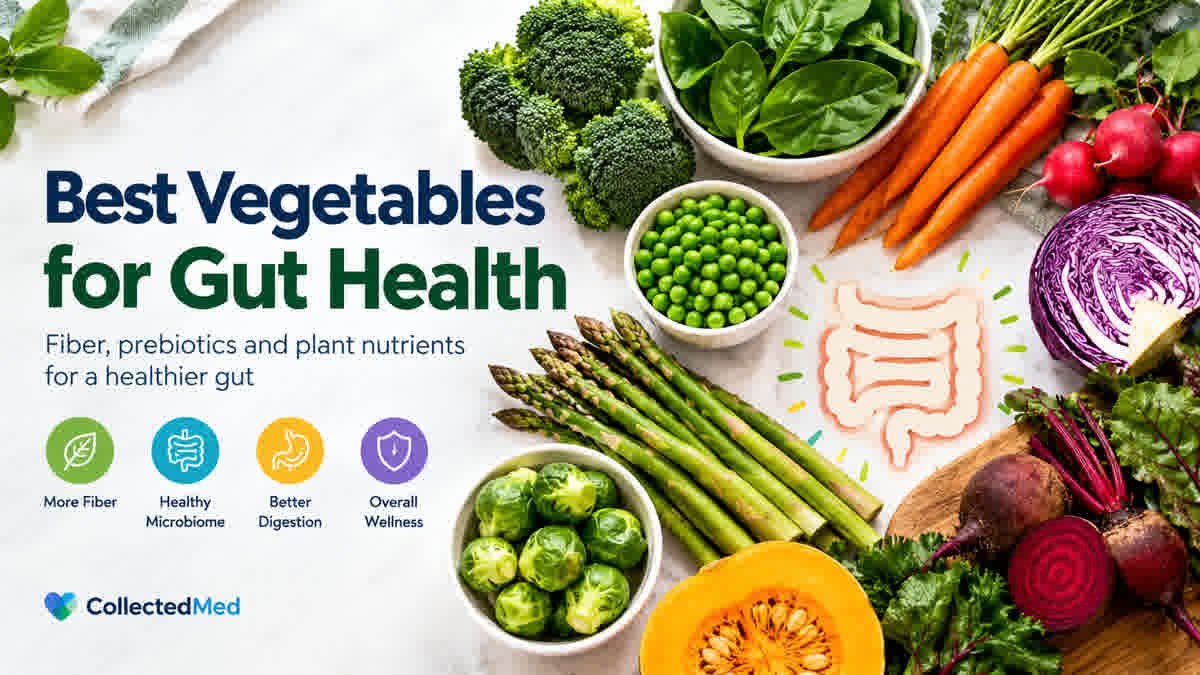

Some of the best vegetables for gut health are broccoli, spinach, carrots, green peas, sweet potatoes, cabbage, green beans, and pumpkin. They provide fiber and other plant compounds that support digestion and feed the microbes in your gut. Eating a variety of vegetables is generally more helpful than relying on any single food.
Your digestive tract is home to trillions of microorganisms, collectively called the gut microbiome. These microbes help break down food, and different vegetables supply different types of fiber for them to use. Vegetables also add water, vitamins, and minerals to your meals, which supports normal digestion and a balanced diet.
This guide explains how vegetables support gut health, profiles 12 good choices, and shows how to match vegetables to different digestive goals. You will also find tips on raw versus cooked vegetables, ways to add more to your meals, and what to do if vegetables cause gas or bloating. This article is general information, not personal medical advice, and no vegetable can treat a digestive condition.
How Vegetables Support Gut Health
Vegetables help your digestive system in several overlapping ways. The effects depend on the type of vegetable, the amount you eat, and how your own body responds.
Fiber and regular bowel movements. Fiber is the part of plant foods your body cannot fully digest. It adds bulk to stool and helps keep it soft, which can support regular bowel movements. The National Institute of Diabetes and Digestive and Kidney Diseases (NIDDK) lists eating more fiber among the common steps for easing constipation. Our guide to high-fiber foods for digestive health covers more sources.
Prebiotic effects. Some fibers, such as inulin-type fructans, serve as food for beneficial gut microbes. These are called prebiotics. Not all fiber is prebiotic, and the evidence is stronger for specific fibers than for vegetables as a group. See our guides to prebiotic foods and the difference between probiotics and prebiotics.
Microbial diversity. Eating many different plant foods may support a more diverse microbiome. A large citizen-science analysis from the American Gut Project, published in mSystems, found that people who ate 30 or more different plants a week had more diverse gut microbes than those who ate 10 or fewer. This is an association, not proof of cause and effect.
Water and plant nutrients. Vegetables contribute water, vitamins, minerals, and plant compounds that support overall health. The Harvard T.H. Chan School of Public Health explains how diet and the microbiome interact.
Not all fiber is the same, and individual responses vary. A vegetable that works well for one person may cause gas in another. For broader lifestyle guidance, see our article on how to improve gut health.
12 Best Vegetables for Gut Health
This list is not a scientific ranking. Each vegetable’s usefulness depends on your overall diet, serving size, preparation, and tolerance.
1. Broccoli
Broccoli provides fiber and cruciferous plant compounds. Human evidence on how these compounds affect gut microbes is still developing, so treat broccoli as one useful vegetable among many. Steam or roast it until tender. Our guide to cruciferous vegetables explains more about this family.
2. Spinach
Spinach supplies fiber, folate, and other micronutrients. It cooks down to a small volume, so you can eat a lot of it in soups, curries, eggs, and lentil dishes. Our article on the benefits of leafy green vegetables covers other greens.
3. Carrots
Carrots contain fiber, including pectin, a type of soluble fiber. You can eat them raw if you tolerate them, or cook them until tender if you prefer a gentler texture. They are affordable, available year-round, and easy to add to rice, soups, and stews.
4. Green Peas
Green peas provide fiber and fermentable carbohydrates. Those carbohydrates can feed gut microbes but may also cause gas in some people. Mix peas into rice, soups, and vegetable dishes, and start with modest portions.
5. Asparagus
Asparagus contains inulin-type fructans that can serve as food for beneficial gut microbes. These same fermentable carbohydrates may trigger gas or discomfort in some people, particularly those with irritable bowel syndrome (IBS). Steam or roast it and see how you feel.
6. Brussels Sprouts
Brussels sprouts offer fiber and cruciferous compounds. Roast or steam them thoroughly so they are tender, since undercooked sprouts can be harder to digest for some people. Start with a small serving if you are not used to them.
7. Sweet Potatoes
Sweet potatoes provide fiber, especially when you eat the skin. They are filling and easy to bake, boil, or roast. They can replace more refined starches in a meal.
8. Cabbage
Cabbage contains fiber and beneficial plant compounds. It works raw in salads or slaws, or cooked in soups and stir-fries. Some people find raw cabbage gassy, so cooked forms may be easier at first.
9. Beets
Beets provide fiber and naturally occurring plant pigments. Roast, steam, or grate them into salads. Our guide to beetroot health benefits covers them in more detail.
10. Artichokes
Artichokes are a source of inulin and other fibers. Availability varies, and larger portions can cause gas, so start small. They work well cooked as a side dish or added to salads and pasta.
11. Green Beans
Green beans provide fiber and micronutrients and are a mild, accessible option for many people. Steam or stir-fry them until tender. They are a good starting point if you are building up your vegetable intake.
12. Pumpkin
Pumpkin provides fiber and other nutrients. Use it in soups, curries, or baked dishes. Its soft texture when cooked makes it an easy choice for many people.
Quick Comparison
| Vegetable | Main gut-health angle | Easy way to eat it |
|---|---|---|
| Broccoli | Fiber and cruciferous compounds | Steamed or roasted |
| Spinach | Fiber and micronutrients | Cooked in soups or curries |
| Carrots | Fiber, including pectin | Raw or cooked |
| Green peas | Fiber and fermentable carbohydrates | Mixed into rice or soup |
| Asparagus | Inulin-type prebiotic fibers | Steamed or roasted |
| Brussels sprouts | Fiber and plant compounds | Roasted until tender |
| Sweet potatoes | Fiber, especially with skin | Baked or boiled |
| Cabbage | Fiber and plant compounds | Cooked or shredded |
| Beets | Fiber and plant pigments | Roasted or steamed |
| Artichokes | Inulin and other fibers | Cooked as a side dish |
| Green beans | Fiber and micronutrients | Steamed or stir-fried |
| Pumpkin | Fiber and other nutrients | Soup, curry, or baked |
For precise fiber amounts, check USDA FoodData Central, since values depend on serving size and preparation.
Which Vegetables Are Best for Specific Digestive Goals?
Matching vegetables to a goal can help you choose, but it does not mean any vegetable treats a condition.
For regular bowel movements: Fiber-containing choices such as peas, carrots, broccoli, and sweet potatoes can help many people. The NIDDK also recommends drinking enough fluids and adding fiber gradually. Our guide to common digestive problems explains other causes of constipation.
For supporting gut microbes: Variety matters most. Vegetables with fermentable fibers, such as asparagus and artichokes, may feed beneficial microbes, but they may also cause gas in sensitive people.
For gentler meal options: Well-cooked vegetables in modest portions, such as carrots, pumpkin, green beans, and peeled sweet potatoes, are often easier to tolerate.
Constipation, bloating, and abdominal pain can have different causes, and vegetables will not solve all of them. If symptoms are persistent, severe, or new, see a clinician. Our article on whether to worry about abdominal pain explains when to seek care.
Raw vs. Cooked Vegetables for Gut Health
Both raw and cooked vegetables can support a healthy diet. Cooking softens plant structure, which may make some vegetables easier to chew and tolerate. Raw vegetables are convenient and nutritious, and they keep their crunch.
Steaming, roasting, boiling, and lightly stir-frying are all reasonable. No method is best for everyone. Raw vegetables are not always healthier, and cooking does not remove all digestive benefits. If raw vegetables give you gas or bloating, try them cooked. Our guide to raw vs. cooked vegetables explains the trade-offs, and our article on frozen vegetables shows how they fit in.
How to Add More Gut-Friendly Vegetables to Your Diet
Small, affordable changes work best, and they fit many food cultures.
- Add spinach or other leafy greens to lentil dishes and soups.
- Mix carrots, peas, and green beans into rice or stir-fries.
- Serve a cooked vegetable side at lunch and dinner.
- Rotate vegetables throughout the week instead of relying on one favorite.
- Increase fiber gradually, and drink enough fluids.
Aim for consistency and variety, not eating every vegetable on this list. The NIDDK’s guidance on IBS suggests adding fiber a few grams at a time, since too much at once can cause gas. For more ideas, see our guides on how to eat more vegetables and the benefits of eating vegetables.
Can Vegetables Cause Gas or Bloating?
Yes, in some people. Fermentable carbohydrates and a sudden jump in fiber can cause gas, bloating, or cramping. Broccoli, peas, cabbage, and asparagus are common triggers, though tolerance varies a lot.
To ease the transition, use smaller portions, increase your intake gradually, and try cooked forms. Eating slowly and chewing well can help too. The NIDDK’s IBS guidance notes that some people with IBS try a low-FODMAP diet, which limits certain fermentable carbohydrates, usually with guidance from a clinician or dietitian.
If you have persistent symptoms or diagnosed IBS, personalized advice matters more than a general list. Do not remove many vegetables from your diet without professional guidance, since they provide important nutrients.
Frequently Asked Questions
What are the best vegetables for gut health?
Broccoli, spinach, carrots, green peas, sweet potatoes, cabbage, green beans, and pumpkin are all good choices. They provide fiber and other nutrients that support digestion. Eating a variety is generally more useful than focusing on one food.
Which vegetables help support regular bowel movements?
Fiber-containing vegetables such as peas, carrots, broccoli, and sweet potatoes can help many people. Drink enough fluids and add fiber gradually, as the NIDDK advises. Talk to a clinician if constipation persists.
Are cooked vegetables better for digestion than raw vegetables?
Neither is always better. Cooking softens vegetables and may make them easier to tolerate, while raw vegetables are convenient and nutritious. Choose the form that suits your digestion and preferences.
What vegetables feed beneficial gut bacteria?
Vegetables with fermentable fibers, such as asparagus, artichokes, and peas, can serve as food for gut microbes. The type and amount of fiber vary by food. A diverse range of plants provides different fiber sources.
Can vegetables make bloating worse?
Yes, for some people. Fermentable carbohydrates and a fast increase in fiber can cause gas and bloating. Smaller portions, gradual changes, and cooked forms may help. See a clinician if symptoms continue.
How can I add more vegetables to my diet without discomfort?
Start with small portions of vegetables you tolerate, such as carrots or green beans, and increase slowly. Drink plenty of fluids and spread vegetables across meals. Adding about 2 to 3 grams of fiber a day is a common suggestion, as the NIDDK notes for IBS.
Conclusion: Build a More Varied, Gut-Friendly Plate
Vegetables supply different types of fiber and nutrients, and a varied diet is generally more useful than relying on a single “superfood.” The best vegetables for gut health are the ones you enjoy, tolerate, and can eat regularly. Start with familiar choices, and expand gradually as your digestion allows.
If you have ongoing digestive symptoms, talk with a healthcare professional rather than relying on food alone. For broader support, our guides to probiotic-rich foods and what makes a balanced diet can help you build a more complete plan.
Sources
- National Institute of Diabetes and Digestive and Kidney Diseases: Constipation
- National Institute of Diabetes and Digestive and Kidney Diseases: Irritable Bowel Syndrome
- Harvard T.H. Chan School of Public Health: The Nutrition Source, The Microbiome
- mSystems: American Gut, an Open Platform for Citizen Science Microbiome Research
- U.S. Department of Agriculture: FoodData Central
Medical Disclaimer: This article is for educational purposes only and is not a substitute for professional medical advice, diagnosis, or treatment. Always talk with a doctor, registered dietitian, or other qualified healthcare provider before changing your diet, starting a supplement, or if you have questions about your health. If you think you are having a medical emergency, call 911 or your local emergency number right away.