
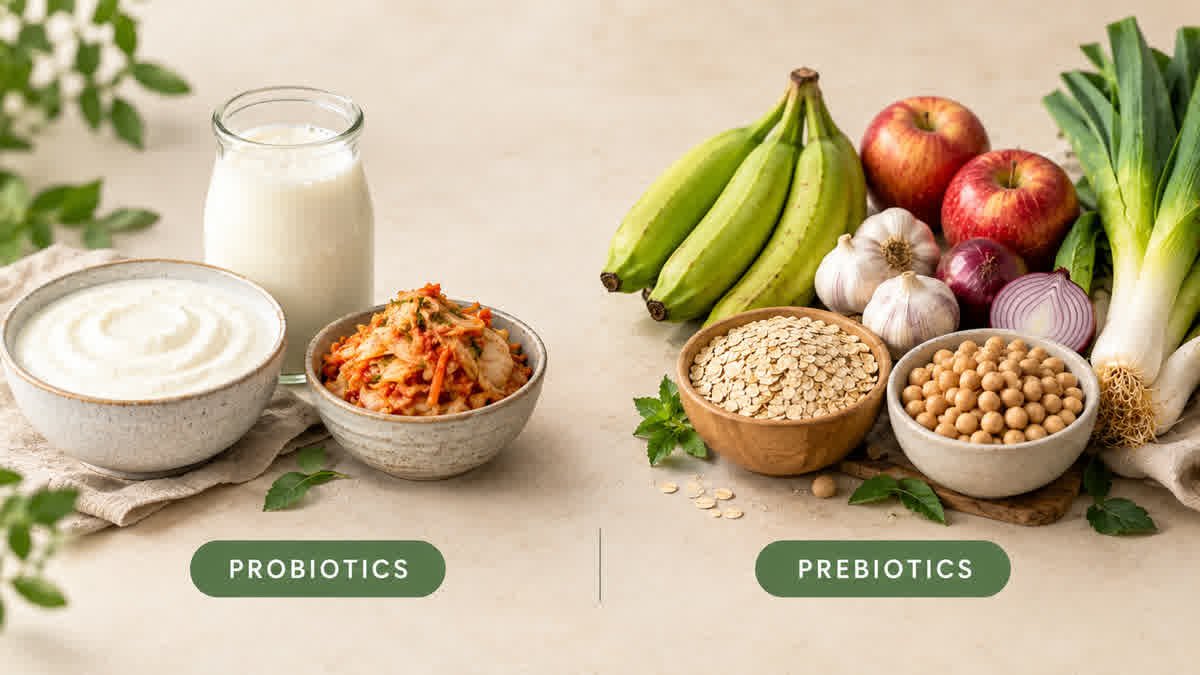

Have you ever wondered whether probiotics and prebiotics are the same thing? The names sound alike, but they do different jobs in your gut. Probiotics are live microorganisms that can provide a health benefit, while prebiotics are substances that certain microorganisms use, and many of the best prebiotic foods are rich in specific types of fiber.
Both are linked to the gut microbiome, the community of bacteria and other microbes that live in your digestive tract. That community plays a role in digestion, and researchers are studying its links to immune function and other areas of health. Probiotics and prebiotics are related, but they are not interchangeable.
This guide explains what each one is, how they differ, which foods contain them, and how to fit both into everyday meals. It also covers possible side effects and when to talk with a healthcare professional. Choosing a variety of prebiotic foods and suitable probiotic-containing foods can help you build a balanced, fiber-rich eating pattern, and our guide on how to improve gut health offers more background. This is general information, not personal medical advice.
What Are Probiotics?
Probiotics are live microorganisms that provide a health benefit when consumed or given in adequate amounts. That definition comes from an international expert consensus statement and is widely used in nutrition research. Not every microorganism, and not every fermented food, automatically counts as a probiotic. The specific organism, the amount, and the evidence of benefit all matter.
How Do Probiotics Work?
Particular probiotic strains may interact with the microbes already in your gut, support certain digestive functions, and influence immune activity. Effects vary by strain and by the health outcome being studied. The National Center for Complementary and Integrative Health (NCCIH) notes that research results for one probiotic cannot be assumed to apply to another.
Where Can You Find Probiotics?
Probiotics are found in some foods and in supplements. Common examples include:
- Yogurt with live cultures
- Kefir
- Some fermented vegetables, such as kimchi and sauerkraut
- Certain other fermented foods, depending on how they are made and stored
Fermentation alone does not guarantee that a food has live microorganisms when you eat it. Heat treatment or pasteurization after fermentation can remove them. To learn more, see our detailed guide to probiotics and our list of probiotic-rich foods.
What Are Prebiotics?
Prebiotics are substances that are selectively used by microorganisms in a way that provides a health benefit. This definition comes from an international consensus statement on prebiotics. Many well-studied prebiotics are specific kinds of fiber, but not all fiber is prebiotic.
The body does not fully digest certain fibers in the upper digestive tract. These substances can reach the colon, where particular microbes use them as fuel.
How Do Prebiotics Support Gut Health?
Prebiotics can act as a food source for certain gut microorganisms. This can support microbial activity and the production of substances such as short-chain fatty acids. Depending on the prebiotic and the evidence available, they may also support normal bowel function.
This does not mean prebiotics treat digestive diseases, and not everyone will notice the same benefit. Your response depends on the type of prebiotic, how much you eat, and your own gut microbiome.
Which Foods Contain Prebiotics?
Several everyday foods contain prebiotic substances, though the type and amount differ by food:
- Garlic and onions
- Leeks and asparagus
- Green (less ripe) bananas
- Oats and barley
- Beans, lentils, and chickpeas
- Apples
- Chicory root and Jerusalem artichokes
For a longer list, see our guide to the best prebiotic foods and our overview of high-fiber foods for digestive health.
Probiotics vs. Prebiotics: What Are the Main Differences?
The simplest way to remember the difference is this: probiotics are live microbes, and prebiotics are substances that feed certain microbes. The table below compares them side by side.
| Feature | Probiotics | Prebiotics |
|---|---|---|
| What they are | Live microorganisms that provide a health benefit when given in adequate amounts | Substances selectively used by microorganisms that provide a health benefit |
| Main role | Provide specific beneficial microbial effects | Provide a resource for certain microorganisms |
| Common food examples | Yogurt with live cultures, kefir, some fermented vegetables | Garlic, onions, oats, legumes, and other sources of particular fibers |
| Are they alive? | Yes, by definition | No, they are substances used by microorganisms |
| Available as supplements? | Yes | Yes |
| Interchangeable? | No | No |
Can a Food Contain Both?
A meal can include both probiotic-containing foods and prebiotic ingredients, such as oatmeal topped with yogurt that has live cultures. However, a food with live cultures does not necessarily provide a proven prebiotic, and not every high-fiber food meets the scientific definition of a prebiotic.
What Are Synbiotics?
Synbiotics are mixtures of live microorganisms and substrates that are selectively used by microorganisms, and that together provide a health benefit. A consensus statement on synbiotics explains that some are designed so the two parts complement each other, while others are formulated so the substrate directly feeds the included microbes.
What Are the Health Benefits of Probiotics and Prebiotics?
The benefits below are described with care. Research findings are specific to the strain, dose, population, and health outcome, so general claims about “probiotics” or “prebiotics” should be read with caution.
Supporting Digestion and Bowel Function
Certain probiotic strains may help with particular digestive outcomes, and fermentable prebiotic fibers can support bowel function. Effects vary, and not every product works for every condition. Increasing fiber too quickly can cause gas or bloating at first. If you have ongoing symptoms, our article on common digestive problems explains when to get checked.
Supporting a Diverse Gut Microbiome
Different plant foods supply different fibers and other compounds. Eating a wide range of vegetables, fruits, legumes, and whole grains can support a range of gut microorganisms. No food or supplement can promise a specific microbiome result for everyone.
Supporting Normal Immune Function
Gut microorganisms interact with the immune system. This is an active area of research, and the NIH Office of Dietary Supplements notes that benefits depend on the specific probiotic and use. Probiotics and prebiotics do not prevent all infections, and they are not a guaranteed way to “boost” immunity.
Supporting Nutrient Utilization
Microbial activity can influence the gut environment and the production of metabolites such as short-chain fatty acids. That said, probiotics and prebiotics are not substitutes for a nutritionally adequate diet. Our guide to what a balanced diet looks like covers the basics.
They have not been proven to treat irritable bowel syndrome across the board or to strengthen immunity for everyone. The NCCIH emphasizes that evidence is stronger for some uses than for others.
Best Probiotic-Rich Foods to Include in Your Diet
A food-first approach is a reasonable place to start. The live cultures in a product depend on how it is made, processed, and stored. Reading labels can help you choose products that actually contain live and active cultures.
Yogurt and Kefir
These dairy-based options are convenient and widely available. Plain varieties make it easier to limit added sugars. If you avoid dairy, you can look for alternatives, but check whether live cultures are listed on the label.
Kimchi and Sauerkraut
Some traditionally fermented versions contain live microorganisms. Products that were heat-treated or pasteurized after fermentation may not. Look for labels that mention live cultures or that are sold refrigerated.
Other Fermented Foods
Other fermented foods can be part of a varied diet, but not all of them are proven probiotic sources. You can enjoy them without assuming every product offers a specific clinical benefit. For more ideas, see our list of probiotic-rich foods and our overview of healthy foods.
Best Prebiotic Foods for a Healthy Gut
This section covers the most common prebiotic foods. For a fuller list with serving ideas, visit our guide to the best prebiotic foods.
Garlic, Onions, Leeks, and Asparagus
These vegetables contain fermentable carbohydrates, including inulin and related compounds, that can serve as prebiotic substrates. They are easy to add to soups, stir-fries, salads, and sauces.
Oats and Barley
Oats and barley are rich in fiber, including beta-glucan. They offer valuable dietary fiber, but not every fiber type should automatically be called a prebiotic. They also fit well into a Mediterranean-style eating pattern.
Beans, Lentils, and Chickpeas
Legumes provide fiber, plant protein, and other nutrients. If you are not used to eating them often, add them gradually to give your digestive system time to adjust.
Green Bananas and Apples
Less ripe, green bananas are a source of resistant starch, and apples provide fiber, including pectin. Ripeness and preparation can change the amount and type of fiber, so a very ripe banana will have a different profile than a green one.
Chicory Root and Jerusalem Artichokes
These are notable sources of inulin. Large amounts of inulin-rich foods can cause gas or bloating in some people, so start with small portions.
How to Choose Prebiotic Foods
Aim for variety instead of focusing on one “superfood.” Begin with foods you already enjoy, increase fiber slowly, and drink enough fluids. The Dietary Guidelines for Americans encourage a range of vegetables, fruits, legumes, and whole grains, and our list of healthiest foods to eat every day can help you plan.
Can You Take Probiotics and Prebiotics Together?
Yes, many people get both through a varied diet. You can also find supplements that combine the two, which are known as synbiotics. A food-first approach is a practical starting point for most people.
Supplement benefits depend on the specific ingredients and the evidence behind them. Taking a supplement is not necessary for everyone, and a higher dose is not always better. Talk with a healthcare professional before using probiotic supplements for a specific health concern. You can read more in our full guide to probiotics.
How to Include Probiotics and Prebiotics in Your Daily Diet
Here is a flexible sample day. It is an illustration, not a prescribed meal plan.
- Breakfast: Oats with plain yogurt containing live cultures, topped with banana or apple.
- Lunch: Lentils or chickpeas with vegetables and a whole-grain side.
- Dinner: A balanced plate with vegetables such as asparagus or onions, a protein source, and whole grains or another suitable carbohydrate.
- Optional snack: Plain kefir or yogurt, if it suits your needs and you tolerate it.
A few practical tips can make this easier:
- Eat a range of vegetables, fruits, legumes, and whole grains.
- Increase fiber intake gradually.
- Choose fermented foods based on their ingredients and how they are prepared.
- Adapt choices to allergies, intolerances, culture, budget, and personal preference.
For wider guidance, see our overviews of what a healthy diet looks like and nutrient-dense foods. Leafy greens are another easy addition, as covered in our article on the health benefits of leafy green vegetables.
Possible Side Effects and Precautions
For most healthy people, probiotic foods and prebiotic foods are well tolerated. Some people notice mild digestive symptoms, especially when they suddenly eat more fermentable fiber or begin a new probiotic product.
- Gas, bloating, or changes in bowel habits can occur. Increase fiber gradually and adjust portions to your tolerance.
- Persistent or severe symptoms deserve individualized advice from a healthcare professional.
- Probiotic supplements need extra caution in people with weakened immune systems, serious underlying illnesses, or other significant medical concerns. Talk with your healthcare provider first.
Probiotics are not risk-free for every person, and product quality and evidence vary, as the NCCIH notes. Do not use a supplement to treat a medical condition without professional advice. If you have ongoing digestive symptoms, read our guide on common digestive problems and our tips to improve your health.
Frequently Asked Questions
What is the main difference between probiotics and prebiotics?
Probiotics are live microorganisms that provide a health benefit when used appropriately. Prebiotics are substances selectively used by microorganisms that provide a health benefit. One introduces beneficial microbes, and the other supplies resources for particular microbes, according to consensus definitions.
Are bananas prebiotic or probiotic?
Bananas are not probiotics because they do not supply live probiotic microorganisms. They contain dietary fiber, and less ripe bananas contain resistant starch that gut microbes can use.
What are the best prebiotic foods?
Useful choices include onions, garlic, oats, legumes, green bananas, apples, and certain vegetables. The best options depend on your tolerance, what is available to you, and your overall diet. See our list of the best prebiotic foods.
Can I take probiotics without prebiotics?
Yes. Whether a probiotic is useful depends on the specific strain, the product, and the intended health outcome. Not everyone needs a supplement, and prebiotic foods can still be part of a balanced diet.
Do probiotics and prebiotics help with bloating?
It varies. Some products may help specific symptoms in certain people, while fermentable prebiotics can make gas or bloating worse in others. Persistent or severe symptoms deserve medical evaluation instead of self-treatment, as advised by the NIH Office of Dietary Supplements.
What are synbiotics?
Synbiotics are combinations of live microorganisms and substrates that microorganisms use, which together provide a health benefit. Some products are designed to complement each other, while others are made to work together directly, as outlined in the synbiotics consensus statement.
Conclusion: Probiotics and Prebiotics Work Differently
Probiotics are beneficial live microorganisms, and prebiotics are substances used by particular microorganisms that provide a health benefit. Both may contribute to gut health, but their effects depend on the food, ingredient, strain, and the individual. A varied, balanced diet with vegetables, fruits, legumes, whole grains, and suitable fermented foods is a sound foundation.
Supplements are not automatically necessary, and persistent digestive concerns should be discussed with a qualified healthcare professional. For practical food ideas, explore our guides to prebiotic foods, probiotic-rich foods, and healthy living tips.
Sources
- Hill C, et al. The International Scientific Association for Probiotics and Prebiotics consensus statement on the scope and appropriate use of the term probiotic. Nature Reviews Gastroenterology & Hepatology
- Gibson GR, et al. Expert consensus document: The International Scientific Association for Probiotics and Prebiotics (ISAPP) consensus statement on the definition and scope of prebiotics. Nature Reviews Gastroenterology & Hepatology
- Swanson KS, et al. The International Scientific Association for Probiotics and Prebiotics (ISAPP) consensus statement on the definition and scope of synbiotics. Nature Reviews Gastroenterology & Hepatology
- National Center for Complementary and Integrative Health. Probiotics: Usefulness and Safety
- NIH Office of Dietary Supplements. Probiotics: Health Professional Fact Sheet
- U.S. Department of Agriculture and U.S. Department of Health and Human Services. Dietary Guidelines for Americans
Medical Disclaimer
Medical Disclaimer: This article is for informational purposes only and is not a substitute for professional medical advice, diagnosis, or treatment. Talk with a qualified healthcare professional before taking probiotic or prebiotic supplements, especially if you have a weakened immune system, a serious illness, or ongoing digestive symptoms. If you think you are having a medical emergency, call 911 or your local emergency number right away.
1 thought on “Probiotics and Prebiotics: Differences, Benefits & Foods”
Comments are closed.