
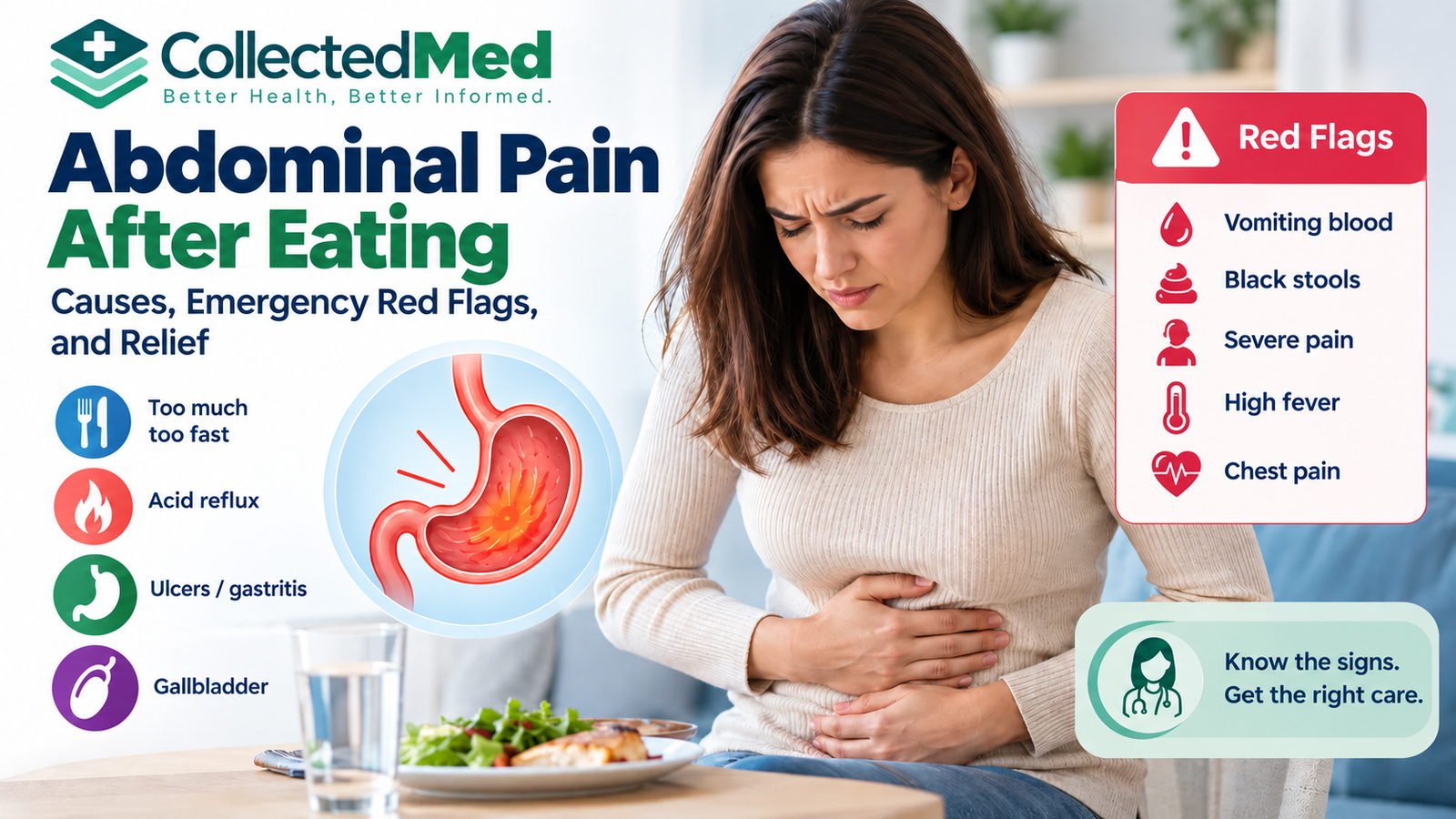

Pain that arrives after a meal is one of the most common reasons people search for health information, and one of the hardest to interpret alone. The same symptom can mean you ate too quickly, or that your gallbladder is inflamed, or that an ulcer is bleeding. The pattern matters more than the pain itself: where it sits, how long after eating it starts, what it feels like, and what comes with it.
This guide walks through what those patterns usually mean. It starts with the situations that need emergency care, because a small number of people reading this need to stop reading and get help.
When abdominal pain after eating is an emergency
Call your local emergency number or go to an emergency department now if pain after eating comes with any of the following:
- Severe, sudden pain that stops you standing up straight
- A rigid, board-like abdomen that is tender to touch
- Vomiting blood, or vomit that looks like coffee grounds
- Black, tarry stools, or visible blood in stool
- Yellowing of the skin or the whites of the eyes
- High fever or shaking chills alongside the pain
- Persistent vomiting where you cannot keep any fluid down
- Chest pain, or pain spreading to the jaw, neck, left arm or back
- Shortness of breath, sweating, or feeling faint with the pain
- Pain following a recent injury to the abdomen
Several of these are recognised warning signs of bleeding in the digestive tract. The National Institute of Diabetes and Digestive and Kidney Diseases lists vomit containing blood or resembling coffee grounds, and black tarry stools, among the symptoms that require prompt medical attention rather than continued self-management.
One warning deserves particular emphasis. Heart attacks are regularly mistaken for indigestion. Pain in the upper abdomen after a meal, with nausea, sweating, breathlessness or discomfort spreading to the jaw or arm, can be cardiac rather than digestive.
The American Heart Association notes that while chest discomfort remains the most common heart attack symptom in both sexes, women more often experience additional symptoms not typically associated with a heart attack — including nausea, vomiting, upset stomach, breathlessness, and pain in the shoulder, back, arm or jaw. The AHA’s guidance on symptoms in women points out that women frequently attribute these signs to less serious causes such as acid reflux.
If there is any doubt, it is treated as a heart problem until proven otherwise. Nobody has ever regretted going to hospital and being told it was heartburn.
Book an urgent appointment with your doctor — within days, not months — if you have:
- Unintentional weight loss alongside pain after eating
- Difficulty swallowing, or food feeling stuck
- Persistent vomiting over more than a day or two
- Pain that wakes you from sleep
- A new pattern of pain after eating that begins after age 50
- Anaemia, or you have been told your iron is low without explanation
- A family history of stomach, bowel, ovarian or pancreatic cancer
- Fear of eating because you know the pain will follow
The rest of this guide covers the far more common, non-emergency causes.
Reading your symptoms: pain location and what it suggests
Where the pain sits narrows the possibilities considerably, because the organs involved sit in predictable places.
| Pain location | Typical sensation | Causes to consider |
|---|---|---|
| Upper right | Sharp or gripping, often spreading to the right shoulder blade or back | Gallstones, cholecystitis, liver conditions |
| Upper centre (below the breastbone) | Burning, gnawing or aching | GERD, gastritis, peptic ulcer, functional dyspepsia |
| Upper left | Deep, boring pain that may spread straight through to the back | Pancreatitis, gastric ulcer, spleen-related causes |
| Around the navel | Cramping, colicky, comes in waves | Small intestine issues, early appendicitis, mesenteric ischaemia |
| Lower abdomen, general | Cramping with bloating, gas, urgency | IBS, food intolerance, inflammatory bowel disease |
| Lower right | Sharp, worsening, worse on movement | Appendicitis, ileitis, Crohn’s disease |
| Lower left | Cramping with change in bowel habit | Diverticular disease, constipation, IBS |
This table narrows the field. It does not diagnose. Pain from internal organs is notoriously poorly localised, and referred pain regularly turns up somewhere other than the organ producing it.
Reading your symptoms: timing after the meal
Timing is the second most useful clue, and it is one most people have never been asked about.
Immediately to 30 minutes This window points to the upper digestive tract — the oesophagus and stomach. Acid reflux, gastritis, and gastric ulcers typically produce burning or gnawing discomfort soon after food arrives. Oesophageal spasm can cause pain that feels alarmingly like a heart problem.
30 minutes to 2 hours This is the classic gallbladder window. After a fatty meal, the gallbladder contracts to release bile; if a stone obstructs the outlet, the result is biliary colic. NHS Inform describes this pain as sudden and severe, usually lasting between one and five hours, felt in the centre of the abdomen or under the right ribs, sometimes spreading to the side or shoulder blade. Importantly, it is constant rather than colicky in the wave-like sense, and it is not relieved by passing wind or opening the bowels. Pancreatitis pain can also begin in this window and tends to be more severe and more persistent.
2 to 5 hours Duodenal ulcers classically produce pain in this later window, when the stomach is empty and acid is unbuffered. A useful distinguishing feature: duodenal ulcer pain is often relieved by eating and returns hours later, while gastric ulcer pain is often made worse by eating. Pain that reliably wakes people at two or three in the morning fits this pattern and deserves medical assessment.
Several hours or longer, with bloating This suggests the lower digestive tract. Undigested food reaching the large intestine is fermented by gut bacteria, producing gas, distension and cramping. As NIDDK explains in its overview of gas in the digestive tract, difficulty digesting certain carbohydrates is a common source of bloating, abdominal pain and diarrhoea after particular foods.
Hours later, with vomiting of recognisable food Delayed gastric emptying — gastroparesis — means food remains in the stomach far longer than it should. People describe feeling full after a few mouthfuls, nausea that builds through the day, and occasionally vomiting food eaten hours earlier.
Common causes explained
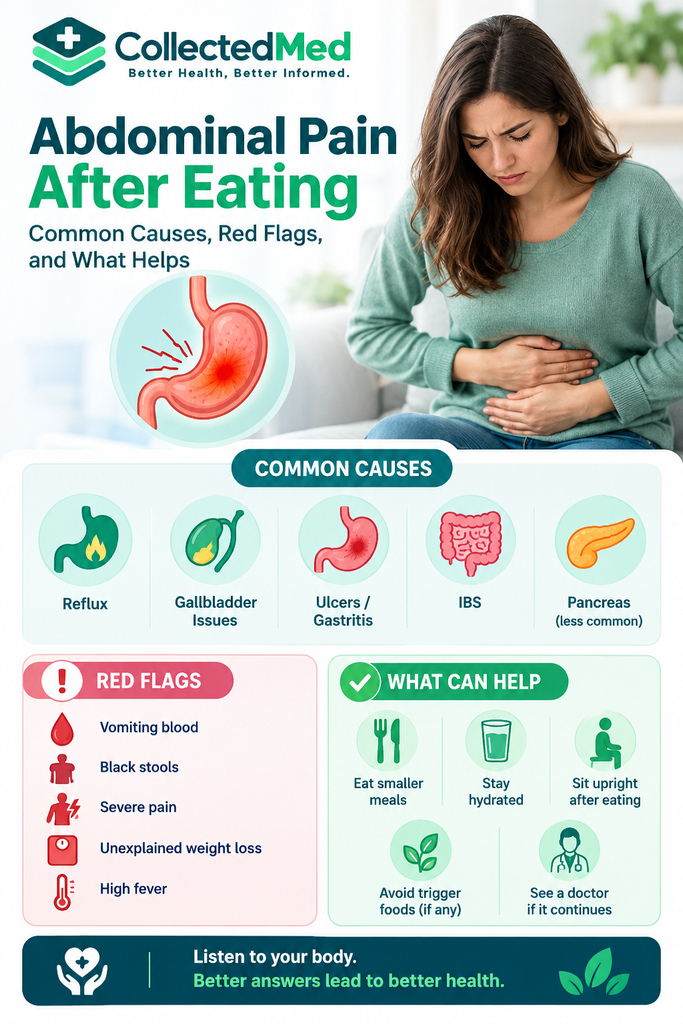
Acid reflux and GERD
Stomach acid moving up into the oesophagus produces burning behind the breastbone, sometimes with an acidic or bitter taste, worse on lying down or bending forward.
NIDDK distinguishes between occasional reflux, which is common and often harmless, and gastro-oesophageal reflux disease, the more persistent form in which reflux causes repeated symptoms or leads to complications over time. Untreated, GERD can lead to oesophagitis, narrowing of the oesophagus, and respiratory problems. NIDDK also notes that not everyone with GERD experiences classic heartburn — chest pain, nausea and swallowing difficulty can all feature.
Large meals, fatty or spicy food, alcohol, caffeine, chocolate and eating shortly before bed all make reflux more likely.
Gastritis
Inflammation of the stomach lining, producing gnawing or burning upper-central pain, often with nausea and a feeling of fullness early in a meal.
NIDDK identifies NSAIDs as the most common non-infectious cause of peptic ulcers, capable of causing life-threatening bleeding, obstruction or perforation. It describes reactive gastropathy — irritation of the stomach lining from substances including NSAIDs, alcohol and bile — as becoming more common with age, present in over 20 percent of adults above 80. Helicobacter pylori infection is the other major contributor, and it is treatable, which is why testing matters rather than managing symptoms indefinitely.
Peptic ulcers
An ulcer is a break in the lining of the stomach or duodenum. The same two culprits dominate: H. pylori and NSAIDs. The Cleveland Clinic notes that up to 70 percent of people with peptic ulcer disease notice no symptoms at all; where symptoms do occur, central upper abdominal pain and indigestion after eating are the most common, along with bloating, heartburn, nausea and pain that wakes people at night.
The timing pattern described above helps distinguish gastric from duodenal ulcers, but the more important point is that ulcers can bleed and can perforate. Black tarry stools, vomiting blood, or sudden severe pain are emergencies. Ulcers are curable when the underlying cause is treated, so they should be diagnosed rather than endured.
Gallstones and gallbladder disease
Gallstones are extremely common and mostly silent. According to NIDDK, many people have no symptoms until complications develop; when a stone blocks the bile ducts, the result is sudden upper-right abdominal pain known as a gallbladder attack or biliary colic.
Risk is higher in women, with increasing age, with obesity, and with rapid weight loss — NIDDK explains that losing weight quickly causes the liver to release extra cholesterol into bile and can prevent the gallbladder emptying properly, which is why crash diets and bariatric surgery both raise gallstone risk.
The Cleveland Clinic explains why fatty meals in particular provoke an attack: the small intestine detects fat content and signals the gallbladder to contract harder, raising pressure in an already obstructed system.
If the gallbladder becomes inflamed — cholecystitis — the pain no longer settles, fever appears, and the abdomen becomes tender. That is a hospital problem, not a wait-and-see one. Jaundice alongside gallbladder pain suggests a stone has moved into the bile duct and needs urgent attention.
Pancreatitis
NIDDK describes the main symptom of both acute and chronic pancreatitis as upper abdominal pain that may spread to the back. In acute pancreatitis the pain may begin slowly or suddenly, can be mild or severe, and may last several days, often with fever, nausea, vomiting, a fast heartbeat and a swollen or tender abdomen. NIDDK is explicit that people with acute pancreatitis usually look and feel seriously ill and need to see a doctor immediately.
Gallstones are the most common cause of acute pancreatitis, and heavy alcohol use the most common cause of the chronic form. Chronic pancreatitis produces recurrent pain after eating, particularly after fatty meals, alongside weight loss and greasy, foul-smelling stools that are difficult to flush — a pattern NIDDK associates with exocrine pancreatic insufficiency, where the pancreas no longer produces enough digestive enzymes.
Irritable bowel syndrome
IBS is a disorder of gut function rather than structure, which is why scans and endoscopies come back normal. NIDDK now classifies it among the disorders of gut-brain interaction: problems in how the brain and gut communicate can make the gut more sensitive and alter how the bowel muscles contract, producing pain, bloating and changes in bowel habit without visible damage to the digestive tract.
The characteristic pattern is cramping abdominal pain associated with a change in bowel habit, often relieved by passing a stool, with bloating that worsens through the day. Meals are a common trigger because eating stimulates colonic activity.
IBS is a legitimate diagnosis, not a label for “nothing found.” But it is a diagnosis of pattern, made by a clinician after red flags are excluded — not one to award yourself online.
Food intolerances
Lactose intolerance is the most common. NIDDK explains the mechanism: the small intestine produces too little lactase, undigested lactose passes into the colon, and bacteria there break it down into fluid and gas — producing bloating, diarrhoea, wind, nausea and abdominal pain within a few hours of dairy.
Two points from NIDDK are worth knowing. Most people with lactose intolerance can handle some lactose without symptoms, and the tolerable amount varies widely between individuals — total avoidance is rarely necessary. And lactose malabsorption is the global norm rather than the exception, affecting an estimated 68 percent of the world’s population, with much higher rates across Asia and Africa than in northern Europe.
Coeliac disease is different and more serious — an immune reaction to gluten that damages the small intestine lining.
One practical warning that saves people months. Testing must happen while you are still eating gluten. The Celiac Disease Foundation is unambiguous that antibody blood testing requires a gluten-containing diet to be accurate, and that people already gluten-free may need a supervised gluten challenge before testing. It also warns against going gluten-free before testing, since antibodies fall and the intestine begins to heal, risking a false negative on both blood test and biopsy. If you suspect coeliac disease, see a doctor before you change your diet, not after.
Food allergy is different again. It involves the immune system, can appear within minutes, and may include hives, swelling, wheezing or throat tightness. That combination is an emergency.
Functional dyspepsia
Persistent upper abdominal discomfort, early fullness, and bloating with no structural cause found on investigation. NIDDK groups it with IBS among the functional gastrointestinal disorders that commonly produce gas and bloating symptoms. It is common, genuinely uncomfortable, and often linked to how the stomach accommodates food and how sensitive the gut nerves are. Stress and anxiety worsen it — not because the pain is imaginary, but because the gut and brain are directly connected.
Gastroparesis
NIDDK lists the complications of gastroparesis as dehydration from repeated vomiting, malnutrition, unintentional weight loss, and blood glucose levels that become harder to control.
That last point matters for anyone with diabetes. NIDDK’s clinical briefing on gastroparesis in diabetes notes that delayed gastric emptying is relatively common in type 1 and type 2 diabetes — affecting up to half of that population in some studies — although most of those people have no symptoms or only mild ones. A formal gastroparesis diagnosis requires both delayed emptying and moderate to severe symptoms such as early fullness, nausea, vomiting, abdominal pain or bloating. NIDDK adds that unexplained difficulty managing blood glucose can itself be a sign of delayed emptying, and may justify testing.
SIBO
Small intestinal bacterial overgrowth means bacteria that belong in the colon have colonised the small intestine, fermenting food earlier than they should. The result is bloating that develops within an hour or two of eating, excess gas, and irregular bowel habit. It is diagnosed with breath testing and is more common after abdominal surgery, in diabetes, and in conditions that slow gut motility.
Mesenteric ischaemia — the one that gets missed
Worth knowing about because it is uncommon, dangerous, and frequently overlooked. When the arteries supplying the intestines are narrowed, eating increases their oxygen demand and the blood supply cannot meet it.
The Society for Vascular Surgery clinical practice guidelines describe the classic triad as pain after eating, fear of food, and weight loss. In one surgical series cited in those guidelines, abdominal pain was present in 96 percent of patients, weight loss in 84 percent and food fear in 45 percent — and diagnosis was delayed by an average of 15 months from symptom onset, because the presentation overlaps with so many other abdominal conditions. StatPearls characterises the pain as beginning 15 to 30 minutes after eating and lasting up to four hours, sometimes called abdominal angina.
It occurs mainly in older adults with known vascular disease, smoking history, or existing heart or peripheral artery disease. If that description fits, it needs vascular assessment rather than another course of antacids.
Constipation, overeating and swallowed air
The least dramatic explanations are also the most common. Large meals, eating quickly, carbonated drinks, chewing gum and talking while eating all introduce air. Constipation produces cramping that food makes worse. These resolve with simple changes and are worth ruling in before assuming something serious.
How doctors work out what is causing it
History. The most valuable diagnostic tool, and largely free. Expect questions about location, timing relative to meals, what makes it better or worse, bowel habit, weight, medications — particularly NSAIDs — alcohol, and family history.
Examination. Palpating the abdomen, checking for tenderness in specific locations and for signs pointing to gallbladder or appendiceal inflammation.
Blood tests. Full blood count for anaemia or infection, liver function tests, amylase or lipase if pancreatitis is suspected, coeliac serology, inflammatory markers. NIDDK notes that in gallstone disease, blood tests can reveal signs of infection or inflammation in the bile ducts, gallbladder, pancreas or liver.
Testing for H. pylori. By breath test, stool antigen test or biopsy. Important because it is treatable and because untreated infection carries long-term risk.
Abdominal ultrasound. The first-line imaging for gallstones, and it looks at the liver, bile ducts and pancreas at the same time.
Endoscopy. A camera examination of the oesophagus, stomach and duodenum. This is what identifies ulcers, gastritis and inflammation directly, and allows biopsies.
Further testing where indicated. CT scanning, gastric emptying studies for suspected gastroparesis, hydrogen breath testing for lactose intolerance or SIBO, colonoscopy where lower GI disease is suspected.
Investigations are chosen based on the pattern, not ordered all at once. If your symptoms fit gallstones, you will get an ultrasound before anyone suggests an endoscopy.
What you can do at home
These measures help with the common, non-urgent causes. They are not a substitute for assessment if red flags are present or symptoms persist.
Keep a food and symptom diary for two weeks. Record what you ate, the time, when pain started, where it sat, what it felt like, and how long it lasted. This is the single most useful thing you can bring to an appointment.
Eat smaller, more frequent meals. A smaller volume reduces gastric distension and lowers the demand placed on the gallbladder and pancreas.
Slow down. Meals eaten in under ten minutes introduce more air and less chewing. Both make symptoms worse.
Time your meals away from bedtime. NIDDK’s dietary guidance for GERD recommends eating two to three hours before lying down, avoiding foods and drinks that trigger your symptoms, and losing weight if you are overweight. If reflux is the problem, raising the head of the bed also helps — using blocks under the bed legs rather than extra pillows, which bend you at the waist and can make it worse.
Identify and reduce triggers rather than eliminating whole food groups. Common culprits are fatty and fried food, spicy food, alcohol, caffeine, carbonated drinks and large portions. Elimination diets such as low-FODMAP work, but they are restrictive and are best done with a dietitian rather than indefinitely on your own. For lactose specifically, remember NIDDK’s point that most people tolerate some — finding your threshold beats cutting dairy entirely.
Review your painkillers. Regular ibuprofen, aspirin or naproxen is one of the leading causes of gastritis and ulcers. If you take them frequently, discuss alternatives with your doctor or pharmacist. Do not stop prescribed aspirin taken for heart protection without medical advice.
Reduce alcohol and stop smoking. Both worsen reflux, gastritis and ulcers, and alcohol is a leading cause of pancreatitis.
Manage stress deliberately. The gut-brain connection is real and physical — it is the basis of how NIDDK now classifies IBS. Sleep, exercise and stress reduction measurably improve functional gut symptoms.
A note on remedies you will find online. Peppermint tea can relax gut spasm and helps some people with IBS — but it also relaxes the valve at the top of the stomach and can make reflux worse. Ginger may help nausea. A warm compress and a short gentle walk help some people. None of these treat an underlying cause, and none should delay assessment of pain that is severe, persistent, or accompanied by any red flag above.
Over-the-counter medication. Antacids and acid-reducing medicines are available without prescription and help many people. Two cautions: they can mask symptoms of a condition that needs diagnosing, and they are not intended for continuous long-term use without medical supervision. If you need them most days for more than two weeks, that is the point to see a doctor rather than buy another packet. Ask your pharmacist about interactions with your other medications.
When to see a doctor
Book an appointment if pain after eating:
- Happens regularly over more than two weeks
- Is getting worse or more frequent
- Interferes with eating, sleeping or daily activities
- Requires over-the-counter medication most days
- Comes with any of the urgent symptoms listed at the top of this article
- Started after beginning a new medication
- Concerns you
That last one is not filler. Persistent worry about a symptom is itself a reason to have it checked, and reassurance from a clinician who has examined you is worth more than reassurance from an article that has not.
Frequently asked questions
Why does my stomach hurt 30 minutes after I eat?
That timing most often points to the upper digestive tract or the gallbladder. Burning pain in the upper centre suggests reflux, gastritis or a gastric ulcer. Sharp or gripping pain in the upper right, especially after fatty food, is a common gallstone pattern. Bloating and cramping in this window can indicate a food intolerance.
Can stress cause stomach pain after meals?
Yes. NIDDK now describes IBS as a disorder of gut-brain interaction, reflecting how directly the two systems communicate. Stress measurably alters gut motility, sensitivity and acid production, and is a genuine contributor to functional dyspepsia and IBS. It does not, however, cause bleeding, jaundice or fever — so stress is not the explanation when those are present.
Is pain after eating always a digestive problem?
No. As the American Heart Association notes, heart attack symptoms in women frequently include stomach upset, nausea and back or jaw pain rather than classic chest pain. Kidney stones, abdominal wall problems and, in women, gynaecological conditions can also produce pain that seems meal-related.
What should I eat when my stomach hurts after meals?
Start with small portions of plain, low-fat food and see how you tolerate it. Cooked rather than raw vegetables are generally easier. Avoid alcohol, caffeine, fatty and spicy food, and very large meals while symptoms settle. If the pain is severe or you cannot keep fluids down, this is a medical question, not a dietary one.
How long is too long to have pain after eating?
Symptoms recurring for more than two weeks should be assessed. Any single episode with a red flag symptom should be assessed immediately, regardless of how long it has been happening.
Should I go gluten-free to see if it helps?
Not before testing. The Celiac Disease Foundation warns that starting a gluten-free diet before testing causes antibody levels to fall and the intestine to begin healing, risking a false negative on both the blood test and the biopsy. See a doctor first — you can always change your diet afterwards.
Can drinking water after eating cause stomach pain?
Water is rarely the cause. Very large volumes of any liquid can add to gastric distension, and carbonated drinks introduce gas, but plain water in normal amounts is not a typical trigger.
Sources
- National Institute of Diabetes and Digestive and Kidney Diseases. Acid Reflux (GER & GERD) in Adults — Definition & Facts, Symptoms & Causes
- NIDDK. Definition & Facts for Gastritis & Gastropathy
- NIDDK. Gallstones — Definition & Facts, Dieting & Gallstones
- NIDDK. Symptoms & Causes of Pancreatitis
- NIDDK. Symptoms & Causes for Exocrine Pancreatic Insufficiency
- NIDDK. Definition & Facts for Irritable Bowel Syndrome
- NIDDK. Lactose Intolerance — Symptoms & Causes, Definition & Facts
- NIDDK. Definition & Facts for Gastroparesis
- NIDDK. How Does Gastroparesis Affect People with Diabetes?
- NIDDK. Symptoms & Causes of Gas in the Digestive Tract
- American Heart Association. Warning Signs of a Heart Attack, Heart Attack Symptoms in Women
- Celiac Disease Foundation. Celiac Disease Screening, Why You Should Be Tested Before Going Gluten-Free
- Huber TS, et al. Chronic mesenteric ischemia: Clinical practice guidelines from the Society for Vascular Surgery. Journal of Vascular Surgery, 2021.
- StatPearls / NCBI Bookshelf. Chronic Mesenteric Ischemia
- NHS Inform. Gallstones
- Cleveland Clinic. Peptic Ulcer Disease, Gallstones
Medical disclaimer
This article is for general information and education. It is not medical advice and it cannot diagnose the cause of your symptoms. Abdominal pain has many possible causes, and distinguishing between them requires examination and often testing. Always consult a qualified clinician about persistent, severe or worsening pain. If you have any of the emergency symptoms described above, seek immediate medical care.
Read our full Medical Disclaimer.
2 thoughts on “Abdominal Pain After Eating: Causes, Emergency Red Flags, and Relief”
Comments are closed.