
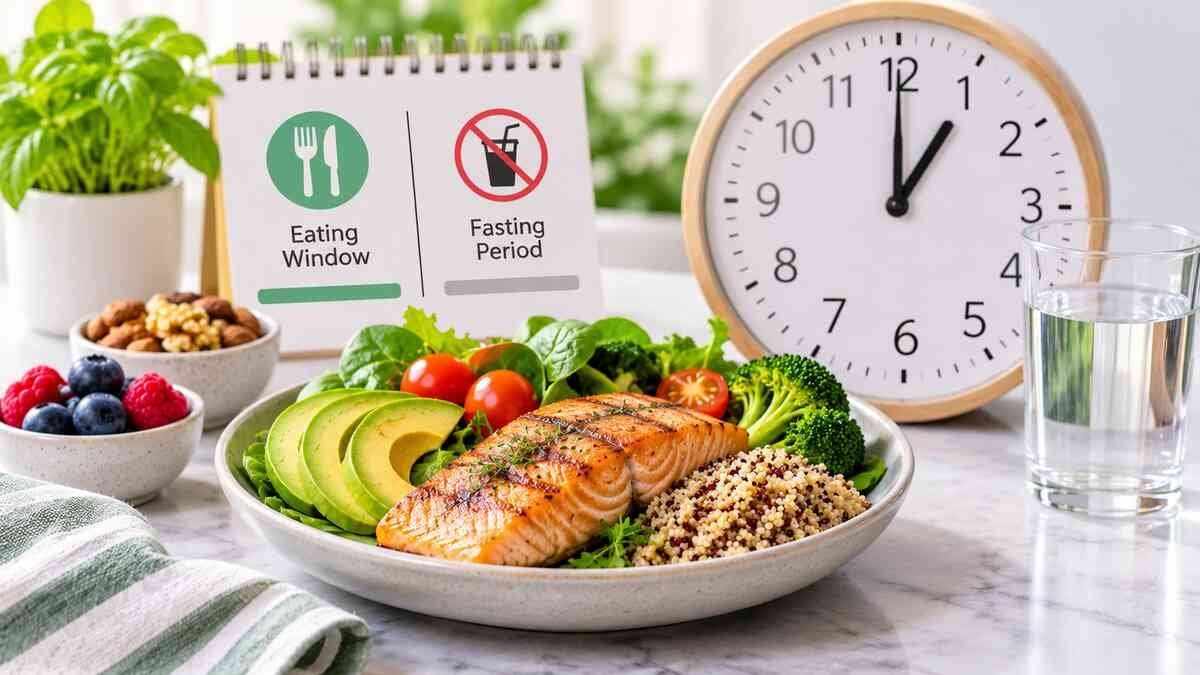

Intermittent fasting is an eating pattern that alternates between periods of eating and fasting. It focuses mainly on when you eat, not on a strict list of foods. That flexibility is appealing, but it leaves many people asking what to eat on intermittent fasting once the eating window opens.
Food quality still matters. When you eat during a shorter window, each meal has to do more work to cover your needs for protein, fiber, vitamins, minerals, and healthy fats. Choosing nutritious, satisfying foods can also make fasting periods feel easier to manage. If you are new to the approach, start with our guide to intermittent fasting for beginners.
This article covers the best foods and drinks for your eating window, what to limit, how to build a balanced plate, a sample one-day meal plan, and common mistakes. Intermittent fasting is not right for everyone, so we also explain who should be careful. You can learn more about the potential benefits of intermittent fasting in our overview.
What Should You Eat on Intermittent Fasting?
The basic principle is simple: build meals from minimally processed, nutrient-dense foods. The CDC describes healthy eating as emphasizing protein, dairy, vegetables, fruits, healthy fats, and whole grains. That advice applies whether you eat three meals a day or follow a fasting schedule.
The main food groups to include are:
- Protein-rich foods
- Vegetables and fruits
- Whole grains and other high-fiber carbohydrates
- Healthy fats
- Dairy or fortified alternatives
- Beans, lentils, nuts, and seeds
Intermittent fasting does not require a special food list or a restrictive diet. The goal is to make your eating window nutritionally balanced. A 2026 systematic review in Nutrition Reviews looked at how time-restricted eating affects diet quality, which is a reminder that the schedule alone does not guarantee a healthy diet.
Best Foods to Eat During Your Intermittent Fasting Eating Window
Use this intermittent fasting food list as a starting point. You do not need to eat everything on it. Pick the foods you enjoy and can get easily.
1. Protein-Rich Foods
Protein helps maintain muscle, supports normal body functions, and makes meals more satisfying. It is especially useful when you eat less often. See our guide to high-protein foods for more ideas.
Good choices include:
- Eggs (see eggs health benefits)
- Chicken and turkey
- Fish and seafood
- Greek yogurt
- Cottage cheese
- Tofu and tempeh
- Beans and lentils
Practical tip: Include a protein source in each main meal rather than relying on one large serving at the end of the day.
2. Fiber-Rich Vegetables
Vegetables provide fiber, vitamins, minerals, and volume, which helps you feel full. The CDC notes that fiber supports digestive health and helps you feel fuller longer.
Recommended choices include spinach, broccoli, kale, carrots, cauliflower, bell peppers, cucumbers, tomatoes, and Brussels sprouts.
Practical tip: Add vegetables to lunch and dinner. Fresh, frozen, and cooked vegetables all count. Our article on how to eat more vegetables has simple ideas.
3. Whole Fruits
Whole fruit provides fiber and important micronutrients. Good options include apples, berries, oranges, bananas, pears, kiwi, and melons.
Whole fruit is generally more filling than fruit juice, because juice has little of the fiber found in the fruit itself.
4. Whole Grains and Complex Carbohydrates
Fiber-rich carbohydrates supply energy and support digestive health. Examples include oats, brown rice, quinoa, barley, whole-wheat bread, whole-grain pasta, and sweet potatoes.
Practical tip: Combine carbohydrates with protein and vegetables to make a more balanced meal. See high-fiber foods for digestive health for more options.
5. Healthy Fats
Dietary fat helps your body absorb certain vitamins and supports normal body functions. Good sources include avocados, olive oil, almonds, walnuts, chia seeds, flaxseeds, pumpkin seeds, and fatty fish such as salmon. See our guides to healthy fats and olive oil benefits.
Fats are energy-dense, so portion awareness helps. You do not need to eliminate them.
6. Beans, Lentils, and Legumes
Legumes combine plant protein, fiber, and minerals. Examples include chickpeas, kidney beans, black beans, green lentils, red lentils, and peas.
Practical tip: Add them to soups, salads, curries, or grain bowls. Our article on the health benefits of legumes explains more.
7. Dairy and Fortified Alternatives
Options include plain Greek yogurt, milk, cottage cheese, and unsweetened fortified soy milk. Other fortified dairy alternatives can also work.
These foods can provide protein and calcium, depending on the product. Check labels, since fortification and added sugar vary widely. You can read about Greek yogurt health benefits too.
Foods and Drinks to Limit While Following Intermittent Fasting
Intermittent fasting does not automatically ban any food during the eating window. Still, relying on certain foods regularly can make balanced nutrition harder. If you are searching for foods to avoid while intermittent fasting, these are the main ones to keep in check:
- Sugary drinks and sweetened beverages
- Highly processed snack foods
- Excessive sweets and desserts
- Refined carbohydrates with little fiber
- Deep-fried foods
- Large amounts of highly processed meats
- Alcohol
These foods tend to be high in calories, added sugar, sodium, or saturated fat, and low in fiber and nutrients. They can also leave you hungry again soon after eating.
You do not need to be perfect or give up your favorite foods. Moderation and your overall eating pattern matter more than any single meal. Our guide to a balanced diet can help you put this into practice.
What Can You Drink During Intermittent Fasting?
What you can drink depends on whether you are in your fasting period or your eating window. Staying hydrated throughout the day matters in both. Read more about the benefits of hydration.
Drinks Usually Suitable During the Fasting Period
- Plain water
- Sparkling water with no added sugar or calories
- Unsweetened black coffee
- Plain unsweetened tea
Johns Hopkins Medicine notes that water and zero-calorie drinks such as black coffee and tea are allowed during fasting periods. Adding sugar, milk, cream, or other caloric ingredients can interrupt a strict fast. See our article on black coffee benefits for more.
Drinks to Have During the Eating Window
- Water
- Milk or fortified alternatives
- Unsweetened smoothies
- Other drinks with meals, as appropriate for you
How to Build a Balanced Intermittent Fasting Meal
A simple plate-building approach can take the guesswork out of meals:
- Fill about half the plate with vegetables and fruit.
- Add a source of protein.
- Include a portion of high-fiber carbohydrates.
- Add a moderate amount of healthy fat.
This is a flexible visual guide, not a strict prescription. Your energy and nutrient needs depend on your age, size, activity level, and health.
Balanced lunch example: Grilled chicken, brown rice, steamed broccoli, avocado, and water.
Balanced vegetarian example: Lentil curry, brown rice, mixed vegetables, and plain yogurt.
The Mediterranean diet is another helpful blueprint. Johns Hopkins also points to Mediterranean-style eating as a good guide for what to eat during an eating window.
One-Day Intermittent Fasting Meal Plan Example
The table below shows a sample day on a 16:8 schedule. It is an example, not a personalized diet prescription. You can shift the times to match any of the different intermittent fasting schedules that fit your routine.
| Time | Meal | Food example |
|---|---|---|
| 12:00 PM | First meal | Two eggs, whole-grain toast, avocado, and berries |
| 3:00 PM | Snack | Plain Greek yogurt with walnuts and fruit |
| 6:30 PM | Dinner | Grilled salmon or tofu, brown rice, and roasted vegetables |
| 7:30 PM | Optional snack | Cottage cheese or a small serving of fruit, if hungry |
A few notes on using this plan:
- Adjust meal times to fit your eating window.
- Eat enough to meet your nutritional needs. Do not cut portions just because the window is short.
- You do not need to force yourself to eat if you are comfortably satisfied.
- For vegetarian options, swap in tofu, beans, chickpeas, or lentils for the egg, fish, or yogurt.
For related salmon ideas, see salmon health benefits.
What Are the Best Foods to Break an Intermittent Fast?
Most people do not need a special food or a detox drink to end a routine overnight fast. A regular balanced meal works well.
Try to include:
- Protein: eggs, yogurt, fish, tofu, or lentils
- Fiber-rich carbohydrates: oats or whole grains
- Vegetables or fruit
- A moderate amount of healthy fat
If large meals upset your stomach after fasting, a moderate-sized first meal may feel better than a very large, heavy one.
No particular food has been shown to “activate” metabolism, detoxify the body, or guarantee fat burning when you break a fast. Be cautious of any source that makes those claims.
Common Eating Mistakes to Avoid During Intermittent Fasting
These mistakes are common, and each has a simple fix.
- Eating too little during the eating window. Aim for meals that satisfy you and meet your needs.
- Not getting enough protein. Add a protein source to every main meal.
- Avoiding carbohydrates unnecessarily. Whole grains, beans, fruit, and starchy vegetables can all fit.
- Neglecting vegetables and fiber. Fill half your plate with vegetables and fruit.
- Overeating highly processed foods because the window feels limited. Plan meals ahead so convenience foods are not the default.
- Drinking too little water. Sip fluids throughout the day, including during fasting.
- Ignoring hunger, weakness, or dizziness. Do not push through these symptoms. Eat, rest, and seek medical advice if they continue.
Fasting is never a reason to ignore your body’s signals. If you want to learn what may cause lightheadedness, see our guide on what causes dizziness.
Tips for Planning Healthy Intermittent Fasting Meals
A little planning makes healthy eating much easier:
- Plan meals before your eating window begins.
- Prepare protein sources in advance.
- Keep frozen vegetables on hand.
- Cook whole grains in batches.
- Stock convenient snacks such as fruit, yogurt, and nuts.
- Mix animal and plant-based proteins.
- Choose an eating schedule that fits your daily responsibilities.
- Avoid making the fasting window so tight that balanced eating becomes difficult.
For more on building sustainable habits, read about healthy weight management.
Who Should Be Careful With Intermittent Fasting?
Intermittent fasting is not suitable for everyone. People who should avoid it or talk with a healthcare professional first include:
- Pregnant or breastfeeding individuals
- Children and teenagers
- People with a current or previous eating disorder
- People who are underweight or at risk of malnutrition
- People with diabetes, especially those taking glucose-lowering medication
- People with medical conditions or medications that require regular food intake
The NIDDK notes that people with diabetes who use certain medications may need adjustments to avoid low blood sugar. Learn more about type 2 diabetes in our guide.
Talk with a qualified healthcare professional before making significant changes to your eating schedule. Intermittent fasting is not a substitute for medical treatment. If you plan to fast for a long time, read about the long-term safety of intermittent fasting.
Frequently Asked Questions About What to Eat on Intermittent Fasting
1. What is the best food to eat during intermittent fasting?
There is no single best food. A mix of protein, vegetables, fruits, whole grains, legumes, and healthy fats is a practical approach. The CDC recommends these same food groups for general healthy eating.
2. Can I eat rice during intermittent fasting?
Yes. Rice can fit into your eating window. Whole-grain options such as brown rice provide more fiber, but portion size and the rest of the meal matter too.
3. Can I eat eggs while intermittent fasting?
Yes. Eggs are a convenient source of protein and can be part of a balanced meal during your eating window. Our article on eating eggs every day covers more.
4. Can I eat fruit while intermittent fasting?
Yes. Whole fruits such as apples, berries, oranges, and bananas provide fiber and nutrients. They are generally more filling than juice.
5. Can I drink coffee during intermittent fasting?
Plain black coffee is generally compatible with a strict fasting period, according to Johns Hopkins Medicine. Sugar, milk, and cream add calories and can interrupt the fast.
6. Should I avoid carbohydrates during intermittent fasting?
No. Whole grains, beans, lentils, fruits, and starchy vegetables can all be part of a balanced eating pattern. Choosing fiber-rich options is a good idea.
7. Can I eat whatever I want during my eating window?
There is flexibility, but consistently choosing nutrient-dense foods helps support your nutritional needs and overall health. The 2026 Cochrane review also found that intermittent fasting may make little to no difference in weight loss compared with usual dietary advice, so food choices still matter.
Final Thoughts
Intermittent fasting is about meal timing, but food quality remains important. Prioritize balanced meals with enough protein, fiber-rich foods, healthy fats, and fluids. Plan ahead so that busy days do not push you toward highly processed choices.
The best eating pattern is one that is nutritionally adequate, sustainable, and right for your health needs. If you are unsure whether fasting suits you, ask a healthcare professional or registered dietitian.
Sources
- Centers for Disease Control and Prevention. Healthy Eating Tips.
- Johns Hopkins Medicine. Intermittent Fasting: What Is It, and How Does It Work?
- National Institute of Diabetes and Digestive and Kidney Diseases. What Can You Tell Your Patients About Intermittent Fasting and Type 2 Diabetes?
- Flynn MK, Parr EB, Devlin BL. The impact of time-restricted eating on diet quality in humans: a systematic review. Nutrition Reviews. 2026.
- Garegnani LI, et al. Intermittent fasting for adults with overweight or obesity. Cochrane Database of Systematic Reviews. 2026.
Medical Disclaimer: This article is for educational purposes only and is not medical advice. It does not replace the advice of a doctor, registered dietitian, or other qualified healthcare professional. Food needs vary by age, activity level, health conditions, and medications. Please talk with a healthcare professional before starting intermittent fasting, especially if you have a health condition, take medication, are pregnant or breastfeeding, or have a history of disordered eating. If you have severe or worsening symptoms, seek medical care promptly.
1 thought on “What to Eat on Intermittent Fasting: A Beginner-Friendly Food Guide”
Comments are closed.