
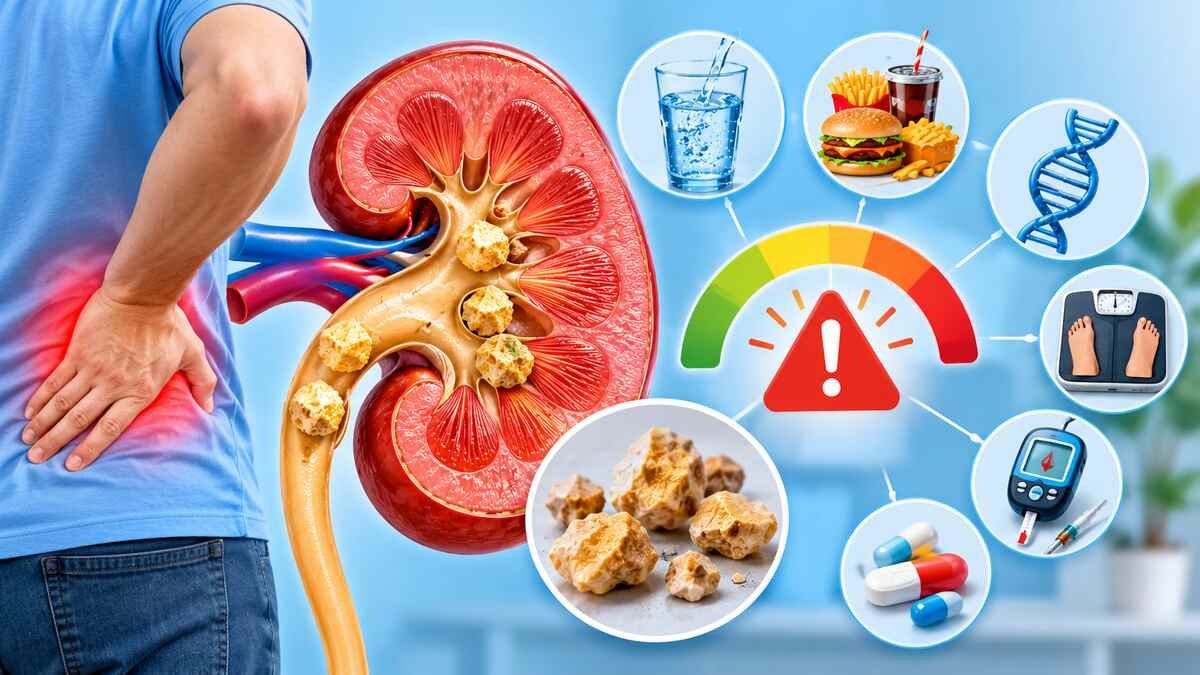

Kidney stones can affect people of nearly any age and background, but some people are more likely to develop them than others. They form when minerals and salts in urine become concentrated enough to clump together into hard deposits. According to the National Institute of Diabetes and Digestive and Kidney Diseases (NIDDK), the odds of having a stone at some point in life are meaningful for both men and women.
Risk rarely comes from a single cause. Dehydration, eating patterns, family history, medical conditions, medications, and daily habits can all shape urine chemistry in ways that make stones more or less likely. Some of these factors, such as genetics, cannot be changed. Others, such as fluid intake and sodium intake, often can.
This guide explains the main kidney stones risk factors in plain language, including how each one may contribute to kidney stone formation. It also covers practical steps to lower your risk and signs that it is time to talk with a healthcare professional. This is general information, not a diagnosis or personal medical advice.
What Are Kidney Stones and Why Do They Develop?
Kidney stones are hard, crystal-like masses that form in the kidneys and can travel through the urinary tract. Some are as small as a grain of sand and pass without notice. Others grow larger and cause significant pain or block urine flow.
Understanding how stones form makes the risk factors easier to follow.
How Do Kidney Stones Form?
Urine contains water along with dissolved minerals and salts, such as calcium, oxalate, phosphate, and uric acid. When urine is dilute, these substances usually stay dissolved and move out of the body. When there is too little fluid or too much of a particular substance, crystals can begin to form.
Over time, those crystals may stick together and grow into a stone. Urine chemistry matters here, including how acidic the urine is and how much of certain protective compounds, like citrate, it contains. The Mayo Clinic notes that stones typically develop when urine contains more crystal-forming substances than the fluid can dilute.
Different Types of Kidney Stones
There are four main types, and each has somewhat different causes:
- Calcium stones (calcium oxalate and calcium phosphate) are the most common type.
- Uric acid stones are linked to persistently acidic urine and certain metabolic conditions.
- Struvite stones are associated with some urinary tract infections.
- Cystine stones are rare and result from an inherited condition called cystinuria.
Because the type affects the cause, a risk factor that matters for one kind of stone may matter less for another. For a closer look at care once a stone has formed, see CollectedMed’s guide to kidney stone treatment options.
Dehydration and Low Fluid Intake
Not drinking enough fluid is among the most important and most changeable kidney stone risk factors. Both the National Kidney Foundation and NIDDK emphasize fluid intake as a cornerstone of prevention.
How Does Dehydration Increase Kidney Stone Risk?
When you take in too little fluid, your kidneys make less urine, and that urine is more concentrated. Minerals that would normally stay dissolved can reach levels where crystals start to form. Low urine volume also gives crystals more time to meet and stick together as urine moves through the kidneys.
This is why kidney stones and dehydration are so closely tied. It also explains why stone rates tend to be higher in hot regions, where people lose more fluid through sweat. For more on everyday fluid habits, see CollectedMed’s article on the benefits of hydration.
Who Is More Likely to Become Dehydrated?
Some people lose fluid more quickly or find it harder to keep up with their needs. Groups at higher risk of low urine volume include:
- People who work outdoors or in hot indoor settings
- People who exercise often or sweat heavily
- Those living in hot or humid climates
- People with vomiting or diarrhea
- Anyone who simply does not drink enough through the day
Fluid needs vary with health, activity level, climate, and medical conditions. Some people with heart or kidney disease must limit fluids, so personal targets should come from a healthcare professional.
Dietary Habits That Increase Kidney Stone Risk
Diet can change the makeup of your urine and, in turn, your risk for particular stone types. Still, no single food causes stones in everyone. The NIDDK guidance on diet and nutrition stresses that dietary advice depends on the type of stone a person has.
High Sodium Intake
Eating a lot of sodium causes the kidneys to release more calcium into the urine. Higher urinary calcium can raise the risk of calcium stones. Salt is not only what you add at the table. Much of it comes from packaged snacks, processed meats, canned soups, and restaurant meals.
Reading nutrition labels is a simple way to see how quickly sodium adds up. Our nutrition facts guide can help with that.
Excessive Animal Protein Consumption
Diets very high in animal protein, such as red meat, poultry, fish, and eggs, may raise the amount of uric acid in urine. They can also lower urinary citrate, a compound that helps keep crystals from forming. Both changes can increase the likelihood of certain stones.
Protein itself is not the problem. The concern is mainly very large portions or heavy reliance on animal sources. Readers curious about higher-protein eating patterns can read about high-protein foods and whether a high-protein diet is safe long term.
High Oxalate Foods
Oxalate is a natural compound found in many plant foods. Examples include:
- Spinach and rhubarb
- Almonds and some other nuts
- Beets
- Some chocolate products
For people who tend to form calcium oxalate stones, a healthcare professional may suggest limiting certain high-oxalate foods. For most people, cutting out all of these foods is unnecessary, and many are otherwise nutritious. You can learn more about a few of them in our articles on spinach, beetroot, and almonds.
Low Dietary Calcium Intake
It may seem logical to avoid calcium if you have calcium stones, but the opposite is often true. Calcium from food binds to oxalate in the digestive tract, so less oxalate gets absorbed and reaches the kidneys. When dietary calcium is too low, more oxalate may be absorbed.
Experts generally recommend normal calcium intake from food unless a clinician advises otherwise. Our list of calcium-rich foods offers ideas.
Genetics and Family History
Inherited factors play a real role in kidney stone risk. If close relatives have had stones, your own chances may be higher, though that does not mean you will develop one.
Are Kidney Stones Hereditary?
Family history is a recognized risk factor. Genes can influence how the body handles calcium, oxalate, and uric acid, and families often share eating habits and environments too, so it can be hard to separate the two.
Some conditions are clearly inherited. Cystinuria, for example, causes the kidneys to release too much cystine and leads to cystine stones, often starting early in life. People with a strong family history may benefit from discussing their personal risk with a clinician, since hereditary kidney stones and kidney stones and genetics are areas where testing can sometimes help.
Medical Conditions That Increase Kidney Stone Risk
Several health conditions can change urine chemistry, mineral metabolism, or how the urinary tract works.
Obesity and Metabolic Syndrome
Higher body weight is associated with changes in urine composition, including more acidic urine and higher levels of calcium, oxalate, and uric acid in some people. Obesity often goes along with insulin resistance and other metabolic changes. Together, these may raise the risk of certain stone types.
Learn more about metabolic syndrome and weight management in our related guides.
Diabetes and Insulin Resistance
Insulin resistance can affect how the kidneys handle acid, leading to persistently acidic urine. Acidic urine makes it easier for uric acid to crystallize, so people with type 2 diabetes face a higher risk of uric acid stones. The link shows why metabolic health and kidney stone formation are connected.
You can read more about insulin resistance and type 2 diabetes on CollectedMed.
Hyperparathyroidism
The parathyroid glands help regulate calcium in the blood. When they are overactive, blood calcium can rise, and more calcium is filtered into the urine. Excess urinary calcium can contribute to calcium-containing stones. Hyperparathyroidism is diagnosed with blood tests and is worth investigating in people with repeated calcium stones.
Digestive Diseases and Intestinal Conditions
Conditions that affect the intestines can raise calcium oxalate stone risk in some people. These include:
- Crohn’s disease
- Ulcerative colitis
- Chronic diarrhea
- Malabsorptive disorders
- Certain intestinal surgeries, including some weight-loss procedures
In these conditions, fat is not absorbed normally and can bind calcium in the gut. That leaves more oxalate free to be absorbed and passed into the urine. Chronic diarrhea can also cause fluid loss and lower urine volume.
Recurrent Urinary Tract Infections
Some bacteria produce an enzyme that makes urine less acidic and encourages struvite stones to form. These stones can grow quickly and may cause repeated infections. Most urinary tract infections do not cause kidney stones, but repeated infections, especially alongside stones, deserve medical attention.
Age, Gender, and Lifestyle Factors
Demographics and daily habits also shape risk, though they rarely act alone.
Does Age Affect Kidney Stone Risk?
Kidney stones can develop at almost any age, including in children and teenagers, though they are most often diagnosed in adulthood. Risk can shift over time as medical conditions, medications, diet, and activity levels change. Age by itself is not a reliable predictor of who will form a stone.
Are Men or Women More Likely to Develop Kidney Stones?
Historically, kidney stones have been more common in men than in women. Over recent decades, the gap appears to have narrowed, and stones are now seen more often in women than in the past. Researchers think hormonal, metabolic, dietary, and lifestyle factors may all play a part.
Gender is only one piece of the picture. A woman with several other risk factors may be at higher risk than a man with none, so kidney stone risk factors in men and women both deserve attention.
Sedentary Lifestyle and Physical Inactivity
Long periods of inactivity can affect how bones handle minerals, and prolonged immobilization can raise urinary calcium in some people. Regular movement supports weight control and metabolic health, which may indirectly lower risk. See our guides on the benefits of exercise and living with a sedentary lifestyle.
Hot Climate and Excessive Sweating
Heavy sweating pulls water out of the body, which makes urine more concentrated. People who work or exercise in the heat may need to drink more to offset these losses. This is the same mechanism behind the dehydration risk described earlier.
Medications and Supplements That May Increase Kidney Stone Risk
Some medicines and supplements can change urine chemistry. The risk depends on the product, the dose, and the person’s overall health.
Medications Associated With Kidney Stones
Examples linked to stone formation include:
- Topiramate, used for seizures and migraines
- Acetazolamide, used for glaucoma and altitude sickness
- Certain antiviral medications, such as indinavir for HIV
- Some medicines that change urinary calcium, acid, or uric acid levels
Never stop or change a prescribed medication on your own. If you are worried about your stone risk, talk with the prescriber or pharmacist first.
Supplements and Excessive Vitamin Intake
High-dose vitamin C supplements may raise urinary oxalate, and some research has linked them to a higher stone risk in men. High-dose vitamin D can increase calcium absorption and urinary calcium in some circumstances. Calcium supplements may also raise risk in some people, which is one reason calcium from food is usually preferred.
Because needs differ, check with a healthcare professional before starting a supplement, especially if you have had stones. For food-based options, see our guides to foods high in vitamin C and vitamin D benefits and sources.
Other Factors That May Increase Kidney Stone Risk
A few additional factors are worth knowing about:
- A previous kidney stone, which is one of the strongest predictors of another
- Recurrent stone formation
- Structural problems in the urinary tract, such as blockages or conditions like medullary sponge kidney
- Reduced urine flow
- Rare inherited metabolic disorders
If you have had one stone, you have a higher chance of forming another, which is why follow-up and prevention matter.
How to Reduce Your Risk of Developing Kidney Stones
Many people can lower their risk with steady, practical habits. Kidney stone prevention is most effective when it is matched to your stone type and health history.
Maintain Adequate Hydration
Aim to drink enough fluid to produce plenty of pale urine throughout the day. Guidelines from groups such as the European Association of Urology suggest a high daily urine volume for stone prevention, which often means drinking about 2.5 to 3 liters of fluid daily for people without fluid restrictions. Needs rise in hot weather or with heavy exercise. Water is generally the best choice.
Follow a Balanced Diet
A kidney stone diet does not have to be extreme. Helpful habits include:
- Limiting sodium from processed and restaurant foods
- Keeping normal dietary calcium intake
- Avoiding very large portions of animal protein
- Following personalized oxalate advice if you form calcium oxalate stones
- Eating plenty of fruits and vegetables
Our guides to a healthy diet and the DASH diet offer helpful background.
Maintain a Healthy Weight
Keeping a healthy weight and supporting metabolic health may help reduce certain risks. Gradual, sustainable changes in eating and activity are usually more effective than extreme diets. Rapid weight loss approaches can affect urine chemistry, so go slowly and ask for guidance if you have had stones.
Manage Underlying Medical Conditions
Keeping diabetes, hyperparathyroidism, digestive disorders, and recurrent urinary infections under good control may reduce stone risk. Regular checkups and following your treatment plan matter. Learn more about preventive health on CollectedMed.
Get Regular Medical Evaluation if You Have a History of Kidney Stones
People who have had stones may benefit from further testing. A doctor may suggest stone analysis, blood and urine tests, or a 24-hour urine collection to measure what your kidneys release. Based on results, a clinician may recommend targeted diet changes or preventive medication. The National Institute for Health and Care Excellence (NICE) also provides guidance on assessing and managing stones.
When Should You Talk to a Doctor About Kidney Stone Risk?
Consider seeing a healthcare professional if you:
- Have had more than one stone
- Have a strong family history of stones
- Have a known metabolic or inherited condition
- Notice blood in your urine
- Have ongoing pain in your side or back
- Have symptoms of a urinary infection
Fever or chills with suspected kidney stones, especially with severe pain or trouble urinating, need urgent medical care.
Conclusion
Kidney stones can result from a mix of genetic, dietary, medical, and lifestyle factors. Knowing your risk factors can help you make informed choices about hydration, nutrition, and preventive care. Talk with a qualified healthcare professional about your own risk.
Frequently Asked Questions
What is the biggest risk factor for kidney stones?
Low fluid intake is one of the most important and modifiable risk factors because it concentrates urine. A previous kidney stone is also a strong predictor of another one. Your own risk depends on several factors working together, so a clinician can help you sort out which ones matter most. (NIDDK)
Does drinking too little water cause kidney stones?
It can contribute. Low fluid intake produces less, more concentrated urine, which lets stone-forming minerals reach higher levels and crystallize. It is rarely the only cause, but staying well hydrated is one of the most consistent ways to lower risk. (National Kidney Foundation)
Are kidney stones hereditary?
Family history raises the chance of developing stones, and some types, such as cystine stones, are caused by inherited conditions. Shared diet and habits within families can also play a role. Having a relative with stones does not mean you will get them.
Which foods increase the risk of kidney stones?
Salty processed foods and very large portions of animal protein may raise risk for some people. High-oxalate foods, such as spinach, rhubarb, and beets, matter mainly for people prone to calcium oxalate stones. Most people do not need to eliminate them entirely. (NIDDK)
Does eating too much salt cause kidney stones?
A high-sodium diet increases the amount of calcium in urine, which can raise the risk of calcium stones. Salt alone does not cause stones in every person. Cutting back on processed and restaurant foods is a practical step for many people.
Can diabetes increase the risk of kidney stones?
Yes, type 2 diabetes and insulin resistance are associated with more acidic urine, which raises the risk of uric acid stones. Good blood sugar management and overall metabolic health may help. See our guide to type 2 diabetes.
Are men more likely to develop kidney stones than women?
Historically, stones were more common in men, but the gap has narrowed in recent years. Gender is only one factor, and hydration, diet, genetics, and medical conditions all matter. Women can and do develop kidney stones.
Can vitamin supplements increase kidney stone risk?
Some can. High-dose vitamin C may increase urinary oxalate, and high-dose vitamin D or calcium supplements may raise urinary calcium in certain people. Ask a healthcare professional before starting supplements, particularly if you have had stones.
Does obesity increase the risk of kidney stones?
Obesity is associated with changes in urine chemistry and often with insulin resistance, both of which may raise the risk of some stone types. Maintaining a healthy weight through gradual lifestyle changes may help lower that risk.
How can I prevent kidney stones naturally?
Drinking enough fluid, limiting sodium, eating a balanced diet with normal calcium intake, staying active, and managing weight can all help. Because the best approach depends on stone type, people who have had stones should get personalized advice. (European Association of Urology)
Sources
- National Institute of Diabetes and Digestive and Kidney Diseases (NIDDK): Symptoms & Causes of Kidney Stones
- NIDDK: Eating, Diet, & Nutrition for Kidney Stones
- National Kidney Foundation: Kidney Stones
- Mayo Clinic: Kidney Stones, Symptoms and Causes
- European Association of Urology: Urolithiasis Guidelines
- National Institute for Health and Care Excellence (NICE): Renal and Ureteric Stones, Assessment and Management
Medical Disclaimer: This article is for general educational purposes only and is not medical advice. It does not diagnose, treat, or replace care from a qualified healthcare professional. Talk with your doctor about your own risk factors, symptoms, medications, and supplements. If you have severe pain, fever, chills, or trouble urinating, seek urgent medical care.
1 thought on “Kidney Stones: 10 Common Risk Factors Explained”
Comments are closed.