
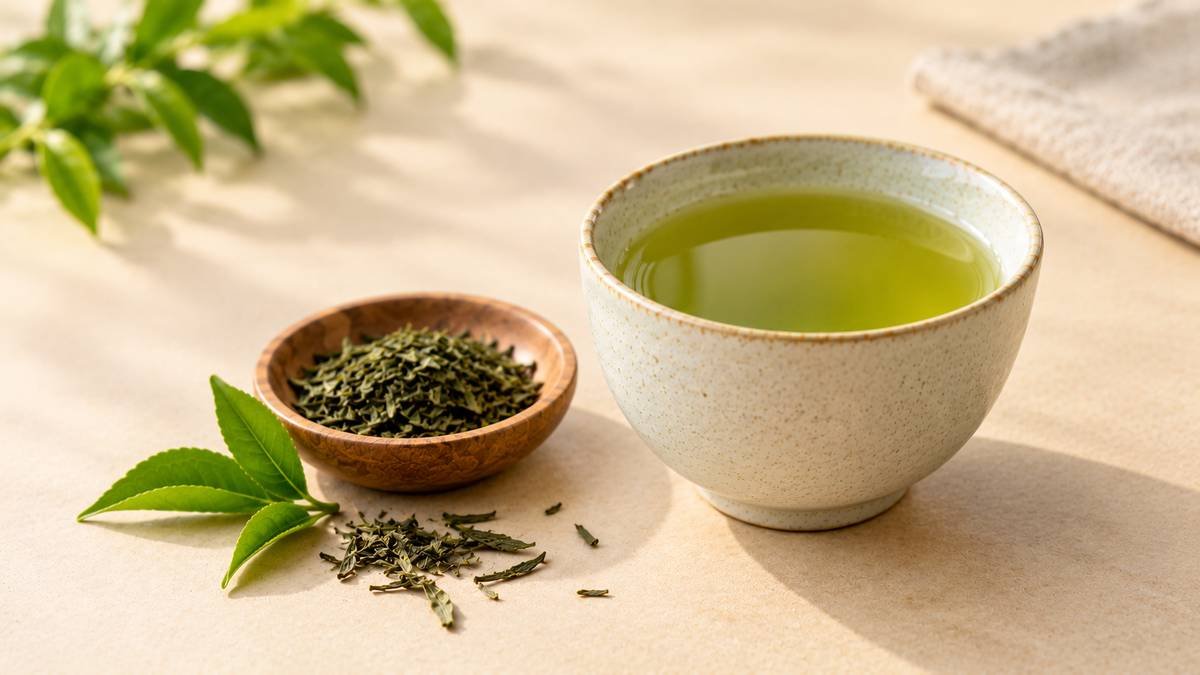

Green tea is not a proven treatment for acid reflux. It may trigger heartburn in some people, mostly because it contains caffeine. Others drink it every day with no symptoms at all.
The research is mixed. Some studies link tea to more reflux symptoms, while others find no overall connection. That means green tea is not a universal trigger, and it is not a safe bet for everyone either.
This guide explains what the evidence shows, how to tell whether green tea bothers you, and what to try if it does. You will also find tips on decaf, timing, and alternative drinks. The goal is to help you answer one practical question: can you keep drinking green tea if you have reflux?
Can Green Tea Cause or Worsen Acid Reflux?
For some people, yes. For many others, no. Individual response varies, and the science does not support a blanket rule.
Reflux, heartburn, and GERD
The National Institute of Diabetes and Digestive and Kidney Diseases (NIDDK) explains that gastroesophageal reflux (GER) happens when stomach contents come back up into the esophagus. Gastroesophageal reflux disease (GERD) is a more severe, long-lasting form. It causes repeated symptoms or complications over time.
Heartburn is the burning feeling in the chest that many people associate with reflux. Occasional heartburn is common. Persistent symptoms may point to GERD, which needs a clinician’s assessment. Our guide to common digestive problems covers other conditions that can feel similar.
Caffeinated drinks and symptoms
NIDDK notes that some people with GERD find that certain foods or drinks trigger symptoms. Its Barrett’s esophagus page lists coffee and other sources of caffeine among the items commonly linked to symptoms. Green tea contains caffeine, so it may fall into this group for some readers.
What the research shows
The evidence on tea itself is inconsistent. Here is a quick summary:
- Meta-analysis: A pooled analysis of 23 articles found no significant overall link between tea drinking and GERD. Subgroup results differed by region and study design.
- Large cohort study: In the Nurses’ Health Study II, women who drank more than six servings of tea per day had a higher risk of reflux symptoms than women who drank none (hazard ratio 1.26).
- Taiwanese population study: A study of 27,119 adults found that habitual tea drinkers had a lower prevalence of GERD than non-drinkers.
- Smaller Taiwanese study: Another analysis found that drinking coffee or tea was not linked to reflux symptoms after adjustment.
These studies are mostly observational. They show associations, not cause and effect. They also cover tea in general, not green tea specifically.
Occasional vs. persistent symptoms
If green tea gives you occasional heartburn, a small change may be enough. If you have symptoms often, tea is unlikely to be the whole story. Our article on what causes acid reflux explains the wider picture.
How Might Green Tea Affect the Digestive System?
Green tea can affect digestion in several ways, but most of them are not well proven. The caffeine is the part most often discussed in relation to reflux.
The caffeine factor
Green tea naturally contains caffeine. An 8-ounce cup typically has about 30 to 50 mg, compared with roughly 100 mg in brewed coffee. The amount depends on the tea type, serving size, water temperature, and steeping time. Matcha and sencha tend to be higher.
Caffeine is a possible trigger, not a guaranteed cause. Many people with reflux tolerate a small cup of green tea well.
Caffeine and the lower esophageal sphincter
NIDDK says GERD may develop when the lower esophageal sphincter (the muscle valve at the bottom of the esophagus) becomes weak or relaxes when it should not. Caffeine is often suggested as a factor that loosens this valve. The story is more complicated than “caffeine always raises stomach acid.”
A review of diet and GERD notes that data supporting specific dietary interventions is variable. That is a good reminder to treat mechanisms as possibilities, not certainties.
Polyphenols and the limits of the evidence
Green tea also contains polyphenols, including catechins. Some people assume these plant compounds soothe the stomach. There is no strong evidence that they relieve heartburn, so this article does not make that claim.
Findings on “tea” as a broad category may not apply equally to every type of green tea. Brewing style, strength, and portion size all differ.
Is Green Tea Safe If You Have GERD?
Many people with GERD can drink green tea without trouble. Others notice symptoms within minutes or hours. Your own response is the best guide.
Tolerance varies
Large guidelines do not tell everyone to avoid tea. A hospital summary of the Nurses’ Health Study II notes that American College of Gastroenterology and American Gastroenterological Association guidance does not recommend routine elimination of specific beverages. The 2022 ACG clinical guideline instead emphasizes lifestyle changes such as weight loss, diet adjustments, and head-of-bed elevation alongside medication when needed.
When to cut back
If green tea consistently causes heartburn or regurgitation, reduce it or pause it for a while. NIDDK says your doctor may recommend reducing or avoiding certain foods or drinks to see whether symptoms improve.
A simple tracking habit can help. Note what you drank, when, and how you felt in the following hours. After a couple of weeks, patterns often become clear.
Tea does not replace treatment
If you have frequent symptoms, you may need a broader plan. The ACG guideline describes proton pump inhibitors (PPIs) as the most effective medical treatment for GERD. Green tea should never replace prescribed or recommended reflux care.
See our guides on acid reflux treatment options and how to manage acid reflux at home for more.
Is Decaffeinated Green Tea Better for Acid Reflux?
Decaf green tea may be worth trying if caffeine seems to be your trigger. It is not a guaranteed fix. It is also not a proven reflux treatment.
What decaf removes
Decaffeination removes most of the caffeine but not all of it. Decaf teas typically contain around 1 to 8 mg per cup, compared with 30 to 50 mg for regular green tea. People with a medical reason to avoid all caffeine should ask a clinician about herbal options.
Reflux can still happen
Caffeine is only one possible trigger. Hot liquids, large servings, drinking on an empty stomach, or drinking right before lying down may also play a role. Decaf can still cause symptoms in some people.
Compare for yourself
Try regular green tea, decaf green tea, and plain water on different days. Keep portions and timing the same. Then compare how you feel.
| Option | Caffeine (approx. per 8 oz) | Possible effect on reflux | Notes |
|---|---|---|---|
| Regular green tea | 30 to 50 mg | May trigger symptoms in some people | Varies by brew strength and type |
| Decaf green tea | 1 to 8 mg | May be tolerated better if caffeine is the trigger | Not caffeine-free; not a treatment |
| Plain water | 0 mg | Not linked to reflux symptoms in large studies | A simple, neutral choice |
How to Drink Green Tea If You Experience Acid Reflux
If you enjoy green tea and want to keep it, small changes can help. Try one at a time so you can see what works.
- Start with a smaller serving. Have half a cup first. Stop if heartburn appears.
- Brew it lighter. Use cooler water and a shorter steep. This usually lowers caffeine.
- Try decaf. Switch for a week and compare.
- Skip it near bedtime. Evening tea may worsen nighttime symptoms in some people.
- Do not drink it on an empty stomach if that bothers you. Pair it with a light snack instead.
- Keep a food and symptom diary. Track tea, meal size, meal timing, and symptoms.
Mind your meal timing
NIDDK advises that if you have symptoms at night or when lying down, eating meals at least 3 hours before lying down may improve them. This applies to drinks and snacks too.
Focus on your own triggers
A universal “forbidden foods” list is less useful than knowing your own patterns. Our article on what makes acid reflux worse can help you spot common culprits. Your overall eating pattern also matters. See what makes a balanced diet and our list of healthy foods to include in your diet.
For more on regular tea habits, read whether you can drink green tea every day.
What Can You Drink Instead of Green Tea for Acid Reflux?
If green tea bothers you, there are other options. None of them is a cure, but some are easier on many people.
Plain water
Water is the simplest choice. In the Nurses’ Health Study II, replacing two servings a day of coffee, tea, or soda with water was associated with a modestly lower risk of reflux symptoms. The effect was small, but water has no downside.
Non-caffeinated drinks
If caffeine is your trigger, a caffeine-free drink may be worth trying. Herbal teas vary a lot. Mint is on NIDDK’s list of foods and drinks commonly linked to GERD symptoms, so peppermint tea may worsen reflux for some people.
Avoid cure claims
Ginger, chamomile, and other herbal drinks are often marketed for digestion. Evidence that they treat GERD is limited. Our article on ginger and acid reflux looks at what is known.
Read the label
Prepared drinks can hide triggers. Check for caffeine, mint, citrus, or added acids. NIDDK lists acidic foods and alcoholic drinks among the items commonly linked to symptoms.
When Should You Seek Medical Advice for Acid Reflux?
See a clinician if symptoms are frequent, persistent, or getting worse. Changing your tea habits is not a substitute for a medical evaluation.
Reasons to make an appointment
Mayo Clinic advises seeing a health care professional if you have heartburn more than twice a week, or if symptoms continue despite nonprescription medicine. A clinician can check whether your symptoms are due to GERD or something else. Our guide on when to see a doctor for acid reflux has more detail.
Warning signs that need prompt assessment
NIDDK says to see a doctor for chest pain, trouble swallowing, or signs of bleeding in the digestive tract. Clinicians also treat persistent vomiting and unexplained weight loss as reasons for prompt evaluation. The ACG guideline reserves endoscopy for patients with alarm symptoms such as difficulty swallowing or bleeding.
Chest pain can be an emergency
Do not assume chest pain is reflux. Mayo Clinic advises seeking help right away for chest pain with shortness of breath, or jaw or arm pain, which may signal a heart attack. Sweating and dizziness are also reasons to call emergency services. Read more in our guide on when chest pain is an emergency.
Medication may be appropriate
Depending on how often you have symptoms, a clinician may recommend over-the-counter or prescription medicine. This decision is individual. Do not start, stop, or change medication on your own.
Frequently Asked Questions
Is green tea acidic?
Brewed green tea is generally close to neutral and much less acidic than citrus juice or tomatoes. Acidity alone does not predict whether a drink will trigger reflux. Caffeine, serving size, and timing may matter more for some people.
Does green tea make acid reflux worse?
It can for some people, but not for everyone. A pooled analysis of tea studies found no significant overall link with GERD. Track your own symptoms to see how you respond.
Is green tea better than coffee for acid reflux?
Green tea has less caffeine than coffee, so it may be gentler for some people. In the Nurses’ Health Study II, both coffee and tea were associated with more reflux symptoms at high intake. Individual tolerance still decides.
Can I drink green tea at night if I have GERD?
It may be best to avoid it close to bedtime. NIDDK advises finishing meals at least 3 hours before lying down if you have nighttime symptoms. Decaf or water may be better evening choices.
Is decaf green tea good for acid reflux?
It may help if caffeine is your trigger, but it is not proven. Decaf still contains a small amount of caffeine. Try it for a week and compare how you feel.
What is the best drink for acid reflux?
There is no single best drink. Plain water is a simple option, and swapping caffeinated drinks for water was linked to fewer symptoms in one large study. The right choice depends on your personal triggers.
Conclusion: Let Your Symptoms Guide Your Tea Choices
Green tea may aggravate reflux in some people, but it is not a universal trigger. The research is mixed, and most of it cannot prove cause and effect. Your own symptoms are the most useful guide.
If green tea bothers you, try a smaller serving, a lighter brew, decaf, or plain water. Keep tea away from bedtime. If heartburn is frequent or you have warning signs, talk with a clinician. Green tea is a drink to enjoy sensibly, not a treatment for reflux.
Sources
- NIDDK: Acid Reflux (GER & GERD) in Adults
- NIDDK: Eating, Diet, & Nutrition for GER & GERD
- NIDDK: Symptoms & Causes of GER & GERD
- NIDDK: Eating, Diet, & Nutrition for Barrett’s Esophagus
- Katz PO, et al. ACG Clinical Guideline for the Diagnosis and Management of GERD. Am J Gastroenterol, 2022
- Cao H, et al. Association between tea consumption and gastroesophageal reflux disease: a meta-analysis. Medicine, 2019
- Association between beverage intake and incidence of gastroesophageal reflux symptoms. Clin Gastroenterol Hepatol, 2020
- Massachusetts General Hospital: Coffee, tea and soda and risk of gastroesophageal reflux
- Habitual tea consumption and GERD prevalence in a Taiwanese population study. Int J Med Sci, 2026
- The role of tea and coffee in the development of GERD. Tzu Chi Medical Journal, 2019
- The role of diet in the development and management of GERD (review). PMC
- Mayo Clinic: Heartburn
- Mayo Clinic: Gastroesophageal reflux disease (GERD)
- Healthline: Caffeine in green tea
- Complete Home Barista: How much caffeine is in decaf tea?
Medical Disclaimer: This article is for general information only. It is not medical advice, and it does not replace care from a doctor, pharmacist, or other qualified health professional. Do not diagnose yourself or change, start, or stop any medicine without talking to your healthcare provider. If you have chest pain, trouble swallowing, ongoing symptoms, or any symptoms that worry you, please contact a clinician. Call emergency services right away for chest pain with shortness of breath, sweating, dizziness, or pain spreading to the arm or jaw.