
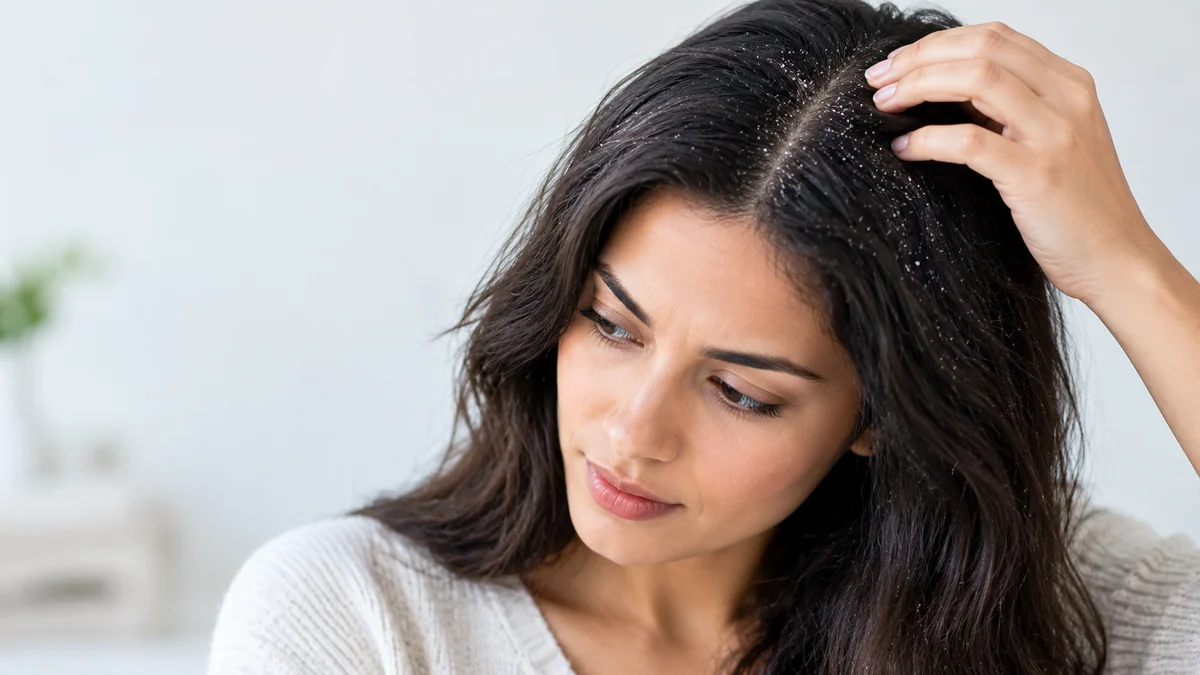

Dandruff is a common scalp condition that causes white or grayish flakes of skin and, often, an itchy scalp. It is not contagious and usually not serious, but it can be persistent and frustrating. Several factors can contribute, including scalp oil, yeast that naturally lives on the skin, irritation, and certain skin conditions.
This guide explains what dandruff is, what may cause it, and how it differs from similar scalp problems. It also covers treatment options, prevention, and when to see a healthcare professional.
What Is Dandruff?
Dandruff is a common scalp condition marked by flaking skin, often with itching. The flakes can be visible in the hair or on the shoulders and clothing. It can be mild and occasional or more persistent.
Dandruff is commonly associated with seborrheic dermatitis, an inflammatory skin condition that can cause flaky, scaly, and sometimes oily skin. Scalp flaking can also have other causes, so not every flaky scalp is dandruff. Mayo Clinic describes dandruff as a common condition that is neither contagious nor usually serious.
Is Dandruff a Medical Condition?
Dandruff is a common scalp problem, and it can sometimes be linked to an underlying skin condition such as seborrheic dermatitis. Most cases are mild and can be managed with over-the-counter products. Persistent or severe cases may need evaluation by a healthcare professional.
Is Dandruff Contagious?
No. Dandruff is not considered contagious, so you cannot catch it from or pass it to another person through contact or shared items. (Mayo Clinic)
Is Dandruff Caused by Poor Hygiene?
Dandruff is not simply the result of poor hygiene. Contributing factors can include scalp oil, hair-care habits, yeast on the skin, and certain skin conditions, according to the American Academy of Dermatology (AAD). Infrequent shampooing may let flakes build up and become more noticeable, but it is rarely the only explanation.
What Causes Dandruff?
Dandruff usually has more than one contributing factor, and the mix differs from person to person. The sections below describe the most commonly discussed ones.
Seborrheic Dermatitis
Seborrheic dermatitis is one of the most common underlying explanations for dandruff. It can cause red, greasy, or scaly skin and flaking, most often on the scalp. It can also affect other oily areas of the body, such as the face. The AAD and MedlinePlus provide detailed overviews.
Malassezia Yeast
Malassezia is a yeast that normally lives on the skin of most adults. In some people, it may contribute to irritation and flaking. This does not mean everyone with dandruff has an infection, and the yeast is present on many people without causing symptoms.
Oily Skin and Scalp
Scalp oil (sebum) is closely tied to dandruff and seborrheic dermatitis. Oily skin and hair may increase the likelihood of flaking in some people. Oil can also cause skin cells to clump together, which may make flakes larger and easier to see.
Dry or Irritated Scalp
Dry scalp and dandruff can look alike, but they are not necessarily the same problem. Dry skin, cold or dry weather, and irritation can all cause flaking. Mayo Clinic lists dry skin and contact dermatitis (a reaction to hair products) among the possible causes of flaky scalp.
Hair and Scalp Care Habits
Some hair products can irritate the scalp and cause flaking or redness in sensitive people. Washing too infrequently may allow flakes and oil to build up. Washing too often with harsh products may dry or irritate the scalp for some people. The right balance depends on your hair type and scalp.
Other Skin Conditions
Several conditions can cause scalp flaking or look like dandruff, including:
- Psoriasis
- Eczema
- Contact dermatitis
- Fungal infections of the scalp (tinea capitis, also called scalp ringworm)
Appearance alone cannot reliably tell these conditions apart, so a clinician’s evaluation may be needed if symptoms are unusual or persistent.
Weather and Environmental Factors
Cold, dry weather may worsen dandruff symptoms for some people, and symptoms may ease in warmer months. Not everyone experiences this seasonal pattern. (Mayo Clinic)
Stress and Other Factors
Stress may worsen symptoms or contribute to flare-ups in some people, although it is not considered a direct cause of dandruff. If stress seems to trigger your flare-ups, our guide on how to reduce stress offers practical strategies.
Dandruff Risk Factors
Some factors may make dandruff or seborrheic dermatitis more likely. These are associations, not guarantees. Many people with these factors never develop dandruff.
- Oily skin or scalp: More scalp oil may increase the likelihood of flaking.
- Age: Dandruff often begins in young adulthood and can continue through middle age, according to Mayo Clinic.
- Hair-care practices: Infrequent shampooing or irritating products may contribute for some people.
- Cold or dry weather: Symptoms may flare in colder months.
- Stress: Stress may worsen symptoms in some people.
- Certain medical conditions: Mayo Clinic notes that some neurological conditions and weakened immune systems are associated with seborrheic dermatitis. Anyone with such a condition and new scalp symptoms should discuss them with their clinician.
Dandruff Symptoms
Common Symptoms of Dandruff
The most common signs of dandruff include:
- White or grayish flakes on the scalp
- An itchy scalp
- Flakes visible in the hair
- Flakes on the shoulders or clothing
- Mild scalp irritation
What Does Dandruff Look Like?
Dandruff flakes are usually white or grayish and may be dry or slightly oily. In seborrheic dermatitis, the scales can look white to yellowish, and the skin underneath may be oily or inflamed. (MedlinePlus)
Appearance can vary across skin tones. Redness may be less obvious on darker skin, and the affected skin may look lighter or darker than the surrounding area. Because several conditions look similar, appearance alone is not a reliable way to diagnose yourself.
Can Dandruff Cause an Itchy Scalp?
Yes. Itching is one of the most common dandruff symptoms. Scratching can irritate the skin further, so try to avoid scratching hard or picking at flakes.
Can Dandruff Cause Hair Loss?
Ordinary dandruff is not considered a direct cause of permanent hair loss. However, intense scratching, significant inflammation, or another scalp condition may lead to some hair shedding or breakage. If you notice thinning, patchy loss, or shedding that does not settle, see our guide to hair loss and consider a medical evaluation.
Dandruff vs. Dry Scalp
Dandruff and dry scalp both cause flaking and itching, and they can overlap. The comparison below describes general tendencies.
| Feature | Dandruff | Dry Scalp |
|---|---|---|
| Flakes | Often larger or more noticeable | Often smaller and drier |
| Scalp oil | May be oily | Often dry |
| Itching | Common | Can occur |
| Common contributors | Seborrheic dermatitis, oil, yeast, scalp factors | Dry skin, environment, irritation |
| Typical approach | May need medicated dandruff shampoo | Often gentle hair and scalp care |
Symptoms can overlap, and a person may have features of both. If symptoms are persistent or severe, a professional evaluation can help identify the cause.
Dandruff vs. Other Scalp Conditions
Dandruff vs. Seborrheic Dermatitis
Dandruff is often considered a mild form of seborrheic dermatitis. Seborrheic dermatitis can involve more noticeable redness, greasy scaling, and areas beyond the scalp, such as the eyebrows, sides of the nose, or behind the ears.
Dandruff vs. Psoriasis
Scalp psoriasis may cause thicker, more clearly defined scaly plaques that can extend beyond the hairline. It can look similar to severe dandruff, so a clinician may be needed to tell them apart.
Dandruff vs. Eczema
Eczema (atopic dermatitis) can also cause an itchy, irritated, flaky scalp. It may occur with eczema elsewhere on the body.
Dandruff vs. Scalp Ringworm
Tinea capitis is a fungal infection that is different from ordinary dandruff. It may cause scaly patches, hair breakage, or hair loss, and it typically needs prescription treatment. It is particularly important to have evaluated in children.
These comparisons are meant to help you understand the possibilities, not to diagnose yourself.
How Is Dandruff Diagnosed?
Uncomplicated dandruff can often be recognized from your symptoms and the appearance of your scalp. Mayo Clinic notes that a healthcare professional can often diagnose dandruff by examining the hair and scalp.
A clinician may ask about:
- How long you have had symptoms
- Your hair-care products and routine
- Other skin conditions or health problems
- Medications you take
- Treatments you have already tried
If the diagnosis is unclear, or if symptoms do not respond to treatment, additional evaluation may be needed to look for psoriasis, eczema, a fungal infection, or another cause.
How to Treat Dandruff
Treatment depends on severity and individual factors. Many people improve with regular washing and an over-the-counter medicated shampoo.
Regular Hair Washing
Regular washing can help remove excess oil and loose skin flakes. This does not mean everyone needs to wash daily. The right frequency depends on your hair texture, scalp oiliness, and the products you use.
Medicated Dandruff Shampoos
Several active ingredients are commonly used in over-the-counter dandruff shampoos. According to Mayo Clinic, these include:
- Zinc pyrithione: Helps reduce yeast and flaking on the scalp
- Selenium sulfide: Slows the turnover of skin cells and may reduce yeast
- Ketoconazole: An antifungal ingredient
- Salicylic acid: Helps loosen and remove scale
- Coal tar: Slows the turnover of skin cells
- Sulfur: Sometimes found in scalp products
These ingredients work in different ways, and the best choice and frequency depend on the product, your hair type, and how your scalp tolerates it. Some can cause side effects. For example, tar-based products may discolor light hair and increase sun sensitivity, and selenium sulfide may discolor hair in some cases. Read the label carefully.
How to Use Dandruff Shampoo Correctly
Follow the directions on your product, which may differ from regular shampoo. In general:
- Apply the shampoo to the scalp, not just the hair.
- Gently massage it into the scalp.
- Leave it on for the time stated on the label.
- Rinse thoroughly.
- Use it at the recommended frequency.
The AAD notes that some dandruff shampoos need to stay on the scalp for several minutes before rinsing.
Choosing a Dandruff Shampoo for Your Hair Type
The AAD notes that how often to use dandruff shampoo can differ by hair texture and scalp characteristics. Some points to consider:
- Straight or fine hair: May get oily faster and tolerate more frequent washing.
- Curly or coily hair: Often becomes dry with frequent washing, so the schedule may need adjusting. Applying the product directly to the scalp can help.
- Dry hair: Follow a medicated shampoo with a moisturizing conditioner on the hair lengths, keeping it off the scalp if directed.
- Oily scalp: May benefit from more frequent washing.
- Color-treated hair: Check the label, because some active ingredients may affect color.
What If One Dandruff Shampoo Does Not Work?
Different ingredients work in different ways, so a product that does not help you may be replaced by one with another active ingredient. Mayo Clinic notes that some people alternate shampoos if one seems to lose effectiveness. Give each product a fair trial as directed rather than switching constantly.
Prescription Treatments
If over-the-counter treatment is not enough, a dermatologist may recommend stronger medicated shampoos or topical medications. Options may include prescription antifungal products or topical corticosteroids when appropriate, as described by the AAD. Your clinician should individualize any prescription treatment.
How to Get Rid of Dandruff Fast
There is no guaranteed instant cure for dandruff. Mild dandruff often improves with appropriate shampooing and treatment, but medicated shampoos usually need repeated use over time.
Keep these points in mind:
- Results vary from person to person.
- Treatment works best when matched to the underlying cause.
- Persistent dandruff may need professional evaluation.
- Dandruff often comes back, so ongoing maintenance may help.
Be cautious about products or home remedies that promise rapid or permanent results.
How to Prevent Dandruff
Dandruff can return even after it improves, so prevention usually means ongoing scalp care rather than a one-time fix.
Use Dandruff Shampoo as Directed
Some people benefit from continued periodic use of a dandruff shampoo after symptoms improve. The AAD discusses ongoing use as part of managing seborrheic dermatitis. Ask a clinician if you are unsure how often to use it.
Follow a Consistent Scalp-Care Routine
Wash at a frequency that suits your hair type and scalp, and handle your scalp gently. Avoid scratching hard.
Avoid Irritating Hair Products
If a product seems to make your scalp itchy, red, or flaky, consider stopping it. Heavy styling products and harsh treatments may worsen irritation in some people.
Protect Your Scalp
Sun protection matters, especially if you have thinning hair or use products that can increase sun sensitivity. The AAD notes this in its dandruff guidance.
Identify Personal Triggers
Some people notice flare-ups with weather changes, stress, or certain products. Keeping track of patterns may help you adjust your routine. Good sleep and stress management may also support overall skin health, though evidence specific to dandruff is limited. See our guides on how to improve sleep and healthy living tips.
When to See a Doctor or Dermatologist for Dandruff
Self-care is not always enough. Consider professional evaluation if:
- Symptoms do not improve after several weeks of appropriate dandruff shampoo use
- Symptoms are severe or getting worse
- Your scalp is significantly red, painful, swollen, or bleeding
- You have sores, crusting, or signs of infection
- Hair loss is significant or unexplained
- Flaking or rash affects areas beyond the scalp
- You are unsure of the diagnosis
- Symptoms interfere with daily life
The AAD recommends seeing a dermatologist if dandruff does not improve with home treatment or if it is severe.
Dandruff in Different Hair Types and Textures
Dandruff affects people of all hair types, but the best routine can differ.
- Straight and wavy hair: Oil spreads easily along the hair, so the scalp may feel oily sooner, and more frequent washing is often tolerated.
- Curly, coily, and textured hair: Natural oils travel less easily down the hair shaft, and frequent washing may cause dryness. The AAD notes that dandruff shampoo frequency may differ by hair texture, so the schedule may need to be adapted. Focus the shampoo on the scalp, and follow with conditioner on the lengths.
- Protective styles: Braids, twists, and similar styles can make scalp care harder. Tight styles may also strain the hair and scalp, so see our guide to hair loss for more on tension-related damage.
No single routine works for everyone. A dermatologist can help tailor a plan, especially if you have both dandruff and dryness.
Common Questions About Dandruff
What causes dandruff?
Dandruff is commonly linked to seborrheic dermatitis, scalp oil, Malassezia yeast, dry or irritated skin, and certain hair products. Other skin conditions can also cause flaking. Causes often overlap. (Mayo Clinic)
Is dandruff contagious?
No. Dandruff is not contagious, so you cannot catch it from or give it to another person. (Mayo Clinic)
Is dandruff caused by poor hygiene?
No, not by itself. Dandruff has several contributing factors, including scalp oil, yeast, and skin conditions. Infrequent washing can make flakes more noticeable, but hygiene is not the main cause. (AAD)
Can dandruff cause hair loss?
Ordinary dandruff does not directly cause permanent hair loss. Heavy scratching, inflammation, or another scalp condition may lead to shedding. If hair loss is significant or unexplained, see a healthcare professional. See also our overview of hair loss.
Is dandruff the same as seborrheic dermatitis?
Not exactly. Dandruff is often considered a mild form of seborrheic dermatitis, which can involve more inflammation and areas beyond the scalp. (Mayo Clinic)
What is the best shampoo for dandruff?
There is no single best shampoo for everyone. The right choice depends on your symptoms, hair type, and tolerance for the active ingredient. Common options include zinc pyrithione, selenium sulfide, ketoconazole, salicylic acid, and coal tar. (Mayo Clinic)
How often should I wash my hair if I have dandruff?
It varies with hair texture, scalp oiliness, the product, and your symptoms. Follow the product label and ask a clinician for guidance if you are unsure. The AAD notes that frequency may differ by hair type.
How long does it take for dandruff shampoo to work?
It varies. Some people notice improvement within a few weeks of consistent use, while others need a different product or a prescription treatment. If there is no improvement after several weeks, consider seeing a dermatologist. (Mayo Clinic)
Can dandruff go away permanently?
Dandruff can often be controlled, but it commonly returns. Many people need ongoing or periodic treatment to keep symptoms away.
Can stress cause dandruff?
Stress may worsen flare-ups in some people, but it is not considered a direct cause. Managing stress may help overall wellbeing, and our guide on how to reduce stress offers practical tips.
Can dandruff cause an itchy scalp?
Yes. Itching is one of the most common symptoms. If itching is intense or comes with redness, swelling, or sores, see a healthcare professional.
What is the difference between dandruff and dry scalp?
Dandruff flakes tend to be larger and may come with an oily scalp, while dry scalp flakes tend to be smaller and the scalp feels dry. The two can overlap, so a clinician can help if you are unsure. (AAD)
When should I see a dermatologist for dandruff?
See one if symptoms do not improve after several weeks of appropriate treatment, are severe, or involve pain, swelling, sores, or significant hair loss. Also seek care if you are unsure of the diagnosis. (AAD)
Sources
- American Academy of Dermatology. Seborrheic dermatitis: Diagnosis and treatment
- American Academy of Dermatology. How to treat dandruff
- American Academy of Dermatology. How to treat dandruff (scalp care)
- MedlinePlus. Seborrheic dermatitis
- Mayo Clinic. Dandruff: Symptoms and causes
- Mayo Clinic. Dandruff: Diagnosis and treatment
Medical Disclaimer
This article is for general educational purposes and does not replace professional medical advice, diagnosis, or treatment. If you have persistent, severe, or concerning scalp symptoms, consult a qualified healthcare professional.
Read our full Medical Disclaimer.