
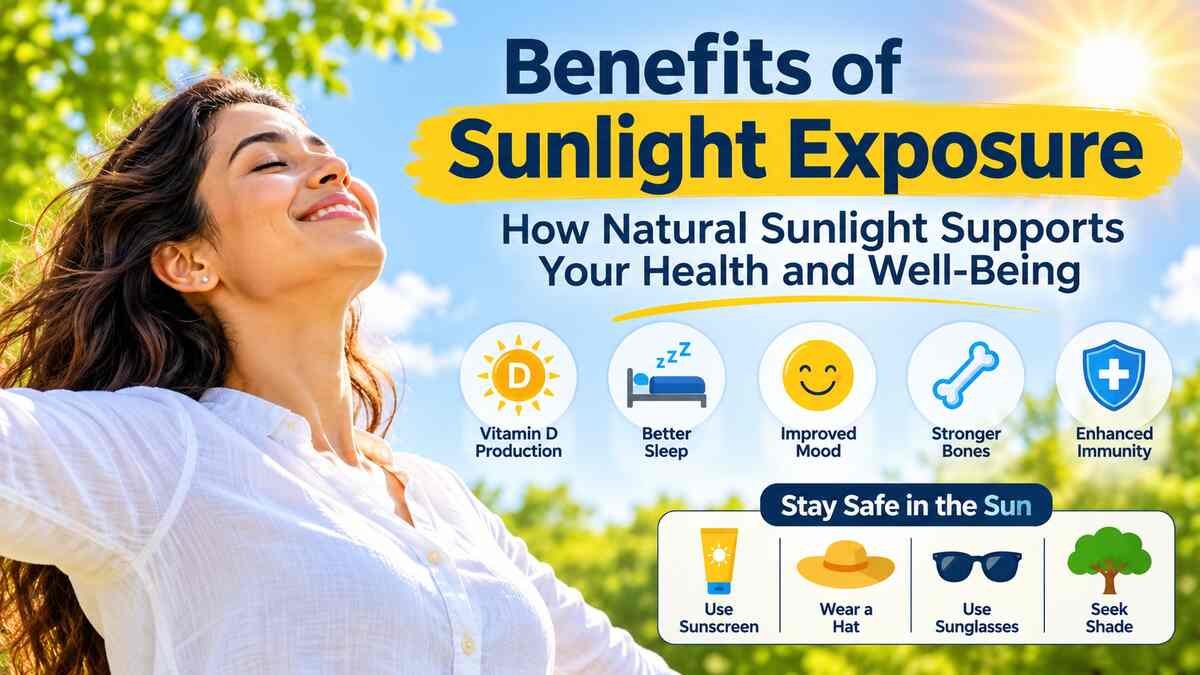

Sunlight exposure is one of the most familiar parts of daily life, yet it affects the body in ways many people never think about. Natural daylight helps set the internal body clock, and sunlight’s ultraviolet (UV) rays allow the skin to make vitamin D. Both processes support general health and well-being.
Daylight and UV radiation are not the same thing, and the difference matters. Visible light helps regulate sleep-wake patterns and daily alertness, while UVB radiation is the part of sunlight involved in vitamin D production. UV rays also cause sunburn, skin aging, and skin cancer when exposure is excessive, which is why the World Health Organization (WHO) treats UV radiation as a significant public health concern.
This guide explains the potential benefits of sunlight exposure, how sunlight affects the body, and what the evidence says about “how much is enough.” It also covers practical ways to enjoy the outdoors safely and clears up common myths. Sunlight is an important environmental factor in health, but it is not a treatment or cure for any medical condition.
What Is Sunlight Exposure?
Sunlight exposure is the amount of natural light from the sun that reaches a person, whether through outdoor activity, daylight indoors, or direct contact with the skin. It is helpful to separate two ideas. Spending time outdoors in daylight is not the same as exposing uncovered skin to UV radiation.
Understanding Natural Sunlight
Sunlight is not constant. Its intensity changes with latitude, season, time of day, altitude, cloud cover, and surface reflection from water, sand, or snow. Clouds can reduce visible brightness, but a good share of UV radiation can still reach the ground on an overcast day.
This is why a cool, cloudy day can still lead to sunburn. How bright it looks outside is not a reliable guide to UV strength.
Understanding the Different Types of Sunlight
Sunlight includes visible light and ultraviolet radiation, and UV is divided into three types. The CDC and WHO both describe how these types differ in their effects on the body.
| Type | Basic explanation |
|---|---|
| UVA | Penetrates deeper into the skin and contributes to skin aging and damage. |
| UVB | Plays a role in vitamin D production but also causes sunburn and skin damage. |
| UVC | Mostly absorbed by Earth’s atmosphere and does not normally reach the ground. |
Visible daylight helps regulate the body’s internal clock. Vitamin D production in the skin, by contrast, requires UVB radiation.
7 Potential Benefits of Sunlight Exposure
Some benefits below are well-established biological functions. Others are associations that need more research. Where evidence is limited or varies by person, the article says so.
1. Supports Vitamin D Production
When UVB radiation reaches the skin, it triggers a process that leads to the production of vitamin D. According to the NIH Office of Dietary Supplements, vitamin D helps the body absorb calcium and phosphorus, supports bone development and maintenance, and contributes to normal muscle and immune function.
Sunlight is only one source. Vitamin D also comes from foods such as fatty fish and fortified products, and from supplements when appropriate. You can learn more in CollectedMed’s guide to vitamin D benefits, food sources, and deficiency and its list of foods high in vitamin D.
Deliberate unprotected UV exposure is not recommended as a vitamin D strategy. No universal exposure time guarantees adequate vitamin D without raising UV-related risks.
2. Helps Regulate the Circadian Rhythm
The circadian rhythm is the body’s roughly 24-hour internal timing system. It influences when you feel sleepy or alert, and it also affects body temperature and hormone release. Daylight is one of the strongest environmental signals that keeps this system aligned with the day-night cycle.
Regular daytime light can be especially relevant for people with irregular schedules, such as shift workers. CDC and NIOSH research on work schedules highlights how disrupted light-dark patterns can affect the body clock. This effect depends mainly on visible light, not UV radiation.
3. May Support Better Sleep Patterns
Light exposure during the day is linked with the timing of sleep at night. Morning daylight can help reinforce a natural sleep-wake schedule, particularly when paired with consistent bedtimes and wake times. The CDC’s sleep guidance emphasizes regular sleep routines as a foundation of healthy sleep.
Reducing bright light close to bedtime also helps. Sunlight is not a cure for insomnia or other sleep disorders, and people with ongoing sleep problems should talk with a clinician. For practical steps, see CollectedMed’s guides on how to improve sleep and how to build a sleep schedule.
4. May Influence Mood and Emotional Well-Being
Many people notice that their mood shifts with the seasons. Seasonal affective disorder (SAD) is a type of depression that follows a seasonal pattern, usually beginning in fall and winter when daylight hours shorten, according to the National Institute of Mental Health.
Researchers think changes in daylight and biological rhythms may play a role in mood regulation. However, sunlight exposure alone is not a treatment for depression or any other mental health condition. Anyone with persistent low mood should seek professional support. For broader context, see CollectedMed’s overview of sleep and mental health and what mental health means.
5. Supports Normal Bone Health
Bone health is closely tied to vitamin D because the vitamin helps the intestines absorb calcium. Adequate vitamin D matters during childhood growth and throughout adulthood. When levels are very low over time, bones may not mineralize properly, which can lead to conditions such as rickets in children and osteomalacia in adults.
This benefit connects to the body’s own vitamin D production, but it does not mean extra UV exposure is advisable. Calcium and vitamin D from food and, when needed, supplements are also important. See CollectedMed’s list of calcium-rich foods.
6. Encourages Outdoor Physical Activity
Sunny days often make it easier to walk, cycle, garden, or play outside. Much of the health value here comes from movement and the outdoor environment, not from UV radiation itself. Regular activity supports heart health, mood, and sleep.
Choose activities that suit your abilities and the weather. CollectedMed offers more on the benefits of walking for health, morning walk health benefits, and the benefits of regular physical activity.
7. Provides Natural Daylight for Daily Alertness
Light signals help the body maintain daily activity patterns. Bright daytime environments are generally associated with greater alertness, and many people find that spending time in naturally lit spaces supports their daily routine.
Individual responses vary. Some people feel noticeably more energized by daylight, while others feel little difference. A bright window, a short outdoor break, or a walk at lunchtime can all provide daylight without seeking intense UV exposure.
How Sunlight Affects the Body
The Skin’s Response to Sunlight
When UV radiation reaches the skin, several things happen. UVB triggers vitamin D production, as described above. At the same time, UV rays can damage the DNA in skin cells.
The skin defends itself with melanin, the pigment that gives skin its color. Melanin absorbs some UV radiation and offers a degree of natural protection. Tanning is the skin’s response to UV damage, not a sign of health, and melanin does not provide complete protection. The National Cancer Institute explains how repeated UV damage can accumulate over time.
The Brain’s Response to Natural Light
The body’s internal clock is coordinated by a small region in the brain. Specialized light-sensitive cells in the retina of the eye detect environmental light and send that information to this region. These cells respond mainly to bright, blue-rich light such as daylight, and they do not depend on vision in the usual sense.
Through this pathway, light exposure helps determine when you feel sleepy and when you feel awake. Consistent timing of light and darkness helps keep sleep-wake rhythms stable.
The Relationship Between Sunlight and Hormonal Rhythms
Light and darkness influence the timing of melatonin, a hormone that signals nighttime to the body. Bright light in the evening can delay melatonin release, while regular exposure to daylight helps anchor the daily rhythm.
Sunlight is only one signal among several. Meal timing, physical activity, sleep habits, and genetics also shape these rhythms. Claims that sunlight directly increases specific hormones are not well supported, so this article focuses on timing effects rather than hormone levels.
How Much Sunlight Exposure Is Healthy?
Is There a Recommended Amount of Sunlight Exposure?
There is no single sunlight exposure duration that is right for everyone. Skin pigmentation, age, geographic location, season, cloud cover, clothing, and UV intensity all change how much UVB the skin receives and how much vitamin D it makes.
For this reason, vitamin D needs cannot be converted into a fixed number of minutes in the sun. The NIH also notes that individual vitamin D status depends on diet, supplements, and other factors. Because of these variables, health authorities generally focus on safe sun habits rather than prescribed exposure times.
Why the UV Index Matters
The UV Index (UVI) is an international scale that describes the strength of UV radiation at a given place and time. Higher numbers mean greater potential for skin and eye damage and a shorter time to sunburn.
The WHO explains that sun protection is recommended when the UV Index reaches 3 or above. Checking your local UV forecast before going outside is a simple way to plan your day.
Does Sunlight Exposure Through Windows Provide Vitamin D?
Not effectively. Ordinary window glass blocks most UVB radiation, so sitting by a sunny window is unlikely to support vitamin D production. Some UVA can still pass through glass.
Daylight coming through a window does still provide visible light, which helps with circadian signaling. So a bright room can support your body clock even though it does not support vitamin D production.
Can People With Different Skin Tones Respond Differently?
Yes. Melanin reduces how much UVB penetrates the skin, so people with darker skin pigmentation generally produce less vitamin D from the same amount of UVB exposure. This is one reason vitamin D intake from food or supplements may matter more for some people, and a healthcare professional can advise on testing.
Importantly, all skin tones need sun protection. Darker skin can still be damaged by UV radiation.
Best Practices for Safe Sunlight Exposure
Spend Time Outdoors Without Seeking Excessive UV Exposure
Enjoying daylight does not require sunbathing or deliberately exposing uncovered skin. A walk, a meal on a shaded patio, or gardening in the morning can provide daylight and movement. When UV levels are high, choose shaded areas.
Check the Local UV Index
Many weather apps and national weather services list the daily UV Index. Use it to adjust your plans: when the index is 3 or higher, add protective measures, and consider limiting midday outdoor time when the index is very high.
Use Appropriate Sun Protection
Combining several methods works better than relying on one. The CDC and the American Academy of Dermatology recommend steps such as:
- Wearing protective clothing that covers the arms and legs.
- Wearing a broad-brimmed hat.
- Wearing sunglasses that provide 99 to 100% UVA and UVB protection.
- Applying broad-spectrum sunscreen to uncovered skin.
- Reapplying sunscreen according to the label, especially after swimming or sweating.
- Seeking shade when UV radiation is strong.
Pay Attention to Individual Risk Factors
Some medications, including certain antibiotics and acne treatments, can make the skin more sensitive to sunlight. People with a history of skin cancer, a family history of it, or photosensitivity conditions may need stricter precautions. If any of this applies to you, ask a healthcare professional for personalized guidance.
Tanning and sunburn are never recommended as a way to obtain health benefits. For related lifestyle habits, see CollectedMed’s guide to healthy habits.
Risks of Excessive Sunlight Exposure
Sunburn and Skin Damage
Sunburn is an inflammatory response to too much UV radiation. It can cause redness, pain, swelling, and sometimes blistering within hours. Even a few burns can add to long-term skin damage.
Premature Skin Aging
Repeated UV exposure breaks down collagen and elastin, the fibers that keep skin firm. Over time, this can lead to wrinkles, rough texture, and uneven pigmentation, a process called photoaging.
Increased Skin Cancer Risk
UV radiation can damage the DNA in skin cells. Over time, this damage can contribute to melanoma and to non-melanoma skin cancers such as basal cell and squamous cell carcinoma, according to the National Cancer Institute. Skin cancer can affect people of all skin tones, so regular skin checks and prompt evaluation of new or changing spots are worthwhile.
Potential Eye Damage
UV radiation can harm the eyes as well as the skin. Long-term exposure is associated with cataracts, and short, intense exposure can cause a painful condition called photokeratitis, sometimes described as sunburn of the eye. The WHO notes that sunglasses and wide-brimmed hats help reduce this risk.
Heat-Related Illness
Heat is a separate issue from UV radiation. Time outdoors in hot weather can cause dehydration, heat exhaustion, or heat stroke, even on days when UV levels are moderate. Drink water, take breaks in the shade, and be especially careful with children, older adults, and people with chronic health conditions.
Common Myths About Sunlight Exposure
| Myth | Accurate explanation |
|---|---|
| Everyone needs 10 to 15 minutes of direct sunlight daily. | There is no universal safe exposure duration. Needs vary by skin tone, location, season, and other factors. |
| More sunlight always means more health benefits. | Excessive UV exposure increases health risks, including skin cancer. |
| Sunlight through a window produces vitamin D. | Ordinary window glass blocks the UVB radiation needed for skin vitamin D production. |
| Darker skin does not need sun protection. | All skin tones can experience UV-related damage. |
| Tanning is a sign of healthy skin. | A tan is a response to UV damage. |
| Sunscreen completely blocks all sunlight-related benefits. | Sunscreen is a protective measure, and visible daylight remains available outdoors. |
These points are supported by guidance from the WHO, the NIH Office of Dietary Supplements, and the National Cancer Institute.
Frequently Asked Questions
What are the main benefits of sunlight exposure?
Sunlight supports vitamin D production in the skin, helps regulate the circadian rhythm, and contributes to daily alertness. Outdoor daylight may also encourage physical activity. These benefits should always be balanced with UV protection.
Is sunlight exposure good for vitamin D?
Yes, UVB radiation allows the skin to make vitamin D. However, the amount produced varies widely, and unprotected UV exposure raises skin cancer risk. Food, fortified products, and supplements are also safe sources, as described by the NIH.
Does sunlight exposure improve sleep?
Natural daylight helps keep the sleep-wake cycle aligned, and morning light may reinforce a consistent schedule. It is not a treatment for sleep disorders. Consistent routines and a dark, quiet bedroom also matter, as the CDC notes.
Can sunlight exposure improve mood?
Daylight and seasonal changes appear to influence mood for some people, particularly those with seasonal affective disorder. Sunlight is not a treatment for depression, though. Anyone with ongoing low mood should talk to a healthcare professional, as the NIMH recommends.
Can you get vitamin D through a window?
Generally no. Ordinary glass blocks most UVB radiation, which is needed for vitamin D production in the skin. A sunny window still provides visible light for circadian signaling.
What are the risks of too much sunlight exposure?
Excessive UV exposure can cause sunburn, premature skin aging, eye damage such as cataracts, and a higher risk of skin cancer. Hot weather can also lead to dehydration and heat-related illness. Protective clothing, shade, sunglasses, and sunscreen reduce these risks.
Conclusion
Sunlight plays an important role in several biological processes, from vitamin D production to sleep-wake rhythms. Its benefits should always be weighed against UV-related risks. Understanding the difference between natural daylight and excessive UV exposure can help you make informed choices and enjoy time outdoors more safely.
For more ideas, explore CollectedMed’s guides to healthy lifestyle habits and preventive health.
Sources
- World Health Organization. Ultraviolet radiation.
- World Health Organization. Radiation: The ultraviolet (UV) index.
- National Institutes of Health, Office of Dietary Supplements. Vitamin D: Fact Sheet for Health Professionals.
- National Institutes of Health, Office of Dietary Supplements. Vitamin D: Fact Sheet for Consumers.
- Centers for Disease Control and Prevention. Sun safety.
- Centers for Disease Control and Prevention. About sleep.
- CDC, National Institute for Occupational Safety and Health. Work schedules.
- National Institute of Mental Health. Seasonal affective disorder.
- National Cancer Institute. Sunlight and cancer risk.
- American Academy of Dermatology. Sunscreen FAQs.
Medical Disclaimer: This article is for general educational purposes only and is not medical advice. It does not diagnose, treat, or prevent any condition, and it cannot replace guidance from a qualified healthcare professional. Talk with your doctor about vitamin D levels, skin changes, medication sensitivity, or any other health concerns before making changes to your routine.
3 thoughts on “Benefits of Sunlight Exposure: How Natural Sunlight Supports Your Health and Well-Being”
Comments are closed.