
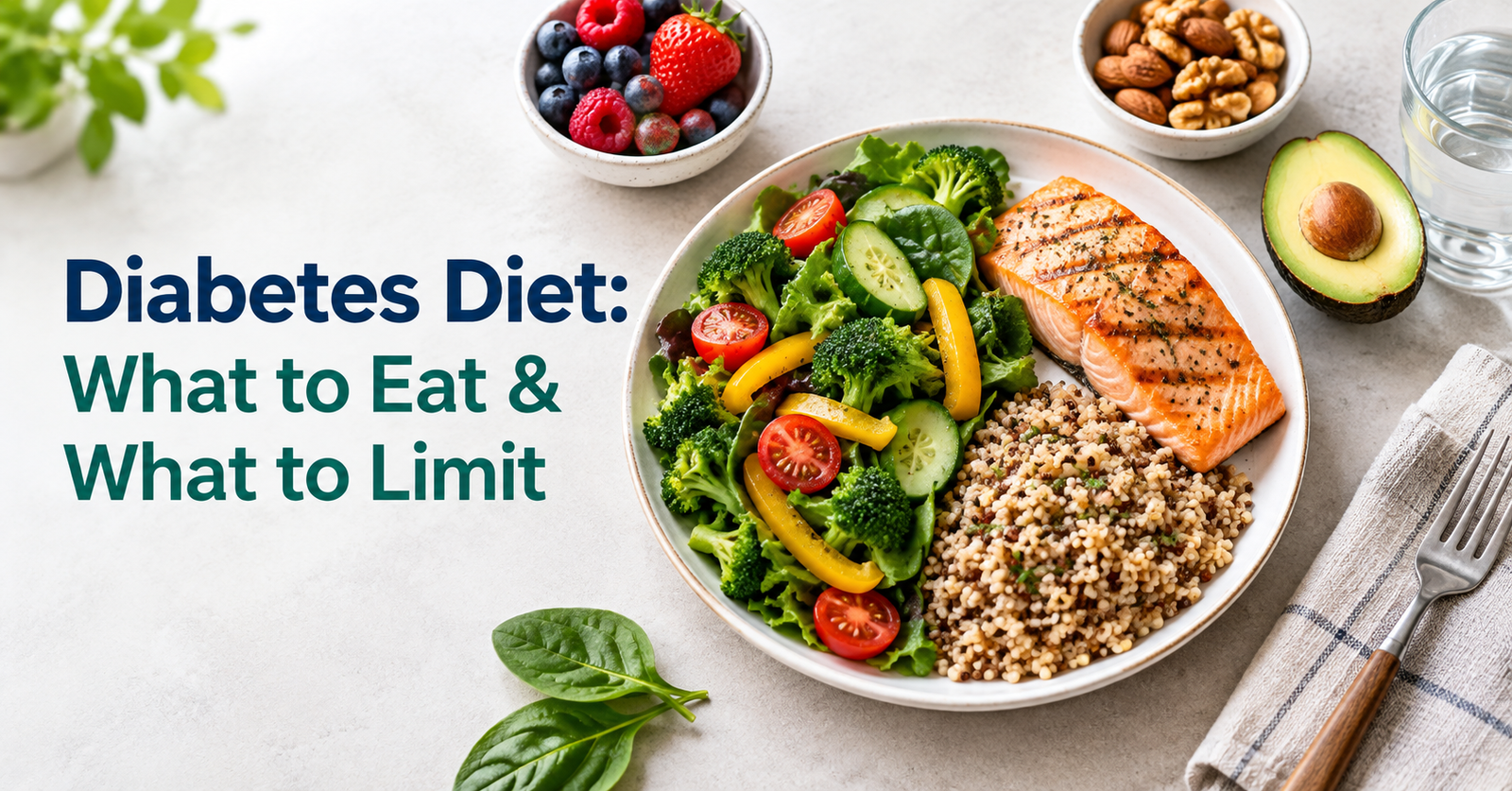

Prediabetes means your blood glucose is higher than normal but not yet in the diabetes range. Food choices are one of the most useful tools for reducing your risk of progressing to type 2 diabetes.
There isn’t one universal “prediabetes diet” that everyone must follow. Instead, a sustainable eating pattern built around vegetables, whole foods, fiber-rich carbohydrates, protein, and healthy fats can support blood glucose management and overall metabolic health.
Diet works best paired with regular physical activity and appropriate medical follow-up. The NIDDK notes that lifestyle changes can help people with prediabetes prevent or delay type 2 diabetes.
What Is a Prediabetes Diet?
A “prediabetes diet” generally refers to an eating pattern designed to support:
- Healthy blood glucose levels
- Overall metabolic health
- A healthy weight, when weight management is medically appropriate
- Adequate nutrition
- Long-term, sustainable habits
The goal isn’t to eliminate carbohydrates completely. It’s to build meals that balance carbohydrates with fiber, protein, and healthy fats.
Do You Need to Avoid Carbohydrates With Prediabetes?
No. Carbohydrates are an important source of energy, and the type and amount matter more than avoiding them altogether.
Whole grains, beans, fruits, and vegetables provide fiber and nutrients alongside their carbohydrate content. Sugary drinks and highly refined carbohydrate foods, by contrast, tend to be less nutrient-dense choices.
The CDC notes that carbohydrates raise blood glucose, but eating them alongside protein, fat, or fiber can slow that rise. This is one reason a bowl of oatmeal with nuts affects blood sugar differently than a plain sugary cereal.
Best Foods to Eat With Prediabetes
Think of these as building blocks for meals, not a rigid checklist.
1. Nonstarchy Vegetables
Spinach, broccoli, cauliflower, cabbage, cucumber, tomatoes, bell peppers, green beans, and eggplant all add volume, fiber, vitamins, and minerals to meals without much effect on blood glucose.
2. High-Fiber Foods
Lentils, beans, chickpeas, oats, barley, whole grains, vegetables, whole fruits, nuts, and seeds are all useful fiber sources. The CDC identifies fruits, vegetables, whole grains, legumes, nuts, and seeds as good sources of dietary fiber. For more detail, see our guide to high-fiber foods for digestive health.
3. Whole Grains
Oatmeal, brown rice, barley, quinoa, whole-grain bread, and whole-wheat pasta offer more fiber than their refined counterparts. Portion size still matters here — whole grains are healthier, not calorie-free.
4. Protein-Rich Foods
Fish, eggs, skinless poultry, beans, lentils, tofu, plain yogurt, nuts, and seeds all support steady energy and help you feel full. Our guide to high-protein foods covers more options.
5. Healthy Fats
Nuts, seeds, avocado, olive oil, and fatty fish support overall health. They’re calorie-dense, so portions remain relevant even though these are “healthy” choices.
6. Whole Fruits
Apples, berries, oranges, pears, guava, and peaches can fit into a healthy eating pattern. Whole fruit is different from fruit juice — the CDC notes that fruit juice can raise blood glucose faster than whole fruit, largely because it lacks the fiber that slows digestion.
Foods to Limit With Prediabetes
These foods don’t need to disappear from your life entirely — the focus is on how often and how much.
Sugary Drinks
Soda, sweetened tea, sweetened coffee, energy drinks, and fruit drinks deliver a large amount of fast-digesting sugar with little nutritional value.
Refined Grains
White bread, refined breakfast cereals, large portions of white rice, and refined pasta lack the fiber that slows digestion in their whole-grain counterparts.
Foods High in Added Sugar
Candy, cakes, cookies, sweet pastries, and sugary desserts can fit occasionally, but eaten often, they add up quickly.
Highly Processed Foods
Many packaged foods are high in added sugar, sodium, saturated fat, or calories — sometimes several of these at once. The CDC recommends limiting added sugars, refined carbohydrates, and highly processed foods while emphasizing nutrient-dense whole foods.
The Prediabetes Plate Method
This simple visual tool doesn’t require counting anything.
| Plate Section | What to Include |
|---|---|
| ½ plate | Nonstarchy vegetables |
| ¼ plate | Lean protein |
| ¼ plate | Whole grains or another carbohydrate-rich food |
Add water or another unsweetened beverage to complete the meal. The CDC describes a similar plate method: half the plate for nonstarchy vegetables, one quarter for lean protein, and one quarter for carbohydrate foods.
What Should I Eat for Breakfast With Prediabetes?
A few practical options, none more “correct” than the others:
- Oatmeal with berries and nuts
- Eggs with vegetables and whole-grain toast
- Plain yogurt with berries and seeds
- Vegetable omelet with avocado and whole-grain toast
- Unsweetened yogurt with fruit and a small serving of nuts
Pick whichever fits your schedule and preferences — consistency matters more than any single “perfect” breakfast.
Prediabetes-Friendly Lunch Ideas
- Grilled chicken and vegetable salad with beans
- Lentil soup with vegetables and whole-grain bread
- Brown rice bowl with vegetables and tofu
- Chickpea and vegetable salad
- Fish with vegetables and a small serving of whole grains
Prediabetes-Friendly Dinner Ideas
- Grilled fish, roasted vegetables, and brown rice
- Chicken, mixed vegetables, and quinoa
- Lentil curry, vegetables, and a moderate portion of brown rice
- Tofu stir-fry with vegetables and whole grains
- Bean and vegetable bowl with avocado
Familiar dishes like lentil curry or a chickpea bowl fit into this pattern just as well as any other meal — the plate method works with a wide range of cuisines, not just one style of eating.
Healthy Snacks for Prediabetes
- A small handful of unsalted nuts
- Plain yogurt
- Whole fruit
- Carrot or cucumber slices with hummus
- A boiled egg
- Apple with nut butter
Snacks aren’t automatically necessary for everyone. Whether they help depends on your hunger, schedule, activity level, and personal needs.
What Should You Drink With Prediabetes?
Best everyday choices:
- Water
- Sparkling water without added sugar
- Unsweetened tea
- Unsweetened coffee
Limit:
- Soda
- Sweetened tea
- Sweetened coffee drinks
- Energy drinks
- Fruit drinks
The NIDDK recommends beverages with little or no added sugar, including water and unsweetened tea or coffee, as part of a diabetes-prevention approach.
Is Fruit Bad for Prediabetes?
No. Whole fruit can fit comfortably into a healthy eating pattern.
Fruit provides fiber, vitamins, minerals, and other nutrients that support overall health. Whole fruit is generally preferable to fruit juice, since juice usually lacks the fiber that slows sugar absorption. There’s no need to rank fruits into “good” and “bad” categories — portion size and your overall dietary pattern matter more than any single fruit choice.
Can You Eat Rice With Prediabetes?
Yes. Rice can fit into a balanced diet when portion size and the rest of the meal are taken into account.
Pairing rice with vegetables and protein helps balance the meal. Whole-grain options like brown rice provide more fiber than refined white rice, but neither needs to be eliminated. The overall meal matters more than any single food choice.
Can You Eat Bread, Pasta, or Potatoes With Prediabetes?
Yes, with the same considerations that apply to rice:
- Bread: Whole-grain varieties offer more fiber than white bread, though portion size still counts.
- Pasta: Whole-wheat pasta is a higher-fiber option; portion and toppings matter too.
- Potatoes: These are carbohydrate-containing foods, so portion size and pairing with protein or vegetables help balance the meal.
None of these foods require complete elimination. Overly restrictive advice tends to be harder to sustain and isn’t necessary for managing prediabetes.
7-Day Prediabetes Meal Plan
This is a general example, not an individualized medical meal plan.
| Day | Breakfast | Lunch | Dinner |
|---|---|---|---|
| Monday | Oatmeal, berries & nuts | Chicken & vegetable salad | Fish, vegetables & brown rice |
| Tuesday | Eggs, vegetables & whole-grain toast | Lentil soup & salad | Chicken, vegetables & quinoa |
| Wednesday | Plain yogurt, fruit & seeds | Chickpea bowl | Fish & roasted vegetables |
| Thursday | Vegetable omelet & toast | Bean salad & whole grain | Tofu stir-fry |
| Friday | Oatmeal & fruit | Grilled chicken wrap | Lentil curry & vegetables |
| Saturday | Eggs & avocado toast | Tuna or bean salad | Chicken & brown rice |
| Sunday | Plain yogurt & berries | Lentil & vegetable bowl | Fish, vegetables & whole grains |
Feel free to swap meals around based on what you have on hand or prefer — the pattern matters more than the exact combination.
Prediabetes Diet and Weight Management
If you’re overweight, losing even a modest amount of weight can help reduce your risk of progressing to type 2 diabetes. The NIDDK’s prevention guidance, based on Diabetes Prevention Program research, supports gradual lifestyle changes involving healthier eating and increased activity, rather than crash dieting.
Steer clear of very restrictive calorie targets, “lose X pounds in X days” claims, or diets that eliminate entire food groups. These approaches are hard to sustain and aren’t necessary for meaningful health improvement. Our guide to weight management covers sustainable approaches in more depth.
Does a Prediabetes Diet Really Work?
Diet is one part of a broader lifestyle approach — not a standalone fix. The NIDDK reports that intensive lifestyle interventions, which combine dietary changes with increased physical activity, have been shown to prevent or delay type 2 diabetes in adults with prediabetes.
The broader approach typically includes:
- Healthy eating
- Physical activity
- Appropriate weight management
- Regular medical follow-up
- Support for sustainable behavior change
The CDC similarly recommends healthy eating and increased physical activity as core strategies for preventing or delaying type 2 diabetes. For a fuller picture of prevention strategies beyond diet, see our guide on how to prevent diabetes.
Common Prediabetes Diet Mistakes
Mistake 1: Cutting out all carbohydrates. This isn’t necessary and can make healthy eating harder to sustain long term.
Mistake 2: Drinking fruit juice instead of eating fruit. Whole fruit provides fiber that juice generally lacks, which affects how quickly sugar enters your bloodstream.
Mistake 3: Focusing only on sugar. Overall food quality, portion sizes, fiber, and protein all matter alongside sugar content.
Mistake 4: Skipping meals to “control blood sugar.” This isn’t a recommended strategy and can backfire by making it harder to manage hunger and energy levels.
Mistake 5: Following an extreme diet. Sustainable habits tend to outperform short-term, highly restrictive plans.
Mistake 6: Ignoring portion sizes. Even nutritious foods contribute calories and carbohydrates — portion awareness still matters.
Prediabetes Diet FAQ
What is the best diet for prediabetes? There’s no single best diet. Eating patterns built around vegetables, fiber-rich carbohydrates, protein, and healthy fats — including approaches like the Mediterranean diet — tend to work well and can be adapted to personal taste.
What foods should you eat if you have prediabetes? Nonstarchy vegetables, high-fiber carbohydrates, lean protein, healthy fats, and whole fruits are good building blocks for most meals.
What foods should you avoid with prediabetes? Rather than avoiding specific foods entirely, focus on limiting sugary drinks, refined grains, foods high in added sugar, and highly processed items.
Can I eat rice if I have prediabetes? Yes, in reasonable portions, ideally paired with vegetables and protein.
Can I eat fruit with prediabetes? Yes. Whole fruit, in normal portions, fits into a healthy eating pattern.
What should I eat for breakfast with prediabetes? Options like eggs with vegetables, oatmeal with berries and nuts, or plain yogurt with fruit all combine protein, fiber, and a moderate amount of carbohydrate.
Is oatmeal good for prediabetes? Plain oatmeal is a high-fiber carbohydrate that digests more slowly than refined cereal, though portion size and added sugar in toppings still matter.
Can prediabetes be reversed with diet? For many people, sustained dietary changes alongside physical activity can bring blood glucose back toward a normal range or prevent progression to type 2 diabetes, though results vary by individual and diet is only one part of the picture.
What drinks are best for prediabetes? Water, sparkling water, and unsweetened tea or coffee are good default choices that don’t add extra carbohydrate load.
How many carbs should I eat with prediabetes? There’s no single daily target that fits everyone. Individual needs vary based on activity level, medications, other health conditions, and overall dietary pattern — a registered dietitian can help set an appropriate target for you.
When to Talk With a Healthcare Professional
Reach out to a doctor or registered dietitian if you:
- Have been diagnosed with prediabetes
- Have abnormal blood glucose results
- Are unsure how to structure your meals
- Take medications that affect blood glucose
- Have another condition that affects your dietary needs
- Want an individualized meal plan
A registered dietitian or qualified healthcare professional can tailor recommendations to your specific health history, preferences, and goals in a way a general guide like this one can’t.
Key Takeaways
- There’s no single diet that everyone with prediabetes must follow.
- Build meals around vegetables, protein, fiber-rich carbohydrates, and healthy fats.
- Choose whole fruits more often than fruit juice.
- Limit sugary drinks and foods high in added sugar.
- Choose whole grains and other nutrient-dense carbohydrate sources more often.
- Portion size matters, even for healthy foods.
- Sustainable dietary changes are more useful than extreme diets.
- Pair healthy eating with regular physical activity and appropriate medical care.
For more on the bigger picture, see our guides on prediabetes, insulin resistance, and metabolic syndrome.
This article is for general educational purposes and isn’t a substitute for personalized medical or nutritional advice. Talk with your doctor or a registered dietitian before making significant changes to your diet.
Sources:
- Centers for Disease Control and Prevention (CDC) — Diabetes Healthy Eating: Carbohydrates and Starchy Foods
- Centers for Disease Control and Prevention (CDC) — Preventing Type 2 Diabetes
- National Institute of Diabetes and Digestive and Kidney Diseases (NIDDK, NIH) — Game Plan for Preventing Type 2 Diabetes