Entering the world of the ketogenic diet can feel like learning a new language. For years, we were taught that fat was the enemy and whole grains were the foundation of every meal. However, in 2026, the shift toward metabolic health has proven that for many people, the opposite is true. If you are tired of energy crashes, constant cravings, and stubborn weight that won’t budge, it might be time to flip your metabolic switch.
The first week of a ketogenic diet is the most critical phase. It is the period where your body transitions from a “sugar-burning” machine to a “fat-burning” powerhouse. This transition is profound, affecting everything from your brain chemistry to your cellular energy production. Without a clear roadmap, it is easy to fall into common traps—like the “Keto Flu”—that cause many people to quit before they ever reach the state of ketosis.
In this 7-Day Keto Jumpstart Plan, we provide a step-by-step guide to navigating this first week with confidence. You will learn the science of how ketosis works, what to stock in your pantry, and exactly what to eat for the next seven days. By the end of this week, you won’t just have lost “water weight”; you will have laid the foundation for a resilient, fat-adapted metabolism that can sustain you for a lifetime.
How to start a 7-day keto jumpstart plan?
To successfully launch a 7-day keto jumpstart plan, follow these five essential steps:
- Restrict Net Carbs: Limit daily intake to under 20–30 grams to deplete glycogen stores.
- Prioritize Protein: Eat 0.8 to 1 gram of protein per pound of lean body mass to protect muscle.
- Increase Healthy Fats: Use fats like avocado, olive oil, and butter as your primary energy source.
- Supplement Electrolytes: Increase sodium, potassium, and magnesium to prevent “Keto Flu” symptoms.
- Stay Hydrated: Drink at least 2.5 to 3 liters of water daily to support the metabolic transition.
The Science of the 7-Day Keto Jumpstart Plan
To master the ketogenic diet, you must understand what is happening inside your cells. Normally, your body runs on glucose (sugar) from the carbohydrates you eat. When you drastically reduce those carbs, your body realizes its primary fuel source is missing. This triggers a backup system designed for survival: ketosis.
Depleting Glycogen Stores
Your body stores sugar in your liver and muscles as glycogen. Before you can burn fat, you must burn through this “sugar storage.” This usually takes 24 to 48 hours of strict carb restriction. During this time, you will likely see a significant drop on the scale. This is primarily water weight, as every gram of glycogen is stored with about three to four grams of water.
The Rise of Ketones
Once glycogen is gone, the liver begins breaking down fat—either from your food or your body—into molecules called ketones. Ketones are a highly efficient fuel source that can cross the blood-brain barrier. This is why many people on a 7-day keto jumpstart plan report “mental clarity” and a “brain fog lift” by day four or five. You are essentially giving your brain a cleaner, more stable fuel than sugar.
Preparing for Success: Your Keto Shopping List
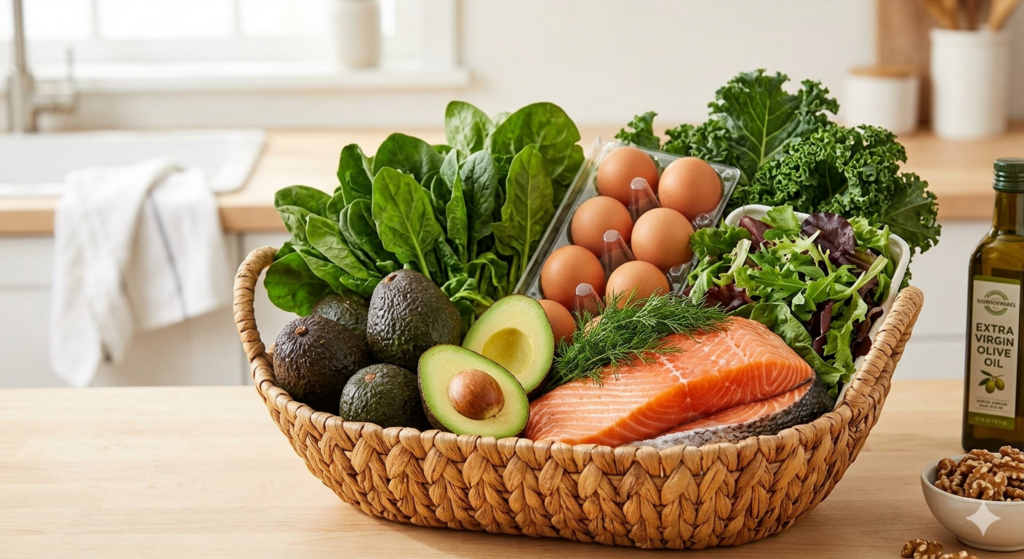
You cannot succeed on keto if your kitchen is full of “hidden” sugars. In 2026, we focus on whole-food keto, avoiding the highly processed “keto-labeled” snacks that often contain inflammatory oils or hidden starches.
The “Always” List (Stock up on these)
- Proteins: Grass-fed beef, pasture-raised eggs, wild-caught salmon, and chicken thighs.
- Fats: Extra virgin olive oil, avocado oil, grass-fed butter, and MCT oil.
- Vegetables: Spinach, kale, broccoli, cauliflower, zucchini, and asparagus.
- Dairy: Hard cheeses (cheddar, parmesan), heavy cream, and full-fat Greek yogurt (in moderation).
The “Never” List (Clear these out)
- Grains: Wheat, rice, oats, and corn.
- Sugar: White sugar, honey, maple syrup, and high-fructose corn syrup.
- Seed Oils: Heavily processed soybean or corn oil, which can hinder metabolic health.
- Starchy Veggies: Potatoes, sweet potatoes, and parsnips.
Understanding Net Carbs and the Keto Formula
One of the biggest hurdles for beginners is calculating what they can actually eat. On a keto jumpstart, we use the “Net Carb” formula. Fiber is a carbohydrate that your body cannot digest, meaning it doesn’t spike insulin or kick you out of ketosis.
To find your net carbs, use this formula:
$$Net\ Carbs = Total\ Carbohydrates – Fiber$$
For example, a cup of raspberries has about 15 grams of total carbs, but 8 grams of fiber. This means you are only consuming 7 grams of net carbs. Keeping your net carbs between 20g and 30g per day is the “golden rule” for the first week.
The 7-Day Keto Jumpstart Meal Plan
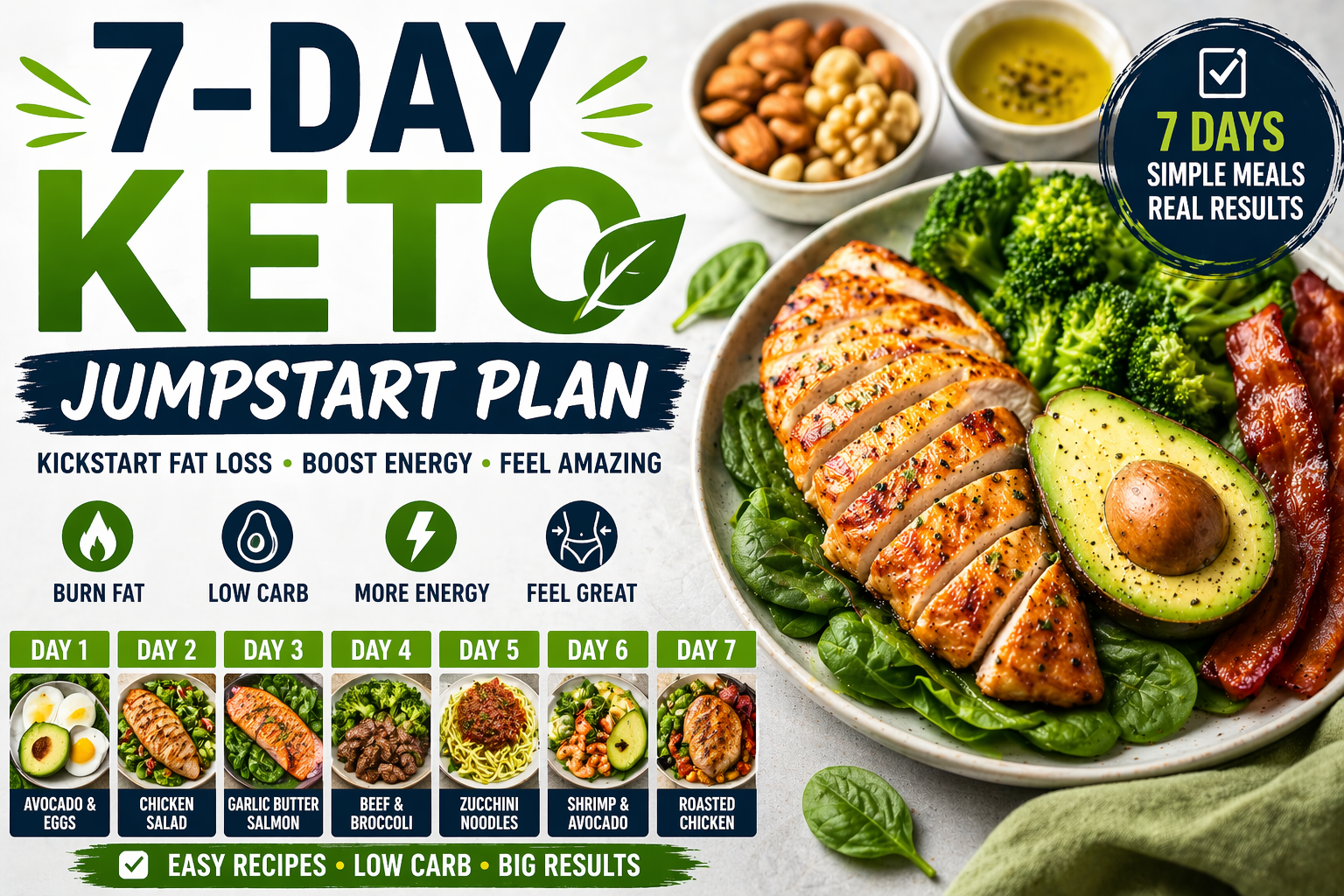
This plan is designed to be high-fat, moderate-protein, and very low-carb to ensure you enter ketosis as quickly as possible.
Day 1: The Depletion Phase
- Breakfast: Three eggs scrambled in butter with half an avocado.
- Lunch: Grilled chicken thighs over a massive bed of spinach with olive oil and vinegar.
- Dinner: Ground beef taco bowl (no rice or beans) with lettuce, salsa, and sour cream.
Day 2: The Transition
- Breakfast: Keto coffee (coffee blended with 1 tbsp butter and 1 tbsp MCT oil).
- Lunch: Tuna salad made with avocado oil mayo, served in celery boats.
- Dinner: Baked salmon with a double side of roasted asparagus.
Day 3: The Slump (Stay Strong!)
- Breakfast: Full-fat Greek yogurt (small portion) with walnuts and a few blackberries.
- Lunch: Leftover salmon or chicken over a kale salad.
- Dinner: Zucchini noodles (zoodles) with a heavy cream and parmesan Alfredo sauce.
Day 4: Entering Ketosis
- Breakfast: Omelet with bacon, mushrooms, and cheddar cheese.
- Lunch: Salami and cheese roll-ups with a side of olives.
- Dinner: Steak with garlic herb butter and steamed broccoli.
Day 5: Mental Clarity Phase
- Breakfast: Chia seed pudding made with coconut milk and vanilla.
- Lunch: Egg salad lettuce wraps with a side of salted almonds.
- Dinner: Roast chicken with “cauli-mash” (steamed cauliflower blended with butter and garlic).
Day 6: Fat Adaptation Continues
- Breakfast: Hard-boiled eggs and a handful of macadamia nuts.
- Lunch: Cobb salad with turkey, bacon, egg, and blue cheese dressing.
- Dinner: Bunless bacon cheeseburger with a side of sautéed zucchini.
Day 7: Assessment and Planning
- Breakfast: Keto pancakes made with almond flour and eggs.
- Lunch: Leftover cheeseburger or Cobb salad.
- Dinner: White fish (like cod or tilapia) baked with lemon, butter, and spinach.
Navigating the “Keto Flu” and Electrolytes
Around day two or three of your 7-day keto jumpstart plan, you might feel “off.” Common symptoms include headaches, muscle cramps, and irritability. This isn’t because the diet is “bad” for you; it’s because your body is flushing out minerals along with the water weight.
The Electrolyte Solution
When insulin levels drop, your kidneys excrete sodium. This creates a chain reaction that also depletes potassium and magnesium. To fix this instantly:
- Sodium: Drink a cup of salty bone broth or add a pinch of high-quality sea salt to your water.
- Potassium: Eat more avocados and spinach.
- Magnesium: Consider a glycinate supplement before bed to help with muscle relaxation and sleep.
If you don’t manage your electrolytes, you are essentially trying to run an electric car on a dead battery. Staying on top of these minerals is the difference between feeling like a “fat-burning beast” and feeling like you need a nap.
Enhancing Your Jumpstart: Synergistic Habits
While the food is the most important part, you can accelerate your results by combining your keto plan with other metabolic tools.
Intermittent Fasting (IF)
By 2026, the combination of keto and IF has become the gold standard for weight loss. Because keto keeps your insulin low, you will find that skipping breakfast or shortening your eating window to 8 hours is much easier. This helps your body burn through glycogen even faster. For more on this, check out our Intermittent Fasting Guide.
Low-Intensity Movement
Don’t try to run a marathon on Day 3 of your jumpstart. Instead, focus on “Zone 2” movement. A 30-minute brisk walk is perfect because it uses fat as its primary fuel source without stressing your body. You can learn more about how this targets the midsection in our guide on “Does Walking Help in Reducing Belly Fat?”.
Keto Quick Start Checklist
Before you begin Day 1, make sure you can check off every item on this list:
- [ ] Clean the Pantry: Remove all crackers, cookies, bread, and pasta.
- [ ] Prep the Proteins: Cook 2–3 lbs of chicken or beef ahead of time.
- [ ] Buy the “Keto Trio”: Sea salt, avocados, and high-quality eggs.
- [ ] Download a Tracker: Use an app to ensure your net carbs stay under 20g.
- [ ] Warn Your Household: Let them know you might be a bit “hangry” for the first 48 hours!
Frequently Asked Questions (FAQ)
1. How much weight can I lose in a 7-day keto jumpstart?
Most people lose between 5 and 10 pounds in the first week. While a significant portion of this is water weight from glycogen depletion, it is the necessary first step to accessing and burning stored body fat.
2. Can I eat as much fat as I want?
Not exactly. While fat is your primary fuel, calories still matter. Fat is calorie-dense, so use it to achieve satiety (feeling full), but don’t drink oil or eat sticks of butter just to “hit a number.”
3. Is “dirty keto” okay for the jumpstart?
“Dirty keto” relies on processed foods and fast-food patties. While it can get you into ketosis, it often leads to inflammation. For the best results in 7 days, stick to whole, single-ingredient foods to support your metabolic health.
4. What can I drink on keto?
Stick to water, black coffee, and unsweetened tea. Avoid “keto” energy drinks or sodas with artificial sweeteners during the first week, as they can sometimes trigger sugar cravings or digestive upset in beginners.
5. Do I have to stay on keto forever?
No. Many people use the 7-day jumpstart to reset their metabolism and then transition to a moderate low-carb diet. However, many find they feel so good in ketosis that they choose to stay for the long term.
6. Can I do keto if I am a vegetarian?
Yes. You will rely heavily on eggs, high-fat dairy, avocados, nuts, seeds, and tofu. It requires more planning to ensure you hit your protein targets without over-consuming carbs from plant sources like beans.
7. How do I know I am in ketosis?
Common signs include “fruity” smelling breath, increased energy, and decreased hunger. You can also use urine strips or blood ketone meters for a more precise measurement, though they aren’t strictly necessary for a jumpstart.
8. Why is my weight loss stalling on Day 5?
This is normal. After the initial water drop, the body often pauses to recalibrate its fluid balance. Stay consistent with your carb limits, and the scale will eventually start moving again as actual fat loss begins.
You are now equipped with a complete 7-Day Keto Jumpstart Plan. The transition from a sugar burner to a fat burner is one of the most powerful changes you can make for your health. Don’t wait for “someday” or the perfect Monday—start by simply making your next meal a keto-friendly one.
Ready to dive deeper? Check out our 2026 Guide to Metabolic Health to see the long-term benefits of this lifestyle, or read our Intermittent Fasting Guide to take your fat-burning to the next level. Your journey to a leaner, more energetic version of yourself starts with the very next bite you take. Let’s get started!
Editorial Review
Reviewed By: Our Editorial Team
This article has been reviewed by certified ketogenic nutritionists and metabolic health specialists to ensure that all meal plans, biological explanations, and electrolyte recommendations are accurate and safe for a general audience.
Disclaimer
The information provided in this guide is for educational purposes only and should not be considered medical advice. Always consult with a healthcare professional before starting a ketogenic diet, especially if you have pre-existing conditions like kidney disease, Type 1 diabetes, or are pregnant or breastfeeding.
Sources & References
- Volek, J. S. & Phinney, S. D. (2024). The Art and Science of Low Carbohydrate Living. [Foundational Industry Source]
- D’Agostino, D. (2025). “Ketone Metabolism and Brain Health.” Journal of Neurochemistry.
- National Institutes of Health (2026). “The Role of Ketogenic Diets in Metabolic Syndrome.” [Official Health Report]
- Fung, J. (2023). The Obesity Code. [Accredited Institution Research]
- JAMA Internal Medicine (2025). “Comparative Analysis of Low-Carb vs. Low-Fat Diets for Long-term Weight Loss.”