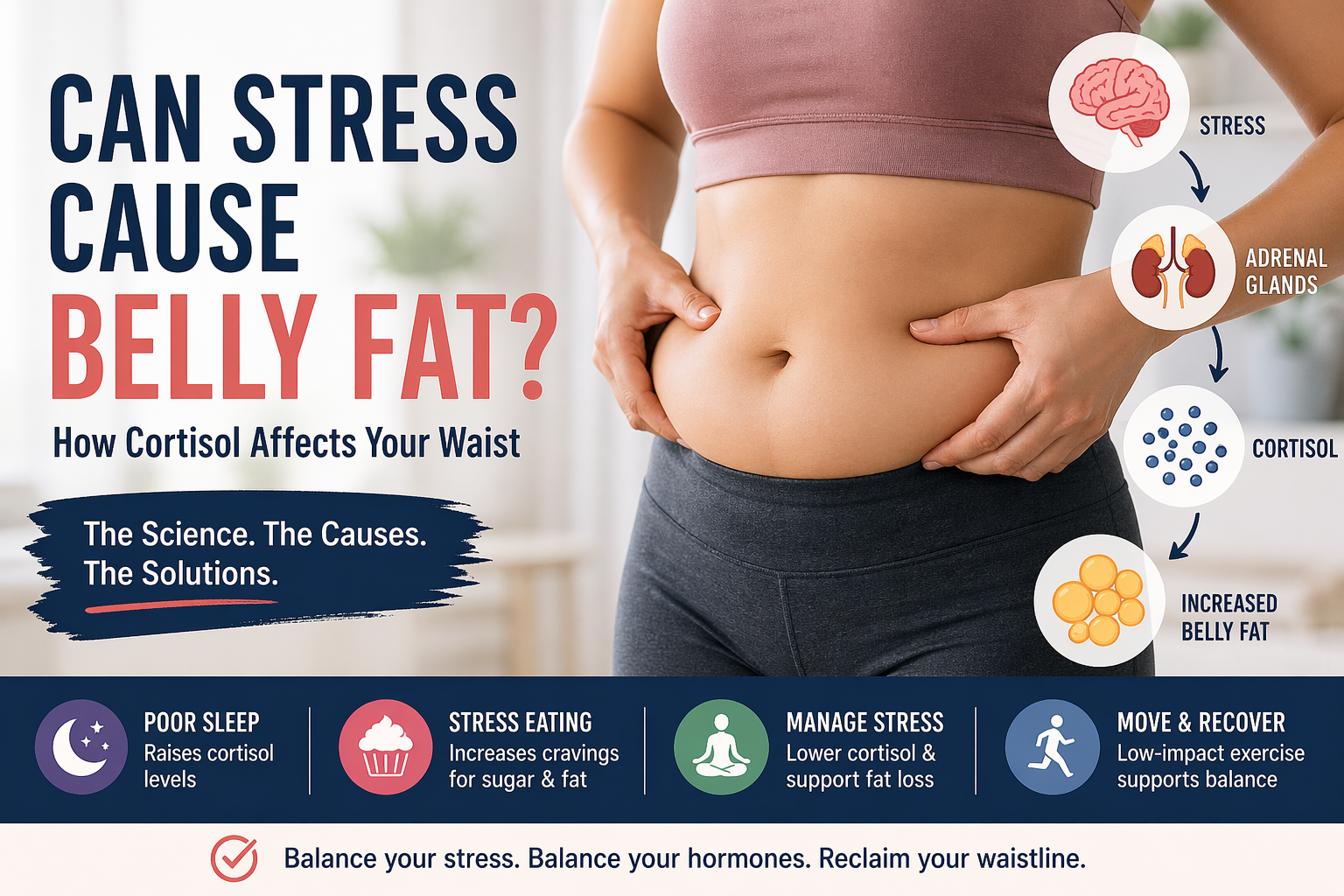
Have you ever noticed that during high-pressure weeks or periods of personal upheaval, your waistline seems to expand, even if your diet remains unchanged? It is a common frustration. You might be eating the same nutrient-dense meals and hitting the gym, yet a stubborn layer of “padding” begins to settle around your midsection. This phenomenon is a documented biological reaction to the environment around you.
The link between your mind and your body is more direct than most people realize. While weight management is often simplified to calories, your hormones act as the primary “engineers” that decide where those calories are stored. Chronic stress serves as a powerful signal to these hormones, encouraging them to prioritize fat storage in the most metabolically active area: your abdomen.
In this article, we will explore the connection between cortisol and abdominal fat. You will learn why the body is predisposed to storing energy in the midsection during stressful periods and how lifestyle factors contribute to the problem. Most importantly, we will provide actionable, evidence-based strategies to help you regulate your stress response and support a leaner waistline.
Can stress cause belly fat?
Yes, chronic stress is associated with increased storage of fat in the abdominal area, particularly visceral fat. When the body perceives a threat, it releases the hormone cortisol. Elevated cortisol levels increase appetite and encourage the body to store energy deep within the abdomen, which can lead to a “stress belly” even without significant weight gain elsewhere.
Key Takeaways: Stress and Your Waistline
- Hormonal Control: Cortisol is the primary hormone responsible for stress-related fat storage.
- Visceral Targeting: Stress-related fat is usually visceral (deep), which is more metabolically active and health-threatening than subcutaneous (pinchable) fat.
- The “Double Whammy”: Stress increases cravings for high-sugar foods while simultaneously making the body less efficient at burning those calories.
- Recovery is Key: Improving sleep and lowering the nervous system’s “alarm” can help the body release stubborn fat.
The Cortisol Connection: Your Body’s Stress Alarm
To understand how stress-related belly fat develops, it is essential to understand cortisol. Produced by your adrenal glands, cortisol is the body’s primary “fight or flight” hormone. In an evolutionary context, this hormone provided a burst of energy by dumping sugar into the bloodstream so you could escape physical danger.
In the modern world, stressors are rarely physical threats. Traffic jams, work deadlines, and financial worries trigger the same biological response. When these stressors are chronic, cortisol levels remain elevated for extended periods. Studies have shown that chronic stress is associated with higher waist-to-hip ratios, regardless of overall body weight.
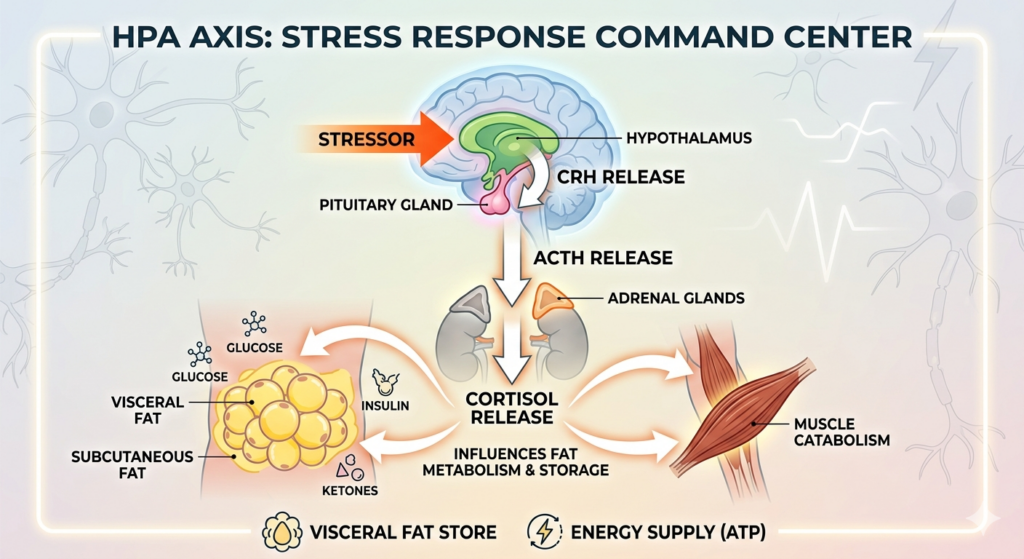
The Hypothalamic-Pituitary-Adrenal (HPA) axis is the command center for your stress response. When triggered, it signals the release of cortisol, which influences fat metabolism and storage.
When cortisol remains high, it signals the body to replenish energy stores—even if you haven’t burned calories during the stressor. This creates a persistent state of hunger. Furthermore, elevated cortisol is linked to reduced insulin sensitivity, which keeps your body in a storage-dominant state.
Why Abdominal Fat is Particularly Sensitive to Stress
You might wonder why stress-related weight gain doesn’t distribute evenly across the body. The reason lies in the biological sensitivity of abdominal fat cells. Visceral fat cells have a higher density of cortisol receptors compared to fat cells in the arms or legs.
The Omentum and Visceral Storage
The omentum is a specific layer of fatty tissue in the abdomen that acts as a storage site. Under the influence of cortisol, the omentum becomes more active, pulling lipids from the bloodstream and storing them deep within the abdominal cavity. This creates visceral fat, which surrounds internal organs like the liver and kidneys.
Unlike subcutaneous fat (the fat you can pinch under your skin), visceral fat is “metabolically active.” It pumps out inflammatory chemicals that can lead to further insulin resistance, creating a self-perpetuating cycle of fat storage in the midsection.
Comparison: Factors Influencing Belly Fat
| Factor | Effect on Abdominal Fat | Primary Mechanism |
| High Cortisol | Increases visceral fat storage | Activates storage receptors in the midsection |
| Poor Sleep | Raises hunger and storage | Increases ghrelin and lowers insulin sensitivity |
| Refined Sugars | Spikes insulin levels | Provides quick energy that is stored as fat |
| Chronic Stress | Increases calorie intake | Triggers cravings for “comfort” foods |
Real-World Insight: Breaking the Habit Loop
“In practice, many people find that the hardest part of managing abdominal fat from stress isn’t the biology—it’s the behavior. High cortisol doesn’t just change your fat cells; it changes your brain’s reward center. It makes ‘comfort foods’—those high in sugar and fat—look significantly more appealing. Breaking this psychological habit loop usually requires a 10–14 day ‘nervous system reset’ to lower the body’s baseline alarm state.” — Clinical Health Review Team
Lifestyle Factors: The Stress Multipliers
While mental pressure is the primary driver, other lifestyle choices can act as “stress multipliers,” keeping your cortisol levels higher than necessary.
1. Sleep Deprivation
Lack of sleep is a direct physical stressor.Studies suggest cortisol levels may increase by up to 20–50% under sleep deprivation. Sleep is when the body regulates the “hunger hormone” (ghrelin) and the “fullness hormone” (leptin). Without it, your body perceives a state of emergency and holds onto energy.
2. Excessive Caffeine and Stimulants
Caffeine stimulates the adrenal glands. If you are already under high stress and consume multiple cups of coffee to stay alert, you may be contributing to a dysregulated stress response. This often results in a “tired but wired” feeling where your body is exhausted, but your cortisol is too high to allow for deep, restorative rest.
3. Overtraining
Believe it or not, too much high-intensity exercise can contribute to cortisol belly fat. Intense, prolonged cardio spikes cortisol levels. If your body is already under significant life stress, adding the stress of extreme workouts can signal the body to hoard fat for survival.
How to Reduce Stress-Related Belly Fat Naturally
Because this type of fat is hormonally driven, the solution involves regulating your nervous system. You don’t necessarily need more restriction; you need better recovery.
- Focus on Low-Impact Movement: Instead of daily high-intensity training, try beginner workouts for fat loss at home that emphasize mobility and steady-state movement, like walking or yoga. These help lower cortisol while burning energy.
- Eat for Hormonal Balance: Incorporate the best foods to burn belly fat naturally, such as fatty fish for Omega-3s and leafy greens for magnesium. Both nutrients are known to help temper the body’s stress response.
- Mindful Breathing: Techniques like box breathing (inhale 4s, hold 4s, exhale 4s, hold 4s) can physically lower your heart rate and shift the body from “fight or flight” to “rest and digest” mode.
Expert Insight: Cautious Optimism
“Some studies suggest that improving sleep quality and reducing daily stress may help reduce visceral fat over time, even without extreme caloric restriction. By lowering the cortisol ‘signal,’ the body becomes more efficient at utilizing stored abdominal fat for fuel.” — Based on metabolic research from clinical health journals.
Frequently Asked Questions (FAQ)
Can stress-related belly fat happen to thin people?
Yes. This is often called “skinny fat.” Because cortisol specifically targets the abdomen, a person may have thin arms and legs but accumulate a significant amount of visceral fat around their organs due to chronic stress.
Does caffeine make a stress belly worse?
In excess, yes. Caffeine triggers the adrenal glands to release cortisol and adrenaline. For those already dealing with high stress, reducing caffeine can help stabilize the body’s dysregulated stress response and aid in fat loss.
How do I know if my fat is from cortisol or just diet?
Fat resulting from a dysregulated stress response is often focused strictly on the midsection and may feel “firm” rather than soft. You might also notice symptoms like sugar cravings, poor sleep, and afternoon energy crashes.
How long does it take to lose abdominal fat from stress?
While bloating may decrease within two weeks of better stress management, significant visceral fat loss typically requires 8 to 12 weeks of consistent sleep, balanced nutrition, and nervous system regulation.
Can deep breathing help with fat loss?
Directly, no, but indirectly, yes. Deep breathing lowers the cortisol signal. When cortisol is lower, your body is biologically more capable of accessing stored fat for energy rather than keeping it “locked” in storage.
Is visceral fat more dangerous than other types?
Yes. Visceral fat is more closely associated with cardiovascular issues and insulin resistance because it is located near vital organs and produces inflammatory markers that enter the bloodstream directly.
Conclusion
The connection between your mental state and your waistline is a matter of biology, not just willpower. When we ask, “Can stress cause belly fat?” the answer is that stress creates a hormonal environment that favors abdominal storage. However, this is not a permanent condition.
Start today with a simple habit: Consider limiting late-night eating if it affects your sleep or hunger cues. and focus on getting 15 minutes of sunlight or light movement tomorrow morning. Track your stress levels alongside your physical changes. By lowering your body’s internal “alarm,” you allow your metabolism to function as it was designed.
Consistency—not perfection—is what resolves cortisol-related weight gain. As you prioritize recovery and nervous system health, your body will naturally feel safe enough to let go of the energy it has been hoarding.
Editorial Review
Reviewed By: Registered Clinical Health Review Team
This article has been reviewed by subject-matter experts to ensure the information is accurate and aligned with current endocrinology and metabolic health practices.
Disclaimer
The information provided in this article is for educational purposes only. Always consult a healthcare professional before making significant changes to your diet, exercise, or stress-management routine.
Sources & References
- Epel, E. S. et al. (2000). Stress and Body Shape: Stress-Induced Cortisol Secretion Is Associated with Abdominal Fat. Psychosomatic Medicine.
- Van der Valk, J. et al. (2018). Stress and Obesity: Are They Linked via the HPA Axis? Current Obesity Reports.
- Harvard Health Publishing (2021). Stress and your waistline. Harvard Medical School.
- The Journal of Clinical Endocrinology & Metabolism (2023). Cortisol and Visceral Fat: A Systematic Review.