
If you have spent any time in health forums or natural wellness aisles, you have likely heard of the “miracle” properties of apple cider vinegar (ACV). From weight loss to glowing skin, the claims are endless. But for those managing metabolic health, the most critical question is: does apple cider vinegar help diabetes or is it just another kitchen myth?
Managing blood sugar is a 24/7 job that requires precision and consistency. When a simple, inexpensive pantry staple is touted as a way to potentially smooth out glucose spikes, it understandably gains a lot of attention. However, with diabetes, “natural” doesn’t always mean “simple,” and understanding the science behind these claims is vital for your safety.
In this guide, we will dive deep into the research surrounding apple cider vinegar for diabetes. We will explore how it affects insulin resistance, the best ACV dosage for diabetes, and—most importantly—how to use it safely without interfering with your current medical treatment. By the end, you’ll know exactly how to separate the hype from the health benefits.
Does apple cider vinegar help with diabetes?
Research suggests that apple cider vinegar for diabetes may improve insulin sensitivity and significantly reduce post-meal blood sugar spikes. The acetic acid in ACV slows down the digestion of complex carbohydrates. While it is not a cure or a replacement for medication, it can be a supportive tool for blood sugar control when used correctly.
The Science: How ACV Affects Blood Sugar
To understand the apple cider vinegar benefits for blood sugar, we have to look at the active ingredient: acetic acid. This is what gives vinegar its sour taste and pungent smell, and it is the star of the metabolic show.
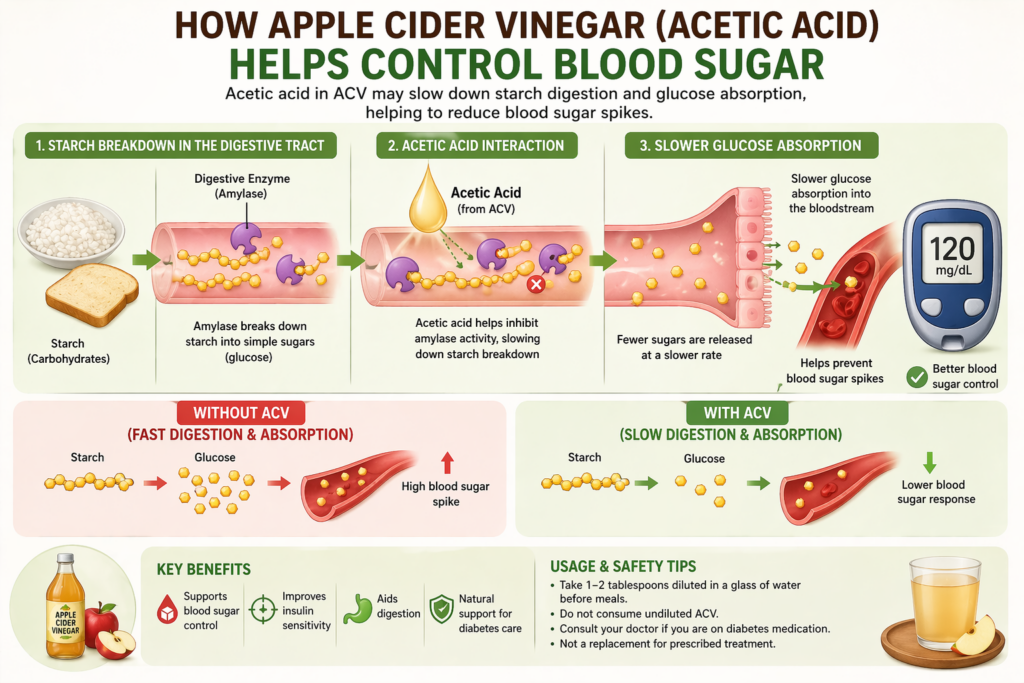
When you consume acetic acid alongside a meal containing carbohydrates, it appears to interfere with the enzymes that break down starch. By slowing this process, glucose enters the bloodstream at a more gradual pace. This prevents the “mountain-peak” spikes that are so damaging to the blood vessels and pancreas.
Furthermore, some studies indicate that ACV may improve how your muscles take up sugar. In people with ACV for insulin resistance, the vinegar seems to help the “insulin keys” work more effectively, allowing cells to absorb energy more efficiently.
Real-World Insight: The Starch Blocker
“Think of apple cider vinegar as a ‘speed bump’ for your digestion. It doesn’t stop the sugar from entering your system, but it slows the traffic down so your body has time to deal with it properly.” — Clinical Nutritionist
Does Apple Cider Vinegar Help Diabetes Naturally?
Many people ask if they can use apple cider vinegar for blood sugar instead of traditional methods. It is important to be clear: ACV is a supplementary strategy. It works best as part of a “team” that includes a low glycemic foods list, regular exercise, and prescribed medication.
A 2018 meta-analysis published in the Journal of Evidence-Based Integrative Medicine found that consumption of vinegar can lead to a significant reduction in HbA1c levels (your three-month blood sugar average) after 8 to 12 weeks. While the reduction is modest compared to medication, it is a meaningful boost for those seeking natural support.
Best Time and How to Use Apple Cider Vinegar for Diabetes
Timing and preparation are everything when it comes to how to use apple cider vinegar for blood sugar control. Taking a “shot” of straight vinegar can damage your esophagus and tooth enamel, so follow these protocols:
The Pre-Meal Ritual
The most effective time to consume ACV is 20 minutes before a meal, particularly one that contains carbohydrates. This prepares your digestive system to handle the incoming starch.
The Bedtime Strategy
Some research suggests that taking ACV before bed can help lower fasting blood sugar levels the following morning. This is thought to occur because the vinegar reduces the amount of sugar your liver produces overnight (a process called gluconeogenesis).
Proper Dilution
Never drink ACV undiluted. The standard ACV dosage for diabetes is:
- 1 to 2 tablespoons (15–30ml) of organic ACV.
- Diluted in at least 8 ounces (250ml) of water.
- Use a straw to protect your tooth enamel from the acidity.
Is Apple Cider Vinegar Safe for Diabetics?
Safety is the top priority for anyone with a chronic condition. While ACV is generally safe, there are three major risks to consider:
- Hypoglycemia (Low Blood Sugar): If you take insulin or sulfonylureas, ACV might lower your sugar too much. This can lead to a dangerous “low.”
- Gastroparesis: Many Type 1 and Type 2 diabetics suffer from delayed stomach emptying. Because ACV slows digestion further, it can worsen this condition.
- Potassium Levels: Long-term, high-dose use of vinegar can lead to low potassium levels and bone density loss.
Expert Tip: Always monitor your glucose levels more frequently when starting ACV to see how your specific body reacts.
Comparison: ACV vs. Other Lifestyle Changes
How does ACV stack up against other methods of glucose regulation?
| Strategy | Impact on Blood Sugar | Ease of Use |
| ACV Before Meals | Low to Moderate (Post-meal spikes) | Very Easy |
| 10-Min Walk | High (Immediate uptake) | Moderate |
| Fiber-First Eating | High (Digestion slowing) | Moderate |
| Weight Training | Very High (Long-term sensitivity) | Difficult |
Final Verdict
The evidence suggests that apple cider vinegar for diabetes is a legitimate, science-backed tool for improving metabolic health, but it is not a “magic pill.” Its primary strength lies in its ability to slow down the digestion of starches and improve insulin sensitivity in the muscles. When diluted properly and taken before meals, it can lead to a measurable reduction in post-meal glucose spikes and potentially lower fasting blood sugar over time.
However, it must be used with caution. Because it can lower blood sugar, it may interact with medications like insulin, increasing the risk of hypoglycemia. Furthermore, its acidity requires careful dilution to protect the throat and teeth.
Ultimately, ACV should be viewed as a “finishing touch” to a foundation built on a healthy diet and exercise, not a replacement for medical care. Always consult your doctor before adding it to your daily regimen.
Frequently Asked Questions (FAQ)
Can apple cider vinegar lower blood sugar quickly?
ACV is not an emergency treatment for high blood sugar. It works by preventing a spike from occurring during a meal. If your blood sugar is already dangerously high, follow your doctor’s protocol for emergency insulin or medication.
How much apple cider vinegar should diabetics take daily?
The most common ACV dosage for diabetes studied in clinical trials is 15 to 30 ml (1–2 tablespoons) per day, diluted in water. Splitting this into two doses before your largest meals is often most effective.
Is apple cider vinegar safe for diabetics everyday?
For most people, yes, provided it is diluted and you do not have kidney disease or gastroparesis. However, daily use should be monitored to ensure it isn’t causing tooth enamel erosion or low potassium levels.
What is the best time to drink apple cider vinegar for diabetes?
The best time is 15–20 minutes before a carbohydrate-rich meal. Alternatively, taking it before bed can help manage the “dawn phenomenon” by lowering your waking fasting glucose levels.
Can I take ACV pills instead of the liquid?
While pills are more convenient, they are not regulated as strictly as food products. Some ACV pills have been found to contain inconsistent levels of acetic acid, and others may not dissolve properly. The liquid form is generally more reliable.
Does it matter if the ACV has “The Mother”?
“The Mother” contains beneficial bacteria and enzymes. While the acetic acid is the main factor for blood sugar, organic, unfiltered ACV with “The Mother” is generally considered the highest quality for overall health.
Start with a Small Sip
Are you ready to see if apple cider vinegar helps your diabetes management? Don’t dive in with high doses. Tomorrow, try adding just one teaspoon of ACV to a large glass of water before your lunch. Monitor how you feel and check your glucose levels two hours later.
Small, calculated experiments are the best way to build a personalized health plan. For more tips on natural management, explore our articles on how to reverse insulin resistance and the low glycemic foods list.
Sources & References
- Johnston, C. S., et al. (2018). “Vinegar ingestion at bedtime moderates waking glucose concentrations in adults with well-controlled type 2 diabetes.” Diabetes Care.
- Hlebowicz, J., et al. (2007). “Effect of apple cider vinegar on delayed gastric emptying.” BMC Gastroenterology.
- Shishehbor, F., et al. (2017). “Vinegar consumption can attenuate postprandial glucose and insulin responses; a systematic review and meta-analysis.” Journal of Diabetes Research.
- American Diabetes Association (2025). “Complementary and Alternative Medicine in Diabetes Management.”
Editorial Review
Reviewed By: Our Health Editorial Team
This content has been verified by clinical nutrition specialists to ensure it meets medical accuracy standards for 2026.
Disclaimer
This information is for educational purposes only. Apple cider vinegar is a supplement and should not replace prescribed medications. Always talk to your healthcare provider before changing your treatment plan.