Managing blood sugar is no longer a concern reserved solely for those with a medical diagnosis. According to the Centers for Disease Control and Prevention (CDC), more than 96 million adults in the United States have prediabetes, many without realizing it.
In our modern world of heavily processed snacks and sedentary routines, maintaining stable glucose levels is the foundation of sustained energy, mental clarity, and overall metabolic health. When your blood sugar fluctuates wildly throughout the day, it often leads to energy crashes that leave you feeling exhausted, irritable, and craving more sugar.
The good news is that your body is incredibly responsive to the environment and habits you create for it. While medical treatments are a vital and necessary tool for many, proactive lifestyle interventions remain the primary defense against insulin resistance. By adjusting how you eat, how you move, and even how you sleep, you can significantly influence your body’s ability to process fuel efficiently and achieve natural diabetes prevention.
In this comprehensive guide, you will learn the most effective, science-backed lifestyle changes to control blood sugar naturally. We will break down complex metabolic processes into actionable steps you can start applying today.
From simple hacks at the dinner table to the surprising role of stress management, this article provides a complete roadmap to stabilize blood sugar and reclaim your metabolic wellness.
What Lifestyle Changes Help Control Blood Sugar?
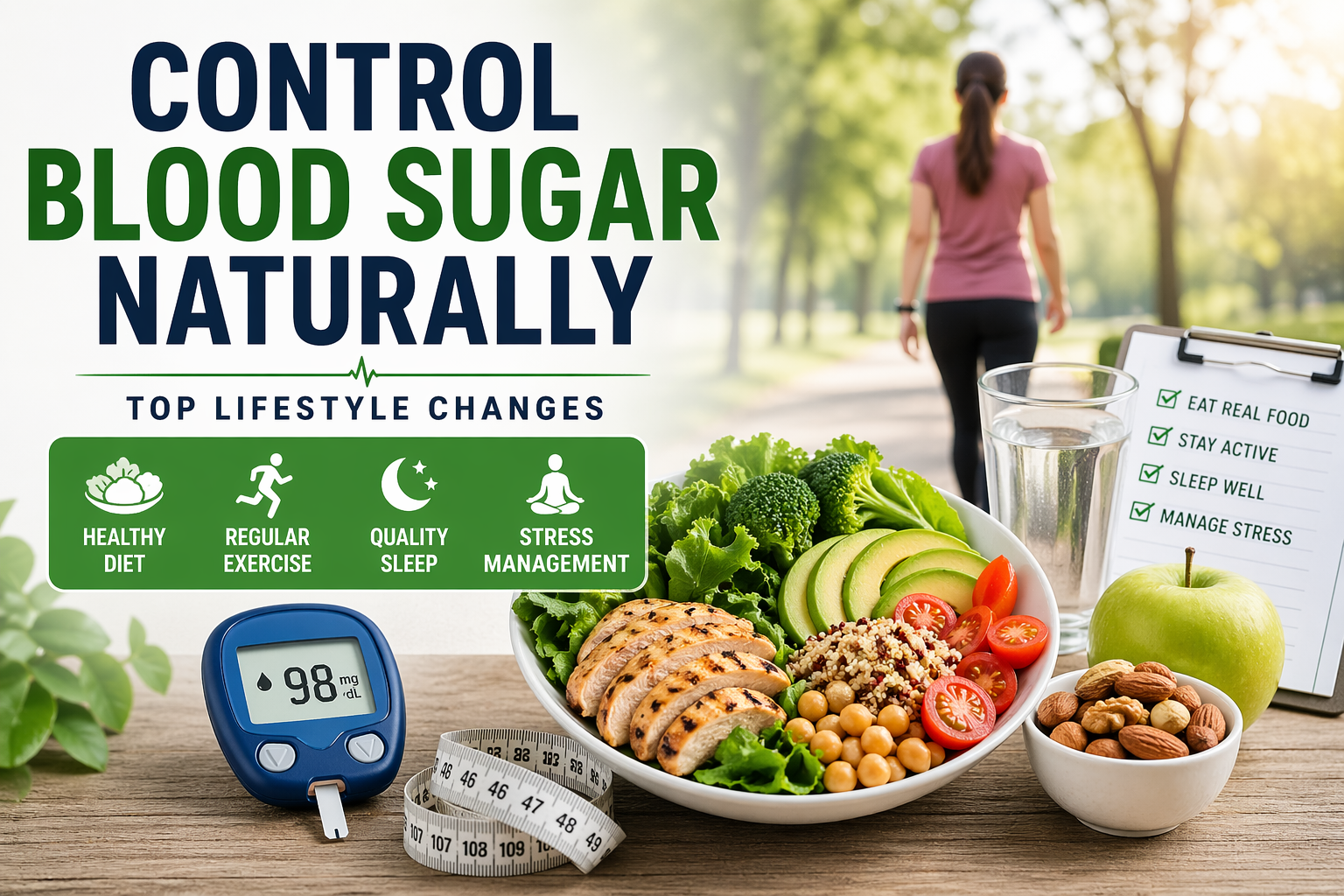
To control blood sugar naturally:
- Eat fiber-rich foods
- Pair carbohydrates with protein and healthy fats
- Exercise regularly
- Walk after meals
- Sleep 7–9 hours nightly
- Manage stress
1. Dietary Changes to Lower Blood Sugar Naturally
The foods you eat have the most immediate impact on your blood sugar and glucose levels. However, controlling blood sugar is not about starving yourself or cutting out entire food groups. Instead, it is about making strategic choices that slow down the absorption of sugar into your bloodstream.
Prioritize Fiber-Rich Foods
Fiber is a carbohydrate that your body cannot digest, meaning it does not raise your blood sugar. Soluble fiber, in particular, dissolves in water to form a gel-like substance in your gut. This slows down digestion and the subsequent release of glucose into your blood.
A study published in the Journal of Chiropractic Medicine highlights that high fiber intake significantly improves glycemic control. Aim to consume 25–30 grams of fiber daily. You can easily reach this goal by incorporating more leafy greens, beans, lentils, chia seeds, and whole grains like oats into your meals. You can also explore our guide on the for blood sugar control.
Balance Your Plate with Protein and Healthy Fats
The “Western Diet” often leans heavily on refined carbohydrates, which break down into glucose rapidly and cause sharp spikes. To counter this effect, you should focus on the “Big Three” of blood sugar stability: protein, fiber, and healthy fats.
Protein triggers the release of hormones that help stabilize insulin, while healthy fats provide long-lasting satiety. Whenever you eat a carbohydrate, make sure to pair it with a protein or fat source. For example, instead of eating an apple on its own, pair it with a handful of almonds or a spoonful of peanut butter to blunt the glucose response. To learn more about balancing your daily meals, check out our .
The Importance of Meal Timing and Food Order
Recent research suggests that how you eat is just as important as what you eat. Eating your food in a specific order can drastically alter your post-meal blood sugar levels.
A prominent study published in Diabetes Care found that eating vegetables and proteins before carbohydrates can lower post-meal glucose levels by up to 30%. Always try to “clothe” your carbs. Start your meal with a fiber-rich salad, follow it with your protein source, and save the starchy carbohydrates for the end of the meal.
2. The Power of Physical Activity
You do not need to train like an Olympic athlete to lower your blood sugar. Physical activity is one of the most effective ways to manage glucose because it forces your muscles to use sugar for energy. When you move your muscles, they can take up glucose from the blood even without the help of insulin.
Aerobic Exercise: The Glucose Burner
Aerobic exercises like brisk walking, cycling, or swimming increase your heart rate and your breathing. This type of cardiovascular exercise prompts your body to burn readily available glucose in your bloodstream for immediate energy.

The American Diabetes Association recommends at least 150 minutes of moderate physical activity per week. Furthermore, the World Health Organization (WHO) emphasizes that regular physical activity is a key pillar of natural diabetes prevention. Consistent aerobic exercise improves your overall insulin sensitivity, meaning your body needs less insulin to process the same amount of carbohydrates over time.
Resistance Training: Building a Glucose Sink
While aerobic exercise burns sugar in the moment, resistance training builds a long-term defense against high blood sugar. Muscles act as the body’s primary storage site for excess glucose, which is stored as glycogen. By lifting weights, using resistance bands, or doing bodyweight exercises, you increase your muscle mass.
Having more muscle mass essentially creates a larger “sink” to drain excess sugar from your blood. Aim for two to three sessions of strength training per week.
Post-Meal Walking: The 15-Minute Rule
A simple 10-to-15-minute walk after lunch or dinner can significantly reduce the “glucose spike” that occurs after eating. This practice is often referred to as “muscle snacking.”
By engaging the large muscles in your legs right after a meal, you turn them into a sponge for the sugar entering your bloodstream. If you cannot go for a walk, even doing light household chores or pacing around the living room can make a measurable difference in your post-meal numbers.
3. Sleep and Stress Management
Diet and exercise are widely discussed in relation to metabolic health, but sleep and stress management are often the missing pieces of the blood sugar puzzle. Ignoring these lifestyle factors can completely undermine a perfect diet. If you are struggling with unexplained glucose fluctuations, reading about the can help you identify if stress or poor sleep might be the culprit.
Learn more: explore our guide on Proven Stress Management Techniques
How Sleep Deprivation Spikes Blood Sugar
Even a single night of poor sleep can temporarily decrease insulin sensitivity, making it much harder for your body to process sugar the next day. This happens because sleep deprivation increases cortisol, the body’s primary “stress hormone.”
High cortisol levels signal your liver to release more glucose into the blood to give you energy to stay awake. To optimize your sleep for metabolic health, aim for 7 to 9 hours of uninterrupted rest. Keep your bedroom cool (around 18°C), avoid blue light from screens at least 60 minutes before bed, and stick to a consistent wake-up time.
Stress Hormones and Insulin Resistance
When you experience chronic stress, your body remains stuck in a mild “fight or flight” mode. This constant state of alertness triggers the continuous release of adrenaline and cortisol. These hormones are evolutionarily designed to give you a quick energy boost by dumping stored sugar into your bloodstream.
In the modern world, where stress is usually psychological rather than physical, that sugar stays in your blood with nowhere to go. Practicing mindfulness, deep breathing exercises, or daily meditation is not just about relaxation; it is a profound metabolic intervention. Lowering your baseline stress levels directly helps keep your fasting blood sugar within a healthy range.
4. Hydration and Daily Habits
Sometimes, the simplest habits yield the most significant results. Proper hydration and mindful supplementation are critical, yet frequently overlooked, components of blood sugar regulation.
Drinking Water to Flush Out Excess Sugar
When your blood sugar levels run high, your body attempts to flush the excess glucose out through your urine. Drinking enough water supports your kidneys in this natural filtration process. Furthermore, dehydration can lead to a higher concentration of glucose in the blood, simply because there is less fluid to dilute it.
Be wary of “healthy” drinks like fruit juices, sports drinks, or sweetened teas. These are essentially liquid sugar bombs that hit your bloodstream instantly because they lack the protective fiber found in whole foods. Stick to pure water, herbal teas, or black coffee.
The Role of Apple Cider Vinegar
Many natural health enthusiasts tout the benefits of vinegar for glycemic control. Some small clinical studies suggest that apple cider vinegar may modestly improve insulin sensitivity, but more research is needed. If you choose to try it, consuming one tablespoon diluted in a large glass of water before a meal may help slow carbohydrate digestion.
5. Weight Management as a Key Driver
If you are carrying excess weight, particularly around your midsection, it can severely impact how your body uses insulin. Visceral fat—the fat stored deep in the belly around your organs—releases inflammatory chemicals that actively promote insulin resistance. Understanding the can help you target this stubborn fat.
Losing Just 5-10% of Body Weight
You do not need to achieve an idealized body weight to see dramatic improvements in your blood sugar levels. According to the CDC, losing just 5% to 10% of your total body weight can significantly improve your body’s ability to manage glucose.
For a person weighing 200 pounds, a 10-pound weight loss is often enough to bring prediabetic blood sugar levels back into the normal range. By implementing the dietary, exercise, and sleep habits outlined above, sustainable weight loss naturally follows as a secondary benefit of a healthier metabolism.
Final Verdict
Controlling blood sugar without medication is highly achievable for many individuals through consistent, daily lifestyle changes. The most effective approach is multi-pronged, focusing on diet, exercise, and stress management. By prioritizing fiber-rich foods and pairing carbohydrates with proteins, you naturally slow glucose absorption. Coupling this with daily movement, particularly post-meal walks and regular strength training, allows your muscles to act as a sink for excess sugar.
Furthermore, protecting your hormonal balance through 7 to 9 hours of quality sleep and effective stress reduction prevents cortisol-induced glucose spikes. While these adjustments require discipline and habit-building, the reward is substantial. You gain steady energy, better mood, and a significantly lower risk of chronic metabolic diseases.
Always remember that consistency matters more than perfection. However, it is crucial to consult with your healthcare provider before making radical changes, especially if you have a medical condition.
Frequently Asked Questions (FAQ)
What foods help lower blood sugar quickly?
Foods high in fiber, protein, and healthy fats can help stabilize blood sugar levels. Examples include leafy greens, lentils, chia seeds, nuts, eggs, and whole oats. These foods slow digestion and prevent rapid glucose spikes.
Can I reverse prediabetes without medication?
Yes, many people successfully reverse prediabetes by making targeted lifestyle changes. Losing 5–7% of your body weight, eating a high-fiber diet, and exercising regularly can naturally restore your insulin sensitivity and normalize glucose levels.
What is the best exercise to lower blood sugar?
A combination of aerobic exercise and resistance training works best. Brisk walking burns immediate glucose, while lifting weights builds muscle mass, creating a larger storage sink for excess blood sugar over the long term.
How much water should I drink daily for blood sugar control?
Aim for at least 8 to 10 cups of water per day. Staying well-hydrated dilutes the concentration of glucose in your bloodstream and helps your kidneys naturally flush out excess sugar through urine.
Does apple cider vinegar really help lower glucose?
Some small clinical studies suggest that apple cider vinegar may modestly improve insulin sensitivity. The acetic acid can slow carbohydrate digestion, mildly reducing the post-meal blood sugar spike, but more research is needed to confirm long-term benefits.
How does lack of sleep affect my blood sugar?
Poor sleep increases cortisol levels, which signals your liver to release more sugar into your bloodstream. Just one night of sleep deprivation can temporarily cause insulin resistance, making glucose management harder the next day.
Are all carbohydrates bad for blood sugar?
No, complex carbohydrates like beans, lentils, and whole oats are excellent for your health. They are packed with fiber, which slows down digestion and provides a steady release of energy without dangerous sugar spikes.
How quickly can lifestyle changes lower my blood sugar?
You may notice improved post-meal energy and lower daily glucose readings within just a few days. However, significantly lowering your HbA1c (your 90-day average) usually takes two to three months of consistent effort.
Start improving your blood sugar today. Begin with a simple habit like a 10–15 minute walk after dinner or adding more fiber-rich foods to your meals.You can also explore our guide on low glycemic foods list or Best Foods for Blood Sugar Control
Sources & References
- Centers for Disease Control and Prevention (CDC). (2023). National Diabetes Statistics Report & Lifestyle Change Program Details. * American Diabetes Association (ADA). (2024). Standards of Care in Diabetes—Lifestyle Management. Diabetes Care Journal.
- World Health Organization (WHO). (2023). Diabetes Prevention and Control Guidelines.
- Shukla, A. P., et al. (2017). Food Order Has a Significant Impact on Postprandial Glucose and Insulin Levels. Journal of Clinical Biochemistry and Nutrition.
- Reynolds, A. N., et al. (2020). Advice to walk after meals is more effective for lowering postprandial glycaemia in type 2 diabetes mellitus than advice that its timing does not matter. Diabetologia.
- McHill, A. W., & Wright, K. P. (2017). Role of sleep and circadian disruption on energy expenditure and in metabolic predisposition to human obesity and metabolic disease. Obesity Reviews.
Editorial Review
Reviewed By: Our Editorial Team
This article has been reviewed by subject-matter experts to ensure the information is accurate, reliable, and aligned with current knowledge and best practices in metabolic health.
Disclaimer
The information provided in this article is for educational and informational purposes only and should not be considered professional medical advice. Always consult a qualified healthcare professional or specialist before making decisions related to your health, diet, or exercise routine.