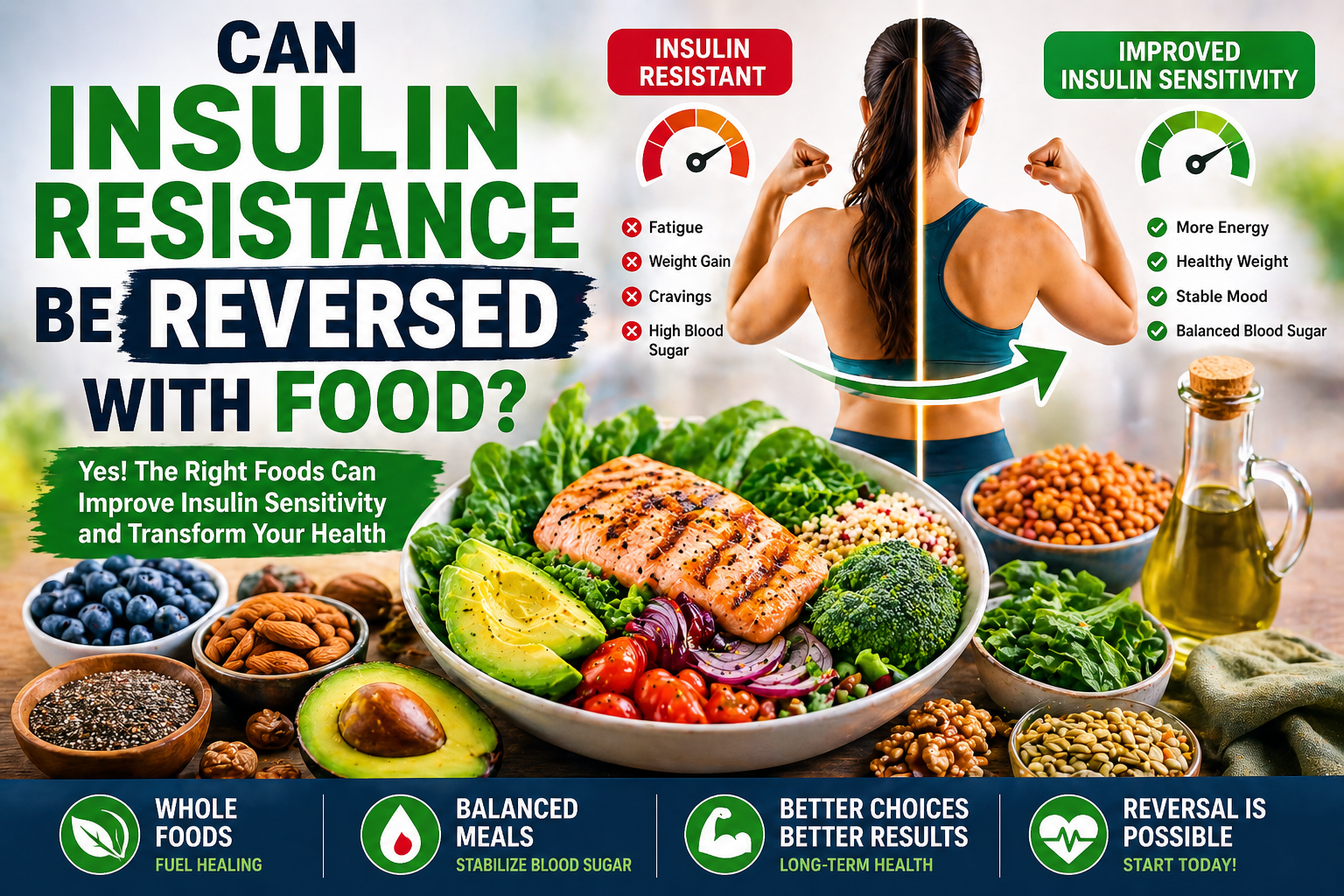
If you have ever felt like your energy levels are on a constant rollercoaster—crashing after lunch or leaving you “hangry” shortly after eating—you might be experiencing insulin resistance. This condition acts as a silent precursor to Type 2 diabetes and metabolic syndrome. A common question for those looking to reclaim their health is: Can insulin resistance be reversed with food?
In many cases, insulin resistance can improve significantly through dietary changes and lifestyle adjustments. While genetics play a role, your diet is one of the most powerful tools for managing your metabolic health. By shifting what and how you eat, you can support your body’s ability to process glucose more efficiently. This isn’t about a temporary fix; it is a long-term metabolic improvement strategy.
In this guide, we will explore the best diet for insulin resistance reversal and management. You will learn how specific nutrients help your cells respond to insulin, which foods that reverse insulin resistance (or significantly improve it) belong in your kitchen, and how to structure meals for stability. If you are ready to fix your metabolism, the journey starts with the choices you make on your plate.
Can insulin resistance be improved with food?
Yes. In many cases, insulin resistance can improve with dietary changes. A diet rich in fiber, lean protein, and healthy fats while limiting refined carbohydrates helps improve insulin sensitivity and stabilize blood sugar levels. These adjustments help the body process glucose more efficiently, supporting overall metabolic health.
Quick Summary: Strategies to Improve Insulin Sensitivity
- Eat more fiber-rich vegetables: Slows sugar absorption.
- Prioritize protein at meals: Creates a metabolic buffer.
- Include healthy fats: Provides steady energy (e.g., olive oil, nuts).
- Avoid liquid sugars: Cuts out sodas and sweetened juices.
- Time your meals: Consider intermittent fasting to lower insulin windows.
Understanding the Biology: Why Cells Stop Listening
To understand how to improve insulin sensitivity naturally, we must look at the “lock and key” mechanism of your metabolism. Insulin is a hormone produced by the pancreas. Its job is to act as a “key” that travels to your cells, fits into a receptor (the lock), and opens the door so glucose can enter to be used for energy.
In a state of insulin resistance, those cellular “locks” become less responsive. Even though the pancreas produces plenty of insulin, the doors remain closed, causing sugar to build up in the bloodstream. The body then stores this excess sugar as fat, particularly around the abdomen.
Dietary changes act as a support system for these receptors. When you reduce the constant demand for insulin by avoiding refined sugars and adding protective nutrients, your cells can become more responsive over time. This process is the foundation of eating to reverse insulin resistance symptoms.
The Pillars of a Diet for Insulin Resistance Improvement
The best diet for insulin resistance reversal and management focuses on three core principles: stabilization, satiety, and slowing digestion.
1. The Power of Soluble Fiber
Fiber is a critical tool for metabolic health. Soluble fiber, found in foods like chia seeds and legumes, slows down the rate at which your stomach empties. This ensures that glucose enters the blood in a slow, steady stream rather than a sharp spike.
2. Prioritizing Protein
Protein has a minimal impact on insulin levels compared to carbohydrates. Clinical dietitians often emphasize focusing on foods that produce smaller blood sugar spikes, like lean meats or plant-based proteins, rather than simply reducing fat intake.
3. Healthy Fats for Satiety
Monounsaturated fats, such as those found in extra virgin olive oil and avocados, help you stay full longer. Because fat does not require an insulin response to be processed, it is a key component of an insulin resistance diet plan.
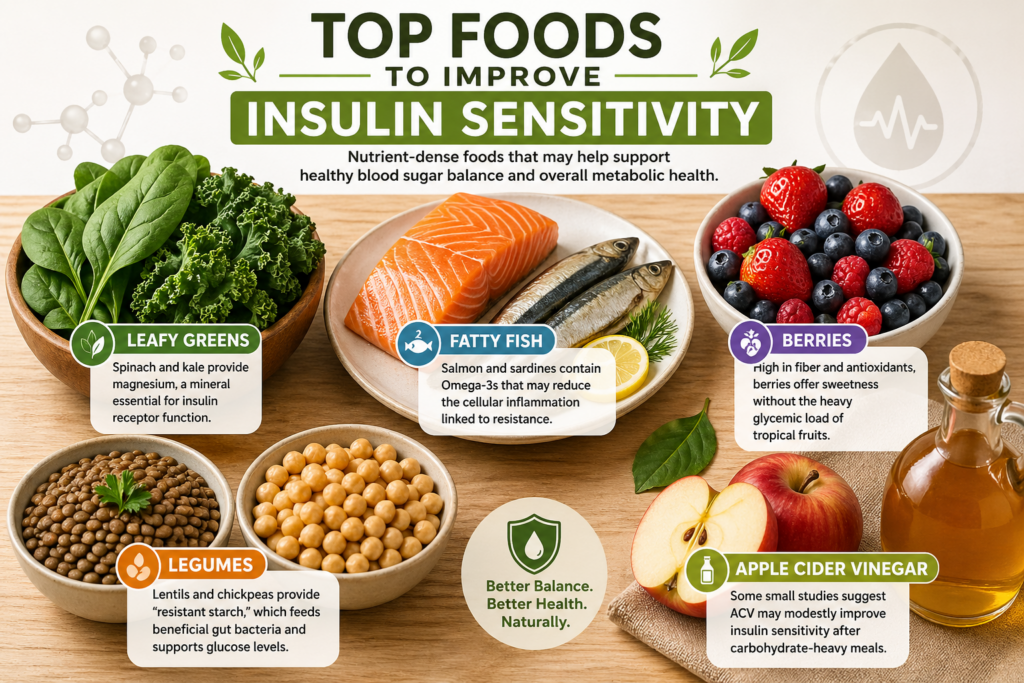
Top Foods to Improve Insulin Sensitivity
If you want to know what diet helps reverse insulin resistance naturally, start by incorporating these nutrient-dense options:
- Leafy Greens: Spinach and kale provide magnesium, a mineral essential for insulin receptor function.
- Fatty Fish: Salmon and sardines contain Omega-3s that may reduce the cellular inflammation linked to resistance.
- Berries: High in fiber and antioxidants, berries offer sweetness without the heavy glycemic load of tropical fruits.
- Legumes: Lentils and chickpeas provide “resistant starch,” which feeds beneficial gut bacteria and supports glucose levels.
- Apple Cider Vinegar: Some small studies suggest ACV may modestly improve insulin sensitivity after carbohydrate-heavy meals.
Timing and Intermittent Fasting
It isn’t just about what you eat; can diet fix insulin resistance also depends on when you eat. Intermittent fasting (IF) has gained popularity as a metabolic tool.
Intermittent fasting may help improve insulin sensitivity partly by reducing overall calorie intake and giving the body longer periods without elevated insulin levels. When insulin levels remain low for several hours, the body is forced to use stored fat for fuel, which can help reduce the visceral fat that contributes to resistance.
👉 For more details, explore our guide on Intermittent Fasting
Common Pitfalls: “Healthy” Foods That Stall Progress
Many people struggle with an insulin resistance diet because of hidden sugars in processed “health” foods.
- Fruit Juices: Even 100% natural juices lack the fiber of whole fruit, causing a rapid insulin spike.
- Flavored Yogurts: Often contain as much sugar as a dessert.
- Gluten-Free Processed Foods: Frequently use high-glycemic starches like potato or tapioca starch, which can worsen insulin resistance.
- Low-Fat Products: Manufacturers often add sugar to maintain flavor when fat is removed.
Clinical Insights and Evidence
Clinical lifestyle intervention programs often report significant improvements in metabolic markers. Many individuals with prediabetes experience normalized fasting insulin and weight loss within several months of consistent dietary changes.
Research from organizations like Virta Health has demonstrated that carbohydrate-restricted diets can lead to the “remission” of Type 2 diabetes in many patients. These results highlight that while you may have a genetic susceptibility to resistance, can changing your diet fix insulin resistance is often answered by the measurable improvements seen in clinical settings.
Frequently Asked Questions (FAQ)
Can insulin resistance be reversed naturally with food?
In many cases, the symptoms and markers of insulin resistance can improve or normalize with dietary changes. However, a person may remain metabolically susceptible, meaning they must maintain healthy habits to keep the condition from returning.
What are the best foods to reverse insulin resistance and prediabetes?
The most effective foods are those high in fiber and protein, such as leafy greens, lentils, wild-caught fish, and seeds. These provide essential nutrients while keeping blood sugar levels stable.
How to eat to improve insulin sensitivity fast?
Focus on “food sequencing”: eat your vegetables and protein first, and save complex carbohydrates for the end of the meal. This reduces the glucose impact of the entire meal.
Is fruit allowed on an insulin resistance diet plan?
Yes, but in moderation. Focus on low-glycemic fruits like berries and avoid fruit juices. Pairing fruit with a protein or fat, like almonds, further stabilizes the insulin response.
Can diet fix insulin resistance permanently?
Dietary changes can normalize your insulin function, but it is a lifestyle commitment. If a person returns to a diet high in processed sugars, insulin resistance is likely to return.
What is the worst food for insulin sensitivity?
Refined sugars and liquid carbohydrates (sodas, sweetened lattes) are the most damaging, as they cause the most significant and rapid insulin spikes.
Final Verdict
Can insulin resistance be improved with food? In many cases, insulin resistance can improve significantly through dietary changes and lifestyle adjustments. By shifting toward a diet rich in fiber, protein, and healthy fats, you support your body’s natural ability to regulate glucose.
While it may not be a “permanent” fix in the sense that you can return to poor eating habits, it is a powerful way to normalize your metabolism and prevent the progression to Type 2 diabetes. Consistency is the most important factor in seeing long-term metabolic improvement.
Start Your Metabolic Reset
You don’t need a perfect diet to start seeing results. Begin by swapping one refined carbohydrate today—like white bread or soda—for a high-fiber alternative.
To learn more about your metabolic health, explore our guides on the low glycemic foods list and Top Herbs and Spices for Better Blood Sugar Management
Sources & References
- Hallberg, S. J., et al. (2019). “Long-term secondary surveillance of a dietary intervention for type 2 diabetes.” Frontiers in Endocrinology.
- American Diabetes Association (2025). Standards of Care in Diabetes.
- Johnston, C. S., et al. (2004). “Vinegar improves insulin sensitivity to a high-carbohydrate meal.” Diabetes Care.
- Harvard Health Publishing. “Intermittent fasting: The positive news continues.”
- National Institute of Diabetes and Digestive and Kidney Diseases (NIDDK). “Insulin Resistance & Prediabetes.”
Editorial Review
Author: Maverick Simon D, MD – Endocrinology & Metabolic Health Specialist
Medically Reviewed By:
Dr. Elena Ramirez, MD, DipABLM Board-Certified Endocrinologist & Lifestyle Medicine Physician With over 15 years of clinical experience in metabolic health, Dr. Ramirez specializes in the physiological synergy between nutrition, exercise, and hormonal balance. She uses evidence-based lifestyle interventions to help patients improve insulin sensitivity and optimize body composition.
Disclaimer
The information provided is for educational purposes only. Herbs and spices may support healthy glucose regulation but should not replace prescribed diabetes treatments. Always consult a healthcare professional before starting new supplements or making major dietary changes.