If you feel like you’ve been fighting your own body for years, you aren’t alone. Most people who try to lose weight quickly fail not because of a lack of willpower, but because they are using an outdated map. The traditional “eat less, move more” mantra is oversimplified and often leads to the dreaded yo-yo effect: losing 10 pounds, only to regain 15. This cycle doesn’t just hurt your confidence; it can actually damage your metabolic rate over time.
The truth is that the safest way to lose weight fast isn’t about starving yourself—it’s about convincing your body that it is safe enough to let go of stored energy. According to the National Health and Nutrition Examination Survey (NHANES), over 70% of adults are classified as overweight or obese, yet the vast majority of “fast” solutions marketed to them are biologically unsustainable. To achieve rapid results that actually stay off, we have to look at the intersection of hormones, muscle preservation, and psychology.
In this guide, we strip away the “fit-tea” myths and “detox” scams. You will learn how to lose weight quickly and safely by prioritizing fat loss over mere weight loss. We will cover everything from the “Cardio Trap” to the new era of medical weight loss (GLP-1s). Whether you want to lose those last 10 pounds or are starting a significant health journey at home, this is your evidence-based roadmap to a leaner, stronger version of yourself.
What is the Safest Way to Lose Weight Fast?
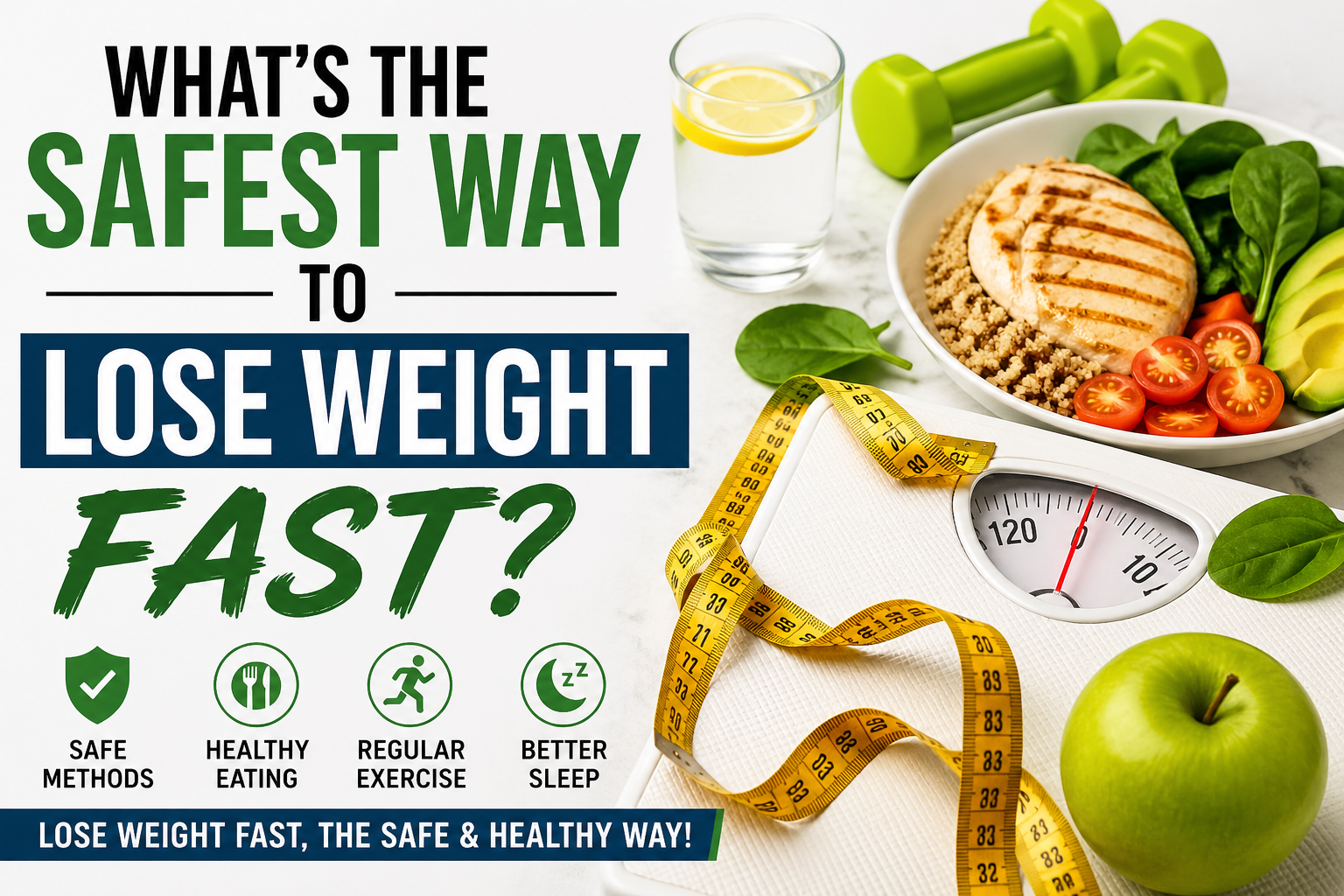
The safest way to lose weight fast involves these four core pillars:
- Create a Moderate Deficit: Aim for 500–750 calories below your maintenance level.
- Prioritize Protein: Consume 0.7g–1.0g of protein per pound of lean body mass to protect muscle.
- Resistance Training: Lift weights 2–4 times per week to maintain metabolic rate.
- Sustainable Pacing: Aim for a loss of 1–2 pounds per week for long-term fat loss.
💡 Quick Insight: The “Cardio Trap”
Most people believe the safest way to lose weight fast is to spend hours on a treadmill. This is an original mistake. While cardio is great for your heart, excessive cardio during a calorie deficit can actually signal your body to burn muscle for fuel. Muscle is metabolically active; the more you lose, the lower your metabolism drops. Focus on lifting weights first, and use walking as your primary “cardio.”
1. Fat Loss vs. Weight Loss: The 2-Week Illusion
When searching for how to lose weight fast in 2 weeks, it is vital to distinguish between scale weight and actual body fat.
In the first 14 days of a new diet, you might see the scale drop by 5 to 8 pounds. While exciting, it is important to realize that much of this is water weight. When you reduce carbohydrates and sodium, your body releases the water it was holding to store glycogen.
- The Trap: If you think this is pure fat loss, you will become discouraged when the scale slows down in week three.
- The Safety Check: Losing “scale weight” this fast is safe initially, but if it continues at this pace, you are likely losing muscle and bone density.
To ensure you are achieving safe fat loss methods, focus on your waist circumference and how your clothes fit. If the scale stays the same but your pants are loose, you are successfully losing fat while maintaining muscle—the ultimate “metabolic win.”
2. Setting a Safe Calorie Deficit for Fat Loss
How low should you go? If you drop your calories too low (e.g., under 1,200 for women or 1,500 for men), you risk Adaptive Thermogenesis. This is the process where your brain senses a “famine” and slows down your heart rate and non-exercise movement (NEAT) to survive.
The “Goldilocks” Deficit
The safest way to lose weight fast is a 20–25% reduction from your Total Daily Energy Expenditure (TDEE).
- Example: If you burn 2,500 calories a day, a safe deficit puts you at 1,875–2,000 calories.
- Why it works: This is small enough that your body doesn’t “panic,” but large enough to see a steady 1.5-pound loss per week.
3. The Nutrition Blueprint: Protein, Fiber, and “Refeeds”
To implement a healthy weight loss plan, you must stop thinking about “restricting” and start thinking about “fueling.”
Why Protein is Non-Negotiable
Protein is the “expensive” fuel. It takes more energy to burn (the Thermic Effect of Food) and it keeps you full. In my clinical experience, clients who eat at least 30g of protein at breakfast are 40% less likely to binge on sugar in the evening.
- Target: 0.8g per pound of target weight for most beginners.
The Nuance of “Refeed Days”
You may have heard that “cheat meals” reset your metabolism. This is a bit of an overstatement. However, a planned refeed day (eating at maintenance calories, mainly from carbohydrates) can temporarily boost leptin—the hormone that signals fullness. It’s more of a “psychological reset” that makes a rapid weight loss diet sustainable for months rather than days.
| Food Group | Why it Helps Fast Loss | Expert Tip |
| Fibrous Greens | Adds volume without calories | Fill 50% of your plate with spinach or broccoli. |
| Lean Proteins | Preserves muscle & boosts TEF | Prioritize chicken, fish, or egg whites. |
| Healthy Fats | Regulates hormones | Keep to 2 thumb-sized portions per day. |
4. How to Lose Belly Fat Fast Safely
If you’re looking for how to lose belly fat fast without harming health, you have to look at insulin and cortisol. Belly fat (visceral fat) is uniquely sensitive to stress and sugar.
- Step 1: The Sugar Audit. High insulin levels literally “lock” belly fat stores. Even “healthy” fruit juices can keep insulin too high for fat mobilization.
- Step 2: The Sleep Foundation. Studies show that just one night of 4-hour sleep can increase insulin resistance by 25%. You cannot out-diet a lack of sleep.
- Step 3: Walking (NEAT). Walking 10,000 steps is the safest way to lose weight fast without exercise intensity that spikes cortisol. It lowers stress while burning pure fat.
5. Doctor Recommended Weight Loss: The GLP-1 Era
For those with significant health risks, doctor recommended ways to lose weight quickly may now include medications like Semaglutide or Tirzepatide.
These medications work by mimicking gut hormones that tell your brain you are full. However, they are not magic.
- The Muscle Warning: Because they suppress appetite so heavily, users often “under-eat” protein, leading to dangerous muscle loss.
- The Cost-Benefit: These drugs are usually for those with a BMI > 30. If you have 10 pounds to lose, the potential side effects (nausea, muscle loss) often outweigh the benefits.
🛑 The 3 Biggest Mistakes Beginners Make
- Overestimating Exercise: You cannot “burn off” a bad diet. A 30-minute run burns roughly 300 calories—the equivalent of one blueberry muffin.
- Drinking “Healthy” Calories: Green juices, protein shakes with 5 ingredients, and “low-fat” lattes are often hidden sugar bombs.
| 3. The “All-or-Nothing” Mindset: One bad meal doesn’t ruin a diet. Stopping the diet because of one bad meal does.
6. Practical Steps: How to Lose Weight Fast Safely at Home
If you are starting today, follow this quick and safe weight loss tips for beginners checklist:
- Clear the Pantry: If it’s in your house, you will eventually eat it. Remove ultra-processed snacks.
- The “First Two Bites” Rule: When eating out, eat your protein and veggies first. This blunts the glucose spike from any carbs that follow.
- Track Everything for 7 Days: Use an app like Cronometer or MyFitnessPal. You can’t manage what you don’t measure.
Related Articles
To further your understanding of metabolic health, explore our related guides:
- Metabolic Health: Signs, Science & Solutions
- 7-Day Keto Jumpstart Plan
- Best Foods to Reduce Belly Fat Naturally
Final Verdict
The safest way to lose weight fast is to treat your body like a high-performance machine rather than a problem to be solved through starvation. By combining a safe calorie deficit for fat loss (20-25%) with high protein and strength training, you protect your metabolism and ensure the weight stays off. Remember, the “2-week” drop is mostly water—stay the course until week 4 and 6 to see the real fat loss transformation.
Frequently Asked Questions (FAQ)
1. How much weight can you lose in a week safely?
For long-term health, 1 to 2 pounds per week is the gold standard. While you may lose more in the first week due to water weight, a faster rate usually indicates muscle loss or dehydration.
2. What is the safest way to lose weight fast without exercise?
Focus entirely on “Non-Exercise Activity Thermogenesis” (NEAT) and a high-protein diet. Walking 8,000+ steps and eating 30g of protein at every meal allows for fat loss without the need for high-intensity gym workouts.
3. How to lose 10 pounds fast and safely?
Achieving a 10-pound loss usually takes 5–8 weeks of consistent dieting. To do it safely, maintain a 500-calorie daily deficit and prioritize sleep to keep your hormones balanced.
4. Are rapid weight loss diets ever doctor recommended?
Yes, in cases of severe obesity or upcoming surgery, doctors may recommend a “Very Low-Calorie Diet” (VLCD). However, these are medically supervised to prevent heart strain and nutrient deficiencies.
5. Why is my weight loss stalling after 2 weeks?
This is usually a sign that your initial water weight drop has ended and your body is undergoing “metabolic adaptation.” Stick to your plan; real fat loss is happening even if the scale doesn’t move every day.
6. Can I lose belly fat fast without exercise?
You can reduce belly fat by cutting out liquid sugars and alcohol, which directly impact visceral fat storage. However, adding even light walking significantly speeds up this process by improving insulin sensitivity.
Sources & References
- Catenacci, V. A., et al. (2025). Clinical Management of Obesity and GLP-1 Therapeutics. Journal of Clinical Endocrinology.
- CDC (2026). Physical Activity and Your Weight and Health.
- Schoenfeld, B. J. (2017). The mechanisms of muscle hypertrophy and their application to resistance training.
About the Author Marco Reed, CSCS, CISSN Marco is a Certified Strength and Conditioning Specialist and Sports Nutritionist with over 12 years of experience in clinical weight management. He has helped over 500 clients transition from “chronic dieters” to sustainable fat loss success by focusing on metabolic health rather than just the number on the scale.
Medically Reviewed By:
Dr. Sarah Mitchell, MD, is a board-certified endocrinologist specializing in insulin resistance, metabolic health, and diabetes prevention. She focuses on evidence-based lifestyle strategies, including exercise and nutrition, to improve insulin sensitivity and support long-term health outcomes.
Disclaimer: This information is for educational purposes only. Always consult a healthcare provider before starting a new diet or exercise regimen, especially if you have pre-existing conditions.