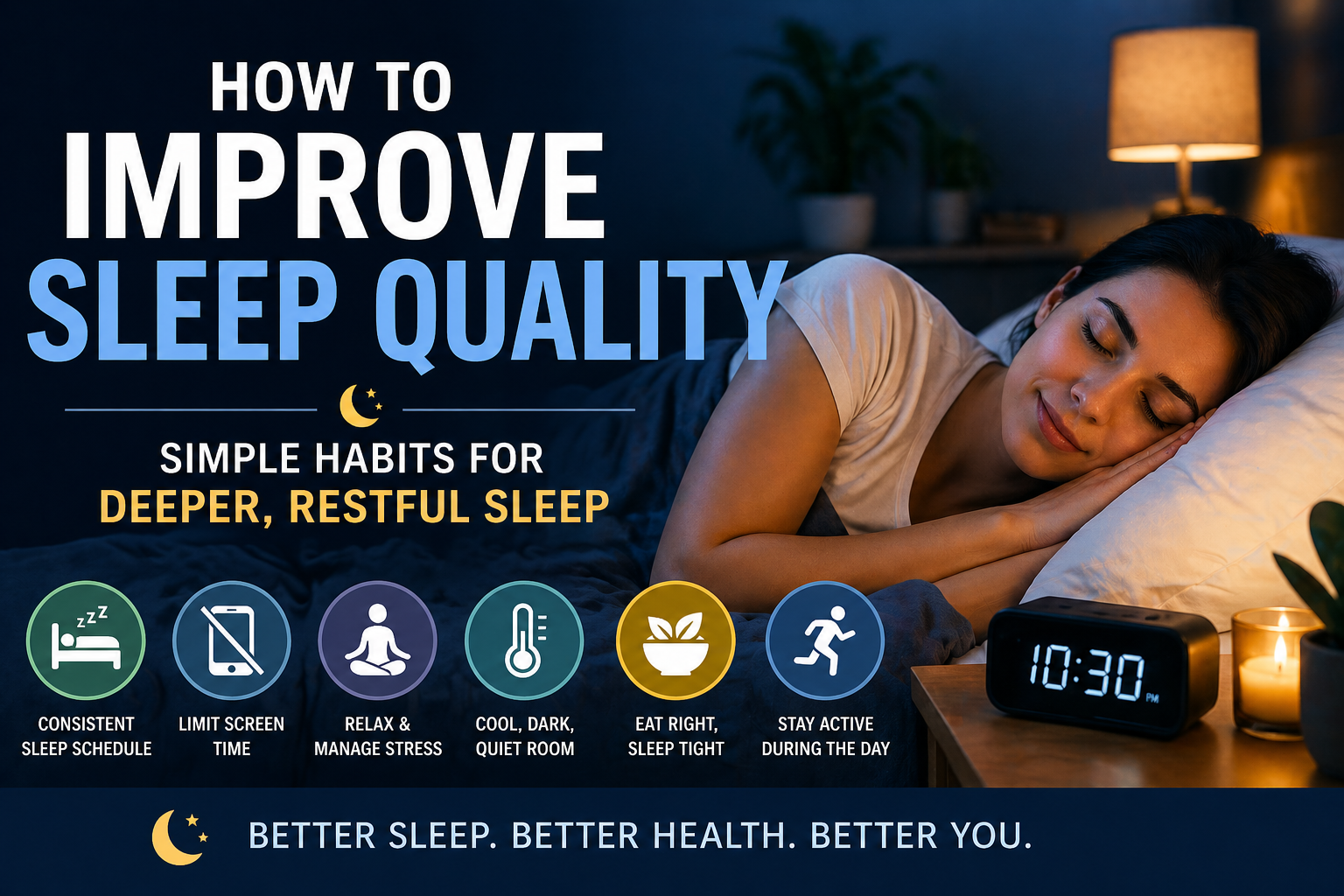
Do you wake up feeling just as tired as when you went to bed? You aren’t alone. Millions of people struggle with “junk sleep”—rest that lasts long enough but doesn’t actually repair the body or mind. While we often focus on how many hours we spend in bed, the real secret to health and longevity lies in how to improve sleep quality.
Quality sleep is the foundation of everything from your immune system to your emotional stability. When you consistently experience poor sleep, your risk for chronic conditions like heart disease, obesity, and brain fog skyrockets. It is one biological process we cannot afford to skip or cut corners on if we want to perform at our best.
In this comprehensive guide, we will dive deep into the science of rest. You will learn ways to improve sleep quality naturally, how to master your sleep hygiene, and the specific habits that help you fall into a deep, restorative state faster. Whether you are dealing with occasional restlessness or chronic fatigue, these evidence-based strategies will help you reclaim your nights.
To improve sleep quality, maintain a consistent sleep schedule, reduce screen time before bed, create a dark and cool sleep environment, limit caffeine, and practice relaxation techniques like deep breathing or meditation.
Understanding the Science of Sleep Quality
To fix your rest, you first need to understand the two main drivers of sleep: Sleep Pressure and your Circadian Rhythm.
Sleep pressure is caused by a chemical called adenosine that builds up in your brain every hour you are awake. The more adenosine you have, the sleepier you feel. On the other hand, your circadian rhythm is your internal 24-hour clock that responds to light and darkness.
When these two systems are out of sync, you experience poor sleep quality. For example, if you drink caffeine late in the day, it blocks your adenosine receptors. You might still “sleep,” but your brain won’t reach the deep stages necessary for physical repair. Understanding this balance is the first step in learning how to fix poor sleep quality for good.
The Foundations of Sleep Hygiene
One of the most effective best habits for better sleep is practicing strict sleep hygiene. Think of this as the “environmental maintenance” of your bedroom. Your brain needs specific cues to understand that it is time to transition from high-alert mode to rest mode.
1. Optimize Your Temperature
The human body needs its core temperature to drop by about 2 to 3 degrees Fahrenheit to initiate sleep. If your room is too warm, your body will struggle to reach this state, leading to “fragmented sleep” where you toss and turn.
- The Sweet Spot: Most experts recommend a room temperature around 65°F (18°C).
- Practical Tip: Use breathable cotton sheets or moisture-wicking pajamas to help regulate your body heat throughout the night.
2. Eliminate Light Pollution
Light is the enemy of melatonin, the hormone that tells your brain it is time to sleep. Even the tiny glow from a charging phone or a digital clock can disrupt your sleep cycle.
- Total Darkness: Invest in blackout curtains or a high-quality silk sleep mask.
- Dim the Lights Early: Start lowering the lights in your home 60 minutes before bed to signal your brain to start producing melatonin.
3. Manage the Soundscape
While some people enjoy total silence, others find that “white noise” helps mask disruptive sounds like traffic or a snoring partner. The goal is consistency. Sudden noises are what wake the brain, so a steady background hum can be one of the best ways to improve sleep quality naturally.
How to Get Deep Sleep Fast
Many people ask how to get deep sleep fast because they feel they are stuck in “light sleep” all night. Deep sleep, also known as slow-wave sleep, is when your body repairs tissues, builds bone and muscle, and strengthens the immune system.
Establish a “Power-Down” Hour
You cannot expect your brain to flip a switch from “100 mph” to “0” instantly. A 60-minute wind-down period is essential.
- First 20 Minutes: Tackle “must-do” chores for the next day (packing a bag, setting out clothes) to reduce morning anxiety.
- Next 20 Minutes: Personal hygiene (a warm bath or shower). As you step out of a warm shower, your body temperature drops rapidly, mimicking the natural dip needed for sleep.
- Final 20 Minutes: Meditation, light stretching, or reading a physical book (no e-readers with blue light).
The Role of Physical Activity
If you want to know what habits improve sleep quality fast, look at your workout schedule. Regular exercise increases the time you spend in deep sleep. However, timing is everything.
- Morning/Afternoon: Ideal for high-intensity training.
- Late Evening: Avoid heavy lifting or intense cardio within 2-3 hours of bedtime. As seen in the graphic above, if you finish a workout at 8:30 PM, you must allow at least two hours for your heart rate and core temperature to return to baseline before attempting to sleep at 10:30 PM.
Dietary Habits to Improve Sleep Without Medication
What you put in your body during the day dictates how you feel at night. If you want to improve sleep without medication, you must audit your intake of stimulants and heavy foods.
The Caffeine Curfew
Caffeine has a half-life of about 5 to 6 hours. This means if you have a cup of coffee at 4:00 PM, half of that caffeine is still in your system at 10:00 PM.
- The Rule: Try to stop all caffeine intake by noon, or at the very least, 10 hours before your desired bedtime.
Alcohol: The Great Deceiver
Many people use a “nightcap” to help them fall asleep. While alcohol is a sedative that might help you drift off faster, it is a disaster for sleep quality. It prevents you from entering REM (Rapid Eye Movement) sleep, which is vital for emotional processing and memory. This is a primary reason why people wake up feeling groggy after drinking.
Magnesium-Rich Foods
Magnesium is a natural mineral that helps the muscles relax and regulates the nervous system. Integrating foods like spinach, pumpkin seeds, and almonds into your dinner can be a great way to improve sleep quality naturally at home.
Master Your Mind: Reducing Nighttime Anxiety
“Why can’t I sleep well at night?” For many, the answer isn’t physical—it’s mental. The moment your head hits the pillow, your brain decides to replay every embarrassing moment from 2014 or worry about tomorrow’s meeting.
The “Brain Dump” Technique
If you find your mind racing, keep a notebook by your bed. Write down every task, worry, or “to-do” item currently in your head. By externalizing these thoughts, you give your brain permission to stop “looping” them, making it much easier to fall into a peaceful state.
Controlled Breathing (The 4-7-8 Method)
This is a powerful tool to how to get better sleep at night without waking up.
- Inhale through your nose for 4 seconds.
- Hold your breath for 7 seconds.
- Exhale forcefully through your mouth for 8 seconds.
This rhythm forces your nervous system to switch from “Sympathetic” (fight or flight) to “Parasympathetic” (rest and digest).
Fixing Common Sleep Disruptors
Sometimes, improving sleep quality requires identifying what is stealing it. Here is how to handle the most common culprits:
| Disruptor | Impact on Sleep | Recommended Fix |
| Blue Light | Suppresses melatonin production | Use “Night Shift” mode or blue-light blocking glasses after 7 PM. |
| Large Meals | Causes indigestion and acid reflux | Finish eating at least 3 hours before bed. |
| Napping | Reduces “Sleep Pressure” | Keep naps under 20 minutes and before 3:00 PM. |
| Irregular Times | Confuses the Circadian Rhythm | Wake up at the same time every day, even on weekends. |
When to Seek Professional Help
If you have tried all the tips to sleep better at night naturally and still find yourself exhausted, it may be time to consult a doctor. Conditions like Sleep Apnea (where breathing stops and starts) or Restless Leg Syndrome cannot be fixed by pillows and darkness alone.
If you experience loud snoring, gasping for air during the night, or chronic insomnia that lasts longer than a month, a sleep study might be necessary to protect your long-term health.
Final Verdict
Improving your sleep quality is not about a single “magic pill” or a high-tech gadget; it is about respecting your body’s biological rhythms. By focusing on how to improve sleep quality through consistent habits—like maintaining a cool environment, sticking to a “caffeine curfew,” and creating a dedicated wind-down routine—you can transform your health.
Remember, sleep is an investment, not an expense. When you prioritize deep, restorative rest, you aren’t just “sleeping better”—you are gaining more energy, better focus, and a longer life. Start with one change tonight, such as dimming your lights an hour before bed, and build from there.
Frequently Asked Questions (FAQ)
1. How can I improve my sleep quality naturally at home?
You can improve sleep naturally by sticking to a consistent sleep schedule, keeping your bedroom cool (65°F), and avoiding screens 60 minutes before bed. These habits help regulate your internal clock and boost melatonin production.
2. How do I get more deep sleep at night?
To increase deep sleep, focus on regular physical activity during the day and avoid alcohol in the evening. Alcohol blocks the restorative stages of sleep, while exercise helps your body transition into deeper, reparative cycles.
3. Why can’t I sleep well even if I’m tired?
Being “tired but wired” is often caused by high cortisol levels or blue light exposure late at night. Your body is physically exhausted, but your brain thinks it should be awake because of light or stress.
4. How long does it take to fix poor sleep quality?
Most people notice an improvement within 7 to 14 days of consistent sleep hygiene. Your body needs time to reset its circadian rhythm, so consistency with wake-up times is the most important factor.
5. Can I improve my sleep without taking medication?
Yes, most sleep issues are behavioral. By managing light exposure, reducing caffeine, and using relaxation techniques like the 4-7-8 breathing method, you can significantly improve rest without relying on over-the-counter sleep aids.
6. Does a late-night workout ruin sleep quality?
It depends on the intensity. High-intensity workouts raise your core temperature and heart rate, which can delay sleep. If you work out late, ensure you have a 2-hour buffer to cool down before bed.
Ready to wake up refreshed? Start your journey to better rest by implementing a “Power-Down Hour” tonight. Put away your phone, dim the lights, and give your brain the peace it deserves.
For more guides on optimizing your health and wellness, explore our [Best time to work out] and [How Exercise Enhances the Effectiveness of a Healthy Diet]. Your best night of sleep is just a few habits away!
Sources & References
- Walker, M. (2017). Why We Sleep: Unlocking the Power of Sleep and Dreams.
- National Sleep Foundation (2023). Sleep Hygiene Recommendations and Core Body Temperature.
- Harvard Health Publishing (2022). Blue light has a dark side.
Medically Reviewed By:
Dr. Elena Ramirez, MD, DipABLM Board-Certified Endocrinologist & Lifestyle Medicine Physician With over 15 years of clinical experience in metabolic health, Dr. Ramirez specializes in the physiological synergy between nutrition, exercise, and hormonal balance. She uses evidence-based lifestyle interventions to help patients improve insulin sensitivity and optimize body composition.
Disclaimer: The information provided in this article is for educational and informational purposes only and should not be considered professional advice. Always consult a qualified professional or specialist before making decisions related to the topic.