
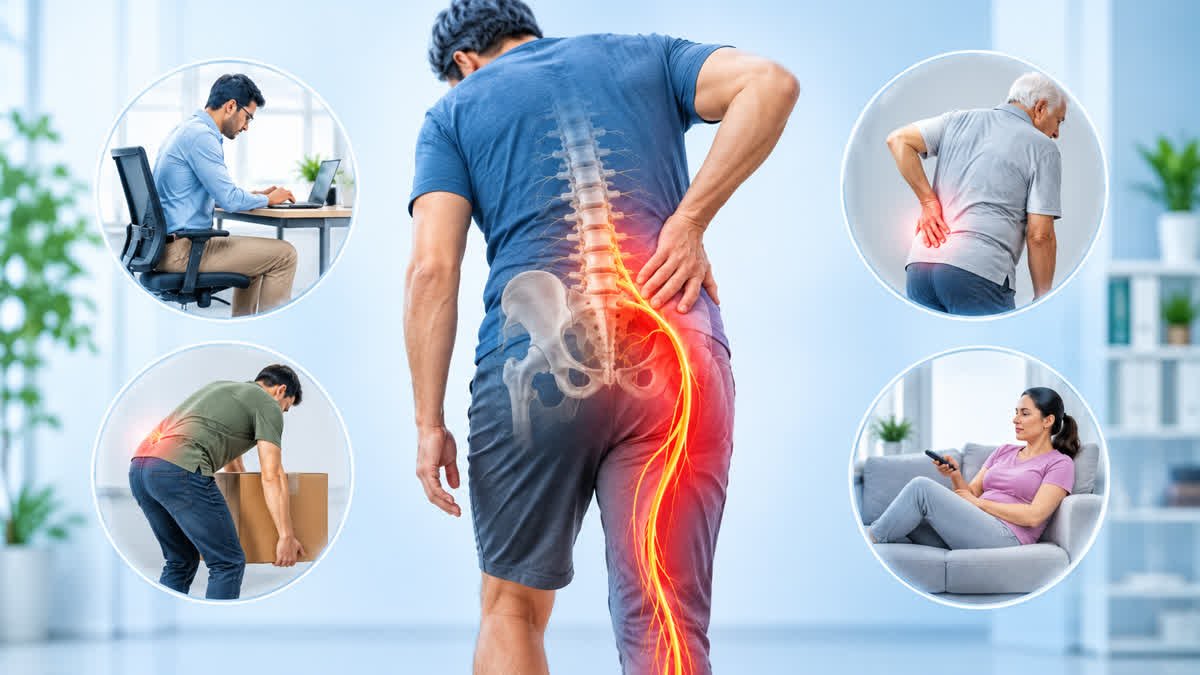

Sciatica is pain that travels along the sciatic nerve, typically from the lower back through the buttock and into one leg. It can affect people with very different lifestyles and health backgrounds, from office workers to manual laborers to avid runners. Many people wonder why it happened to them, and whether they could have done something differently.
Research suggests that several factors may raise the likelihood of developing sciatica. These include age-related spinal changes, smoking, excess body weight, physically demanding work, long periods of sitting or inactivity, certain health conditions such as diabetes, and a history of back problems. A risk factor is an association, not a guarantee, so having one or more of them does not mean you will develop sciatica.
This guide explains the main sciatica risk factors, how they differ from direct causes, which ones you may be able to change, and what general habits may help support your back. It is educational information, not individualized medical advice.
Emergency warning signs: get medical care right away. Seek emergency care (call 911 in the U.S.) if you have new difficulty controlling or emptying your bladder, loss of bowel control, numbness around the groin, genitals, or anus, or severe or rapidly worsening weakness in both legs. These may be signs of cauda equina syndrome, a rare but serious condition. The NHS and Mayo Clinic both advise immediate care for these symptoms.
What Is Sciatica?
The sciatic nerve is the longest nerve in the body. It forms from nerve roots in the lower spine, passes through the buttock, and runs down the back of each leg. MedlinePlus describes sciatica as a symptom of a problem with this nerve, and it usually affects only one side of the body.
When a nerve root is irritated or compressed, the signals it carries can change along the whole length of the nerve. That is why a problem near the spine can cause symptoms in the buttock, thigh, calf, or foot. Common symptoms include:
- Pain that travels from the lower back or buttock into the leg
- Tingling or pins-and-needles sensations
- Numbness in part of the leg or foot
- Muscle weakness in more serious cases
Sciatica is a symptom pattern, not a disease on its own. It points to an underlying problem, such as a herniated disc or spinal narrowing. For a closer look, see our guides on the early signs of sciatica and what causes sciatica.
How Does Sciatica Develop?
It helps to separate two ideas: what directly irritates the nerve, and what makes that more likely to happen.
Pressure or Irritation Around the Sciatic Nerve
Most cases begin when a nerve root in the lower spine is pressed on or irritated. A herniated disc is a common cause. This happens when the soft center of a spinal disc pushes through a weaker outer layer and presses on a nearby nerve root.
Spinal stenosis (narrowing of the spaces around the nerves) and bone spurs can have a similar effect. Mayo Clinic notes that sciatica usually results from a herniated disc or an overgrowth of bone pressing on the nerve roots.
Why Certain Risk Factors Matter
Risk factors do not press on the nerve themselves. Instead, they may make the conditions behind sciatica more likely. Age-related changes in the discs, repeated physical stress on the spine, and general health habits may all play a role.
The distinction matters. A herniated disc is a direct cause of nerve irritation, while factors like smoking or heavy lifting are associated with a higher chance of developing that kind of problem. Researchers also note that individual risk factors tend to explain only a modest part of why someone develops sciatica, and several often overlap.
Main Risk Factors for Sciatica
A systematic review of first-time sciatica grouped risk factors into modifiable ones (smoking, obesity, occupational factors, and health status) and non-modifiable ones (age, gender, and social class). The sections below cover the most commonly discussed factors.
1. Age and Natural Spinal Changes
Spinal discs change over time. They tend to lose water content and flexibility, which can make them more likely to bulge or herniate. Bone spurs and narrowing of the spinal canal also become more common as we age.
A 2022 overview in Cureus reports that sciatica affects both genders and that incidence peaks around the fourth decade of life. Mayo Clinic notes that herniated discs are most likely in people ages 20 to 50, while bone spurs develop more commonly in older adults.
This does not mean sciatica only affects midlife or older adults. Younger adults can develop it too, especially after an injury or with certain spinal conditions. Risk varies across age groups, and age alone is never the whole story.
2. Excess Body Weight
Carrying extra weight can increase the mechanical load on the spine, and Mayo Clinic lists obesity as a risk factor. The Cureus overview, citing large cohort studies, reports that obesity was associated with a higher risk of hospitalization for sciatica.
Body weight alone does not decide whether someone develops sciatica. Many people at every size have it, and many people with higher body weight never do. If weight is a concern for you, supportive and sustainable habits, such as regular movement and balanced eating, tend to work better than drastic approaches. Our guide on weight management offers balanced information.
3. Prolonged Sitting and Physical Inactivity
Staying in one position for hours may add to back discomfort. Mayo Clinic notes that people who sit a lot or do not move much are more likely to develop herniated discs than active people. This applies to desk-based jobs, long periods of driving, and generally sedentary routines.
Sitting does not automatically cause sciatica. Still, regular movement and activity breaks may support general back health. For more on this, see our articles on what causes a sedentary lifestyle, its risk factors, and good desk posture.
4. Jobs Involving Heavy Lifting
Occupations that involve repeated lifting, carrying, bending, and twisting can place stress on the spine. Examples include warehouse work, construction, and other physically demanding manual jobs. Mayo Clinic lists jobs that require twisting the back, carrying heavy loads, or driving a motor vehicle for long periods as factors that might play a role in herniated discs.
The Cureus overview also describes regular lifting and whole-body vibration as forms of physical stress on the spine linked to sciatica. Appropriate lifting practices, task rotation, and workplace support may help reduce strain, although they cannot remove the risk entirely.
5. Smoking
Smoking is associated with a higher risk of sciatica. The NHS says smoking can increase the risk, and the systematic review lists it among the modifiable risk factors. The Cureus overview, referencing cohort data, reports that current smokers had a higher risk of hospitalization for sciatica, while former smokers were no longer at increased risk.
Smoking may affect spinal and disc health in several ways. Researchers are still working out the exact mechanisms. The takeaway is a hopeful one: smoking is a factor you may be able to change, and support is available for quitting.
6. Diabetes
Diabetes can increase the risk of nerve damage, and Mayo Clinic lists it as a risk factor. It is important to know that diabetic peripheral neuropathy is a different condition from sciatica. Neuropathy typically affects the feet and hands more broadly, while sciatica follows the path of one sciatic nerve.
Leg pain, tingling, or numbness in someone with diabetes does not automatically mean sciatica. If you have diabetes and new nerve symptoms, a healthcare professional can help sort out the cause. You can read more in our overviews of what diabetes is and type 2 diabetes.
7. Previous Back Pain or Spinal Problems
A history of lower back pain may be relevant to future episodes. The Cureus overview lists a history of lower back pain among general health factors linked to sciatica. Prior disc problems, degenerative disc disease, or spinal stenosis can also make recurrence more likely.
That said, previous back pain does not guarantee that you will develop sciatica. Many people have back pain for years without ever having leg symptoms. For background, see our guide on what causes back pain.
8. Repetitive Bending, Twisting, and Awkward Postures
Repeated bending and twisting can stress the lower back, particularly when the movements are combined with heavy lifting. Jobs and hobbies that involve frequent bending, such as gardening, plumbing, or nursing, may add up over time.
Varied movement, sensible technique, and regular breaks may help. There is no single perfect posture, and moving often matters more than holding any one position.
Medical Conditions That May Increase Sciatica Risk
Some conditions are direct causes of nerve irritation, while others raise the chances in different ways. A clinician can help work out which applies to you.
Herniated or Bulging Discs
Disc material can press against nearby nerve roots, which makes a herniated disc one of the most common underlying causes of sciatica. A bulging disc extends past its normal boundary and may or may not press on a nerve. Not every disc change causes symptoms, and many people have them on imaging without pain.
Spinal Stenosis
Spinal stenosis is a narrowing of the spaces within the spinal canal or where nerves exit. The narrowing can put pressure on spinal nerves. It is often linked to age-related changes, and it does not always cause symptoms. The NHS lists it among the main causes of sciatica.
Degenerative Disc Disease
With time, discs can lose hydration and flexibility. These changes can contribute to other spinal problems, such as herniation or narrowing. The name sounds alarming, but disc degeneration is common and is a normal part of aging for many people.
Spondylolisthesis
Spondylolisthesis occurs when one vertebra slips forward over the one below it. This can narrow the space available for a nerve root and contribute to compression, depending on the degree of slippage and where it occurs.
Diabetes and Nerve Health
Diabetes increases the chance of nerve damage generally, but diabetic neuropathy and sciatic nerve-root irritation are different. Getting the right diagnosis matters, because the two conditions are managed differently.
Lifestyle and Occupational Factors That May Contribute to Sciatica
Sedentary Daily Routines
Long hours of sitting at work, school, or while traveling may contribute to back stiffness and discomfort. Regular movement breaks are a simple way to support general back health.
Physically Demanding Work
Repeated lifting, awkward positions, and prolonged driving can all stress the lower back. Workplace ergonomics, such as adjustable equipment and lifting aids, may help. Employers and employees can often work together on practical changes.
Limited Physical Activity
Low activity can reduce conditioning and make everyday tasks feel harder on the back. Regular, appropriate activity is generally beneficial. The Cureus overview, citing cohort studies, reports that walking or cycling to work was associated with a lower risk of hospitalization for sciatica. See our guides on the benefits of exercise and how to build a step count habit.
General Health and Lifestyle
Smoking, excess body weight, and overall health can interact. The systematic review notes that several of these factors are tied to unhealthy lifestyles, which may work together toward the development of sciatica. Psychological stress, such as monotonous work or low mood, has also been discussed as a contributor in the research.
Sciatica Risk Factors You Can and Cannot Change
Some risk factors are within your control, while others are not. This table gives a general overview.
| Factors that may be modifiable | Factors that are generally not modifiable |
|---|---|
| Smoking | Age |
| Physical inactivity | Natural aging changes in the spine |
| Occupational exposures (in some cases) | Previous injuries |
| Prolonged sitting habits | Some inherited tendencies |
| General health habits | Certain existing spinal conditions |
Some overlap exists. For example, an occupation may be hard to change, while how you move at work often can be adjusted. Having non-modifiable risk factors does not mean you are destined to develop sciatica. Many people with several of them never do.
Can You Reduce Your Risk of Sciatica?
No approach can eliminate every possible cause, but general habits may help support your back. The NHS suggests staying active, not smoking, using a safe technique when lifting, keeping good posture when sitting and standing, and losing weight if you are overweight.
Helpful habits may include:
- Staying physically active with activities you enjoy and tolerate
- Taking regular movement breaks during desk work or long drives
- Using sensible lifting techniques, such as keeping loads close to your body
- Setting up your workspace for comfort and support
- Avoiding smoking, and asking a healthcare professional about support for quitting
- Managing existing health conditions, such as diabetes, with professional guidance
- Getting advice early when recurring back pain or unusual leg symptoms develop
The systematic review suggests that most identified risk factors are modifiable, which points to possible benefits of prevention. Still, the evidence is not definitive, and sciatica can happen even when you do everything right. For general guidance, see our articles on exercises for lower back pain and healthy habits.
When Should You Seek Medical Advice?
Contact a healthcare professional if you have:
- Back or leg pain that is persistent or getting worse
- Numbness or tingling that does not improve
- New or increasing leg weakness
- Symptoms that interfere with normal daily activities
The NHS advises seeing a clinician if symptoms have not improved after a few weeks of home care, or if they are getting worse.
Seek emergency care immediately for new loss of bladder or bowel control, numbness around the groin or saddle area, or rapidly worsening leg weakness. These need urgent assessment, not a routine appointment. Call 911 or ask someone to take you to the emergency department.
For more on care options, see our guide to sciatica treatment options and our article on what makes sciatica worse.
Frequently Asked Questions About Sciatica Risk Factors
What Is the Biggest Risk Factor for Sciatica?
There is no single biggest risk factor for everyone. A herniated disc is a common underlying cause, while age, smoking, excess body weight, and physically demanding work may influence the likelihood of developing it. The systematic review also notes that sciatica is defined inconsistently across studies, which makes comparisons difficult.
Can Sitting Too Much Increase the Risk of Sciatica?
It may be associated with higher risk. Mayo Clinic notes that people who sit a lot are more likely to develop herniated discs than active people. Sitting alone does not directly cause sciatica, and regular movement breaks may help.
Does Age Increase the Risk of Sciatica?
Yes, age is associated with the spinal changes that can lead to sciatica, such as disc wear, bone spurs, and narrowing. The Cureus overview reports that incidence peaks around the fourth decade of life. Younger and older adults can both be affected.
Can Diabetes Cause Sciatica?
Diabetes raises the risk of nerve damage, but diabetic neuropathy is a different condition from sciatica, which involves irritation of a nerve root or the sciatic nerve itself. Both can cause leg tingling or numbness, so a clinician should assess new symptoms. Mayo Clinic lists diabetes among the risk factors.
Is Sciatica Hereditary?
Sciatica is not simply an inherited condition. Some inherited tendencies may influence spinal health, such as how discs age, but lifestyle, occupation, and injury also matter. Having a relative with sciatica does not mean you will develop it.
Can Sciatica Be Prevented?
Risk may be reduced through supportive habits, such as staying active, avoiding smoking, and using safe lifting techniques, as the NHS describes. Prevention is not always possible, though, and sciatica can come back even if you have had it before.
Conclusion
Sciatica risk factors include age and natural spinal changes, smoking, excess body weight, prolonged sitting and inactivity, physically demanding work, diabetes, and a history of back problems. Together they may play a role, but none of them guarantees that sciatica will develop.
Risk factors are different from direct causes. A herniated disc or spinal narrowing is what presses on the nerve, while lifestyle, occupation, and health conditions can make those problems more likely. Some factors can be changed, and others cannot.
If you have persistent or concerning symptoms, talk with a healthcare professional. Understanding your risk can help you make informed choices about your back health. To learn more, see our guides on what causes sciatica and the early signs of sciatica.
Sources
- Cook CE, et al. Risk factors for first time incidence sciatica: a systematic review. Physiotherapy Research International, 2014.
- Cureus. Risk Factors, Prevention, and Primary and Secondary Management of Sciatica: An Updated Overview. 2022.
- Mayo Clinic. Sciatica: symptoms and causes.
- NHS. Sciatica overview.
- NHS. Sciatica treatment and prevention.
- MedlinePlus. Sciatica.
- National Institute for Health and Care Excellence (NICE). Low back pain and sciatica in over 16s: assessment and management (NG59).
Medical Disclaimer: This article is for general educational purposes only and is not medical advice. It does not diagnose any condition or replace a visit with a qualified healthcare professional who knows your health history. Do not ignore professional advice or delay seeking care because of something you read here. If you think you may have a medical emergency, such as new weakness in both legs, numbness around the groin, or loss of bladder or bowel control, call 911 or your local emergency number right away.