

Asthma can cause recurring coughing, wheezing, chest tightness, and shortness of breath. But having these symptoms does not automatically mean someone has asthma. Many other conditions can cause similar problems.
So how is asthma diagnosed? Healthcare professionals combine your medical history, a physical examination, and specialized breathing tests to see whether asthma is the cause. Asthma is a chronic respiratory condition involving airway inflammation and breathing symptoms that vary over time.
This guide explains what clinicians look for, which tests are used, how the process differs for children, and what can be mistaken for asthma. It also covers what happens after a diagnosis, so you know what to expect from an evaluation.
Understanding How Asthma Is Diagnosed
Asthma diagnosis is more than spotting a cough or a wheeze. Clinicians look for a pattern of symptoms and, where possible, objective evidence from lung function tests.
What Is Asthma?
Asthma affects the airways, the tubes that carry air into and out of the lungs. In people with asthma, the airways are inflamed and more sensitive than usual. When triggered, the muscles around them tighten, the lining swells, and the airways may produce extra mucus.
These changes narrow the airways and make it harder to move air. What makes asthma distinctive is that this airflow limitation varies. It can be worse at some times and better at others, even within the same day.
Why Is an Accurate Asthma Diagnosis Important?
Asthma symptoms overlap with many other conditions, and different conditions need different treatments. An accurate diagnosis helps your healthcare professional choose the right approach. It can also reduce the chance of being treated for asthma you do not have, or of missing asthma that you do.
Research reviews have noted that asthma is both over-diagnosed and under-diagnosed. A European Respiratory Society task force pointed to limited use of lung function testing as one reason diagnoses can be wrong.
The Global Initiative for Asthma (GINA) describes two central findings for diagnosis:
- A history of characteristic, variable breathing symptoms.
- Evidence of variable expiratory (breathing out) airflow limitation, shown through appropriate testing.
Common Asthma Symptoms Doctors Look For
Doctors usually start by asking about your symptoms. These are the ones that most often lead them to consider asthma.
Wheezing
Wheezing is a whistling or squeaky sound during breathing, often more noticeable when you breathe out. It is one of the best known asthma symptoms. However, not everyone with asthma wheezes.
Persistent or Recurrent Coughing
Coughing that returns again and again can point to asthma, especially if it occurs at night, after exercise, or after exposure to allergens. In cough-variant asthma, coughing may be the main or only symptom. Our guide on what causes a cough covers other possible explanations.
Shortness of Breath
Some people feel winded during everyday tasks, such as climbing stairs. Others notice it mostly during exercise. You can read more about possible causes in our overview of shortness of breath.
Chest Tightness
Chest tightness feels like pressure or a band squeezing the chest. It can occur on its own or with other symptoms.
Symptoms That Change Over Time
Variation is a key clue. Asthma symptoms often:
- Come and go.
- Get worse at night or early in the morning.
- Increase after exercise.
- Flare with cold air, allergens, or respiratory infections.
- Vary in intensity from day to day.
If you ever have severe breathing difficulty, trouble speaking because of breathlessness, or blue or gray lips, call 911 or your local emergency number right away.
How Doctors Evaluate Possible Asthma
Before ordering specialized tests, a clinician will usually review your history and examine you.
Reviewing Medical History
Expect questions like these:
- When did your breathing symptoms start?
- How often do they happen?
- Are they worse at night?
- Does exercise trigger coughing or wheezing?
- Do you have known allergies?
- Does anyone in your family have asthma or allergic conditions?
- Do dust, smoke, or pollen make symptoms worse?
The National Heart, Lung, and Blood Institute (NHLBI) encourages people to tell their provider about any possible risk factors. Our guide to asthma risk factors can help you prepare.
Physical Examination
During the exam, your doctor may:
- Listen to your lungs with a stethoscope.
- Check your breathing pattern.
- Listen for wheezing.
- Look at your nose and throat for signs of allergies.
- Look for other explanations for your symptoms.
A normal exam does not rule out asthma. Symptoms and lung function vary, so your breathing may sound completely normal during an appointment. That is one reason clinicians often turn to testing. Guidance from NICE also emphasizes objective tests as part of diagnosis.
What Tests Are Used to Diagnose Asthma?
Clinicians choose tests based on age, symptoms, history, available equipment, and diagnostic guidelines. No single test works for everyone. Here are the main ones.
1. Spirometry Test
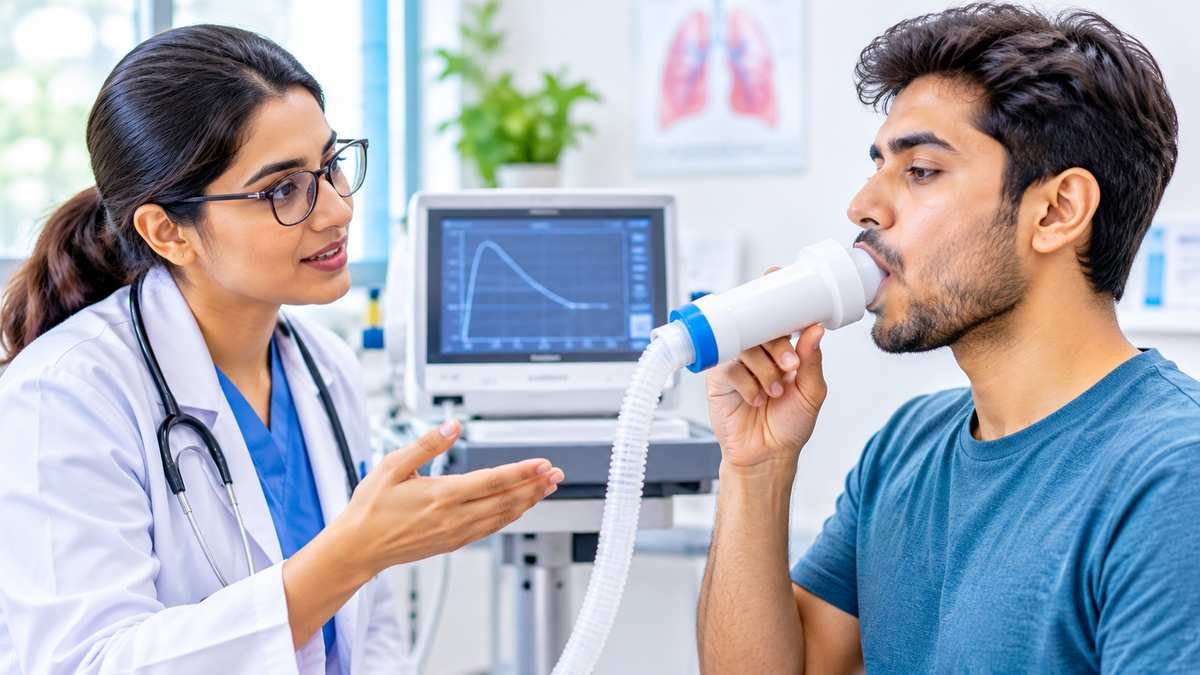
Spirometry is one of the most important tests for suspected asthma. It measures how much air you can breathe out and how fast.
You sit and breathe into a mouthpiece connected to a machine, following instructions from a healthcare professional. You will usually take a deep breath in and then blow out as hard and as fast as you can. Two measurements matter most:
- FEV1 (forced expiratory volume in one second): How much air you can force out in the first second.
- FVC (forced vital capacity): The total amount of air you can forcefully breathe out.
Comparing these numbers helps show whether the airways are narrowed. The NHLBI notes that some people feel lightheaded or tired from the effort, which is normal and usually passes quickly.
2. Bronchodilator Response Test
This test shows whether your airflow improves after a fast-acting bronchodilator, a medicine that relaxes the muscles around the airways. The steps are simple:
- You do spirometry to get a baseline.
- You receive a prescribed bronchodilator.
- You repeat the breathing test after a short wait.
- The clinician compares the two sets of results.
A meaningful improvement suggests airflow limitation that can reverse, which supports an asthma diagnosis. A single normal result does not exclude asthma, because results depend on timing and on whether you are already taking treatment.
3. Peak Expiratory Flow (PEF) Test
A peak flow meter is a small handheld device. You blow into it as hard as you can, and it shows how fast air leaves your lungs.
Because asthma varies, clinicians may ask you to record readings over days or weeks. Large swings between readings can point to variable airflow. Spirometry is generally more reliable when it is available, but peak flow can be useful, including at home.
4. Fractional Exhaled Nitric Oxide (FeNO) Test
This test measures nitric oxide in your breath, which can rise when airways are inflamed. You breathe steadily into a mouthpiece connected to a device.
An NHLBI fact sheet explains that FeNO does not directly test for asthma, but it can help confirm a diagnosis in adults and children ages 5 and older when the diagnosis is unclear. It also says FeNO alone should not be used to diagnose asthma.
In practice, a high result does not prove asthma, and a normal result does not completely rule it out.
5. Allergy Testing
Allergies contribute to asthma symptoms in some people. Two common methods are:
- Skin prick testing: Small amounts of allergens are placed on the skin to see if a reaction occurs.
- Specific IgE blood tests: These look for allergy-related antibodies in the blood.
Common allergens include dust mites, pollen, mold, and pet dander. Results can help explain possible triggers. However, a positive allergy test alone does not establish an asthma diagnosis.
6. Bronchial Challenge Test
If early results are unclear but asthma is still suspected, a specialist may recommend a bronchial challenge test. It checks how sensitive your airways are, which is called airway hyperresponsiveness.
Lung function is measured before and after a controlled exposure, such as an inhaled substance. Because it can provoke symptoms, it must be done under appropriate medical supervision.
7. Blood Tests and Chest Imaging
These tests are sometimes used to look into other possibilities or to add information.
- Blood eosinophils may hint at a type of airway inflammation.
- Blood allergy tests may be used where appropriate.
- Chest X-rays may be ordered if a doctor suspects another condition.
- Chest CT scans are used only in selected situations.
In most cases, blood tests and imaging do not confirm ordinary asthma by themselves.
Does the Order of Tests Matter?
Approaches vary. The European Respiratory Society task force cited earlier suggested starting with spirometry and then bronchodilator testing if airway obstruction is present. If spirometry does not show obstruction, further tests such as FeNO, peak flow variability, or bronchial challenge may follow. Your clinician will decide what fits your situation.
How Is Asthma Diagnosed in Children?
Diagnosing asthma in children can take a different approach, especially for the youngest ones.
Recognizing Childhood Asthma Symptoms
Signs that may prompt an evaluation include:
- Frequent coughing, especially at night.
- Wheezing during play or exercise.
- Shortness of breath.
- Repeated breathing problems.
- Symptoms that worsen with allergies or viral infections.
Diagnostic Challenges in Young Children
Many young children cannot perform reliable spirometry. Their symptoms also overlap with common childhood infections, and wheezing is very common in early childhood. For these reasons, doctors often rely on symptom patterns, family history, and how a child responds over time.
Testing options depend on a child’s age and ability to cooperate. GINA describes diagnosis in children age 5 and younger as largely clinical.
Tests Used for Older Children
Children who can perform the tests well may have spirometry and bronchodilator response testing. The NHLBI notes that FeNO can be considered for children age 5 and older when the diagnosis is unclear.
A child with possible asthma should be evaluated by a qualified healthcare professional. You can also read about how common asthma is in children and adults.
What Conditions Can Be Mistaken for Asthma?
Several conditions cause symptoms that look like asthma. Clinicians consider them before confirming a diagnosis, as GINA and NICE both advise.
Chronic Obstructive Pulmonary Disease (COPD)
COPD can cause wheezing, cough, and breathlessness, especially in older adults and people who have smoked. Lung function testing helps tell it apart from asthma, though the two can overlap.
Allergic Rhinitis
Nasal allergies can cause cough, throat clearing, and breathing discomfort. They also commonly occur alongside asthma.
Gastroesophageal Reflux Disease (GERD)
Acid reflux can contribute to a persistent cough. If reflux is a possibility, our article on what causes acid reflux may be helpful.
Respiratory Infections
Bronchitis and other infections can cause temporary wheezing and coughing. The symptoms usually settle as the infection clears, which helps separate them from long-term asthma.
Vocal Cord Dysfunction
In this condition, the vocal cords move abnormally during breathing. This can cause noisy breathing and breathlessness that resemble asthma.
Several of these can also occur together with asthma, which is another reason a careful evaluation matters.
What Happens After an Asthma Diagnosis?
Once asthma is confirmed, the focus shifts to treatment and long-term control.
Developing a Personalized Treatment Plan
Your healthcare professional will recommend medication suited to you. Treatment often includes controller medicines that reduce airway inflammation over time and reliever medicines that ease symptoms. You will likely get a written asthma action plan. Our guide to asthma treatment options explains the main categories.
Identifying Personal Triggers
Learning what sets off your symptoms, such as allergens or smoke, helps you avoid them where possible. Allergy test results and a symptom diary can both help.
Monitoring Lung Function
Your clinician may repeat lung function tests over time. They will also track your symptoms and schedule follow-up visits to see how well treatment is working.
Learning About Long-Term Asthma Management
Daily habits make a difference alongside medicine. For practical steps, read our guide on how to manage asthma at home. You may also be interested in whether asthma can be prevented.
Frequently Asked Questions About Asthma Diagnosis
1. How do doctors test for asthma?
Doctors review your symptoms and medical history, perform a physical exam, and commonly use spirometry with bronchodilator response testing. They are looking for airflow limitation that varies over time. The NHLBI lists these among the main diagnostic tests.
2. Can asthma be diagnosed with a blood test?
No single blood test confirms ordinary asthma. Blood tests may point to allergies or certain types of inflammation, and they can provide supporting information alongside other findings.
3. Can a chest X-ray detect asthma?
A chest X-ray generally cannot confirm asthma. Doctors may order one to check for other conditions that could explain your symptoms.
4. Is spirometry necessary to diagnose asthma?
Spirometry is an important test, and guidelines favor objective testing where possible. When it is unavailable or unsuitable, such as in young children, clinicians may use other lung function measures or rely more on symptoms and history.
5. Can asthma be diagnosed without wheezing?
Yes. Some people have coughing, chest tightness, or shortness of breath without noticeable wheezing. This is one reason a full evaluation matters.
6. How long does an asthma diagnosis take?
It depends on your symptoms, access to testing, and whether more assessments are needed. Some people are diagnosed in one visit, while others need several appointments or repeat tests.
Conclusion: Why Proper Asthma Diagnosis Matters
Diagnosing asthma means putting together symptoms, history, and objective testing. Spirometry is a key tool, and other tests can help when results are unclear. Children may need a different approach, and clinicians also rule out conditions that look like asthma.
An early, accurate diagnosis leads to the right treatment and better long-term control. If you have recurring cough, wheezing, chest tightness, or breathlessness, see a healthcare professional instead of self-diagnosing. With the right evaluation, you can get clear answers and a plan that works for you.
Sources
- Global Initiative for Asthma (GINA). Global Strategy for Asthma Management and Prevention.
- National Heart, Lung, and Blood Institute (NHLBI). Asthma Diagnosis.
- National Heart, Lung, and Blood Institute (NHLBI). Fractional Exhaled Nitric Oxide (FeNO) Testing.
- National Institute for Health and Care Excellence (NICE). Asthma: diagnosis, monitoring and chronic asthma management.
- European Respiratory Society task force. Diagnosing asthma in adults, European Respiratory Journal, 2021.
Medical Disclaimer
This article is intended for educational purposes only and does not replace professional medical advice, diagnosis, or treatment. If you experience recurring coughing, wheezing, chest tightness, or difficulty breathing, consult a qualified healthcare professional for appropriate evaluation.
2 thoughts on “How Is Asthma Diagnosed? Symptoms, Tests, and Diagnosis Process”
Comments are closed.