
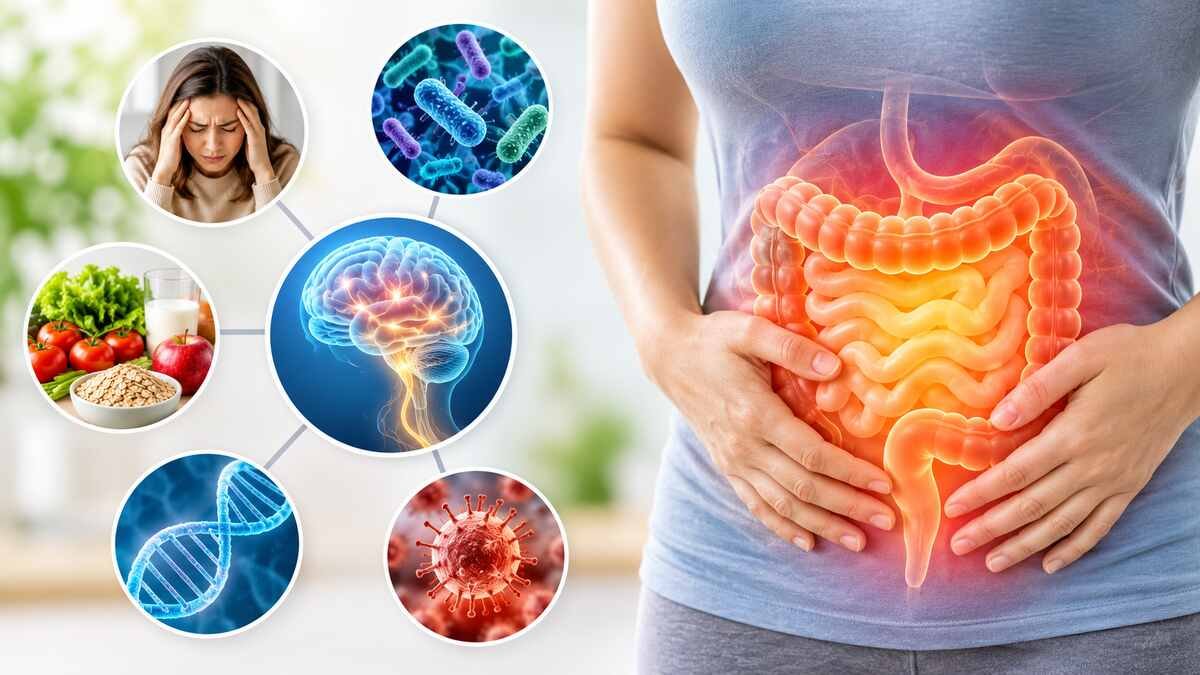

If you deal with recurring abdominal pain, bloating, constipation, or diarrhea, it is natural to ask what causes IBS. The honest answer is that researchers have not found one single cause. NIDDK explains that doctors are not sure what causes IBS, and that a combination of factors may lead to it, with different factors at work in different people.
Irritable bowel syndrome is now understood as a disorder of gut-brain interaction. Current research points to several overlapping contributors: how the brain and gut communicate, how sensitive the intestines are, how quickly food moves through the digestive tract, gut bacteria, past infections, genetics, and stress. It also helps to separate three ideas that are easy to confuse: factors that may contribute to developing IBS, factors that affect symptom severity, and individual triggers that cause a flare-up.
This guide walks through each of these areas in plain language. You will learn about gut-brain communication, intestinal movement and sensitivity, the gut microbiome, post-infectious IBS, genetics, stress, and food and lifestyle triggers. It is general education, not a diagnosis, and it cannot tell you why you in particular have symptoms. If you want to move from causes to care, our guide to IBS treatment options is the natural next step.
What Is IBS and Why Does It Develop?
Understanding Irritable Bowel Syndrome
IBS is a chronic disorder of gut-brain interaction. It involves recurring abdominal pain along with changes in bowel habits, which may mean constipation, diarrhea, or alternating episodes of both. NIDDK notes that IBS can be painful but does not damage the digestive tract or lead to other serious health problems.
IBS is different from inflammatory bowel disease (IBD), such as Crohn’s disease and ulcerative colitis. With IBD, tests can show inflammation or damage in the digestive tract. With IBS, symptoms occur without visible signs of damage or disease in the gut. For a wider view of digestive complaints, see our overview of common digestive problems.
Is There One Main Cause of IBS?
What causes IBS? Irritable bowel syndrome does not have one single known cause. Researchers believe it may develop through a combination of factors, including changes in gut-brain communication, intestinal sensitivity, abnormal digestive movement, gut microbiome changes, previous gastrointestinal infections, genetics, and environmental influences. Stress and certain foods may also worsen symptoms in people who already have IBS.
A major review in Nature Reviews Disease Primers describes IBS as a multifactorial disease. Different mechanisms seem to matter more in different people. Some develop symptoms after a stomach infection, others have increased intestinal sensitivity, and others have changes in gut movement that lean toward constipation or diarrhea.
Causes vs. Triggers: Understanding the Difference
An underlying contributing factor is not the same as a symptom trigger. Changes in gut-brain communication may contribute to IBS itself, while a stressful week or a particular food may worsen symptoms in someone who already has the condition. A food that triggers symptoms does not mean that food caused IBS.
| Contributing factor | Possible role in IBS |
|---|---|
| Gut-brain dysfunction | Alters communication between the brain and digestive system |
| Intestinal hypersensitivity | Increases sensitivity to normal digestive sensations |
| Gut microbiome changes | May influence digestion and intestinal function |
| Previous infections | May contribute to post-infectious IBS |
| Genetics | May influence individual susceptibility |
| Stress | May affect gut-brain communication and symptoms |
| Certain foods | May trigger symptoms in susceptible individuals |
| Hormonal influences | May affect digestive symptoms in some people |
Keep this distinction in mind as you read. Some items in the table are likely closer to underlying causes, while others mainly shape day-to-day symptoms.
The Gut-Brain Connection: A Major Factor in IBS
What Is the Gut-Brain Axis?
The digestive system and the brain communicate constantly. They exchange signals through nerves, hormones, immune messengers, and other chemicals. This two-way network, often called the gut-brain axis, helps regulate digestion, the muscle contractions that move food along, and the sensations you feel from your gut.
The gut also has its own extensive network of nerves, sometimes called the enteric nervous system. It works with the brain and spinal cord rather than in isolation.
How Disrupted Gut-Brain Communication May Contribute to IBS
In IBS, this communication may work differently than expected. The Rome Foundation framework, described in a review in Gastroenterology, links disorders of gut-brain interaction to a combination of motility disturbance, visceral hypersensitivity, altered mucosal and immune function, altered gut microbiota, and altered central nervous system processing.
Changes in gut-brain signaling may affect:
- Intestinal muscle contractions
- The speed of digestion
- How strongly abdominal pain is perceived
- Bowel habits
- Responses to normal digestive sensations
Why the Gut-Brain Connection Matters
IBS is not a problem confined to the intestines alone. Because the nervous system and digestive tract work together, both physical and emotional experiences can influence digestive symptoms.
This also explains why some treatments aim at gut-brain communication. The American College of Gastroenterology guideline suggests gut-directed psychotherapy for overall IBS symptoms. None of this means IBS is “all in your head.” The symptoms are real and involve measurable biological processes.
Changes in Intestinal Movement and Sensitivity
Abnormal Gastrointestinal Motility
Gastrointestinal motility means the muscle contractions that move food and waste through the digestive tract. NIDDK explains that in some people with IBS, food moves too slowly or too quickly, which changes bowel movements.
In general terms:
- Faster movement may contribute to diarrhea.
- Slower movement may contribute to constipation.
- Irregular contractions may contribute to cramping and changing bowel habits.
These patterns vary from person to person, and motility is only one of several mechanisms. Our guide to constipation risk factors covers related background.
Visceral Hypersensitivity
Visceral hypersensitivity means increased sensitivity to sensations from internal organs. NIDDK notes that some people with IBS feel pain when a normal amount of gas or stool is in the gut. A sensation that most people barely notice may feel uncomfortable or painful.
How These Changes Affect Digestive Symptoms
Altered movement and heightened sensitivity can help explain common IBS symptoms such as abdominal cramps, bloating, constipation, diarrhea, and changes in stool frequency. They may also explain why two people with IBS can have very different experiences. If you are trying to make sense of pain patterns, see what causes abdominal pain and our guide to bloating and constipation.
Gut Microbiome Changes and Their Possible Role in IBS
What Is the Gut Microbiome?
The gut microbiome is the community of microorganisms, including bacteria, viruses, and fungi, that live in your digestive tract. These organisms help digest certain foods, support normal digestive processes, interact with the immune system, and produce substances that influence intestinal health. You can learn more in our guide on how to improve gut health.
How Gut Bacteria May Be Associated With IBS
Some research suggests that people with IBS may have differences in their gut microbiome. These differences might influence gas production, the fermentation of certain carbohydrates, intestinal movement, digestive sensitivity, and interactions with the immune system.
The picture is far from settled. Microbiome differences vary between individuals and between IBS subtypes, and researchers have not identified one universal IBS microbiome pattern. An association does not prove that bacteria cause IBS.
Small Intestinal Bacterial Overgrowth (SIBO) and IBS
SIBO is an increase in the number, or a change in the type, of bacteria in the small intestine. NIDDK lists it among the problems that may be linked with IBS. The two can share symptoms such as bloating, abdominal discomfort, and altered bowel habits.
SIBO may coexist with IBS in some people, but it is not established as the cause of all IBS cases. If you suspect SIBO, ask a healthcare professional rather than relying on self-diagnosis.
Can Gut Health Influence IBS?
Gut microorganisms are one part of a much larger system. Diet, the nervous system, immune activity, and gut movement all interact with them. For that reason, probiotics, supplements, and microbiome-focused diets should not be seen as guaranteed ways to prevent or cure IBS. NIDDK says researchers are still studying probiotics for IBS.
If you are curious about the topic, our articles on probiotics, probiotic-rich foods, and prebiotic foods offer general nutrition background.
Can a Previous Stomach Infection Cause IBS?
What Is Post-Infectious IBS?
Some people develop lasting IBS symptoms after an episode of infectious gastroenteritis, commonly called a stomach bug or food poisoning. This is known as post-infectious IBS (PI-IBS). It can follow certain bacterial, viral, or parasitic infections.
How Infections May Affect the Digestive System
After an infection, several changes may occur, although researchers are still working out which matter most. These include altered immune activity in the gut, changes in gut bacteria, increased intestinal sensitivity, changes in gut movement, and altered communication between intestinal nerves and the brain.
Does Food Poisoning Increase the Risk of IBS?
It can raise the risk, but most people recover without developing IBS. A systematic review and meta-analysis in Gastroenterology found that more than 10% of people with infectious enteritis later developed IBS, with a risk about four times higher than in people without such an infection. The authors noted considerable variation between studies.
Persistent symptoms after an infection should be evaluated by a healthcare professional rather than assumed to be IBS. Other conditions can also follow a stomach infection. For persistent or severe pain, see when abdominal pain is an emergency.
Genetics and Family History: Is IBS Hereditary?
Can IBS Run in Families?
Research suggests that IBS is more common in some families. A review of the genetics of IBS notes that family and twin studies support a heritable component, though estimates have varied widely. Genes may influence digestive function, pain sensitivity, and other biological processes. Shared family habits and environments may also play a part.
Do Genes Directly Cause IBS?
IBS is not explained by a single inherited gene. A review in Nature Reviews Gastroenterology & Hepatology describes the pathophysiology as multifactorial, probably involving genetic predisposition together with environmental factors. Genetic susceptibility likely interacts with infections, stress, and other exposures.
Other Factors That May Influence IBS Risk
Other possible influences include a family history of digestive disorders, previous gastrointestinal infections, early-life experiences, and individual biological differences. The Nature Reviews Disease Primers review names female sex, younger age, and preceding gastrointestinal infections as the most important single risk factors.
Having a relative with IBS may raise susceptibility, but it does not mean you will definitely develop it.
Stress, Anxiety, and Mental Health: Their Relationship With IBS
Can Stress Contribute to IBS?
Stress can influence gut-brain communication, intestinal movement, and digestive sensitivity. Stressful periods may make symptoms worse in some people. Stress is best understood as a possible contributor and symptom amplifier, not a universal explanation for IBS.
Plenty of people with IBS lead calm lives, and plenty of very stressed people never develop it. If you want practical ideas for coping with daily pressure, see our guide on how to reduce stress.
Anxiety and Depression in People With IBS
IBS and some mental health conditions can occur together. NIDDK lists anxiety and depression among the conditions that are more common in people with IBS. The relationship runs both ways: emotional distress may worsen digestive symptoms, and ongoing digestive discomfort can take a toll on emotional well-being.
You can read more about anxiety and the role of therapy on CollectedMed.
How the Nervous System Responds to Stress
The autonomic nervous system helps control automatic body functions, including digestion. During stress, signaling in this system changes, which may alter gut movement and sensitivity. This is one reason relaxation techniques, psychological support, and gut-directed therapies help some people manage symptoms. Simple practices such as deep breathing are an easy place to begin.
Foods and Lifestyle Factors That May Trigger IBS Symptoms
Foods and lifestyle factors may trigger or worsen symptoms without necessarily causing IBS. Individual tolerance varies widely, so none of the items below apply to everyone.
High-FODMAP Foods
FODMAPs are fermentable carbohydrates that some people digest and absorb poorly. In susceptible individuals, they may contribute to gas, bloating, and discomfort. Examples include some:
- Onions and garlic
- Certain fruits
- Wheat-based foods
- Milk products containing lactose
- Beans and legumes
These foods are not a problem for everyone and should not be cut out automatically. Many of them, such as legumes, are nutritious. For a broader look at fiber, see our guide to high-fiber foods for digestive health.
Caffeine and Certain Beverages
Caffeine, alcohol, and carbonated drinks may worsen digestive symptoms in some people. They are not universal causes of IBS. A food and symptom diary can show whether they matter for you.
Irregular Eating Patterns
Rushed meals, irregular schedules, and very large meals may affect digestive comfort for some people. Eating at regular times and more slowly may help. Our article on meal timing explores this further.
Sleep and Physical Activity
Poor sleep and big changes in activity can influence digestive well-being and symptom patterns. See our guides on how to improve sleep and the benefits of exercise.
Restrictive diets should be approached carefully, ideally with a registered dietitian, so that nutrition does not suffer.
Other Factors That May Contribute to IBS
Hormonal Influences
Hormonal changes may influence digestive symptoms. NIDDK notes that women with IBS often have more symptoms during their periods.
Low-Grade Inflammation and Immune Activity
Researchers have found signs of altered immune activity in some people with IBS, particularly in certain post-infectious cases. This is different from the visible inflammation seen in IBD, and IBS is not the same condition.
Individual Biological Differences
Differences in intestinal barrier function, immune responses, and nervous system signaling may contribute in some individuals. IBS involves several overlapping mechanisms, and the importance of each one may differ from person to person.
When to See a Doctor
Recurring digestive symptoms should be evaluated rather than assumed to be IBS. See a healthcare professional promptly if you notice blood in your stool, unexplained weight loss, persistent or severe abdominal pain, fever, anemia or unusual fatigue, symptoms that wake you from sleep, or a new and significant change in bowel habits. These can point to other conditions that need investigation.
This article is written for adults. Children and teenagers with recurring digestive symptoms should see an appropriate healthcare professional with a parent or trusted adult.
Frequently Asked Questions About What Causes IBS
What Is the Main Cause of IBS?
There is no single confirmed cause. IBS is associated with multiple factors, including altered gut-brain communication, intestinal sensitivity, changes in gut movement, genetics, and previous gastrointestinal infections. NIDDK says different factors may cause IBS in different people.
Can Stress Cause IBS?
Stress may affect digestion and worsen symptoms, but it is not considered the sole cause of IBS. It is better viewed as one contributing factor among several.
Is IBS Caused by Bad Gut Bacteria?
Changes in the gut microbiome have been associated with IBS. However, researchers have not identified one bacterial imbalance responsible for every case.
Can Food Poisoning Lead to IBS?
Yes, in some people. Post-infectious IBS can follow gastrointestinal infections, but most people who have a stomach infection do not develop it, according to a meta-analysis in Gastroenterology.
Is IBS Genetic?
Genetic factors may influence susceptibility, and IBS can occur more often in some families. It is not considered a simple single-gene condition.
Can Poor Diet Cause IBS?
Eating habits may influence symptoms, but there is no evidence that one poor dietary choice directly causes IBS in everyone. Diet is more often a symptom trigger than a root cause. Our article on the DASH diet and IBS offers additional nutrition context.
Final Thoughts: Understanding the Multiple Causes of IBS
Although researchers have not identified one single cause of IBS, growing evidence shows that digestive function, gut-brain communication, genetics, infections, and environmental influences may all play a role. Understanding these connections can help people recognize their symptoms, avoid common misconceptions, and work with healthcare professionals to find an appropriate management approach.
IBS is not a sign of weakness, poor lifestyle choices, or imagined symptoms. If you are ready to explore next steps, read our guide to IBS treatment options.
Sources
- National Institute of Diabetes and Digestive and Kidney Diseases (NIDDK). Symptoms & Causes of Irritable Bowel Syndrome
- NIDDK. Irritable Bowel Syndrome (IBS) overview
- NIDDK. Irritable Bowel Syndrome: all content
- NIDDK. Treatment for Irritable Bowel Syndrome
- Enck P, et al. Irritable bowel syndrome. Nat Rev Dis Primers. 2016;2:16014.
- Drossman DA. Functional Gastrointestinal Disorders: History, Pathophysiology, Clinical Features and Rome IV. Gastroenterology. 2016.
- Klem F, et al. Prevalence, Risk Factors, and Outcomes of Irritable Bowel Syndrome After Infectious Enteritis. Gastroenterology. 2017;152(5):1042-1054.
- Henström M, D’Amato M. Genetics of irritable bowel syndrome. Mol Cell Pediatr. 2016;3:7.
- Nat Rev Gastroenterol Hepatol. Pathophysiology of irritable bowel syndrome. 2022.
- Lacy BE, et al. ACG Clinical Guideline: Management of Irritable Bowel Syndrome. Am J Gastroenterol. 2021;116(1):17-44.
Medical Disclaimer: This article is for educational purposes only and does not replace professional medical advice, diagnosis, or treatment. Everyone’s body and health history are different, so please talk with a qualified healthcare professional about persistent digestive symptoms or concerns about IBS. If you have severe pain, blood in your stool, unexplained weight loss, or symptoms that worry you, seek medical care promptly.
2 thoughts on “What Causes IBS? Understanding the Triggers, Risk Factors, and Gut-Brain Connection”
Comments are closed.