
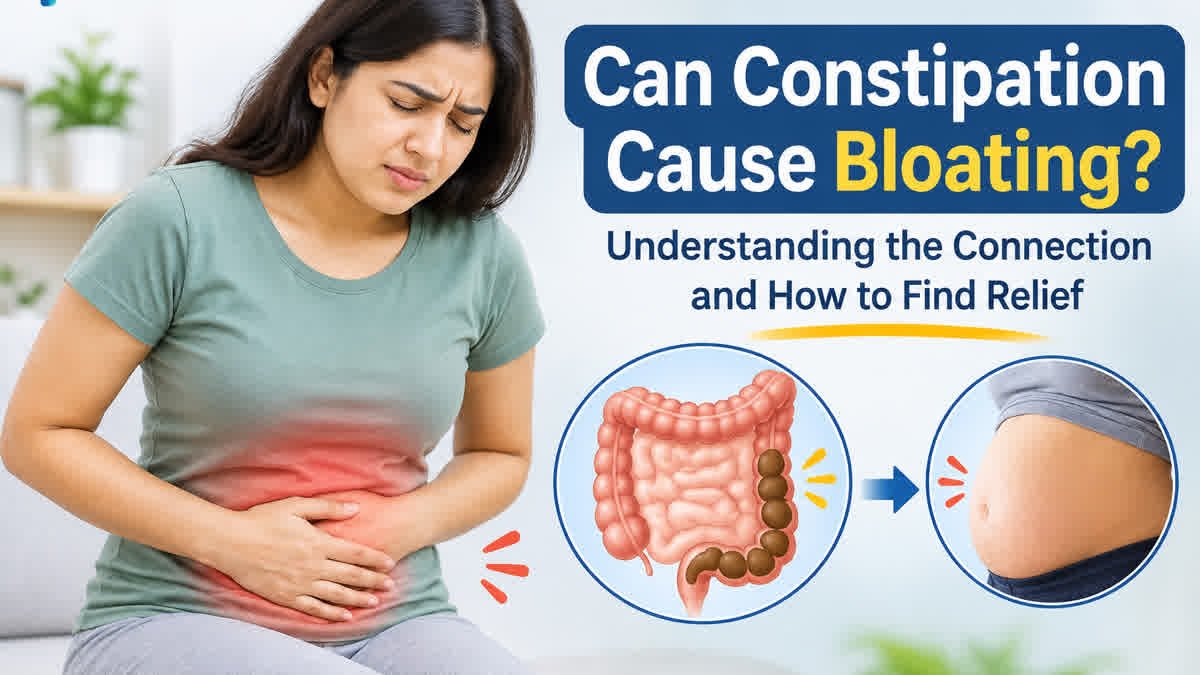

Yes, constipation can cause or worsen bloating. When stool builds up and moves slowly through the intestines, the abdomen can feel full, tight, or swollen. Gas can also become trapped behind slow-moving stool, which adds to the pressure.
Bloating is a sensation of fullness, pressure, or swelling in the abdomen, and constipation is one of its most common causes. Not everyone with constipation feels bloated, and bloating has many other possible causes. Still, the two often show up together, and they often ease together once bowel movements improve.
This guide explains why constipation and bloating are linked, which symptoms to watch for, what may be causing them, and which relief strategies are worth considering. It also covers warning signs that call for medical care. The information is general and does not replace advice from your healthcare professional.
Can Constipation Cause Bloating?
Constipation can cause or worsen bloating, although not everyone with constipation experiences it. Cleveland Clinic describes constipation as the most common cause of bloating, noting that it can be due to gas, constipation, or fluid retention, each with its own underlying causes.
Several things may be happening at once:
- Stool buildup: When bowel movements become less frequent, stool accumulates in the colon and can make the abdomen feel full or uncomfortable.
- Slower movement: When contents move slowly through the intestines, gas may not pass as easily.
- Gas and stool retention: Together, retained stool and trapped gas can stretch the intestines and contribute to abdominal distension.
If constipation is the cause, bloating often improves after passing stool or gas. That pattern is a helpful clue, though it does not prove the cause.
It also helps to know two terms that are often mixed up. Bloating is a subjective feeling of fullness or pressure. Abdominal distension is a visible increase in the size of the abdomen. You can have one without the other, and either one can happen with constipation.
In short, constipation can plausibly explain a bloated stomach, especially when it comes with hard stools, straining, or a feeling of incomplete emptying. For more on what constipation itself looks like, see our guide to the early signs of constipation.
Why Does Constipation Make You Feel Bloated?
The link between constipation and bloating comes down to how the intestines move stool and gas. Researchers are still studying some of the details, so the explanations below describe likely mechanisms rather than a single proven cause.
Stool Buildup in the Colon
The colon absorbs water from stool as it moves along. When stool stays in the colon longer, it can become harder and drier, and more of it can accumulate. A fuller colon can create a sense of abdominal fullness and pressure.
Passing stool may relieve this fullness. That is why many people feel better after a good bowel movement.
Trapped Gas and Slower Intestinal Movement
Gas is a normal part of digestion. It comes from swallowed air and from bacteria in the gut, and it usually moves through and out of the body without much notice.
When the intestines move slowly, gas can become trapped. Cleveland Clinic notes that whenever the contents of the gut are not moving properly, gas can build up and cause bloating. Chronic constipation is one example of this kind of slow movement.
Changes in Gut Bacteria and Fermentation
Gut bacteria break down carbohydrates that the body cannot digest on its own, and this fermentation produces gas. When stool stays in the colon longer, some experts suggest that more fermentation may occur, which could add to gas and bloating.
This idea is still being studied, and it does not apply to everyone. Not all constipation leads to more gas production, so this is one possible contributor rather than a rule.
Straining and Abdominal Discomfort
Straining to pass hard stool can cause cramping and abdominal pressure. The effort and discomfort can make the abdomen feel more tight and swollen. Some people also tense their abdominal muscles when they are uncomfortable, which can make bloating feel worse.
What Are the Common Symptoms of Constipation and Bloating?
Constipation and bloating often show up together. You may notice:
- Fewer bowel movements than usual
- Hard, dry, or lumpy stools
- Difficulty passing stool
- A feeling that your bowels have not emptied completely
- Abdominal fullness or tightness
- Gas or flatulence, or trouble passing gas
- Abdominal discomfort or cramping
- Visible swelling or distension of the abdomen
The National Institute of Diabetes and Digestive and Kidney Diseases (NIDDK) lists fewer than three bowel movements a week, hard or lumpy stools, stools that are difficult or painful to pass, and a feeling that not all stool has passed as symptoms of constipation. The NHS adds that people may also have a stomach ache and feel bloated.
How to Recognize Constipation-Related Bloating
Bloating linked to constipation usually appears alongside changes in bowel habits, and it may ease after you pass stool. It may also build up over several days as constipation continues.
Symptoms alone cannot confirm the cause. Persistent, severe, or unexplained bloating can have other explanations, such as food intolerances, irritable bowel syndrome (IBS), or other digestive conditions. Our overview of common digestive problems can help you see how these conditions compare.
What Causes Constipation and Bloating?
Constipation can have more than one cause at a time, and sometimes there is no obvious reason. The factors below can contribute to both constipation and bloating. For a fuller list, see our article on constipation risk factors.
Not Getting Enough Fiber
Fiber adds bulk and helps keep stool soft enough to pass. Not eating enough of it is a common contributor to constipation, according to NIDDK. Good sources include fruits, vegetables, legumes, and whole grains.
Not Drinking Enough Water
Not drinking enough fluids, or becoming dehydrated, can make stools harder and more difficult to pass. Fluid needs vary with health, activity, and climate, so there is no single right amount for everyone.
Lack of Physical Activity
Regular movement supports normal bowel function. Long periods of sitting or lying down, and low activity in general, are linked to constipation. The NHS lists not moving enough among the most common causes.
Ignoring the Urge to Have a Bowel Movement
Repeatedly putting off a bowel movement can make stool harder and constipation more likely. NIDDK notes that ignoring the urge is one way bowel habits can change.
Certain Medications and Health Conditions
Some medicines and supplements can contribute to constipation. NIDDK lists several, including:
- Iron supplements
- Narcotic (opioid) pain medicines
- Antacids that contain aluminum or calcium
- Some medicines used to treat depression
Health conditions that may play a role include irritable bowel syndrome (IBS), an underactive thyroid (hypothyroidism), and diabetes. Do not stop a prescribed medicine on your own. Talk with your healthcare professional, who may be able to adjust your treatment or suggest an alternative.
How to Relieve Bloating Caused by Constipation
The goal is to relieve the constipation itself, since that is often what drives the bloating. These strategies are general options to consider, not a personal treatment plan. You can also read our guide on how to manage constipation at home.
Increase Fiber Gradually
NIDDK recommends adding fiber a little at a time so your body can adjust. Soluble fiber (found in oats, pears, prunes, and beans) and insoluble fiber (found in vegetables and whole grains) both play a role.
Increasing fiber too quickly can temporarily worsen gas and bloating, so go slowly. Our list of high-fiber foods is a helpful starting point.
Drink Enough Water
Adequate fluid supports softer stools. Spread fluids through the day, and choose still water over carbonated drinks if gas is a problem. Your needs may differ if you have a condition such as heart or kidney disease, so ask your healthcare professional if you are unsure.
Get Regular Physical Activity
Walking, cycling, and other moderate activity can support bowel regularity. The NHS suggests that a daily walk or run can help you pass stool more regularly. Even a short walk after meals may help some people. See our guide to walking for health for ideas.
Establish a Regular Bathroom Routine
Respond to the urge to go, and give yourself unrushed time at a regular time each day. The NHS also suggests resting your feet on a low stool while sitting on the toilet, and raising your knees above your hips if possible, which may make passing stool easier for some people.
Consider Appropriate Constipation Treatments
If lifestyle changes are not enough, over-the-counter options may help. These include fiber supplements, osmotic laxatives such as polyethylene glycol, and stool softeners in some situations. Cleveland Clinic notes that a laxative may help move excess stool along if you are bloated and have not had a bowel movement in several days.
The NHS notes that most laxatives work within three days and should be used for a short time only. The right choice depends on the cause, your symptoms, and your medical history, so talk with a pharmacist or healthcare professional before starting one. Avoid prolonged or unnecessary laxative use. To learn more, see our overview of constipation treatment options.
What Foods Help Relieve Constipation and Bloating?
Food choices can support more regular bowel movements. The table below lists common options. No single food cures constipation, and responses vary from person to person.
| Food | Potential digestive benefit |
|---|---|
| Prunes | Contain fiber and sorbitol, which may help bowel movements |
| Kiwi | Provides fiber and may support bowel regularity |
| Oats | Provide soluble fiber |
| Pears | Contain fiber and sorbitol |
| Vegetables | Provide dietary fiber |
| Beans and lentils | Provide substantial fiber |
| Water | Supports hydration and normal stool consistency |
You can learn more about kiwi and legumes in our nutrition guides. For additional ideas, see our article on natural home remedies for constipation.
Foods That May Make Bloating Worse
Some foods can increase gas in certain people, especially when eaten in large amounts or when your intake rises suddenly. These include:
- Beans and lentils
- Cabbage and broccoli
- Onions
- Carbonated beverages
- Certain dairy products, in people with lactose intolerance
- Sugar alcohols such as sorbitol in some products
Triggers vary a lot between individuals. Many of these foods are nutritious, so avoid cutting them out unnecessarily. If you suspect a trigger, try adjusting portions or introducing the food gradually, and ask a healthcare professional or dietitian for guidance.
How Long Does Constipation-Related Bloating Last?
There is no set timeline. It depends on the cause and how severe the constipation is.
- Mild bloating may ease after you pass stool or gas.
- Bloating may continue for as long as the constipation does.
- Lifestyle changes can take days to weeks before bowel regularity improves. The NHS says you may notice a difference within a few days, though sometimes it takes a few weeks.
- Persistent or recurring symptoms should be evaluated by a healthcare professional.
Do not expect a guaranteed recovery date. If your bloating keeps returning or does not improve, there may be another cause that needs attention. Our guide on how constipation is diagnosed explains how clinicians look for underlying problems.
When Should You See a Doctor for Constipation and Bloating?
Talk with a healthcare professional if you have:
- Constipation that is persistent or keeps coming back
- Unexplained weight loss
- Blood in the stool or rectal bleeding
- Persistent abdominal pain
- A sudden or significant change in bowel habits
- Ongoing bloating that does not improve
- Constipation that does not respond to reasonable self-care
NIDDK advises seeing a doctor if symptoms do not go away with self-care or if you have a family history of colon or rectal cancer. The NHS lists regular bloating, blood in the stool, and unintended weight loss among reasons to see a GP.
Some symptoms need urgent medical evaluation. Severe or worsening abdominal pain, vomiting, marked abdominal swelling, and inability to pass stool or gas may signal a bowel obstruction or another serious condition. NIDDK says to see a doctor right away if constipation comes with constant abdominal pain, inability to pass gas, vomiting, fever, or bleeding.
Do not try to treat a possible obstruction at home with laxatives. Seek emergency care instead. Our guides on whether to worry about abdominal pain and when abdominal pain is an emergency can help you recognize serious symptoms.
Frequently Asked Questions About Constipation and Bloating
Can constipation cause a swollen stomach?
Yes. Constipation can contribute to abdominal swelling because retained stool and trapped gas may cause fullness and distension. Other conditions can cause a swollen stomach too, so see a healthcare professional if it persists.
Does constipation cause excessive gas?
Constipation can contribute to gas retention and difficulty passing gas. However, excessive gas can also result from diet, food intolerances, swallowed air, and other digestive conditions. Cleveland Clinic notes that bloating can come from gas, constipation, or fluid retention.
Can passing stool relieve bloating?
Yes. If constipation is contributing to your bloating, passing stool may reduce abdominal fullness and discomfort. Passing gas can help too.
Can you be constipated and bloated every day?
Yes. Chronic constipation can be associated with recurring bloating. Persistent daily symptoms should be evaluated to identify the underlying cause, which may include IBS or another digestive condition.
Is constipation-related bloating dangerous?
It is often not dangerous. However, severe abdominal pain, vomiting, significant swelling, and inability to pass gas or stool need urgent medical assessment, according to NIDDK.
What is the fastest way to relieve constipation and bloating?
The best approach depends on the cause. Drinking enough fluids, gentle movement, and suitable over-the-counter treatments may help, and some people find relief within a few days. Severe symptoms need medical evaluation rather than self-treatment.
Final Thoughts
Constipation can cause or worsen bloating. Stool buildup and changes in how gas moves through the intestines both contribute to abdominal discomfort. Gradual dietary changes, enough fluids, regular movement, and appropriate treatments can help many people. Persistent or severe symptoms should not be ignored, so reach out to a healthcare professional if your symptoms continue or if any warning signs appear.
Sources
- NIDDK: Symptoms and Causes of Constipation
- NIDDK: Constipation, All Content
- NHS: Constipation
- Cleveland Clinic: How to Get Rid of Bloating
Medical Disclaimer: This article is for general education only and does not replace advice from a doctor or other qualified healthcare professional. Constipation and bloating can have many causes, and symptoms alone cannot confirm which one applies to you. Talk with your healthcare provider before starting laxatives, supplements, or other treatments, and do not stop prescribed medicines without medical guidance. Seek urgent care for severe or worsening abdominal pain, repeated vomiting, marked abdominal swelling, inability to pass stool or gas, or blood in your stool.