
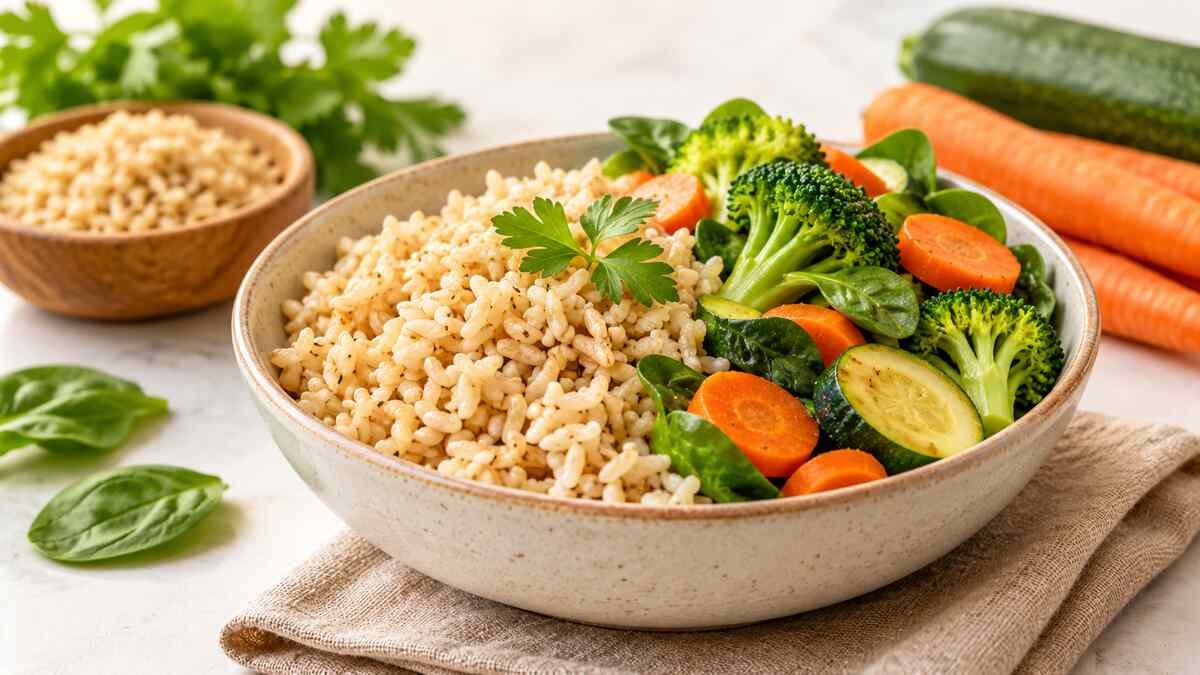

When heartburn flares up, even everyday meals can feel like a gamble. Brown rice is a common whole grain, so many people wonder whether it belongs on a reflux-friendly plate. For most people, the answer is yes: brown rice is low in fat, is not an acidic food, and can fit into a balanced eating pattern.
Acid reflux happens when stomach contents flow back into the esophagus, causing symptoms such as heartburn and regurgitation. Food choices can influence symptoms, but responses vary from person to person. Brown rice contains more fiber than white rice, which supports digestion but may cause bloating in some people. It does not neutralize stomach acid, and it is not a treatment for reflux.
This guide explains why brown rice may suit many people with reflux, when it might not, how it compares with white rice and other grains, and how to prepare it for better comfort. The information is general and is not individualized medical advice. To learn more about the condition itself, see our guide to the common causes of acid reflux.
Is Brown Rice Good for Acid Reflux?
Yes, brown rice can be a suitable food choice for many people with acid reflux. It is naturally low in fat, and plain brown rice does not contain common reflux triggers such as chili, tomato sauce, or citrus. Johns Hopkins Medicine lists brown rice among the high-fiber whole grains that may be helpful in a GERD-friendly diet.
Its fiber content supports normal digestive health. Fiber can also help you feel full, which may make overeating less likely. Large meals can worsen reflux, so this is a practical benefit.
Still, the higher fiber content does not suit everyone. Some people feel bloated after eating whole grains. Brown rice also does not directly neutralize stomach acid or cure gastroesophageal reflux disease (GERD).
The main takeaway is that brown rice can be part of a balanced eating pattern for people with acid reflux, but tolerance varies. Paying attention to your own response matters more than following a universal list of safe foods.
Why Brown Rice May Be a Good Choice for Acid Reflux
Several nutritional characteristics make brown rice a reasonable grain option. None of them make it a reflux treatment.
1. Naturally Low in Fat
High-fat meals are commonly linked with worse reflux symptoms. The National Institute of Diabetes and Digestive and Kidney Diseases (NIDDK) lists high-fat foods among those commonly linked to GERD symptoms. Plain, boiled brown rice offers a low-fat carbohydrate option.
Added ingredients can change that. Butter, cream, and fatty sauces can turn a gentle side dish into a heavy meal.
2. Contains Dietary Fiber
Brown rice is a whole grain because it keeps its bran layer, which contributes dietary fiber. Refined grains such as white rice have this layer removed. Fiber supports regular bowel movements and overall digestive health.
This does not mean fiber prevents acid reflux. It means brown rice can contribute to a high-fiber diet, which health organizations generally recommend.
3. Provides Complex Carbohydrates
Brown rice supplies carbohydrates for energy. It pairs easily with vegetables and lean protein, which makes it a flexible base for balanced meals.
4. Contains Important Nutrients
Brown rice provides magnesium, manganese, phosphorus, and B vitamins. These nutrients support normal body functions such as energy metabolism and muscle and nerve activity. Brown rice contributes to overall nutrition, not to reflux relief.
For broader guidance on building meals, see our article on building a healthy, balanced diet.
Can Brown Rice Make Acid Reflux Worse?
Brown rice is generally well tolerated, and it is not considered a common reflux trigger. Even so, some people do notice discomfort. The cause is usually how it is eaten, what accompanies it, or the fiber content rather than the grain itself.
High Fiber Content and Bloating
The bran layer in brown rice adds fiber. Some people experience gas or bloating when they add whole grains too quickly. Bloating and acid reflux are different symptoms, although they can occur together. Our article on whether acid reflux can cause bloating explores the link.
Increasing fiber gradually usually helps the digestive system adjust.
Large Portions May Increase Discomfort
Meal size can influence reflux. A very large serving of brown rice, especially alongside a heavy meal, may leave you feeling overly full. Fullness increases pressure in the stomach, which can push contents upward.
Added Ingredients May Trigger Symptoms
The following additions can make a brown rice meal less suitable for someone with reflux:
- Chili peppers and spicy seasonings
- Tomato-based sauces
- Excess butter or oil
- Deep-fried meats
- Heavy cream-based sauces
The NIDDK notes that acidic foods, spicy foods, and high-fat foods are commonly linked with GERD symptoms, though triggers vary. It is the combination on the plate that often matters, not the rice.
Brown Rice vs. White Rice for Acid Reflux
Both types of rice can work for acid reflux. The main differences are fiber and processing. Brown rice keeps its bran and germ, while white rice has them removed during milling.
The table below compares approximate values for 1 cup of cooked rice, based on USDA FoodData Central. Exact numbers vary by product and cooking method.
| Feature | Brown rice | White rice |
|---|---|---|
| Grain type | Whole grain | Refined grain |
| Fiber (approx.) | About 3 g | Under 1 g |
| Bran layer | Retained | Removed |
| Magnesium (approx.) | About 80 mg | About 20 mg |
| Nutrient profile | More fiber and minerals | Some nutrients lower due to refining; may be enriched |
| Digestive tolerance | May cause bloating in some people | Often easier for some people to digest |
| Acid reflux suitability | Suitable for many people | Also suitable for many people |
White rice is not unhealthy for reflux. Some people with sensitive digestion simply find it more comfortable because it has less fiber. Others prefer the added nutrition of brown rice.
Neither type is universally better. If you want to learn more about brown rice itself, read our guide to the health benefits of brown rice.
Nutritional Benefits of Brown Rice
This section gives additional context about why brown rice is a nutritious grain. It is not a list of reflux treatments.
Dietary Fiber for Digestive Health
Fiber supports bowel regularity and overall digestive function. It does not directly treat GERD. Our guide to high-fiber foods for digestive health offers other options.
Magnesium for Normal Muscle Function
Magnesium supports normal nerve and muscle function, according to the NIH Office of Dietary Supplements. The magnesium in brown rice has not been shown to relax or tighten the esophageal sphincter or to prevent reflux.
B Vitamins for Energy Metabolism
Brown rice contains B vitamins such as thiamin, niacin, and vitamin B6. These help the body convert food into usable energy.
Whole-Grain Nutrition
As a whole grain, brown rice contributes complex carbohydrates and other nutrients to a balanced eating pattern. For a closer look at daily use, see whether you can eat brown rice every day.
How to Eat Brown Rice If You Have Acid Reflux
Small changes in portion, cooking, and timing can make brown rice easier to enjoy.
Start With a Comfortable Portion
Begin with a modest serving, such as half a cup to one cup cooked, rather than a very large bowl. Individual tolerance varies. Notice how you feel after meals, and adjust accordingly.
Cook Brown Rice Until Tender
Rinse the rice before cooking, and use enough water to cook it until soft. A softer texture may be more comfortable for people who find chewy whole grains hard to tolerate.
Choose Simple Cooking Methods
Boiling, steaming, or using a rice cooker works well. You can also make soft brown rice porridge. These methods avoid the extra oil, butter, and heavy sauces that can make a meal harder to tolerate.
Eat It With Smaller, Balanced Meals
Pair brown rice with lean protein and non-spicy vegetables. Avoid combining large portions with heavy, fatty dishes. Eat slowly and stop before you feel overly full.
Avoid Eating Too Close to Bedtime
The NIDDK says that if you have GERD symptoms at night, eating meals at least 3 hours before lying down may improve symptoms. This applies to any meal, including rice dishes.
A simple lunch idea: Combine tender brown rice, steamed carrots, zucchini, and a modest serving of grilled chicken or tofu. For more everyday strategies, see our guide to managing acid reflux at home.
Best Foods to Pair With Brown Rice
Simple combinations make meals easy to customize and often easier to tolerate.
| Food | Why it may work well |
|---|---|
| Steamed carrots | Mild flavor and useful nutrients |
| Zucchini | A versatile, non-spicy vegetable |
| Spinach | Provides vitamins and minerals |
| Lean chicken | Provides protein without requiring a high-fat preparation |
| Tofu | Plant-based protein option |
| Steamed fish | Provides protein when prepared without heavy sauces |
| Bananas | A non-citrus fruit that many people tolerate |
Keep portions moderate, and choose steaming, boiling, or baking over deep-frying. Even foods often considered reflux-friendly can trigger symptoms in certain people. Our article on broccoli and acid reflux is another useful side-dish resource.
Foods and Ingredients to Limit When Preparing Brown Rice
The ingredients you add can matter as much as the grain itself. Common problem additions include:
- Chili and hot spices: These may worsen symptoms in some people.
- Tomato sauce: Its acidity can be a problem for some individuals.
- Excess butter and oil: High-fat additions may aggravate reflux.
- Deep-fried ingredients: These often add significant fat.
- Creamy sauces: These make meals heavier and higher in fat.
These foods do not need to be eliminated by everyone. The American College of Gastroenterology guideline suggests against routine broad food elimination for reflux, so it is more useful to identify your own triggers than to follow an unnecessarily restrictive diet. A simple food and symptom diary can help.
Is Brown Rice Better for Acid Reflux Than Other Grains?
There is no single best grain for everyone with acid reflux. Here is how brown rice compares with other common options:
- Oatmeal: A fiber-containing whole grain often included in reflux-friendly eating patterns.
- White rice: Lower in fiber and potentially easier to tolerate for some people.
- Quinoa: Provides fiber and plant protein.
- Whole-wheat bread: Another whole-grain option, although tolerance varies.
When looking for whole grains for acid reflux or the best rice for acid reflux, consider your own tolerance, portion size, preparation, and the overall meal. Foods that are easy to digest for one person may not be for another.
Frequently Asked Questions
Is brown rice acidic or alkaline?
Brown rice is generally considered a low-acid food in dietary discussions. Your body regulates its acid-base balance tightly, and eating brown rice does not meaningfully change the acidity of your stomach.
Can I eat brown rice every day if I have acid reflux?
Many people can include brown rice regularly if they tolerate it. Portion size, preparation, and overall dietary variety matter. If it causes discomfort, try a smaller portion or switch to another grain.
Is brown rice better than white rice for heartburn?
Brown rice provides more fiber, while white rice may be easier for some people to digest. Neither is guaranteed to prevent heartburn, and Johns Hopkins Medicine lists brown rice among foods that may help in a GERD diet.
Does brown rice help with digestion?
Its fiber supports bowel regularity and digestive health. However, too much fiber or a sudden increase in intake can cause bloating.
Can brown rice cause bloating?
Yes. Its fiber may contribute to gas or bloating in some people, particularly when fiber intake rises suddenly. Increasing portions gradually and cooking the rice until tender may help.
What is the best way to cook brown rice for acid reflux?
Boil or steam it until tender, and serve it with mild vegetables and lean protein. Avoid excessive oil, butter, and spicy sauces if these trigger your symptoms.
Conclusion
Brown rice can be a nutritious grain choice for many people with acid reflux. Its fiber and low-fat composition make it a reasonable addition to balanced meals. Some people may feel bloated because of the fiber, so portion size, preparation, and personal triggers matter.
Brown rice does not cure acid reflux, but it can fit into a balanced eating pattern. Look at your overall habits rather than relying on one food, and pay attention to how your body responds. For more help, see our guide to living with acid reflux, or browse our nutrition guides.
If you have frequent or worsening symptoms, talk with a healthcare professional. Difficulty swallowing, persistent vomiting, unexplained weight loss, or signs of gastrointestinal bleeding need prompt medical attention. Our article on when to see a doctor for acid reflux explains more.
Sources
- National Institute of Diabetes and Digestive and Kidney Diseases. Eating, Diet, & Nutrition for GER & GERD.
- Johns Hopkins Medicine. GERD Diet: Foods That Help with Acid Reflux (Heartburn).
- Katz PO, et al. ACG Clinical Guideline for the Diagnosis and Management of Gastroesophageal Reflux Disease. American Journal of Gastroenterology. 2022;117(1):27-56.
- U.S. Department of Agriculture. FoodData Central.
- National Institutes of Health, Office of Dietary Supplements. Magnesium fact sheet for health professionals.
Medical Disclaimer: This article is for general educational purposes only and is not medical advice. It does not diagnose, treat, or prevent any condition, and it should not replace guidance from a qualified healthcare professional. Recurring or worsening acid reflux symptoms should be evaluated by a healthcare professional. Seek medical attention promptly if you have difficulty swallowing, persistent vomiting, unexplained weight loss, or signs of gastrointestinal bleeding such as black stools or vomiting blood.