

Bad breath is common, but it can be frustrating when it keeps returning despite regular brushing, mouthwash, or other home remedies. If you have been wondering whether something more is going on, you are not alone. Learning how common bad breath is can be reassuring, and it often prompts people to look for answers.
The medical term for persistent unpleasant breath is halitosis. Diagnosis usually begins with questions about your symptoms, oral hygiene, medications, and health history. A dentist will typically examine your teeth, gums, tongue, and other areas of the mouth before deciding whether specialized tests are needed. If the dental exam does not explain the problem, a doctor or another specialist may become involved.
If bad breath keeps coming back despite good oral hygiene, finding the cause is more useful than trying products that only mask the odor. This guide explains the diagnostic steps, the tests that may be used, common causes, how to prepare for an appointment, and when to seek professional help. It offers general information and cannot replace an evaluation by a dentist or doctor.
What Is Bad Breath, and Why Might It Need Diagnosis?
Bad breath, or halitosis, is an unpleasant odor that comes from the mouth. Temporary odor, such as morning breath or the smell left by onions, is common and usually harmless. Persistent halitosis is odor that returns or lingers despite ordinary cleaning.
In most cases, odor develops when bacteria in the mouth break down proteins and other material, releasing odor-producing compounds. The tongue, the gumline, the spaces between teeth, and dental appliances can all hold this material. Reduced saliva flow can make the odor more noticeable, because saliva normally helps rinse these substances away.
Persistent odor may be linked to gum disease, tooth decay, dry mouth, or, less often, conditions outside the mouth. You can read more about the common causes of bad breath in our companion article.
It is important to know that bad breath is a symptom, not a diagnosis. The odor alone cannot confirm a particular disease. The goal of an evaluation is to decide whether a problem is present, identify likely contributing factors, and choose appropriate treatment.
Step 1: Your Dentist Reviews Symptoms and Medical History
The first step is usually a conversation. Your dentist will ask when the odor occurs, how long it has been present, and what might be contributing to it. A thorough history is considered an essential part of diagnosis, as described in a review in the Journal of Dental Hygiene.
Topics your dentist may cover include:
- Duration and pattern: Is the odor occasional, mostly present in the morning, or constant throughout the day?
- Oral hygiene: How often you brush, clean between teeth, and clean your tongue.
- Associated symptoms: Dry mouth, bleeding gums, toothache, sensitivity, mouth sores, nasal congestion, or throat symptoms.
- Lifestyle factors: Tobacco use, alcohol, diet, and how much water you drink.
- Medications: Some medicines can contribute to dry mouth. Do not stop a prescribed medicine without talking to your healthcare professional.
- Dental history: Recent dental work, dentures, retainers, gum disease, cavities, or missed checkups.
- Relevant health history: Conditions that may affect saliva, oral health, or the respiratory and digestive systems.
You may hear questions such as these:
- When did you first notice the odor?
- Does it improve after brushing?
- Have you noticed dry mouth or gum bleeding?
- Have your medications or oral hygiene routine changed recently?
These answers help narrow down possible causes, but no single answer establishes a diagnosis. If you want to know what to watch for before your visit, read about the early signs of bad breath. You can also review the risk factors for bad breath to help you think through your own history.
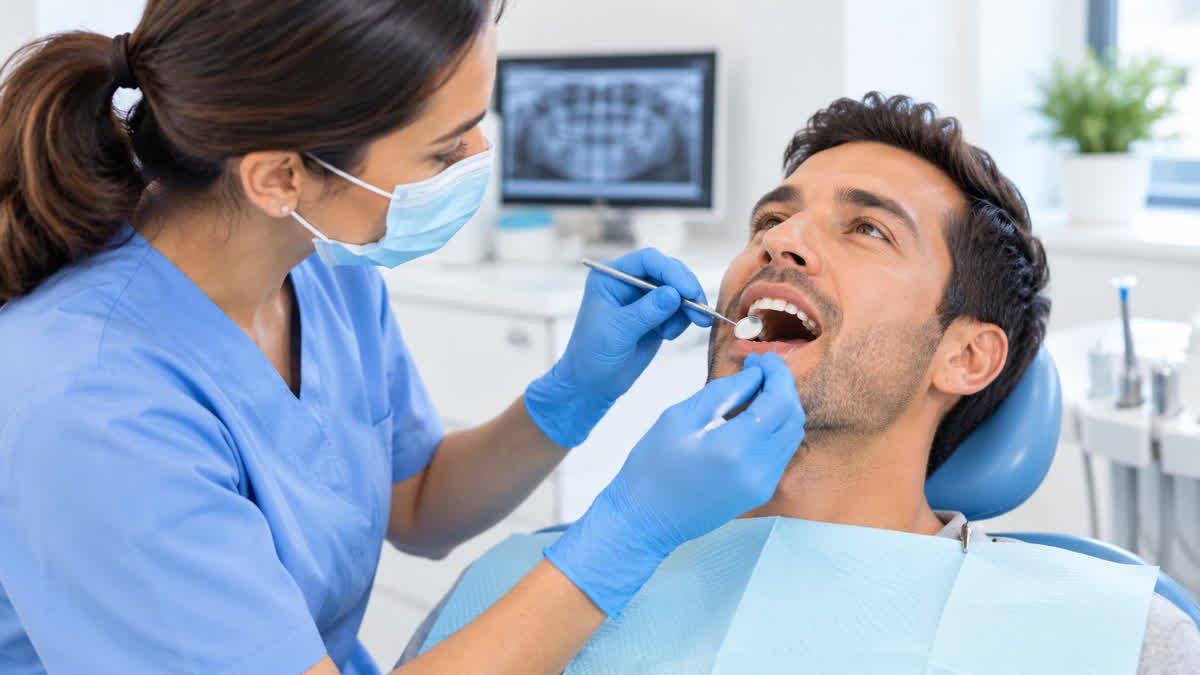
Step 2: A Dental Examination Checks the Mouth, Teeth, Gums, and Tongue
A careful oral examination is often the most important part of the initial assessment, because most persistent cases start in the mouth. A 2022 systematic review in Oral Diseases reported that 80% to 90% of halitosis is caused by intraoral factors. That figure reflects the evidence reviewed, not every individual case.
Teeth and spaces between them. Your dentist checks for tooth decay, trapped food, damaged dental work, and other problems that could contribute to odor.
Gums and periodontal health. The dentist may look for gum inflammation, bleeding, swelling, plaque, tartar, and signs of periodontal disease. If needed, a periodontal assessment can measure the spaces between your teeth and gums.
Tongue and oral tissues. A coating on the tongue can harbor odor-producing bacteria. The dentist may inspect the tongue’s surface and other tissues for coating, irritation, sores, or other changes.
Saliva and dry mouth. Your dentist may check whether your mouth looks unusually dry and ask about symptoms such as trouble swallowing dry food or frequent thirst. Additional saliva testing is not needed for everyone.
Dentures and other appliances. Dentures, retainers, and other appliances can trap food and plaque if they are not cleaned well.
The findings help your dentist decide whether treatment for gum disease, tooth decay, plaque buildup, or dry mouth makes sense. The Mayo Clinic also notes that a dentist may smell your breath and check your mouth as part of the evaluation. If you want to understand which conditions can be involved, see what causes bad breath.
Step 3: Specialized Tests May Help Measure Breath Odor
Specialized testing is not part of every visit. Availability varies by clinic, and many people receive useful treatment without it. When tests are used, they generally fall into the following groups.
1. Organoleptic assessment. A trained clinician judges the odor of your breath using their sense of smell, following a set procedure. This approach is subjective, yet it remains an important clinical method. Results can be affected by testing conditions, examiner experience, and recent food or oral hygiene activity. A clinical review describes organoleptic assessment as one of the main ways halitosis is measured.
2. Volatile sulfur compound (VSC) testing. Some devices measure volatile sulfur compounds, which are gases produced by certain oral bacteria. These measurements can help a clinician assess odor-related compounds. They do not detect every compound that may cause odor, so they cannot identify all cases of bad breath.
3. Portable breath monitors. Some instruments estimate the levels of selected gases in exhaled air. The Halimeter is one example, and it mainly reflects sulfur compounds. Devices differ in what they detect and how results are interpreted, so a reading should be considered alongside your history and examination.
4. Gas chromatography. This laboratory method separates and measures individual volatile compounds. It is considered complex and is more often used in specialist clinics or research than in routine care, according to the Journal of Dental Hygiene review.
5. Additional tests when indicated. If your history and exam point to another problem, a clinician may recommend targeted tests for that suspected condition. These are not routine halitosis tests, and they should be based on clinical findings.
Keep a few points in mind:
- Not every dental clinic offers specialized breath testing.
- No single test detects every possible cause of bad breath.
- Test results must be interpreted together with your history and oral examination.
- You do not necessarily need an expensive test to receive useful treatment.
This is one reason clinicians take persistent symptoms seriously, as the prevalence data on how common bad breath is show that many people are affected, yet causes differ widely.
Step 4: The Dentist Identifies the Most Likely Cause
After gathering your history, examining your mouth, and, when appropriate, testing your breath, your dentist weighs the findings to decide which cause is most likely. The cause determines the treatment.
- Tongue coating and plaque: Odor may be related to bacterial buildup and incomplete removal of oral debris.
- Gum disease: Inflamed or infected gum tissue may contribute to persistent unpleasant breath.
- Tooth decay or dental problems: Cavities, trapped food, and problems with dental appliances can contribute.
- Dry mouth: Reduced saliva flow may allow odor-producing material to build up.
- Dietary and lifestyle factors: Some foods and tobacco use can influence breath.
- Possible non-dental causes: Nose, sinus, throat, and some other medical conditions may be considered when symptoms or exam findings point in that direction.
More than one factor may be involved at the same time. Clinicians should also avoid blaming digestive conditions without evidence, since most persistent cases have an oral source. An expert consensus review estimated that about 90% of halitosis cases originate in the mouth, with roughly 5% to 10% from extra-oral causes.
To learn which factors raise the likelihood of odor, see the factors that increase the risk of bad breath. Good home care for bad breath supports whatever treatment your dentist recommends.
Step 5: When Might You Need Further Medical Tests?
Medical testing is not automatically needed when someone reports bad breath. It may be considered when the dental examination does not explain persistent symptoms, or when other symptoms suggest a non-dental condition.
Here is how this usually works:
- If no clear oral cause is found, a dentist may suggest seeing a primary care clinician.
- Nasal congestion, sinus symptoms, tonsil problems, or throat symptoms may call for assessment by an appropriate healthcare professional.
- Digestive investigations should be guided by relevant symptoms and clinical findings, not by bad breath alone.
- Blood tests, imaging, or other investigations make sense only when a clinician suspects a condition that requires them.
The type of test depends on the suspected problem. There is no universal blood test or scan that diagnoses every case of halitosis. Be open about all your symptoms and medicines, rather than asking for a particular test without a clinical reason.
If digestive symptoms are part of your picture, our overview of common digestive problems explains what may be worth discussing with a doctor. Keep in mind that gut-focused changes are not a proven treatment for halitosis.
What to Expect During a Bad Breath Appointment
Most visits are straightforward, although the details depend on your symptoms and the clinic. A typical appointment may include:
- A discussion of your symptoms, health history, medicines, and oral hygiene habits.
- An examination of your tongue, teeth, gums, and oral tissues.
- A breath-odor assessment or specialized testing, if the clinician finds it useful.
- An explanation of the likely cause, including any uncertainties.
- A recommended treatment or follow-up plan.
You can ask questions at any point. It is fine to say that you feel embarrassed, and it helps to tell your dentist about anything that makes the symptoms better or worse. Dentists hear about bad breath often, and the focus is on finding the cause rather than judging you.
If you would like a broader look at the options that may follow, read how to manage persistent bad breath.
How to Prepare for Your Appointment
A little preparation can make the visit more useful. Consider doing the following:
- Note when the odor occurs and how long it has been present.
- List your medicines and supplements.
- Write down any related symptoms, such as dry mouth, gum bleeding, tooth pain, or nasal complaints.
- Be ready to describe your routines for brushing, flossing, tongue cleaning, and cleaning appliances.
- Ask the clinic whether you should avoid certain foods, smoking, mouthwash, or brushing before a specialized breath test.
Instructions vary by test and by clinic. Follow the testing provider’s directions rather than skipping normal oral care or changing medicines on your own.
When Should You Seek Professional Help?
Arrange an evaluation if you notice any of the following:
- Persistent bad breath despite consistent oral hygiene
- Recurrent gum bleeding, swollen gums, or ongoing tooth pain
- Persistent dry mouth or repeated oral health problems
- Breath odor along with ongoing nasal, sinus, throat, or digestive symptoms that need separate assessment
Bad breath alone does not mean you have a serious illness. However, severe swelling, difficulty breathing or swallowing, or rapidly worsening symptoms need urgent medical attention.
Frequently Asked Questions
How do dentists diagnose bad breath?
Dentists usually start by reviewing your symptoms and medical history, then examine your teeth, gums, tongue, and oral tissues. They may assess breath odor directly or use specialized testing when appropriate. Further evaluation depends on what they find, as outlined by the Mayo Clinic.
Is there a specific test for halitosis?
No single test identifies every case or cause. A clinician may assess odor directly, measure selected volatile sulfur compounds, or use more specialized methods in certain settings. See this clinical review for an overview of the methods.
Can a dentist tell where bad breath comes from?
A dentist can often identify oral causes, such as gum disease, tooth decay, tongue coating, or dry mouth. If the exam does not explain persistent symptoms, the dentist may suggest evaluation by another healthcare professional.
Do I need a blood test for bad breath?
Usually, blood tests are not the first step. A clinician may order them if your symptoms or exam findings suggest an underlying medical condition that needs investigation.
Can bad breath come from the stomach?
Most cases originate in the mouth. Some digestive or other medical conditions may contribute in certain circumstances, but breath odor alone does not prove that a stomach problem is the cause.
Should I brush my teeth before a bad breath test?
It depends on the test. Some protocols require avoiding certain foods, drinks, smoking, or oral hygiene products for a set time. Contact the clinic beforehand and follow its instructions.
What happens if the dentist cannot find a cause?
The dentist may review the history and exam findings again, consider whether specialized testing would help, and recommend a medical evaluation if appropriate. The next step should be based on your symptoms rather than automatically ordering extensive tests.
Conclusion
Diagnosing bad breath typically begins with a symptom review and an oral examination. Specialized breath tests may help in selected cases, but not everyone needs them. Many cases have oral causes, including tongue coating, gum disease, tooth decay, and dry mouth, and additional medical testing depends on your symptoms and the findings.
Identifying the cause is more useful than simply masking the odor. If bad breath persists despite consistent oral hygiene, schedule a dental appointment to discuss your symptoms and decide whether further evaluation is needed.
Sources
- Mayo Clinic: Bad breath, diagnosis and treatment
- Halitosis: A Review of Current Literature. Journal of Dental Hygiene (ADHA)
- Aetiology and associations of halitosis: A systematic review. Oral Dis. (PubMed)
- The Underestimated Problem of Intra-Oral Halitosis in Dental Practice: An Expert Consensus Review. Clin Cosmet Investig Dent. (Dove Medical Press)
- Accuracy of halitosis detection methods. Journal of Applied Oral Science (SciELO)
Medical Disclaimer: This article is for general education only and is not a substitute for professional medical or dental advice, diagnosis, or treatment. Talk with your dentist or doctor about your own health, especially if you have ongoing symptoms. Do not ignore professional advice or delay care because of something you read here. If you think you may be having a medical emergency, call 911 or your local emergency number.