
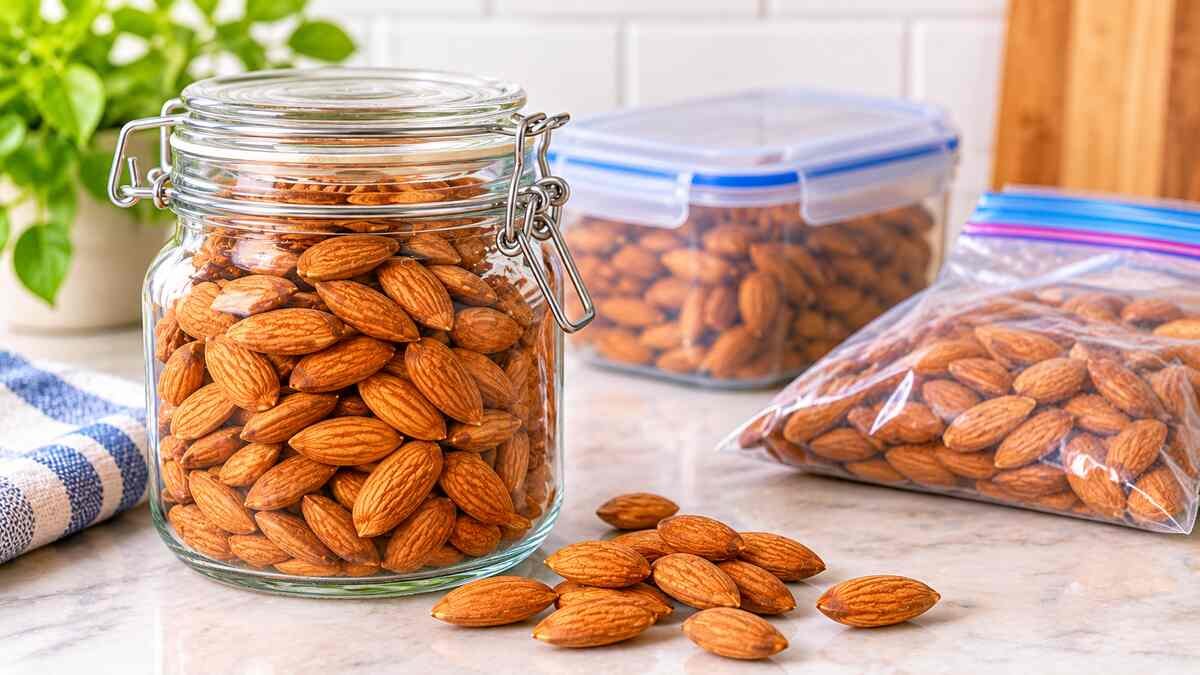

Almonds are a convenient, nutrient-rich snack, but buying a big bag does not guarantee they will stay fresh. Storing almonds the wrong way can leave them stale, soft, or rancid, which wastes both money and a healthy food. Anyone who has opened an old packet and caught a sharp, off smell knows how disappointing this can be.
Almonds are naturally high in oil, which is part of what makes them so nutritious. It is also why they are sensitive to heat, air, light, and moisture. The good news is that you do not need special equipment to protect them. A few simple habits make a real difference.
This guide explains the best way to store almonds at home, how pantry, refrigerator, and freezer storage compare, and which containers work well. You will also learn how to store different almond products, how to handle hot and humid weather, and how to tell when almonds have gone bad.
Why Proper Almond Storage Matters
Quick answer: Almonds contain natural oils that can deteriorate when exposed to heat, oxygen, light, and moisture. Good storage slows these changes, helping almonds stay crunchy, flavorful, and pleasant to eat for longer.
Several factors affect how long almonds keep their quality:
- Natural oils: Almond fats can break down through oxidation, which leads to stale or rancid flavors.
- Air: Oxygen contributes to flavor loss over time.
- Heat: Warmer temperatures speed up quality loss.
- Moisture: Extra moisture changes texture and can encourage mold.
- Light: Prolonged exposure to direct light can reduce quality.
- Strong odors: Almonds can absorb smells from nearby foods.
Processing also matters. Whole almonds generally keep better than sliced, chopped, or ground almonds, because cutting increases the surface area exposed to air. The Almond Board of California, an industry organization, notes that almond shelf life depends on the product, the storage environment, and the package. Its guidance is largely based on commercial storage, so treat it as a useful reference rather than an exact home timeline.
What Is the Best Way to Store Almonds?
Quick answer: Keep almonds in a clean, dry, airtight container in a cool, dark place. For longer storage, or in warm and humid homes, move them to the refrigerator or freezer. Keep them away from heat, sunlight, moisture, and strong-smelling foods.
These basic principles apply to almost every situation:
- Use a clean, completely dry, airtight container
- Keep almonds away from heat and direct sunlight
- Choose a cool, dry location
- Avoid moisture exposure
- Store them away from strong-smelling foods
- Refrigerate or freeze larger quantities for longer storage
Airtight containers matter because they limit contact with oxygen and humidity. The University of California advises that shelled nuts absorb moisture and outside flavors, so they should be packed in moisture-free, odor-tight packaging such as plastic or glass containers, according to UC Cooperative Extension.
For everyday household use, transfer opened almonds into a clean, dry, airtight container. Keep that container in the refrigerator when possible, especially if your kitchen is warm or humid.
Should You Store Almonds in the Pantry, Refrigerator, or Freezer?
Quick answer: A cool, dry pantry works for short-term storage. The refrigerator is better for opened packages and warm climates, and the freezer is best for large amounts or long-term storage.
1. Storing almonds in the pantry
Pantry storage is fine for short periods if the space is consistently cool, dark, and dry. Choose a cabinet away from the stove, oven, dishwasher, and sunny windows.
Warm kitchens are not ideal for long-term storage. The University of California notes that room-temperature storage encourages insect growth and causes nut oils to go rancid more quickly, as described in its consumer nut storage guidance.
2. Storing almonds in the refrigerator
Refrigeration is a practical choice for most households. Lower temperatures help preserve quality, and an airtight container protects almonds from moisture and food odors in the fridge.
It works especially well for opened packages. Avoid repeatedly taking a large container in and out of the refrigerator, since temperature swings can cause condensation. A small container for daily use, with the rest stored separately, solves this problem.
3. Storing almonds in the freezer
Freezing suits almonds bought in larger quantities. To freeze them well:
- Use airtight, freezer-safe containers or bags
- Divide the almonds into smaller portions
- Label each container with the date
- Avoid repeatedly thawing and refreezing the same batch
A helpful tip is to let frozen almonds warm up while still sealed before you open the container. This reduces condensation forming directly on the nuts. UC Davis postharvest guidance similarly recommends warming nuts before moving them to room temperature to minimize condensation problems.
How Long Do Almonds Last?
Quick answer: It depends on the almond type, packaging, and storage conditions. Cold storage helps almonds keep quality much longer than a warm pantry, but these are guidelines, not guaranteed expiration dates.
| Storage location | General guidance |
|---|---|
| Pantry | Short-term storage in cool, dry conditions; shorter in warm kitchens |
| Refrigerator | Several months for best flavor at home; UC guidance suggests quality can last up to about a year at 40°F or below |
| Freezer | A year or more under proper conditions |
| Unopened original packaging | Follow the manufacturer’s best-by date and storage instructions |
The University of California reports that nuts can keep quality for a year or more at refrigerator temperature (40°F or below), according to its consumer storage guidance. UC Davis adds that frozen nuts can keep up to two years under optimal conditions, and that whole shelled kernels keep longer than diced or slivered ones.
These figures reflect ideal conditions. Home kitchens vary, and a package that has been opened repeatedly will not hold up as long as a sealed one. Unopened packages usually retain quality longer, while chopped and ground almonds tend to deteriorate faster than whole almonds. Roasted almonds may also need more protective packaging, because roasting changes how they hold up over time.
A best-by date is a quality guide, not a safety cutoff. Always check smell, taste, and appearance before eating.
How to Store Different Types of Almonds
Different almond products have slightly different needs.
Raw almonds
- Keep whole raw almonds in airtight containers
- Avoid warm, humid storage spots
- Refrigerate for longer household storage
- Freeze larger quantities when needed
Roasted almonds
- Let freshly roasted almonds cool completely before packaging
- Store in airtight containers to minimize oxygen exposure
- Keep away from heat and sunlight
- Refrigerate if you will not eat them soon
Sliced and chopped almonds
Smaller pieces have more surface area, so they lose freshness faster. Store them in airtight containers, refrigerate to help preserve flavor, and avoid leaving opened packets exposed to air. If you use them rarely, buy smaller quantities.
Blanched and peeled almonds
Blanched or peeled almonds must be completely dry before storage. Sealing damp almonds in a container can lead to spoilage. If you have soaked almonds at home, see our guide on soaking almonds benefits and methods for safe handling, since wet almonds should be refrigerated and eaten promptly.
Ground almonds and almond flour
- Keep in airtight, moisture-resistant packaging
- Follow the manufacturer’s storage instructions
- Refrigerate or freeze after opening when appropriate
- Use clean, dry utensils
Best Containers for Storing Almonds at Home
Quick answer: Choose a container with a tight-fitting lid that is clean and completely dry. Glass jars, food-safe plastic containers, and freezer bags all work well, depending on where you plan to store the almonds.
| Container | Best use |
|---|---|
| Airtight glass jar | Everyday refrigerator or pantry storage |
| Food-safe airtight plastic container | Bulk household storage |
| Resealable freezer bag | Freezer storage |
| Vacuum-sealed bag | Longer-term storage, where available |
| Original resealable packaging | Convenient everyday use |
A few points are worth remembering. Tight lids matter, because loose ones let in air and humidity. Containers must be fully dry before filling. Clear containers should stay out of direct light. Very large containers with lots of empty space inside are less ideal for batches you open often.
A simple practical tip: use several small containers instead of one large one. That way, you only expose a small portion to air each time you reach for a snack.
How to Store Almonds in Hot and Humid Weather
Heat speeds up oxidation, and humid air can change almond texture and add moisture. Leaving almonds in a bowl on the counter or in a warm cabinet is not ideal in these conditions. Airtight containers become especially important.
A realistic routine for households without special equipment:
- Divide bulk almonds into smaller portions.
- Place each portion in a dry, airtight container.
- Keep the container for regular use in the refrigerator.
- Store the remaining portions in the freezer.
- Do not leave the container open while you prepare meals.
The Almond Board of California suggests that cooler, drier conditions extend almond shelf life, and its storage guidance points to moisture, temperature, and packaging as the main controls. In a warm climate, the refrigerator and freezer give you the most control.
How to Tell If Almonds Have Gone Bad
Quick answer: Almonds that smell sour, paint-like, or stale, taste bitter or off, show mold, feel damp or sticky, or contain insects should be discarded. Trust your senses and do not eat almonds you are unsure about.
1. Unpleasant or rancid smell
Fresh almonds smell mild and nutty. A sour, stale, or paint-like odor can mean the oils have deteriorated.
2. Bitter or unusual taste
Rancid almonds often taste bitter or stale. If an almond tastes noticeably off, stop eating it. UC Cooperative Extension notes that rancid nuts are not considered unsafe, but they have a sharp, unpleasant flavor, so discarding them is the sensible choice.
3. Mold growth
Visible mold is a reason to throw the almonds away. Do not wash or roast moldy almonds to try to make them safe.
4. Changes in texture
Unusual softness, dampness, or stickiness deserves attention. A small loss of crunch does not always mean spoilage, but unexpected moisture can signal a problem, particularly when combined with an off smell.
5. Insects or pest damage
Signs include holes, webbing, or small insects. Discard affected almonds and check nearby pantry items. UC guidance notes that freezing nuts at 0°F for 48 hours can kill insect pests and eggs in home-stored nuts, which can be helpful for backyard harvests, as described in UC Cooperative Extension publications.
When almonds show signs of mold, contamination, or rancidity, discard them rather than trying to restore their freshness.
Common Almond Storage Mistakes to Avoid
- Leaving packets open after use
- Storing almonds near a stove or oven
- Keeping them in direct sunlight
- Using containers that are not completely dry
- Storing almonds beside strong-smelling ingredients
- Keeping bulk quantities in warm, humid cabinets
- Repeatedly opening and closing the same freezer bag
- Mixing fresh almonds with older stock
- Ignoring unusual smells or mold
- Assuming dry foods never expire
A simple habit helps: follow the first-in, first-out rule. Use older stock first, and label new batches with the date.
Can You Store Almonds After Opening the Package?
Yes. Once opened, almonds need a little extra protection:
- Check whether the original bag has a reliable resealable closure
- If not, transfer the almonds to an airtight container
- Keep opened almonds away from humidity
- Refrigerate when appropriate
- Follow the storage instructions on the product label
- Use clean, dry utensils instead of wet hands or spoons
If you snack on almonds often, you may enjoy our guides on the health benefits of nuts and how many nuts you should eat every day.
Frequently Asked Questions About Storing Almonds
Should almonds be stored in the refrigerator?
Refrigeration is a good option for maintaining almond quality, especially after opening or in warm environments. The University of California notes that nuts can retain quality for a year or more at refrigerator temperatures.
Can you freeze almonds?
Yes. Store almonds in airtight freezer-safe containers or bags, ideally in smaller portions. UC Davis reports that frozen nuts can keep up to two years under optimal conditions.
How long do almonds last after opening?
It depends on the almond type, packaging, and storage conditions. Refrigeration generally preserves quality longer than warm pantry storage, so keeping opened almonds cold in an airtight container is a good habit.
Can almonds be stored in glass jars?
Yes. Clean, completely dry glass jars with tight-fitting lids are suitable for household storage. Keep clear jars out of direct light.
Do almonds go bad if left out?
They can lose quality more quickly when exposed to heat, light, oxygen, or moisture. Room-temperature storage speeds up rancidity compared with cold storage, according to UC Cooperative Extension.
How do you keep almonds crunchy?
Protect them from moisture and humidity by using airtight containers and cool storage. Make sure containers are fully dry before filling them.
Is it safe to eat almonds that smell strange?
It is best not to. Discard almonds with a rancid or otherwise unpleasant odor. Rancid nuts are generally not considered unsafe, but they taste unpleasant, and an off smell can also signal other problems.
Should almonds be washed before storing?
It is generally better to store dry almonds without washing them. Moisture introduced during washing can raise the risk of spoilage and mold.
Final Thoughts: Keep Your Almonds Fresh With Simple Storage Habits
Keeping almonds fresh does not require complicated equipment. A clean, dry, airtight container, protection from heat and sunlight, and refrigerator or freezer storage when appropriate will help maintain their quality.
For everyday use, keep smaller portions handy and protect the rest of your supply from temperature changes and humidity. Checking freshness before you eat is just as important as choosing the right storage method. To learn why almonds are worth keeping fresh, see our overview of almonds health benefits.
Sources
- Almond Board of California. Shelf Stability and Shelf Life (storage tips).
- University of California Cooperative Extension. Tree nuts: food safety and storage.
- University of California Division of Agriculture and Natural Resources. Harvesting and Storing Your Home Orchard’s Nut Crop.
- University of California, Davis Postharvest Technology Center. Commercial storage of whole and diced almonds, pecans and hazelnuts.
- University of California Cooperative Extension. Nuts: Safe Methods for Home Gardeners to Harvest, Store, and Enjoy.
Medical Disclaimer: This article is for informational purposes only and is not a substitute for professional medical or food safety advice. Storage times are general guidelines, not guaranteed expiration dates. When in doubt about the safety or quality of any food, throw it out, and talk with a qualified healthcare professional if you have concerns about food allergies or foodborne illness.