
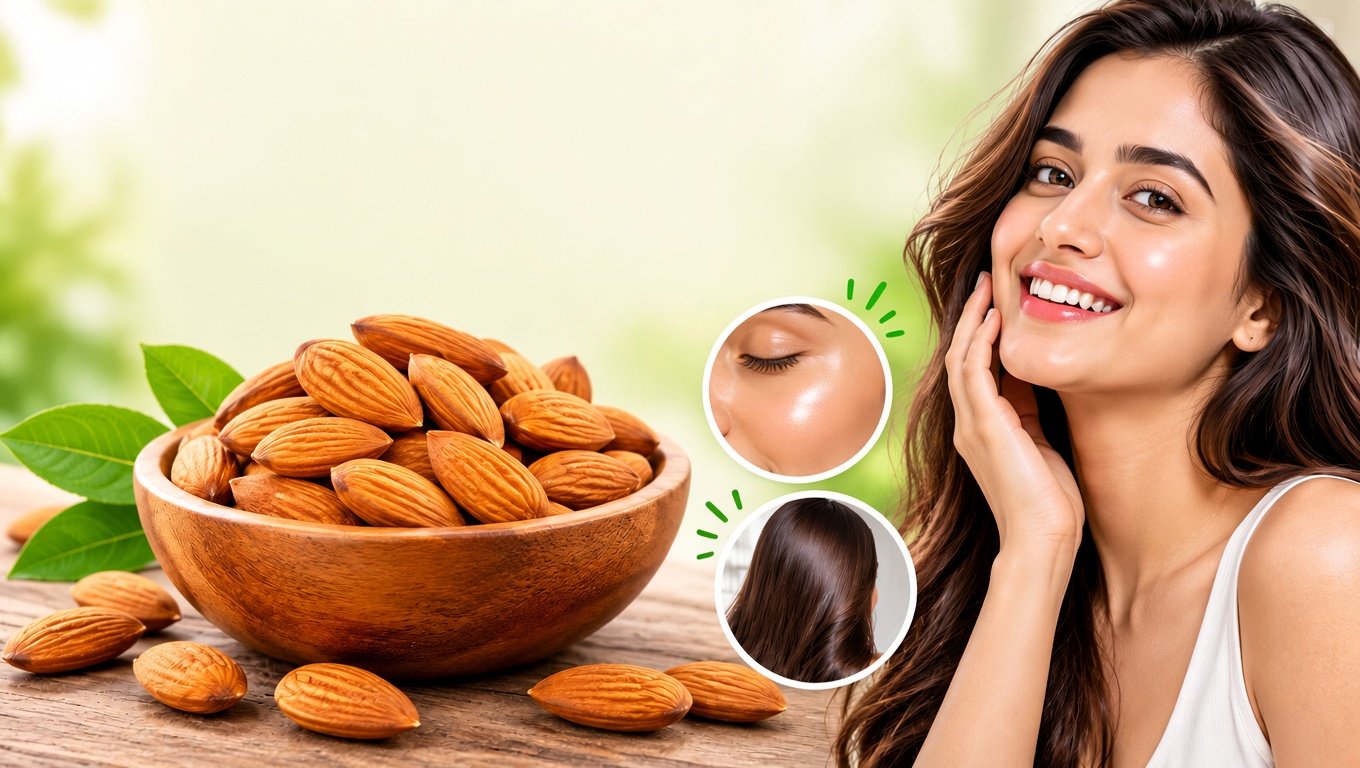
Could a small handful of almonds each day support healthier-looking skin and stronger hair? Many people spend money on skincare products, hair oils, and beauty treatments without considering how everyday nutrition contributes. Almonds are one of the most popular foods people turn to for this reason.
Almonds are a nutrient-dense food that provides vitamin E, healthy fats, plant-based protein, magnesium, and other nutrients that support normal body functions. When it comes to almonds skin hair health, these nutrients play a supporting role. Almonds are not a miracle beauty food, but their nutritional profile makes them a sensible addition to a balanced diet.
This guide explains what almonds contain, what research does and does not show, how many to eat, whether soaking matters, and who should avoid them. The information is general and educational, and it is not a substitute for individualized medical advice. For a broader overview, see our guide to the health benefits of nuts.
Are Almonds Good for Skin and Hair?
Yes, almonds can contribute to skin and hair health because they provide several nutrients the body uses to maintain these tissues. Vitamin E, healthy fats, protein, and minerals all play a role, but eating almonds alone cannot guarantee visible changes in your skin or hair.
Vitamin E is a fat-soluble antioxidant that helps protect cells from oxidative damage, according to the NIH Office of Dietary Supplements. Healthy fats support normal cell structure. Protein supplies the amino acids needed to build and maintain tissues, including hair. Minerals such as zinc and magnesium support many everyday processes in the body.
It is equally important to understand the limits. Eating almonds will not reverse hair loss, clear acne, or prevent wrinkles. They work best as one part of an overall eating pattern that is rich in varied whole foods.
Almond Nutrition Facts: What Makes Them Good for Skin and Hair?
Before looking at individual benefits, it helps to see what a standard serving contains. The table below shows approximate values for a 1-ounce (28-gram) serving of almonds, based on USDA FoodData Central data.
| Nutrient | Approximate amount | Why it matters |
|---|---|---|
| Calories | 164 kcal | Energy |
| Protein | 6 g | Tissue maintenance |
| Total fat | 14 g | Essential dietary fats |
| Fiber | 3.5 g | Digestive health |
| Vitamin E | About 7 mg | Antioxidant protection |
| Magnesium | 76 mg | Normal cellular functions |
| Zinc | Under 1 mg | Normal tissue maintenance |
Values are approximate and vary by almond variety and preparation.
Vitamin E is the standout nutrient here. Most of the fat in almonds is unsaturated, which is generally considered the more favorable type of dietary fat. You can read more in our article on almonds and healthy fats.
Almonds also provide protein and a range of minerals. They are not an especially rich source of every mineral, so zinc in particular should come from a varied diet. If you are curious how they compare with another popular nut, see almonds vs. walnuts. For more detail on the nut itself, read our guide to the health benefits of almonds.
7 Potential Benefits of Almonds for Skin and Hair
The benefits below describe how almonds may contribute to skin and hair health through their nutrients. Direct research on almonds themselves is limited, so each point notes what is known and what is not.
1. May Help Protect Skin From Oxidative Stress
Oxidative stress occurs when unstable molecules called free radicals damage cells. Sun exposure, pollution, and smoking can all increase it. Vitamin E is a fat-soluble antioxidant that helps protect cell membranes from this type of damage.
According to the NIH, one ounce of dry-roasted almonds provides about 6.8 mg of vitamin E, or roughly 45% of the Daily Value. That makes almonds a convenient source. However, getting enough vitamin E does not guarantee visible skin improvements or reverse existing damage.
2. May Support Healthy-Looking Skin
Skin is a living organ that depends on a steady supply of nutrients. Dietary fats help build cell membranes, and vitamins and minerals support normal skin maintenance. A diet that falls short in key nutrients can show up in the skin over time.
Almonds can fit into a balanced diet that supports these needs. They are one useful ingredient, not a shortcut to a particular complexion. Sleep, sun protection, hydration, and overall food quality all matter as well.
3. Provides Nutrients That Support Skin Hydration and Barrier Function
The skin barrier is the outer layer that helps hold in moisture and keep irritants out. Healthy cell membranes and fats are part of what keeps it working normally. Almonds provide mostly unsaturated fats, which can contribute to a balanced fat intake.
There is an important caveat. In the 2019 pilot study discussed below, researchers did not find significant changes in sebum production or water loss through the skin between groups. Eating almonds is also not equivalent to using a moisturizer. If you struggle with persistent dryness, our article on dry skin explains common causes and when to seek care.
4. May Help Support Skin’s Natural Aging Processes
Oxidative stress is one of several factors involved in skin aging, and antioxidants such as vitamin E are part of the body’s defense against it. This is why almonds often appear in discussions of healthy aging.
A small randomized pilot study published in Phytotherapy Research followed postmenopausal women for 16 weeks. The women who ate almonds as a daily snack showed reductions in wrinkle severity and width compared with the control group. The study was small, included only women with lighter skin types, and was funded by the Almond Board of California. The findings are interesting, but they are not enough to establish a universal anti-aging effect.
5. Provides Protein for Healthy Hair Structure
Hair is made mostly of a protein called keratin, so adequate dietary protein is important for normal hair production. Almonds provide about 6 grams of plant-based protein per ounce, which adds to your daily total.
Insufficient protein intake can contribute to hair changes, according to MedlinePlus. Almonds should complement other protein sources such as legumes, dairy, eggs, fish, and poultry rather than serve as your only source. There is no strong evidence that eating almonds directly speeds up hair growth.
6. Supplies Minerals Involved in Normal Hair and Tissue Function
Almonds contain magnesium and smaller amounts of zinc. The NIH fact sheet on zinc notes its role in cell division and tissue maintenance. The NIH fact sheet on magnesium describes its involvement in hundreds of enzyme-related processes.
Balanced mineral intake matters, but correcting a true deficiency is different from adding extra minerals when your levels are already adequate. Almonds should not be viewed as a treatment for hair thinning. If you are concerned about shedding, see our overview of hair loss.
7. Supports Overall Nutrition for Healthy Skin and Hair
The real strength of almonds is how many helpful nutrients they combine in one small serving. They provide healthy fats, plant-based protein, vitamin E, fiber, and several essential minerals together.
Still, healthy skin and hair depend on an overall dietary pattern, not a single food. Pairing almonds with fruits, vegetables, whole grains, and other protein sources gives your body a wider range of nutrients. You can explore more options in our guide to nuts for skin and hair.
How Does Vitamin E in Almonds Support Skin and Hair Health?
Vitamin E is the strongest nutritional angle for almonds. It is the collective name for a group of fat-soluble compounds, and alpha-tocopherol is the form the body uses most. It is essential, meaning you must get it from food or supplements.
Its best-known role is as an antioxidant that helps protect cell membranes from free radical damage. This supports normal cell function throughout the body, including in the skin. Vitamin E works alongside other nutrients, such as vitamin C, rather than on its own.
Almonds are a convenient dietary source. One ounce of dry-roasted almonds provides about 6.8 mg, or 45% of the adult Daily Value of 15 mg, according to the NIH Office of Dietary Supplements. Other foods, including sunflower seeds, hazelnuts, and vegetable oils, also contribute.
Vitamin E is not a standalone treatment for hair loss, acne, wrinkles, or other skin conditions. Most healthy people can meet their needs through food, and high-dose supplements carry risks. The NIH consumer fact sheet explains that supplements can interact with certain medicines, so talk with a healthcare professional before taking them.
How Many Almonds Should You Eat Daily for Skin and Hair Health?
A standard serving is about 1 ounce (28 grams), which is roughly 23 whole almonds. This is a practical amount for many adults and fits within general healthy eating guidance, such as the Dietary Guidelines for Americans.
There is no scientifically established almond dosage specifically for improving skin or hair. Eating more does not automatically produce better results. Almonds are energy-dense, so portions should fit your overall calorie and nutrition needs. Our guide on how many nuts to eat every day offers more detail.
Some easy ways to build a daily habit include having a small handful with breakfast, pairing almonds with fruit as a snack, or adding them to a meal. Aim for consistency rather than large portions.
Raw Almonds vs. Soaked Almonds: Which Is Better for Skin and Hair?
There is no convincing evidence that soaked almonds are better than raw or roasted almonds for skin and hair health. All three forms provide vitamin E, healthy fats, and protein.
Raw almonds are convenient and nutrient-dense, and they can be eaten straight from the bag.
Soaked almonds are usually left in water overnight. They have a softer texture and may be easier to chew for some people. Soaking is popular, but it has not been shown to significantly change skin or hair outcomes. See our article on the benefits of soaking almonds for more.
Roasted almonds offer many of the same nutrients. Dry-roasted, unsalted options are a good choice. Try to avoid products with heavy added salt, sugar, or oils.
The best form is usually the one you will actually eat regularly.
Easy Ways to Include Almonds in Your Daily Diet
Whole almonds are generally a nutritious, minimally processed choice. Here are some simple ideas:
- Add chopped almonds to oatmeal.
- Mix almonds into plain yogurt.
- Combine almonds with fresh fruit.
- Spread unsweetened almond butter on whole-grain toast.
- Sprinkle sliced almonds over salads.
- Blend ground almonds into homemade smoothies.
If you buy in bulk, proper storage helps keep the fats from going rancid. Our guide on storing almonds has practical tips. People with tree nut allergies should avoid almonds entirely.
Are There Any Side Effects of Eating Almonds Every Day?
For most people, moderate almond intake is well tolerated. There are still some precautions worth knowing.
- Tree nut allergy: Almonds can cause serious allergic reactions in people with tree nut allergy. See Food Allergy Research & Education for details.
- Calorie density: Large portions can add up quickly and may lead to unintended weight gain.
- Digestive discomfort: Eating a lot of almonds at once may cause bloating or gas in some people.
- Added sugar and salt: Flavored or candied almond products can undermine the benefits.
- Individual needs: Certain food intolerances or medical conditions may call for different advice.
If you have a known tree nut allergy or a history of allergic reactions, speak with a healthcare professional before eating almonds.
Myths About Almonds for Skin and Hair
| Common myth | Evidence-based explanation |
|---|---|
| Almonds make hair grow faster. | They provide nutrients, but direct hair-growth evidence is lacking. |
| Eating almonds removes wrinkles. | Limited research suggests possible benefits, but more studies are needed. |
| Soaked almonds are always healthier. | There is no strong evidence of superior skin or hair benefits. |
| Almonds cure dry skin. | They support overall nutrition but do not replace skincare treatment. |
| Eating more almonds produces better results. | Excess intake mainly adds unnecessary calories. |
Almonds are also often said to boost collagen directly. Collagen is made by the body from several nutrients, and no strong evidence shows that eating almonds directly increases it.
Final Verdict: Should You Eat Almonds for Skin and Hair Health?
Almonds are a nutrient-dense food that can support overall health. Vitamin E is their standout nutrient for skin, while protein and minerals contribute to normal tissue and hair function. Regular, moderate consumption can be part of a balanced diet.
They are not a cure for hair loss, wrinkles, acne, or other skin conditions. If you notice persistent changes in your skin or hair, a healthcare professional or dermatologist can help find the cause. The American Academy of Dermatology offers reliable information on hair loss.
The practical takeaway is simple: enjoy a small portion of almonds alongside fruits, vegetables, adequate protein, and other nutrient-rich foods. For more ideas, browse our nutrition and healthy eating section.
Frequently Asked Questions
Are almonds good for skin and hair?
Yes. Almonds contain vitamin E, healthy fats, protein, and minerals that contribute to normal skin and hair function. However, eating almonds alone cannot guarantee visible improvements.
Do almonds help hair growth?
Almonds provide protein and micronutrients needed for normal hair function. There is insufficient evidence that eating almonds directly increases hair growth or reverses hair loss.
How many almonds should I eat daily for glowing skin?
A serving of about 23 almonds (28 grams) is a practical option for many adults. There is no scientifically established serving specifically for glowing skin.
Are soaked almonds better for skin and hair?
Soaked almonds are a popular choice, but there is no convincing evidence that they offer greater skin or hair benefits than raw or roasted almonds. Choose the form you enjoy and will eat consistently.
Can eating almonds reduce wrinkles?
A small randomized pilot study in postmenopausal women reported improvements in wrinkle measurements after 16 weeks of daily almond snacking (study). More research is needed before firm anti-aging claims can be made.
Can almonds prevent hair loss?
No. Almonds cannot be relied upon to prevent or treat hair loss. Persistent or unexplained hair loss should be evaluated by a healthcare professional.
Sources
- National Institutes of Health, Office of Dietary Supplements. Vitamin E: Fact Sheet for Health Professionals.
- National Institutes of Health, Office of Dietary Supplements. Vitamin E: Fact Sheet for Consumers.
- Foolad N, et al. Prospective randomized controlled pilot study on the effects of almond consumption on skin lipids and wrinkles. Phytotherapy Research. 2019;33(12):3212-3217.
- U.S. Department of Agriculture. FoodData Central.
- National Institutes of Health, Office of Dietary Supplements. Zinc: Fact Sheet for Health Professionals.
- National Institutes of Health, Office of Dietary Supplements. Magnesium: Fact Sheet for Health Professionals.
- MedlinePlus. Hair Loss.
- American Academy of Dermatology Association. Hair loss.
- U.S. Department of Agriculture and U.S. Department of Health and Human Services. Dietary Guidelines for Americans.
- Food Allergy Research & Education. Tree nut allergy.
Medical Disclaimer: This article is for general educational purposes only and is not medical advice. It does not diagnose, treat, or prevent any condition, and it should not replace guidance from a qualified healthcare professional. Talk with your doctor or a registered dietitian before changing your diet, especially if you have a food allergy, a medical condition, or take medication.