
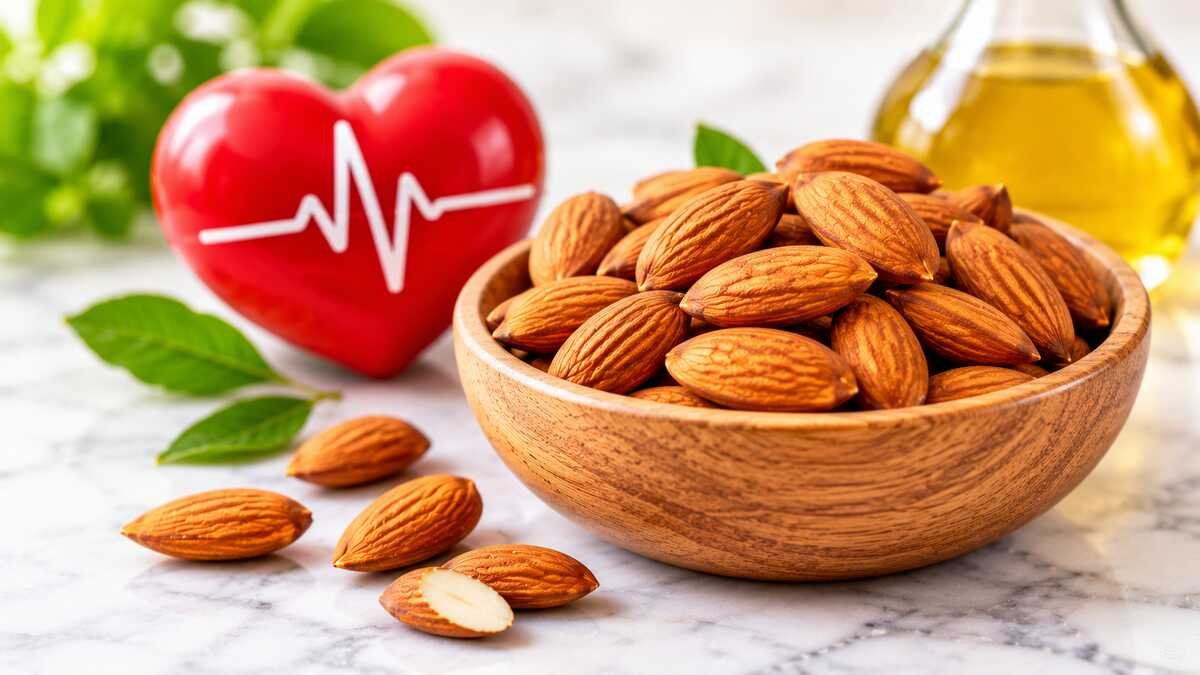

Almonds are one of the most popular nutrient-dense snacks, and much of their reputation comes from the kind of fat they contain. When people search for almonds healthy fats information, they usually want to know whether the fat in almonds is the good kind and how it affects the heart. The answer is encouraging, with a few important details worth understanding.
Almonds are a good source of healthy fats, particularly monounsaturated fats. These fats make up most of the fat in almonds and can support heart health when they replace foods high in saturated fat. Almonds also provide fiber, protein, vitamin E, and other nutrients that make them a useful addition to a balanced diet.
Still, no single food prevents heart disease. This guide explains the types of fat in almonds, why the type of fat matters, what research says about cholesterol, how many almonds to eat, and who should be careful. The goal is to help you use almonds wisely as part of an overall heart-conscious eating pattern.
Are Almonds a Good Source of Healthy Fats?
Yes. Almonds are rich in unsaturated fats, the types of fat that nutrition experts generally recommend choosing more often. The American Heart Association (AHA) advises replacing foods that contain saturated and trans fats with foods that contain monounsaturated and polyunsaturated fats, as described in its guide to fats in foods.
It helps to separate total fat from the type of fat. A 1-ounce (28-gram) serving of almonds, about 23 kernels, provides approximately:
- 14 grams of total fat
- 9 grams of monounsaturated fat
- 3.5 grams of polyunsaturated fat
- About 1 gram of saturated fat
These values are approximate and can vary slightly by product and nutrient database, based on USDA-derived nutrition data. The key point is that fat is not automatically unhealthy. The type of fat, and the foods it replaces in your diet, matter most.
What Types of Fat Are Found in Almonds?
Almonds contain three broad categories of fat, in very different proportions. Understanding each one explains why almonds are considered a heart-friendly choice. For a wider overview, see our guide to healthy fats.
Monounsaturated fats: The main healthy fat in almonds
Monounsaturated fats (MUFAs) have one double bond in their chemical structure. Besides supplying energy, they are a key part of many heart-conscious eating patterns, such as the Mediterranean diet.
The main monounsaturated fatty acid in almonds is oleic acid, the same type that is abundant in olive oil. According to the AHA, monounsaturated fats can help reduce LDL (“bad”) cholesterol levels when they replace saturated fats in the diet.
Polyunsaturated fats: Another beneficial fat
Almonds also contain polyunsaturated fats (PUFAs), mainly omega-6 fatty acids such as linoleic acid. These fats are part of a balanced diet and, like monounsaturated fats, are a better choice than saturated fats for cholesterol management.
It is worth noting that almonds are not a major source of omega-3 fats. If you want those, our article on omega-3 fatty acids covers better sources, such as fatty fish.
Saturated fats: Present in smaller amounts
Almonds contain only a small amount of saturated fat, about 1 gram per ounce. A food does not need to be completely fat-free to be heart-friendly, and the saturated fat in almonds is modest compared with foods such as butter, where saturated fat makes up a much larger share of the total.
This fat profile is one reason almonds work well as a swap for snacks that are higher in saturated fat.
Why Monounsaturated Fats Matter for Heart Health
Heart-conscious eating is often less about cutting fat and more about choosing better fats. Here is why the monounsaturated fats in almonds are significant.
They can help improve cholesterol levels
LDL cholesterol is a major contributor to plaque buildup in the arteries, so elevated levels matter for cardiovascular risk. You can read more in our guides on high cholesterol and LDL vs. HDL cholesterol.
The AHA states that replacing saturated fat with unsaturated fat can help lower LDL cholesterol, as reviewed in its presidential advisory on dietary fats. It is important not to assume that monounsaturated fats automatically raise HDL cholesterol in every person, since that effect is not consistent.
They support a heart-conscious eating pattern
Food substitutions matter more than simply adding healthy fats on top of your current diet. Almonds can take the place of butter-heavy snacks, pastries, or processed chips. If you add almonds without changing anything else, you may just add calories.
The overall dietary pattern is also more important than any one nutrient. Almonds fit well alongside vegetables, fruit, whole grains, legumes, and other nutritious foods.
They provide energy and help absorb vitamins
Dietary fat supplies energy and helps your body absorb the fat-soluble vitamins A, D, E, and K. A moderate serving of almonds can contribute to this, but no single fatty acid should be viewed as a miracle nutrient. A balanced diet provides these benefits across many foods.
Almonds, Cholesterol, and Cardiovascular Health
Almonds have been studied extensively in relation to blood cholesterol. They contain unsaturated fats, fiber, and small amounts of plant sterols, which together may help explain the results seen in trials.
A 2019 systematic review and meta-analysis of randomized controlled trials found that almond intake lowered total cholesterol and LDL cholesterol compared with diets without almonds. The included studies varied considerably in dose and design, which limits firmer conclusions.
A 2022 meta-analysis similarly reported reductions in total cholesterol, LDL, and triglycerides, and a 2025 review reported improvements in LDL and total cholesterol as well. The 2025 review was funded by the Almond Board of California, so it is helpful to read it alongside independent work.
Results vary between studies, and better cholesterol markers do not prove that almonds alone prevent heart attacks or strokes. Almonds are one helpful food choice within a heart-healthy diet. They are not a cholesterol-lowering treatment or a replacement for prescribed medication. To dive deeper, see our article on almonds and high cholesterol and our overview of almonds and heart health.
Other Nutrients That Make Almonds Heart-Friendly
Fats are only part of the picture. Almonds provide several other nutrients that contribute to overall nutrition.
Fiber
A 1-ounce serving provides roughly 3.5 grams of fiber. Fiber supports digestive health and, as part of a fiber-rich diet, may help support healthy cholesterol levels. Almonds should be seen as one of many fiber sources, alongside oats, beans, fruit, and vegetables.
Vitamin E
Almonds are a useful food source of vitamin E, an antioxidant that helps protect cells from oxidative damage. This supports general health, though it should not be treated as a direct way to prevent heart disease.
Plant protein and minerals
Almonds also provide plant-based protein, magnesium, and other minerals. These nutrients contribute to overall nutrition, but there is no evidence that they independently prevent heart disease. For more on how almonds fit into your overall diet, see our almonds health benefits guide.
How Many Almonds Should You Eat?
A practical serving is about 1 ounce (28 grams), often around 23 almonds. This provides roughly 165 calories, so portion awareness matters because almonds are energy-dense. Our article on how many nuts you should eat every day offers more general guidance.
Individual needs vary with calorie requirements, activity level, and overall eating patterns. No specific number of almonds has been shown to produce a particular cholesterol result.
Choose unsalted or lightly salted varieties, especially if you monitor sodium intake. If blood pressure is a concern, see whether almonds are good for high blood pressure.
A useful rule of thumb is to use almonds in place of a less nutritious snack, rather than adding a large portion on top of your regular meals. If weight is a concern, our guide on nuts and weight management can help.
Healthy Ways to Add Almonds to Your Diet
Almonds are easy to include in everyday meals. A few simple ideas:
- Add chopped almonds to oatmeal or plain yogurt
- Mix almonds with fruit for a snack
- Sprinkle sliced almonds over salads
- Spread unsweetened almond butter on whole-grain toast
- Add ground almonds to homemade meals or smoothies
Almonds work best as part of a varied diet that includes vegetables, fruit, whole grains, legumes, and other nutritious foods. If you are building up your produce intake, see how many vegetables you should eat a day. You may also enjoy our article on the benefits of peanuts for other nut options.
Raw, Roasted, or Almond Butter: Which Is Healthiest?
There is no single “best” form. Preparation and added ingredients matter more than whether an almond is raw or roasted.
Raw almonds
Raw almonds are a convenient option with no roasting oil or added salt, which makes them a simple default choice.
Dry-roasted almonds
Dry-roasted almonds can be just as nutritious. Check the ingredient list for added salt, sugar, or flavorings, and avoid products roasted in a lot of added oil.
Almond butter
Almond butter provides many of the same nutrients as whole almonds. Look for varieties where almonds are the main or only ingredient. Sweetened or heavily salted versions may contain unnecessary additions, and portions can add up quickly because almond butter is calorie-dense.
Who Should Be Careful About Eating Almonds?
Almonds are suitable for most people, but a few groups should take care:
- People with tree nut allergies should avoid almonds unless a qualified allergy specialist advises otherwise. Severe reactions need emergency medical care.
- People with difficulty chewing or swallowing may need an alternative texture, such as smooth almond butter, if appropriate for them.
- People following a calorie-controlled diet should be mindful of serving sizes.
- People with medical dietary restrictions should follow advice from their healthcare professional.
Some people with reflux find high-fat snacks bothersome, and our article on whether almonds are good for acid reflux explains this in more detail. People who have low iron can also read about almonds and iron deficiency.
Frequently Asked Questions About Almonds and Healthy Fats
Are almonds high in healthy fats?
Yes. Most of the fat in almonds is unsaturated, with monounsaturated fat making up the largest share. The AHA recommends choosing foods with monounsaturated and polyunsaturated fats in place of those high in saturated and trans fats.
How much monounsaturated fat is in 10 almonds?
Ten almonds provide roughly 4 grams of monounsaturated fat, based on about 9 grams in a 23-almond serving. This is an estimate, since almond size and nutrient data vary by product.
Do almonds help lower LDL cholesterol?
Research suggests almond consumption may modestly reduce LDL cholesterol, particularly when almonds replace foods high in saturated fat. A 2019 meta-analysis of randomized trials supports this, though the effect varies from person to person.
Are almonds better than walnuts for heart health?
Both can be part of a heart-healthy diet, and their nutrient profiles differ. Walnuts, for example, provide more plant omega-3 fat, so variety is a sensible approach. See our comparison of almonds vs. walnuts.
Can I eat almonds every day?
Many people can include a moderate portion daily as part of a balanced diet, provided they do not have an almond allergy or another reason to avoid them. Keeping to a serving of about 1 ounce helps manage calories.
Are salted almonds still healthy?
Salted almonds still contain unsaturated fats, but unsalted or lightly salted options are preferable for people who need to limit sodium. Checking the nutrition label helps you compare products.
Conclusion: Almonds and Healthy Fats
Almonds are rich in monounsaturated fats, along with polyunsaturated fats and only a small amount of saturated fat. They also provide fiber, vitamin E, protein, and minerals that add to their value in a balanced diet.
The key is portion size and substitution: choose almonds in place of snacks higher in saturated fat, rather than adding them on top. Almonds can support a heart-conscious eating pattern, but they are not a substitute for medical care or an overall healthy lifestyle.
Sources
- American Heart Association. Fats in Foods.
- Sacks FM, et al. Dietary Fats and Cardiovascular Disease: A Presidential Advisory From the American Heart Association. Circulation, 2017.
- Lee-Bravatti MA, et al. Almond Consumption and Risk Factors for Cardiovascular Disease: A Systematic Review and Meta-analysis of Randomized Controlled Trials. Advances in Nutrition, 2019.
- Morvaridzadeh M, et al. The effect of almond intake on cardiometabolic risk factors, inflammatory markers, and liver enzymes: A systematic review and meta-analysis. Phytotherapy Research, 2022.
- Musa-Veloso K, et al. Blood Lipid Levels in Response to Almond Consumption: A Systematic Review and Meta-Analysis of Randomized Controlled Trials. Nutrients, 2025.
- University Hospitals (USDA-based data). Nutrition facts: almonds, 1 oz (23 whole kernels).
Medical Disclaimer: This article is for informational purposes only and is not a substitute for professional medical advice, diagnosis, or treatment. Talk with a qualified healthcare professional before making significant dietary changes, especially if you have heart disease, high cholesterol, a tree nut allergy, or take prescription medication. Follow the guidance of your care team for any cardiovascular condition.