
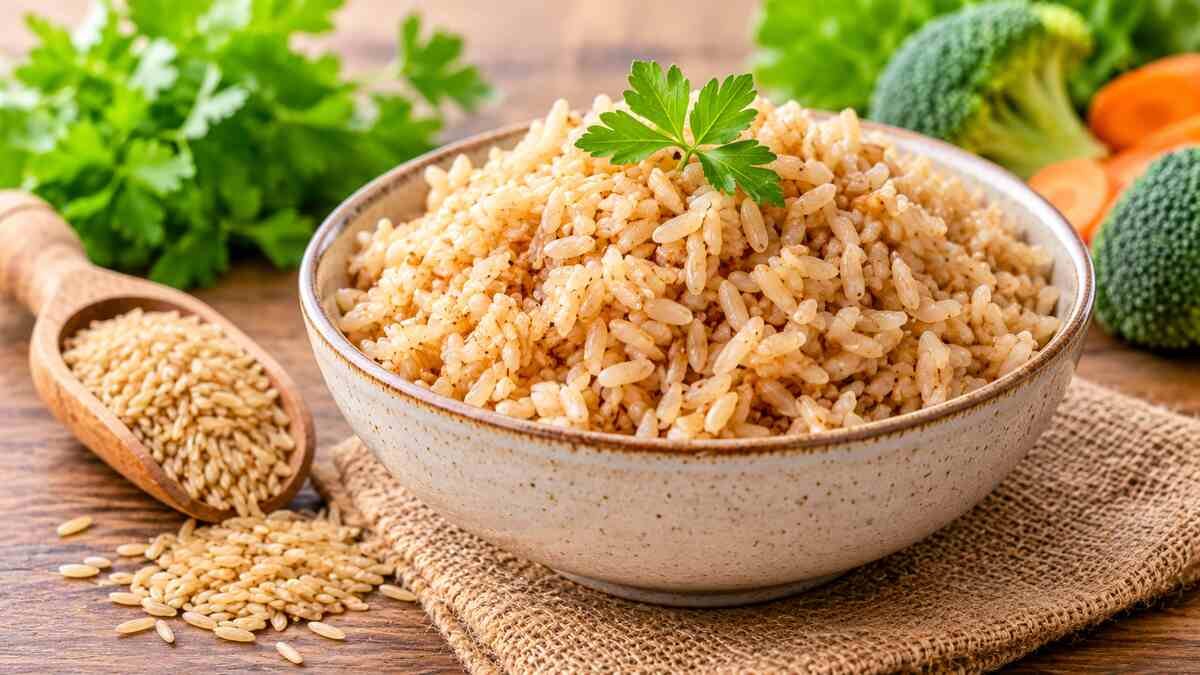

Brown rice is a nutritious whole grain that provides fiber, vitamins, minerals, and beneficial plant compounds. Because it keeps its outer bran and germ layers, it generally offers more nutrients than refined white rice. Harvard Health describes it as more nutrient-dense than white rice, and for most people it is a healthy choice.
Including brown rice in a balanced diet may support digestive health, blood sugar management, and overall nutritional quality. Still, it is not a miracle food. Its benefits depend on portion size, preparation, and the rest of your diet, and research on brown rice specifically is more mixed than many headlines suggest.
This guide covers brown rice nutrition, seven potential health benefits, how it compares with white rice, and possible drawbacks such as digestive discomfort and arsenic. You will also find practical advice on serving sizes, cooking, and eating it regularly.
What Is Brown Rice?
Understanding brown rice
Brown rice is the whole-grain form of rice. Like all whole grains, it keeps three parts of the kernel:
- Bran: the outer layer, which contains most of the fiber
- Germ: the nutrient-rich inner component
- Endosperm: the starchy inner portion
White rice starts out as brown rice, but milling removes the bran and germ, leaving mostly the endosperm. That is why brown rice has a nuttier flavor and a chewier texture, and why it usually takes longer to cook.
Different types of brown rice
Brown rice comes in several varieties, including long-grain, medium-grain, and short-grain. Aromatic varieties such as basmati and jasmine are also sold in brown and white versions, according to Harvard’s Nutrition Source.
Cooking time, texture, and flavor vary by type. Long-grain rice tends to cook up fluffier and more separate, while short-grain rice is stickier. Check the package for water ratios and timing.
Brown Rice Nutrition Facts
Nutritional value of cooked brown rice
The table below shows approximate values for 1 cup (about 195 grams) of cooked long-grain brown rice, based on USDA data as republished by University Hospitals. Exact numbers vary by variety, so check USDA FoodData Central for the product you use.
| Nutrient | Approximate amount per 1 cup cooked |
|---|---|
| Calories | About 216 kcal |
| Carbohydrates | About 45 g |
| Protein | About 5 g |
| Dietary fiber | About 3.5 g |
| Fat | About 1.8 g |
| Magnesium | About 84 mg |
| Manganese | About 1.8 mg |
Medium-grain brown rice is similar. Harvard Health lists 218 calories per cooked cup of medium-grain brown rice.
Important nutrients in brown rice
Brown rice contributes several nutrients to your overall diet:
- Fiber: supports bowel regularity and digestive health.
- Magnesium: plays a role in normal muscle and nerve function.
- B vitamins: help the body use energy from food. Harvard Health notes brown rice has more B1, B3, B6, and B9 than white rice.
- Manganese: involved in normal metabolic processes.
- Plant compounds: natural substances in the bran, although research on their effects in people is still developing.
Is brown rice high in carbohydrates?
Yes. Brown rice is mainly a carbohydrate food, and carbohydrates are an important source of energy. That does not make it unhealthy. Whole-grain carbohydrates with fiber can fit well into a balanced diet. For more on building meals, see our guide to what a balanced diet looks like.
7 Brown Rice Health Benefits
Each benefit below includes a note on how strong the evidence is. Research often looks at whole grains as a group, so results do not always apply to brown rice alone.
1. Supports digestive health
Brown rice contains dietary fiber, which helps add bulk to stool and supports regular bowel movements. Fiber is also part of an overall pattern of eating that supports gut health. Our list of high-fiber foods for digestive health shows other ways to get it.
Brown rice does not cure constipation or digestive disorders. People with certain digestive conditions may not tolerate high-fiber foods well during a flare-up (more on this below).
2. May support healthy blood sugar management
Carbohydrates raise blood glucose, and brown rice is no exception. The fiber and intact grain structure may slow digestion somewhat. Harvard Health reports a glycemic index (GI) of about 68 for brown rice and 73 for white rice, so both fall in the medium to high range with a modest difference.
Large Harvard studies have linked eating more white rice with a higher risk of type 2 diabetes, and brown rice with a lower risk. These are observational findings, so they cannot prove cause and effect. As one of the researchers noted, people who eat more brown rice may also have healthier lifestyles overall. Our diabetes diet guide and article on blood sugar offer more context.
3. Provides nutrients that support heart health
Brown rice supplies magnesium, fiber, and other nutrients that fit into a heart-healthy diet. Harvard Health says fiber-rich whole grains, including brown rice, are linked with a reduced risk of heart disease and type 2 diabetes in otherwise healthy people.
The evidence for rice itself is less clear. Harvard’s Nutrition Source notes that a systematic review of 45 whole-grain studies did not find a reduced risk of stroke, heart disease, or cancer from white or brown rice intake. Brown rice alone does not prevent heart disease. See our overview of heart-healthy foods.
4. May help with weight management
The fiber in brown rice may contribute to feeling full. Replacing refined grains with whole grains can be one useful swap, and Harvard Health links whole-grain-rich diets with weight management.
Brown rice is not a weight-loss or fat-burning food. Calories are similar to white rice, and portion size and your total diet matter most. Our guide to weight management covers the bigger picture.
5. Provides important vitamins and minerals
Brown rice adds B vitamins, magnesium, manganese, and other nutrients to your daily intake. It contributes to overall nutrition and does not treat or fix a deficiency. A varied diet is the best way to cover your needs.
6. Supports a balanced whole-grain diet
Brown rice pairs well with vegetables, legumes, and lean proteins. Try it with legumes or leafy greens to round out a meal.
Variety matters, too. Rotating brown rice with oats, millet, quinoa, and whole wheat gives you a wider range of nutrients and avoids relying on a single grain.
7. Offers a naturally gluten-free grain option
Plain brown rice is naturally gluten-free, which makes it useful for people avoiding gluten. People with celiac disease should check labels and watch for cross-contact with gluten-containing foods during processing and cooking. You do not need to eat brown rice exclusively to follow a gluten-free diet, because other gluten-free grains are available.
Brown Rice vs. White Rice: Which Is Healthier?
Nutritional differences
| Feature | Brown rice | White rice |
|---|---|---|
| Grain type | Whole grain | Refined grain |
| Bran and germ | Retained | Removed |
| Fiber | Generally higher | Generally lower |
| Magnesium | Generally higher | Generally lower |
| B vitamins | Naturally retained | Often added back (enriched) |
| Texture | Chewier | Softer |
| Cooking time | Usually longer | Usually shorter |
Calories are close. Harvard Health lists about 218 calories for a cup of cooked medium-grain brown rice and 242 for white.
Is brown rice always the healthier choice?
Brown rice is generally more nutrient-dense, and Harvard Health calls it a healthier choice for most people. There are exceptions:
- White rice may be easier to digest. Harvard Health suggests it may be a better option during a flare-up of a digestive condition that makes fiber harder to handle.
- Enriched white rice can provide added nutrients.
- Both types can fit into a balanced diet, especially when your fiber comes from other foods too.
- Your health conditions, preferences, and culture matter.
If you are unsure which suits you, a registered dietitian can help. Our guide to what a healthy diet looks like may also help.
Potential Side Effects and Disadvantages of Brown Rice
May cause digestive discomfort
Adding a lot of fiber quickly can cause gas or bloating in some people. If you are switching from white rice, increase brown rice gradually and drink enough fluids. People with certain digestive conditions may need individualized advice from a healthcare professional.
Brown rice and arsenic exposure
Rice plants absorb more arsenic from soil and water than most other crops, and arsenic tends to build up in the outer layers of the grain. As a result, brown rice generally contains more inorganic arsenic than white rice. Harvard’s Nutrition Source cites an FDA report with an average of 154 parts per billion in brown rice, and notes that early-life exposure raises the risk of later health effects.
Context matters. A 2025 Michigan State University study, as reported by TODAY, found brown rice had more arsenic than white rice but concluded it would not cause long-term problems unless someone ate an enormous amount daily for years. Normal brown rice intake is not automatically dangerous. Regulators and researchers still advise variety, particularly for young children.
How to reduce arsenic exposure
You can lower exposure with a few habits:
- Rinse rice before cooking.
- Cook rice in extra water and drain the excess, as you would pasta. This may reduce arsenic but can also wash away some water-soluble nutrients.
- Vary your grains. The FDA has advised eating a well-balanced diet that includes a variety of grains, consistent with American Academy of Pediatrics advice.
- Rotate brown rice with oats, millet, quinoa, and other grains rather than eating rice at every meal.
- Consider rice varieties with lower reported arsenic, such as brown basmati from California, India, or Pakistan, which Consumer Reports analysis found to have about a third less than other brown rice, as summarized by Livestrong.
How Much Brown Rice Should You Eat Per Day?
Understanding a practical serving size
A common cooked serving is about ½ cup, though serving sizes vary. How much is right for you depends on your energy needs, activity level, and the rest of your meal. There is no universal daily amount.
Can you eat brown rice every day?
Brown rice can be eaten regularly as part of a varied diet. Because of arsenic and nutrient variety, many experts suggest rotating it with other grains. Balance your plate with protein and vegetables, and see our guide on how many vegetables to eat a day.
Is brown rice suitable for people with diabetes?
Brown rice can fit into an individualized diabetes meal plan. Portion control and monitoring your own blood glucose response are important, since brown rice still contains carbohydrates. It does not prevent or treat diabetes. Pairing it with non-starchy vegetables and protein can help, and our list of the best vegetables for diabetes offers ideas. Talk with your care team about portions that fit your needs.
How to Cook Brown Rice for Maximum Nutrition
Basic brown rice cooking method
Brown rice takes longer than white rice, often 40 to 50 minutes depending on the type. Follow the package for exact ratios.
- Measure the amount of brown rice you need.
- Rinse it under clean running water.
- Add water according to the variety and package instructions.
- Bring the water to a boil.
- Reduce the heat, cover, and simmer until tender.
- Let the rice rest, covered, for several minutes before fluffing and serving.
If you want to reduce arsenic, use the extra-water-and-drain method described above, knowing it may trade off some nutrients.
Healthy ways to serve brown rice
Simple pairings turn brown rice into a balanced meal:
- Brown rice with vegetables and grilled chicken
- Brown rice with lentils or beans
- Brown rice with fish and leafy greens
- Brown rice with tofu and vegetables
- Brown rice in a vegetable soup or grain bowl
Use moderate amounts of added oil, salt, and sauces. Heavy sauces can add calories and sodium quickly.
Frequently Asked Questions About Brown Rice
Is brown rice healthy?
Yes. Brown rice is a whole grain that contains fiber, vitamins, minerals, and other nutrients, and it can be part of a balanced diet. Harvard Health calls it a healthier choice than white rice for most people.
What are the main health benefits of brown rice?
Brown rice provides fiber and nutrients that support digestion and overall nutrition. Replacing refined grains with whole grains is linked with better long-term health, though research on rice alone is mixed.
Is brown rice better than white rice?
Brown rice generally has more fiber and naturally occurring nutrients because it keeps the bran and germ. Both can fit into a healthy diet, and white rice may suit people during certain digestive flare-ups.
Is brown rice good for weight loss?
It may support weight management because its fiber can add to fullness. Weight loss still depends on overall calorie intake, activity, and other factors, and brown rice is not a fat-burning food.
Does brown rice raise blood sugar?
Yes. Brown rice contains carbohydrates and can raise blood glucose. The effect depends on portion size, preparation, what you eat with it, and your individual response.
Can you eat brown rice every day?
It can be eaten regularly as part of a varied diet. Rotating grains helps diversify nutrients and limits reliance on a single food, which also helps with arsenic exposure.
Is brown rice gluten-free?
Plain brown rice is naturally gluten-free. People with celiac disease should check labels and avoid cross-contact with gluten-containing foods.
Final Thoughts on Brown Rice Health Benefits
Brown rice is a nutrient-dense whole grain. Its fiber, vitamins, and minerals make it a useful addition to balanced meals, and it may support digestive health and dietary patterns linked with better long-term health. It is not a miracle food and does not independently prevent or treat disease.
Portion size, variety, preparation, and individual tolerance all matter. Brown rice can be a healthy everyday grain for many people. Enjoy it alongside vegetables, protein-rich foods, and other whole grains to build a balanced and varied diet.
For more ideas, browse our list of the healthiest foods to eat every day.
Sources
- Harvard Health Publishing. Brown rice versus white rice: A head-to-head comparison
- Harvard T.H. Chan School of Public Health, The Nutrition Source. Rice
- University Hospitals. Nutrition Facts: Rice, brown, long-grain, cooked, 1 cup (USDA data)
- USDA. FoodData Central
- FoodNavigator-USA. FDA: Arsenic in rice safe in short term, long-term risk unknown
- TODAY. Brown rice vs. white rice: which is better for your health? (reporting on 2025 Michigan State University research)
- Livestrong. Health benefits of quinoa vs. brown rice (summarizing Consumer Reports analysis of FDA data)
Medical Disclaimer: This article is for informational purposes only and is not a substitute for professional medical advice, diagnosis, or treatment. Always talk with a qualified healthcare professional or registered dietitian about your diet, especially if you have a medical condition such as diabetes, a digestive disorder, or celiac disease.
2 thoughts on “Brown Rice Health Benefits Explained: Nutrition, Uses, and What to Know”
Comments are closed.