
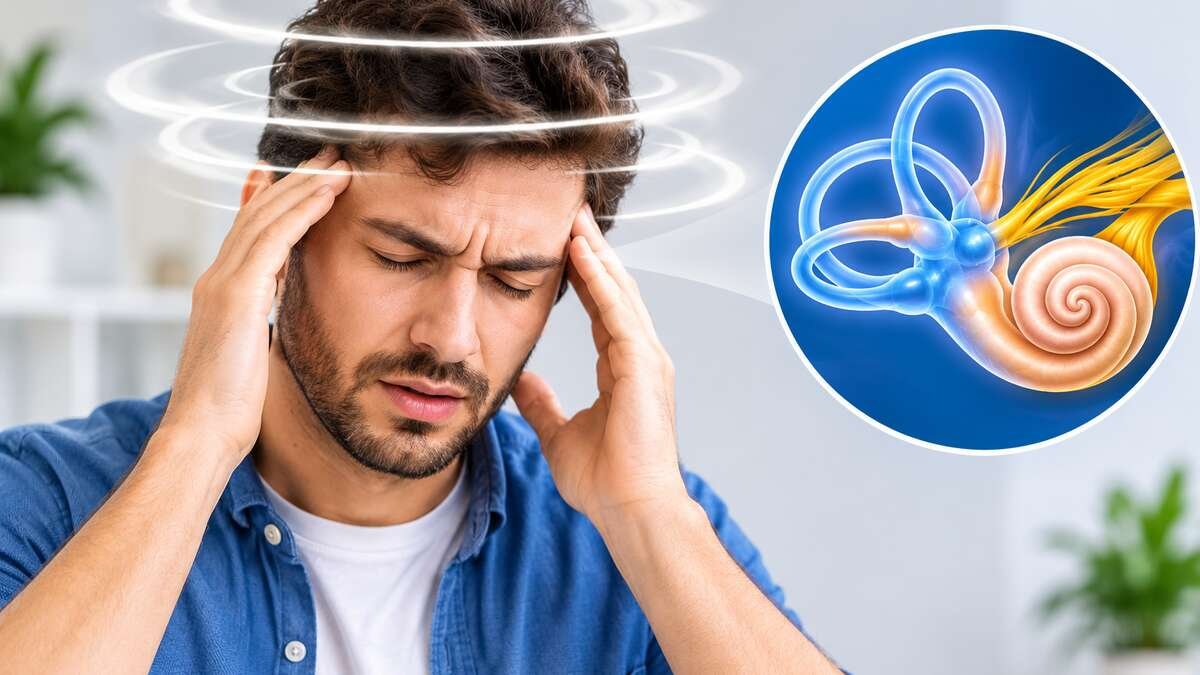

Feeling as though the room is spinning, even when you are sitting still, can be unsettling. This sensation is called vertigo. It often develops when something disrupts the body’s balance system, particularly the inner ear or the pathways that connect it to the brain.
If you are wondering what causes vertigo, the answer is that it is a symptom rather than a disease. Problems in the inner ear, the vestibular nerve, or the brain can all produce it. Common causes include benign paroxysmal positional vertigo (BPPV), vestibular neuritis, Ménière’s disease, and vestibular migraine.
Many causes of vertigo are manageable, but a few require urgent medical attention. This guide explains how the balance system works, how different conditions disrupt it, what triggers episodes, how doctors find the cause, and which warning signs should never be ignored.
What Causes Vertigo? The Short Answer
Vertigo happens when the balance system sends the brain mismatched or inaccurate signals about movement. Most often the problem is in the inner ear, such as displaced calcium crystals (BPPV), inflammation of the vestibular nerve, or fluid changes in Ménière’s disease. Less often, the brain is involved, as in stroke, migraine, or multiple sclerosis.
What Is Vertigo?
Vertigo is the illusion that you or your surroundings are moving when no real movement is happening. The American Academy of Otolaryngology-Head and Neck Surgery Foundation (AAO-HNSF) defines vertigo as an illusory sensation of motion of the self or the surroundings. People often describe it as spinning, tilting, or swaying.
Because vertigo is a symptom, the real question is always what is behind it. The same spinning sensation can come from a harmless inner ear problem or, rarely, from something serious in the brain.
Vertigo vs. General Dizziness
Many people use “dizzy” for several different feelings. Doctors separate them because each one points toward different causes. If you want a broader look at dizziness, see our guide on what causes dizziness.
- Vertigo: a false sensation of spinning or movement.
- Lightheadedness: feeling faint, or as though you might pass out.
- Disequilibrium: feeling unsteady while standing or walking.
- General dizziness: a broad, non-specific term that can describe any of these.
This article focuses on true vertigo and the conditions that cause it. The National Institute on Deafness and Other Communication Disorders (NIDCD) notes that dizziness can mean a fleeting faint feeling for one person and an intense, long-lasting spinning sensation for another, which is why describing your exact sensation matters.
Common Symptoms of Vertigo
Vertigo rarely appears alone. Symptoms that often accompany it include:
- Spinning or rotating sensations
- Nausea and vomiting
- Difficulty keeping your balance
- Unsteadiness when walking
- Abnormal, jerking eye movements (nystagmus)
- Symptoms that are triggered or worsened by head movement
- Sensitivity to motion
How Does the Body’s Balance System Work?
Your sense of balance depends on several systems working together. When one of them sends faulty information, the brain can misread your position and create a false sense of motion. Understanding this makes it easier to see why such different conditions can cause similar symptoms.
The Role of the Inner Ear
The vestibular system is the part of the inner ear that detects movement and head position. According to the NIDCD, the balance structures sit in a maze-like organ called the labyrinth. Its key parts include:
- Semicircular canals: three fluid-filled loops that detect rotational head movements, such as turning or nodding.
- Otolith organs (utricle and saccule): structures that sense gravity and straight-line movement, such as riding in an elevator.
- Vestibular nerve: the nerve that carries balance information from the inner ear to the brain.
- Vestibular labyrinth: the bony and membranous housing that holds these structures.
How the Brain Maintains Balance
The brain does not rely on the inner ear alone. It combines information from the inner ears, the eyes, and sensory receptors in the muscles and joints. These inputs normally agree with one another, which is why you feel stable.
What Happens When the Balance System Is Disrupted?
When signals conflict or become inaccurate, the brain can interpret them as movement that is not occurring. A StatPearls review describes how conflicting inputs can overwhelm the central nervous system and produce dizziness, nausea, and a perception of motion.
Here are a few examples:
- Displaced calcium particles in the inner ear can send false information about head position.
- Inflammation of the vestibular nerve can make one side seem “weaker” than the other.
- A problem in the brainstem or cerebellum can disrupt how balance signals are processed.
Common Inner Ear Problems That Cause Vertigo
Disorders of the inner ear and vestibular nerve are called peripheral causes, and they account for most cases of vertigo. A StatPearls overview of vertigo notes that peripheral causes are usually, though not always, benign. This is the section to read if you are searching for inner ear vertigo causes.
1. Benign Paroxysmal Positional Vertigo (BPPV)
BPPV is one of the most common causes of vertigo. Tiny calcium carbonate crystals called otoconia normally sit in the utricle, one of the otolith organs. In BPPV, some of these particles become displaced and drift into a semicircular canal.
When you move your head, the loose particles shift and send incorrect balance signals to the brain. The result is a brief but intense spinning sensation. The AAO-HNSF guideline describes BPPV as a disorder of the inner ear characterized by repeated episodes of positional vertigo.
Common triggers include:
- Rolling over in bed
- Looking upward
- Bending forward
- Getting out of bed
- Turning the head quickly
Episodes are typically short and linked to specific head positions. BPPV can appear without an obvious cause. The NIDCD notes that it may also follow a head injury or develop with age. If you are curious about how it is treated, see our guide to vertigo treatment options.
2. Vestibular Neuritis
Vestibular neuritis involves inflammation of the vestibular nerve. It usually causes sudden, severe, and prolonged vertigo, often with nausea, vomiting, and trouble walking or keeping balance. Symptoms can last for days before gradually improving.
The NIDCD says vestibular neuronitis may be caused by a virus, and a recent viral illness is sometimes reported beforehand. The exact cause is not always identified. Hearing loss is not typically a feature of isolated vestibular neuritis, which helps distinguish it from labyrinthitis.
3. Labyrinthitis
Labyrinthitis is inflammation of the inner ear labyrinth itself. Because the hearing structures sit in the same region, it can affect hearing as well as balance. Symptoms may include:
- Vertigo and balance difficulties
- Nausea and vomiting
- Hearing loss in the affected ear
- Tinnitus (ringing or buzzing)
The NIDCD describes labyrinthitis as an infection or inflammation of the inner ear often associated with an upper respiratory infection. Not every case, however, has a clearly identified infectious cause. The simplest way to remember the difference: vestibular neuritis mainly affects balance, while labyrinthitis can affect both balance and hearing.
4. Ménière’s Disease
Ménière’s disease is a chronic inner ear disorder. It is not simply an ear infection. It is marked by recurring episodes of vertigo along with fluctuating hearing symptoms. Typical features include:
- Episodes of vertigo
- Fluctuating hearing loss, often in one ear
- Tinnitus
- A feeling of fullness or pressure in the ear
The AAO-HNSF guideline defines the condition by spontaneous vertigo attacks lasting from 20 minutes to 12 hours, along with documented low- to mid-frequency sensorineural hearing loss. The exact cause is unknown, though too much fluid in part of the inner ear is believed to play a role. The guideline also recommends that people being assessed for Ménière’s disease be evaluated for vestibular migraine, because the two can look alike.
5. Other Inner Ear Conditions
Several less common conditions can also cause vertigo or related symptoms. The Vestibular Disorders Association lists many of them.
- Superior semicircular canal dehiscence: a thinning or opening in the bone over one semicircular canal. It can cause dizziness triggered by loud sounds or pressure changes.
- Perilymphatic fistula: an abnormal leak or connection involving inner ear fluid, sometimes linked to trauma or pressure changes. The NIDCD lists it among the balance disorders.
- Acoustic neuroma (vestibular schwannoma): a benign, usually slow-growing tumor of the balance and hearing nerves. One-sided hearing loss and tinnitus are common early signs, and imbalance is often mild.
Key takeaway: Inner ear disorders can cause very different kinds of vertigo. Hearing loss, tinnitus, ear fullness, and position-related spinning are clues that help clinicians identify the underlying condition.
Can Brain or Neurological Problems Cause Vertigo?
Yes. Not all vertigo begins in the ear. Problems in the brain, brainstem, or cerebellum can disrupt balance, and this is called central vertigo. The StatPearls review of central vertigo lists stroke, multiple sclerosis, brain tumors, and vestibular migraine among the common causes.
1. Vestibular Migraine
Vestibular migraine is an important cause of recurrent vertigo. It can cause spinning or movement sensations, balance problems, sensitivity to light and sound, and nausea. Headache may be present, but it is not required.
Under the Bárány Society and International Headache Society criteria, episodes of moderate or severe vestibular symptoms last between 5 minutes and 72 hours. A current or past history of migraine helps clinicians recognize the condition. Our article on what causes migraine explains more about the migraine side of this overlap.
2. Stroke and Transient Ischemic Attack (TIA)
A stroke affecting the cerebellum or brainstem can cause sudden vertigo. It may come with other signs such as:
- Difficulty walking or loss of coordination
- Double vision
- Slurred speech
- Weakness or numbness
- Severe headache
A TIA can cause temporary symptoms of the same kind and still needs urgent assessment. A review of acute isolated vertigo notes that vertigo from a posterior circulation stroke usually comes with other neurologic signs, but small strokes in the cerebellum or brainstem can occasionally cause vertigo alone.
This does not mean that isolated vertigo is usually a stroke. Most vertigo has an inner ear cause. It also means the absence of obvious weakness does not rule out a serious neurological cause, so sudden, severe, or unexplained vertigo deserves prompt evaluation.
3. Multiple Sclerosis
Multiple sclerosis (MS) can affect balance pathways in the brainstem and other parts of the central nervous system. Vertigo may be one symptom, alongside:
- Double vision
- Coordination problems
- Numbness or tingling
- Muscle weakness
StatPearls notes that MS has been linked to both central and peripheral causes of vertigo. Vertigo on its own is far from enough to diagnose MS, and most people with vertigo do not have it.
4. Other Brain-Related Causes
Other central causes are less common. They include brainstem disorders, cerebellar conditions, certain brain tumors or other lesions, and head injuries that affect central balance pathways. These conditions often require a specialized neurological examination and imaging to evaluate.
What Other Conditions Can Cause or Contribute to Vertigo?
Many things can make you feel dizzy, but not all of them cause true spinning. This section separates the contributors that can produce vertigo from those that more often cause other kinds of dizziness.
Head and Neck Injuries
A head injury can damage vestibular structures or dislodge inner ear crystals, leading to post-traumatic BPPV. It can also affect central balance pathways. Dizziness after a head injury should be medically assessed, especially if it is new or getting worse.
Medication-Related Vertigo
Some medicines can affect the inner ear, balance pathways, or coordination. The effect depends on the drug, the dose, and the person. Examples include:
- Certain aminoglycoside antibiotics, such as gentamicin. The Merck Manual describes gentamicin as primarily affecting balance. A CMAJ article adds that this toxicity often shows up as unsteadiness and blurred vision with head movement, and true spinning is often absent.
- High-dose salicylates (aspirin-type drugs), which are listed among common ototoxic medicines.
- Some antiseizure medicines, sedatives, and other drugs that can impair balance or coordination.
If you suspect a medication is affecting your balance, talk with your prescriber or pharmacist. Do not stop a prescribed medicine on your own. The Vestibular Disorders Association notes that many common medications cause temporary dizziness without lasting vestibular damage.
Circulation and Blood Pressure Problems
Low blood pressure, especially when standing up quickly, usually causes lightheadedness or a faint feeling rather than true spinning. Heart rhythm and other cardiovascular problems can also cause dizziness and should not be overlooked. Our guide to high blood pressure covers how blood pressure changes affect the body.
Anxiety and Persistent Dizziness
Anxiety can contribute to dizziness and can make existing symptoms feel worse. A related condition, persistent postural-perceptual dizziness (PPPD), involves dizziness, unsteadiness, or non-spinning vertigo on most days for three months or more. The Bárány Society classifies it as a chronic functional vestibular disorder, not a structural or psychiatric one.
Anxiety should not be assumed to explain new, unexplained spinning. Learn more about what anxiety is and how it affects the body.
Common Triggers That Can Bring on Vertigo
An underlying cause is the medical condition behind your vertigo. A trigger is what sets off an individual episode. Knowing your triggers can help you describe your symptoms clearly to a clinician.
Head Position Changes
Position changes are the classic triggers of BPPV. They include rolling over in bed, looking up or down, bending forward, and turning the head suddenly. This is why many people notice vertigo when turning the head or when lying down.
Migraine-Related Triggers
Possible triggers for vestibular migraine include poor sleep, stress, certain sensory stimuli, skipped meals, and individual food or drink triggers. These vary widely from person to person. Our articles on what makes migraine worse and how to improve sleep may help you identify patterns.
Other Potential Triggers
Other triggers include sudden movements, loud sounds or pressure changes in certain inner ear disorders, head injuries, some medications, and illnesses that affect the vestibular system. None of these causes vertigo in everyone. Whether a trigger matters depends on the underlying condition.
What Your Vertigo Symptoms May Reveal About the Cause
The length of an episode, what sets it off, and what else you feel can all offer clues. The table below shows common patterns. These are clues rather than diagnostic rules, because similar symptoms can occur in different conditions.
| Symptom pattern | Possible underlying cause |
|---|---|
| Brief spinning when rolling over in bed | BPPV |
| Persistent vertigo lasting days | Vestibular neuritis or another acute vestibular condition |
| Vertigo with fluctuating hearing loss and tinnitus | Ménière’s disease |
| Vertigo with migraine history or light sensitivity | Vestibular migraine |
| Vertigo with sudden neurological symptoms | Possible stroke or other central cause |
| Vertigo after a head injury | Post-traumatic vestibular disorder or another injury-related cause |
Duration, triggers, associated symptoms, and the overall clinical picture help doctors narrow the possibilities. Only a medical evaluation can tell you which one applies to you.
How Is the Cause of Vertigo Diagnosed?
Diagnosis involves identifying the symptom pattern and deciding whether the problem starts in the inner ear, the vestibular nerve, the brain, or elsewhere in the body. A StatPearls review states that a complete history and physical examination is the best way to tell peripheral from central causes.
Medical History and Symptom Assessment
Expect questions about:
- When the symptoms started
- Whether episodes are brief or last for hours or days
- Whether movement or position triggers them
- Any changes in hearing
- Headaches or other neurological symptoms
- Recent illnesses, injuries, and medications
Physical and Neurological Examination
A clinician may check eye movements and nystagmus, walking and coordination, balance, hearing, and general neurological function. These findings help separate inner ear causes from central ones.
Diagnostic Tests
Which tests you need depends on your symptoms. Possibilities include:
- Dix-Hallpike maneuver for suspected BPPV. The AAO-HNSF guideline strongly recommends it for diagnosing posterior canal BPPV.
- Supine roll test for certain other forms of positional vertigo.
- Hearing tests when hearing symptoms are present. The Ménière’s guideline recommends an audiogram when that condition is suspected.
- Vestibular function testing when indicated.
- MRI or other imaging when a central neurological cause is suspected.
Not everyone needs imaging or extensive testing. In BPPV, for example, the guideline aims to reduce unnecessary imaging. The pattern of symptoms and a focused examination are often more useful than the spinning sensation alone.
When Should You Be Concerned About Vertigo?
Many causes of vertigo are not emergencies. Even so, sudden vertigo with certain other symptoms can signal a stroke or another serious problem.
Emergency Warning Signs
Call 911 or seek emergency care right away if sudden vertigo occurs with any of the following:
- Weakness or numbness, especially on one side of the body
- Trouble speaking or understanding speech
- Double vision or sudden vision loss
- New inability to stand or walk
- Severe, sudden headache
- Fainting or loss of consciousness
The American Stroke Association’s BE FAST warning signs include sudden trouble walking, dizziness, or loss of balance. Johns Hopkins also warns that a stroke can closely mimic inner ear causes of severe, prolonged vertigo, and that careful examination of eye movements is needed to tell them apart.
Sudden hearing loss also needs urgent assessment. The NIDCD explains that prompt evaluation matters for sudden deafness.
Even without emergency symptoms, new, unexplained, recurring, or worsening vertigo should be evaluated by a healthcare professional. If you are unsure, it is reasonable to seek care sooner rather than later.
Frequently Asked Questions About Vertigo
What is the most common cause of vertigo?
Benign paroxysmal positional vertigo (BPPV) is one of the most common causes. It happens when displaced calcium crystals in the inner ear send incorrect balance signals, typically causing brief spinning with certain head movements. StatPearls describes it as the most common cause of brief, episodic peripheral vestibular dysfunction.
Can an inner ear infection cause vertigo?
Yes. Infections or inflammation affecting the inner ear or vestibular nerve can cause vertigo, as in labyrinthitis and vestibular neuritis. Labyrinthitis may also affect hearing, while vestibular neuritis mainly affects balance. Not every case has a clearly identified infectious cause.
Can stress cause vertigo?
Stress and anxiety can contribute to dizziness and may worsen vestibular or migraine symptoms. They should not automatically be assumed to be the cause of true spinning. New or unexplained vertigo is worth having checked, whatever your stress level. You can also read our tips on how to reduce stress.
Can vertigo be caused by a brain problem?
Yes. Stroke, multiple sclerosis, tumors, and vestibular migraine can all affect the brain’s balance pathways and cause central vertigo. The StatPearls review stresses that prompt attention is important when central causes are suspected.
Why does vertigo happen when lying down?
Lying back or rolling over changes your head position, which can move displaced crystals in a semicircular canal and trigger BPPV. The spinning is usually brief. If it keeps happening, a clinician can confirm the cause with a positional test.
Can medications cause vertigo?
Some medications can affect the inner ear, the nervous system, or balance. Effects depend on the drug, dose, and individual factors, and balance problems are not always true spinning. Ask your clinician or pharmacist to review your medicines, and do not stop a prescribed drug without medical advice.
Does vertigo always mean an inner ear problem?
No. Inner ear conditions are the most common causes, but neurological disorders, migraine, and other medical conditions can also produce vertigo. This is why a proper evaluation matters, especially when symptoms are sudden or come with other neurological signs.
Sources
- American Academy of Otolaryngology-Head and Neck Surgery Foundation. Clinical Practice Guideline: Benign Paroxysmal Positional Vertigo (Update). Otolaryngology-Head and Neck Surgery, 2017.
- American Academy of Otolaryngology-Head and Neck Surgery Foundation. Clinical Practice Guideline: Ménière’s Disease. Otolaryngology-Head and Neck Surgery, 2020.
- AAO-HNSF. Ménière’s Disease: New Clinical Practice Guideline fact sheet.
- National Institute on Deafness and Other Communication Disorders. Balance Disorders.
- National Institute on Deafness and Other Communication Disorders. Vestibular Schwannoma (Acoustic Neuroma).
- National Institute on Deafness and Other Communication Disorders. Sudden Deafness.
- StatPearls. Vertigo. NCBI Bookshelf.
- StatPearls. Central Vertigo. NCBI Bookshelf.
- StatPearls. Vestibular Dysfunction and related chapter. NCBI Bookshelf.
- StatPearls. Vertigo in Clinical Practice.
- Lempert T, et al. Vestibular migraine: diagnostic criteria. Journal of Vestibular Research, 2012.
- Staab JP, et al. Diagnostic criteria for persistent postural-perceptual dizziness (PPPD). Journal of Vestibular Research, 2017.
- Kim JS, Lee H. Isolated vertigo of vascular cause. PubMed Central.
- Johns Hopkins Medicine. If You Are Experiencing Dizziness.
- American Stroke Association. Let’s Talk About B.E. F.A.S.T..
- Vestibular Disorders Association. Vestibular Disorders: An Overview and Medications and balance.
- MSD Manual Professional Version. Drug-Induced Ototoxicity.
- Canadian Medical Association Journal. Aminoglycoside-induced ototoxicity can profoundly affect quality of life.
Medical Disclaimer: This article is for general education only and is not medical advice. It cannot diagnose your condition or replace a visit with a doctor or other qualified healthcare professional. Every person is different, so please talk with a clinician about your own symptoms, medicines, and treatment options. If you have sudden vertigo with weakness, numbness, trouble speaking, vision changes, severe headache, or trouble walking, call 911 or go to the nearest emergency department right away.
2 thoughts on “What Causes Vertigo? Common Inner Ear, Neurological, and Other Causes”
Comments are closed.