
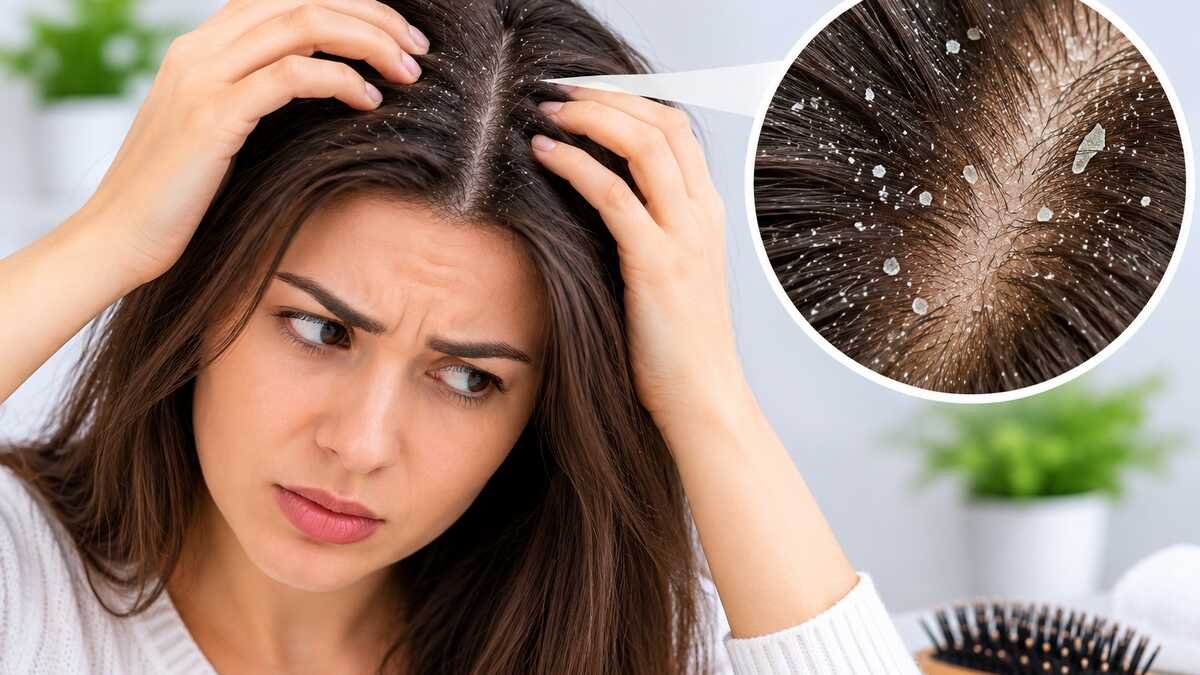

Dandruff is one of the most familiar scalp concerns. You might notice white or yellowish flakes in your hair or on a dark shirt, sometimes with an itchy scalp. If so, you are far from alone: a widely cited clinical review estimates that dandruff affects about 50% of adults worldwide.
That figure is an approximation, not a head count. Estimates change with the population studied and the way researchers define dandruff. Still, the main point holds: scalp flaking affects many people across ages, backgrounds, and hair types.
Dandruff is usually manageable. It does not automatically signal poor hygiene or a serious medical problem. So how common is dandruff, who is most likely to experience it, and when might flakes point to something else?
How Common Is Dandruff?
Dandruff is very common. The most frequently quoted estimate is about half of all adults, although some research places the figure considerably lower.
What percentage of people have dandruff?
The 50% estimate comes from sources such as a 2015 review of seborrheic dermatitis and dandruff. The British skin health information service similarly describes dandruff as affecting almost half of adults. The Canadian Dermatology Association estimates that 50% of North Americans have it.
A 2025 review of the research reports a wider range, from 17% to 50% of the general population. In other words, “about half” is best read as a common estimate toward the upper end of published figures.
So how many people have dandruff? No one knows the exact number. Prevalence estimates can differ for several reasons:
- Definitions: One study may count any visible flaking, while another requires specific signs or a clinician’s exam.
- Self-reporting: People may mistake dry scalp or another condition for dandruff.
- Age: A study of young adults may produce different results than a study of older people.
- Setting: Climate, season, and the population sampled can all shape the findings.
Is dandruff common or unusual?
Dandruff is not rare or unusual. The UK National Health Service (NHS) notes that it is not harmful and that you cannot catch it from someone else.
Having flakes does not mean something is seriously wrong. Mild dandruff may cause little or no itching, and some people only notice it when they wear dark clothing. You can read more about common dandruff symptoms.
Is dandruff a long-term condition?
It often can be. Dandruff tends to come and go, with symptoms improving for a while and then returning. According to Mayo Clinic, it often starts in young adulthood and lasts through middle age, and for some people it never fully goes away.
Dandruff is closely related to seborrheic dermatitis, an inflammatory skin condition. Experts often view dandruff as its mildest form. The two terms are not always interchangeable, however, because seborrheic dermatitis can involve inflammation and areas beyond the scalp.
How Common Is Dandruff Around the World?
Dandruff occurs in populations around the world. Is dandruff common worldwide to the same degree everywhere? The evidence does not support that conclusion, and good country-by-country comparisons are limited.
Does dandruff affect people in every country?
Dandruff is not limited to one country, ethnicity, or region.
That does not mean every population has the same dandruff prevalence. Studies often use different definitions, age groups, and sampling methods, so their percentages cannot always be compared directly.
One large example shows why definitions matter. An international survey published in 2024 questioned 50,552 people age 16 and older. It studied scalp seborrheic dermatitis, not ordinary dandruff, and required five features: dandruff, ongoing or intermittent symptoms, thick greasy yellowish scales, red patches, and itching.
Under that strict definition, only 3.3% of respondents qualified. Rates ranged from 1.2% in North America to 3.8% in East Asia.
These numbers should not be read as dandruff rates. The answers were self-reported rather than confirmed by a clinician, and the study was funded by a company that makes skin care products, which also employed several authors. It does show that a narrower definition can produce a far smaller figure than the “half of adults” estimate.
Does climate affect dandruff prevalence?
Weather can influence how noticeable symptoms become, but it is only one piece of the picture.
- Cold, dry weather: The NHS notes that cold weather may make dandruff worse. The American Academy of Dermatology (AAD) also highlights the winter months.
- Heat and humidity: Sweat and oil may leave some people’s scalps feeling greasier or more irritated.
- Seasonal changes: Many people notice that flaking rises and falls over the year.
Climate alone does not explain why someone develops dandruff. Two people living in the same town can have very different experiences.
Is dandruff more common in certain climates?
Researchers cannot say with confidence that one climate produces the most dandruff. Differences between regions may reflect weather, but also skin characteristics, hair-care customs, access to products, and research methods.
Which Age Groups Are Most Likely to Get Dandruff?
Age is one of the clearer patterns in the research. According to the 2015 review, dandruff starts around puberty, peaks in frequency and severity at about age 20, and becomes less common after age 50. These are population trends, so your own experience may differ.
Is dandruff common in teenagers?
Yes. Dandruff in teenagers often first appears around puberty. At this stage, hormonal changes activate the sebaceous glands, which produce an oily substance called sebum.
More oil gives certain naturally occurring scalp yeasts more to feed on. In people who are sensitive to the byproducts, this can contribute to irritation and flaking. Not every teen with an oily scalp develops dandruff.
Visible flakes can feel embarrassing, particularly at school or in social settings. It can help teens to hear that dandruff is common, is not a sign of being unclean, and can usually be managed.
Is dandruff common in adults?
Dandruff is particularly common in adolescents and adults. Symptoms often peak in early adulthood and may continue or recur for decades.
Dandruff in adults varies widely. Some people have a light dusting of flakes during winter. Others have frequent flare-ups with itching that return soon after they stop using a medicated shampoo.
Can older adults get dandruff?
Yes. Although dandruff tends to become less common after 50, older adults can still have it.
Seborrheic dermatitis, the broader and more inflammatory condition, follows a somewhat different pattern. The AAD describes it as especially common in adults age 50 and older, while DermNet reports high prevalence in both young adults and older people.
Aging skin often becomes drier, and dry skin on the scalp can look much like dandruff. Psoriasis, eczema, and reactions to products can also cause flakes. Persistent flaking, redness, or itching in an older adult should not automatically be assumed to be ordinary dandruff.
Can babies have dandruff?
Babies can develop cradle cap, a common form of infantile seborrheic dermatitis. MedlinePlus, a service of the National Library of Medicine, explains that gentle daily washing and soft brushing can usually help.
Cradle cap often looks like greasy, yellowish scales or crusts on a baby’s scalp. It is related to adult dandruff but does not look or behave exactly the same. It usually clears on its own within a few months.
Parents should contact a pediatric healthcare professional if the rash is severe, spreading, or concerning. Ask before using adult dandruff products on an infant.
Is Dandruff More Common in Men or Women?
Dandruff affects both men and women. Several sources report higher rates in men, but the size of the gap is not the same in every study.
Do men experience dandruff more frequently?
Often, yes, according to dermatology sources. The 2015 review and Mayo Clinic both describe dandruff as more common in males.
Hormones may help explain this. Androgens influence oil glands, and the Canadian Dermatology Association notes that more active glands and oilier scalps may contribute.
This is not a universal rule. In the 2024 international survey described above, rates of strictly defined scalp seborrheic dermatitis were similar: 3.3% in men and 3.2% in women. That difference was not statistically significant, and the survey did not measure ordinary dandruff.
Can women develop dandruff just as easily?
Women commonly experience dandruff, and any individual woman may have more severe symptoms than a particular man. Population averages cannot predict one person’s scalp.
Oil production and scalp sensitivity vary among women. Some notice changes in oiliness or irritation during times of hormonal change, although research has not clearly shown how much these shifts affect dandruff itself.
Does hair type influence dandruff?
People with straight, wavy, curly, and coily hair can all get dandruff. Hair texture alone does not determine who develops it.
Hair-care routines can affect how flakes look and how much oil or product builds up. They also shape which treatment schedule is realistic.
The AAD recommends matching your routine to your hair type. People with fine or straight hair or an oily scalp may need to wash often. Those with coarse, curly, or coily hair may wash as needed and use dandruff shampoo about once a week, if tolerated, applying it to the scalp to limit dryness.
Why Is Dandruff So Common? Causes and Risk Factors
Dandruff is common partly because its main ingredients are common: skin yeast, scalp oil, and individual sensitivity. Researchers still do not fully understand how these pieces fit together. This overview covers the causes of dandruff that matter most for understanding who gets it.
Malassezia yeast and scalp health
Malassezia is a yeast that naturally lives on human skin, including healthy scalps. It feeds on oils and is strongly associated with dandruff and seborrheic dermatitis.
The yeast’s presence is only part of the story. As it breaks down scalp oil, some of the byproducts can irritate susceptible skin. The scalp may then become inflamed at a microscopic level and shed cells faster, forming visible flakes.
Having Malassezia does not mean you caught an infection or failed to keep clean. It is a normal resident of the skin.
Excess scalp oil production
Sebum protects the skin and hair. It also provides food for Malassezia, and research links oil gland activity with dandruff and seborrheic dermatitis.
This explains why dandruff may produce greasy or yellowish flakes, not only dry white ones. Oil can make shed skin cells stick together in larger clumps.
Oil is not the whole explanation. Some people with very oily scalps never develop dandruff, and some with dandruff produce ordinary amounts of sebum.
Individual skin sensitivity
Scalps respond differently to the same microorganisms and conditions. The skin barrier, its outer protective layer, helps hold in water and keep irritants out.
When the barrier is disrupted, irritants may penetrate more easily. Inflammation can then further weaken the barrier, which may help symptoms persist.
Hormonal changes
Hormones strongly influence oil glands. Activity rises at puberty, which fits the common appearance of dandruff in adolescence and early adulthood.
Oil production generally changes again later in life. Hormones are one influence among several, so a flare does not by itself indicate a hormone disorder.
Stress and lifestyle factors
Stress may worsen symptoms for some people. Flares can be triggered by tiredness, stress, and cold, dry weather. Stress alone has not been shown to directly cause dandruff.
Learning how to reduce stress and how to improve sleep can support general health. Neither is a proven dandruff treatment.
Other possible contributing factors
Other dandruff risk factors and triggers may include:
- Cold or dry weather.
- Skin conditions such as eczema or psoriasis, which can also cause flaking on their own.
- Sensitivity to shampoos, dyes, or styling products (contact dermatitis).
- A washing routine that does not suit your scalp, allowing oil and flakes to collect.
- Certain medical conditions and medications, which can trigger or worsen dandruff or seborrheic dermatitis.
Do not stop a prescribed medicine because of flaking without speaking to your healthcare professional.
Why Do Some People Get Dandruff While Others Do Not?
Two people can share a home, a climate, and even a bottle of shampoo, yet only one develops flakes. There is no single explanation for this.
Differences in skin biology
Sebum production, skin barrier strength, immune response, and sensitivity vary from person to person. The 2015 review concludes that oil secretions, skin yeast, individual susceptibility, and their interactions all play a part.
Genetics and family tendencies
Inherited traits may influence susceptibility. Research suggests there may be a genetic component to seborrheic dermatitis, possibly involving the skin barrier or immune response.
Dandruff is not a straightforward genetic disease. Having a parent or sibling with flakes does not mean you will have them, and many people with dandruff know of no family history.
Environmental and lifestyle differences
Daily circumstances can affect how severe symptoms become. Examples include indoor heating, seasonal weather, stress, washing habits, and the products you apply to your scalp.
Why dandruff can keep returning
Dandruff is often recurring rather than a one-time problem. Treatment can reduce flaking, but it does not permanently remove the yeast that lives on skin or change your natural susceptibility.
Flare-ups can therefore return after symptoms improve. This does not necessarily mean you did something wrong. Some people need ongoing or occasional use of a dandruff shampoo to keep flakes under control.
Is Dandruff the Same as Seborrheic Dermatitis or a Dry Scalp?
Not every flaky scalp is dandruff. How studies group these conditions also affects their statistics.
Dandruff vs. seborrheic dermatitis
Dandruff is often considered a mild scalp presentation within the seborrheic dermatitis spectrum. DermNet describes dandruff as an uninflamed form that causes fine, widespread scaling and may itch slightly or not at all.
Seborrheic dermatitis is an inflammatory condition that affects oil-rich areas. It can cause redness or other color change, itching, swelling, and greasy scales.
Unlike dandruff, it may appear beyond the scalp, including on the ears, eyebrows, beard area, sides of the nose, and chest. It is also much less common than dandruff.
Dandruff vs. dry scalp
A dry scalp lacks moisture, while dandruff is linked with excess oil, according to Cleveland Clinic.
Dry scalp tends to produce smaller, drier flakes and may come with tightness or dry skin elsewhere. Dandruff flakes are often larger and may look oily, white, or yellowish.
The symptoms overlap, so appearance alone may not give a definite answer. Our guide to itchy scalp causes and treatments covers other possibilities.
Dandruff vs. psoriasis
Scalp psoriasis is a separate inflammatory condition linked to the immune system. It often causes well-defined raised patches, called plaques, with scale.
Compared with seborrheic dermatitis, psoriasis scales are usually thicker and drier. Psoriasis also tends to extend past the hairline and often affects other parts of the body, such as the elbows or knees.
Dandruff vs. scalp fungal infection
Tinea capitis, or ringworm of the scalp, is a fungal infection caused by different fungi than the yeast linked to dandruff. It can cause scaly, itchy, red or swollen areas, broken hairs, and bald patches.
Ringworm is contagious and mostly affects children, although it can occur at any age. It requires medical evaluation and usually needs prescription antifungal medicine taken by mouth. Dandruff shampoo alone is not enough.
| Condition | Typical clues | Contagious? |
|---|---|---|
| Dandruff | Loose flakes, mild or no itch, little visible inflammation | No |
| Seborrheic dermatitis | Greasy scales, inflammation, may spread beyond scalp | No |
| Dry scalp | Small dry flakes, tightness | No |
| Scalp psoriasis | Thick, well-defined plaques, may extend past hairline | No |
| Scalp ringworm | Scaly patches, broken hairs, hair loss | Yes |
These clues are general. A healthcare professional can examine your scalp and, if needed, test a sample to identify the cause.
Is Dandruff Contagious or Caused by Poor Hygiene?
No on both counts. Dandruff does not spread between people, and it is not simply the result of dirty hair.
Can you catch dandruff from another person?
Ordinary dandruff is not contagious. Sharing a room, sitting close to someone, or touching their hair will not pass it to you.
Malassezia already lives naturally on human skin. It does not behave like the fungi that cause scalp ringworm, which can spread through contact, combs, hats, and pets. If a scalp problem seems to be spreading within a household, ask a healthcare professional to check it.
Does poor hygiene cause dandruff?
Poor hygiene does not cause dandruff. The NHS states that flakes may be more obvious if you do not wash your hair regularly, but that is different from being the cause.
Scalp oil, skin sensitivity, and natural microorganisms are all involved. Infrequent washing may let oil and loose skin collect, making symptoms more visible. People who wash their hair every day can still have dandruff.
Can washing your hair prevent dandruff?
Appropriate cleansing may help manage buildup. For mild dandruff, regular washing may be enough to improve symptoms, but it cannot guarantee prevention.
The right frequency depends on your hair type, scalp condition, and products. Washing more is not a cure, and harsh scrubbing or products that dry or irritate your scalp may add to discomfort.
When Should You See a Doctor About Dandruff?
Most mild dandruff can be managed with suitable scalp care. Drawing partly on NHS guidance, see a healthcare professional if you notice any of the following:
- Severe or persistent itching.
- Significant redness, color change, swelling, or irritation.
- Thick, widespread, or painful scales.
- Bleeding, oozing, crusting, or open sores.
- Noticeable hair loss or bald patches.
- Scaling that spreads to the face, ears, or other areas.
- Symptoms that do not improve after about a month of using an anti-dandruff shampoo as directed.
A board-certified dermatologist can assess whether the cause is dandruff, seborrheic dermatitis, psoriasis, eczema, or a fungal infection. They may recommend a prescription shampoo or other medicine. A child with bald patches or scaly, inflamed areas should be seen promptly.
Can You Reduce Your Risk of Dandruff?
You cannot control every factor, but these steps may help manage or reduce symptoms:
- Follow a cleansing routine that suits your hair and scalp.
- If flakes appear, consider an over-the-counter anti-dandruff shampoo. Common active ingredients include zinc pyrithione, selenium sulfide, ketoconazole, salicylic acid, sulfur, and coal tar.
- Follow the label directions, including how long to leave the shampoo on.
- Stop using hair products that irritate your scalp.
- Avoid aggressive scratching.
- Notice whether seasons or specific products make symptoms worse.
- Seek professional advice if symptoms persist.
Ask a pharmacist or doctor which product is appropriate if you are pregnant, breastfeeding, treating a child, or have sensitive or broken skin. Read more about dandruff treatment options. None of these steps can guarantee that dandruff will never develop or return.
Frequently Asked Questions About How Common Dandruff Is
How many people have dandruff?
Dandruff is commonly estimated to affect about half of adults worldwide. Published estimates range from about 17% to 50%, depending on the study and population.
Is dandruff common in teenagers?
Yes. Dandruff often begins around puberty, when hormonal changes increase scalp oil production. It can usually be managed with appropriate scalp care.
Is dandruff more common in men?
Several sources, including Mayo Clinic, report higher rates in males. However, dandruff affects people of all sexes and genders, and individual experiences vary widely.
Can anyone get dandruff?
Almost anyone can. It is more common at some ages than others, but it occurs across different backgrounds and hair types.
Can you suddenly develop dandruff?
Yes, it can seem to appear suddenly. Changes in oil production, weather, stress, or hair products may make flaking more noticeable. A sudden or severe scalp rash should be checked, since another condition could be responsible.
Is dandruff a sign of poor health?
Usually not. Dandruff is common and typically does not indicate a serious health problem. Talk with a healthcare professional if symptoms are severe, widespread, or accompanied by other health changes.
Does dandruff go away permanently?
It may improve significantly or stay away for long periods. Many people have symptoms that come back and need ongoing or occasional scalp care.
Is dandruff contagious?
No. Ordinary dandruff cannot be caught from another person. Some other causes of scalp scaling, such as ringworm, can spread.
Conclusion: Dandruff Is Common, Manageable, and Not a Cause for Shame
Dandruff is a widespread scalp concern. About half of adults is a commonly cited estimate, though research figures vary with definitions and study populations.
It can affect different age groups, sexes, and hair types, with several biological and environmental factors involved. It is not contagious and is not simply caused by poor hygiene.
If your flakes are severe, persistent, or unusual, a healthcare professional can help identify the cause and discuss suitable options.
Sources
- Borda and Wikramanayake: Seborrheic Dermatitis and Dandruff, A Comprehensive Review (2015)
- Turchin et al.: Current Understanding of Seborrheic Dermatitis (2025)
- International study on scalp seborrheic dermatitis (2024)
- Role of sebaceous gland activity and scalp microflora (2005)
- Role of Malassezia in dandruff (2018)
- American Academy of Dermatology: How to treat dandruff
- American Academy of Dermatology: Seborrheic dermatitis overview
- American Academy of Dermatology news release on dandruff (2023)
- NHS: Dandruff
- Mayo Clinic: Dandruff symptoms and causes
- Mayo Clinic: Dandruff diagnosis and treatment
- Mayo Clinic: Ringworm of the scalp, diagnosis and treatment
- DermNet: Seborrhoeic dermatitis
- Cleveland Clinic: Dry scalp
- Canadian Dermatology Association: Dandruff
- British skin health information: Seborrhoeic dermatitis
- MedlinePlus: Dandruff, cradle cap, and other scalp conditions
- MedlinePlus: Ringworm of the scalp
- University of Arkansas for Medical Sciences: Scalp conditions
Medical Disclaimer
This article is for general information and education only. It is not medical advice, a diagnosis, or a treatment plan. Scalp flaking has many possible causes, and what helps one person may not help another. Talk with a doctor, dermatologist, pharmacist, or other qualified healthcare professional about your symptoms, and before starting or stopping any treatment.
2 thoughts on “How Common Is Dandruff? Understanding Its Prevalence and Who It Affects”
Comments are closed.