
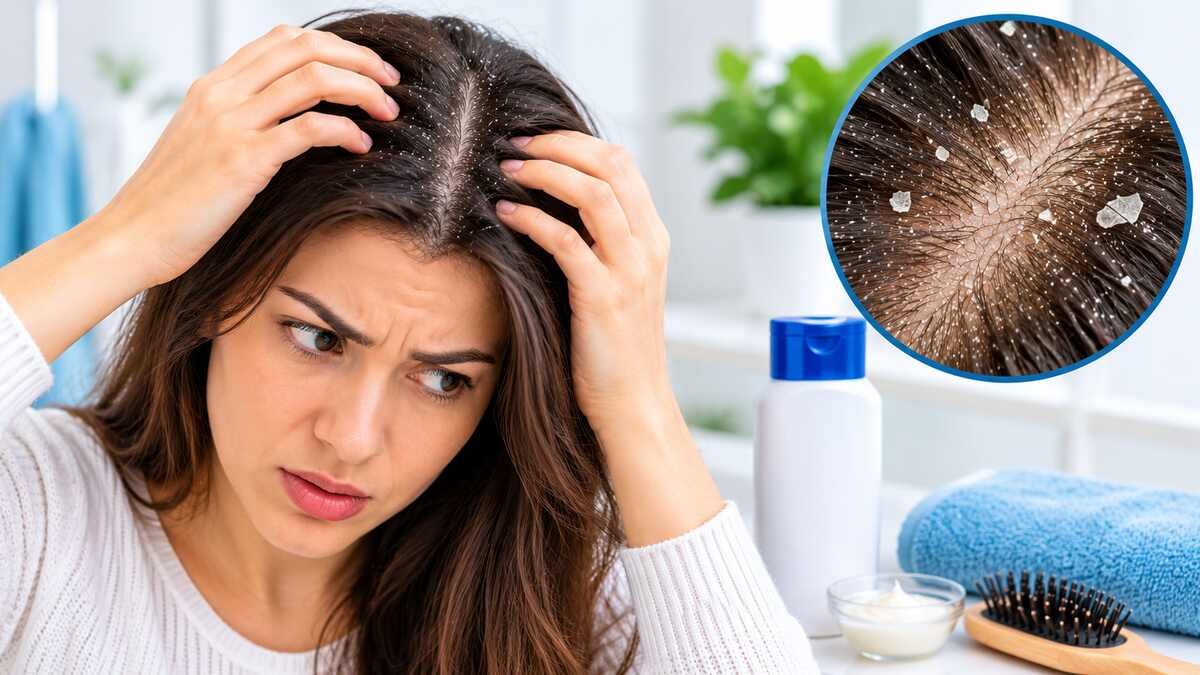

Flakes on your shoulders and an itchy scalp can be frustrating, especially when they keep coming back. The good news is that mild dandruff can often be managed at home. The most useful first steps are usually the right shampoo, correct use, and consistency.
Dandruff is also very common, and it is not a sign that you are unclean. You can read more about how common dandruff is and who tends to get it.
This guide explains how to manage dandruff at home, how to use dandruff shampoo, and what the evidence says about natural remedies. It also covers the signs that mean it is time to see a dermatologist.
What Is Dandruff?
Dandruff is a common scalp condition that causes skin flakes. It is not harmful, and you cannot catch it from someone else.
Dermatology references often describe dandruff as a mild, non-inflamed form of seborrheic dermatitis. Seborrheic dermatitis on the scalp can also cause redness or other color changes, greasy scales, and more stubborn symptoms.
What Causes Dandruff?
Dandruff can have more than one cause. Mayo Clinic lists oily or irritated skin, dry skin, a yeast called Malassezia, product sensitivity, and other skin conditions.
Malassezia lives on most adult scalps and feeds on natural oils. Researchers believe that the yeast, scalp oil, and a person’s individual sensitivity all play a part in many cases.
Poor hygiene does not cause dandruff. Washing too seldom can let oil and flakes build up, but that is different from being the root cause.
Common Symptoms of Dandruff
The main signs are white or yellowish flakes in your hair, on your scalp, or on your shoulders. Your scalp may also itch or feel dry.
Symptoms may get worse with stress or cold, dry weather. Many people notice that flakes improve for a while and then return.
Is Dandruff the Same as Dry Scalp?
Not exactly. Dry scalp happens when skin loses too much moisture, while dandruff is often linked to excess oil.
Dry scalp may come with dry skin elsewhere on your body. The two can look alike, so a clinician can help if you are unsure. Other causes of an itchy scalp can also produce flakes.
10 Practical Ways to Manage Dandruff at Home
These steps work best together. They can help control symptoms, but they cannot promise that flakes will never return.
1. Use an Anti-Dandruff Shampoo
An anti-dandruff shampoo contains an active ingredient that targets yeast, scaling, or both. If gentle shampooing is not enough, a medicated shampoo is a common next step.
2. Follow the Shampoo Instructions
Products differ in strength, timing, and frequency. Many medicated shampoos need to stay on the scalp for several minutes, so rinsing right away may limit the benefit.
3. Wash Your Hair Regularly
Regular washing removes oil and loose skin. No single schedule suits everyone, because hair type, scalp oil, and the product all matter.
4. Avoid Scratching Your Scalp
Scratching can irritate or break the skin. When you shampoo, massage gently with your fingertips instead of your nails.
If itching keeps you scratching, treat that as a reason to review your routine or get advice.
5. Choose Gentle Hair Products
Some people react to fragrances, dyes, preservatives, or other ingredients. If a new product causes stinging, burning, or a rash, stop using it.
6. Rinse Your Hair Thoroughly
Rinse until your hair no longer feels slick or soapy. Check the hairline, behind the ears, and the back of your head, where product can linger.
7. Avoid Excessive Styling-Product Buildup
Gels, sprays, waxes, and pomades can collect on the scalp. Mayo Clinic suggests limiting styling products while managing dandruff.
8. Keep Brushes and Combs Clean
Cleaning your tools removes trapped hair, oil, and residue. This is good basic care, but it is not a proven dandruff treatment.
Dandruff itself is not contagious. Still, avoid sharing combs or hats if you or someone else may have a scalp infection.
9. Pay Attention to Possible Triggers
Keep brief notes on flare-ups, products, weather, and stress levels. Patterns can help you adjust your routine or give a clinician useful details.
Stress does not affect everyone the same way. If it seems to be a trigger for you, these ways to reduce stress and improve sleep may support your overall well-being, though they do not treat dandruff directly.
10. Stay Consistent With Your Scalp-Care Routine
One wash rarely settles the problem. Give a suitable routine a few weeks, then continue a maintenance schedule if the label or your clinician advises it.
Which Anti-Dandruff Shampoo Should You Choose?
The best shampoo for dandruff is one that suits your symptoms, scalp, and hair, and that you can use as directed. No single product is best for everyone.
In the United States, FDA rules for over-the-counter dandruff products list ingredients such as pyrithione zinc, selenium sulfide, salicylic acid, coal tar, and sulfur. Ketoconazole is also widely sold as a dandruff shampoo. Strengths, availability, and rules vary by country.
| Active ingredient | Main role | Points to check |
|---|---|---|
| Ketoconazole | Antifungal | Strength and dosing schedule |
| Selenium sulfide | Antifungal | May discolor treated hair |
| Pyrithione zinc | Antifungal | Not allowed in EU cosmetics |
| Salicylic acid | Loosens and reduces scale | Dryness or irritation |
| Coal tar | Reduces scaling | Staining and sun sensitivity |
Ketoconazole Shampoo
Ketoconazole targets yeast, including Malassezia. In the U.S., 1% shampoo is used for dandruff, while 2% is listed for a different fungal skin condition. A clinician may recommend the stronger version for some scalp problems.
MedlinePlus notes that the nonprescription shampoo is usually used every 3 to 4 days for up to 8 weeks, then as needed. Directions differ between countries and products.
Selenium Sulfide Shampoo
Selenium sulfide is another antifungal-type ingredient. Rinse it off completely, keep it out of your eyes, and avoid applying it to cut or scratched skin.
It may discolor bleached, tinted, or permed hair. Check the label and rinse well if your hair is chemically treated.
Zinc Pyrithione Shampoo
Zinc pyrithione, also called pyrithione zinc, helps control yeast. It remains a listed over-the-counter dandruff ingredient in the U.S.
The European Union, however, stopped allowing it in cosmetic products in March 2022. Check local rules and ingredient labels if you live or shop outside the U.S.
Salicylic Acid Shampoo
Salicylic acid targets scaling by helping loosen flakes. It may be worth considering when buildup is your main concern.
It may leave some scalps feeling dry or irritated. Ask a pharmacist first if you are using other medicated skin products or have concerns about salicylates.
Coal Tar Shampoo
Coal tar can reduce scaling and itching. However, it may stain light-colored hair and can irritate the skin.
It can also make skin more sensitive to sunlight. Protect your scalp, and follow the label’s sun precautions. Some coal tar directions advise avoiding direct sun for 72 hours after use.
How to Choose the Right Shampoo
Start by thinking about your main symptom. Antifungal ingredients are a common starting point, while salicylic acid or coal tar may help with heavier scale.
Also consider your hair color, chemical treatments, skin sensitivity, age, pregnancy or breastfeeding status, and sun exposure. A pharmacist can help you compare labels.
If one ingredient does not help after consistent use, another may. Both Mayo Clinic and the American Academy of Dermatology describe alternating or switching ingredients. Our overview of dandruff treatment options explains more.
How to Use Dandruff Shampoo Correctly
Here is how to use dandruff shampoo in a way that gives it a fair chance to work. Your product label or prescription always comes first.
Step 1: Read the Product Label
Check the active ingredient, contact time, frequency, age limits, and warnings. Note anything about colored hair, sunlight, or broken skin.
Step 2: Wet Your Scalp and Hair
Wet your hair fully unless the label says otherwise. Part thick or curly hair into sections so the product can reach your scalp.
Step 3: Massage the Shampoo Into Your Scalp
Apply it to the scalp, not just the hair. Massage gently with your fingertips, and avoid scraping off scales.
Step 4: Leave It On for the Recommended Time
Contact time matters. The AAD notes that some shampoos need up to 5 to 10 minutes, but others need less.
Step 5: Rinse Thoroughly
Rinse the shampoo away completely and keep it out of your eyes. Never leave a rinse-off product on overnight unless a clinician tells you to.
Step 6: Repeat Only if Instructed
Some labels call for a second lather, and others do not. Using more product or washing more often than directed may raise the chance of irritation.
If you like, follow with your usual shampoo or conditioner, unless the label or your clinician says not to.
Step 7: Monitor Your Scalp
Watch flakes and itch over several weeks. The NHS suggests trying a dandruff shampoo for up to 4 weeks.
Stop sooner if it stings, burns, or causes a rash. Get urgent care for facial swelling or trouble breathing.
How Often Should You Wash Your Hair With Dandruff?
How often to wash hair with dandruff depends on your scalp, hair type, and shampoo. Washing frequency and medicated shampoo frequency are not always the same.
If You Have an Oily Scalp
More frequent washing may help. For fine, straight, or oily hair, the AAD suggests that daily shampooing, with dandruff shampoo about twice a week, may work.
If You Have Dry or Sensitive Skin
Choose gentle products and watch for tightness or stinging. For coarse, curly, or coily hair, the AAD advises washing as needed, with dandruff shampoo about once a week, applied mainly to the scalp.
If You Use Medicated Shampoo
Follow the label. Some people tolerate medicated shampoo two or three times a week, but that is not a rule for every product.
Once symptoms improve, you may be able to use it less often. Mayo Clinic notes that using it at least weekly may help limit recurrence.
Gentle Dandruff Scalp Care Routine
Good dandruff scalp care does not need many products. A simple routine is easier to follow and makes reactions easier to trace.
Daily Care
- Handle your scalp gently when brushing or styling.
- Keep nails short and avoid picking at flakes.
- Go easy on heavy products near the roots.
- Notice new redness, soreness, or hair breakage.
If you wear tight styles, braids, wigs, or extensions, check the scalp underneath. Make sure you can clean it without pulling or rubbing hard.
Hair-Washing Days
Start with your medicated shampoo and give it the full contact time. Use that waiting period to wash the rest of your body if that helps you keep track.
Rinse well, then apply conditioner if you wish. Keep it mainly on the lengths and ends unless the product is meant for the scalp.
Pat or squeeze your hair dry instead of rubbing hard. If you use heat tools, avoid holding high heat close to an irritated scalp.
Between Washes
Brush loose flakes away gently rather than scratching them off. Wash hats, scarves, and pillowcases regularly for comfort and cleanliness, although this will not treat dandruff.
Plan your next wash so you do not drift away from the routine. A phone reminder can help, especially with weekly maintenance.
Home Remedies for Dandruff: What Does the Evidence Say?
Many people look for natural ways to manage dandruff. Some home remedies for dandruff have early research behind them, but “natural” does not always mean safe or effective.
Aloe Vera
Aloe may soothe some skin, but evidence is limited. In one small, older trial of 44 adults with seborrheic dermatitis, an aloe emulsion improved scaling and itch more than a placebo.
That study tested a specific preparation, not any aloe gel from a store. It also does not show that aloe works as well as medicated shampoo.
Coconut Oil
Coconut oil can moisturize hair, but it is not an established dandruff treatment. Malassezia depends on fats to grow, and dermatologists have raised concern that some hair oils may worsen seborrheic dermatitis.
That concern relies partly on laboratory studies, and clinical research is lacking. If you use oil for your hair type, consider keeping it on the lengths, and notice whether flakes increase.
Tea Tree Oil
In a 4-week trial of 126 people, a 5% tea tree oil shampoo improved dandruff more than a placebo shampoo. One trial is not enough to settle the question, and Mayo Clinic says benefit has not been clearly shown.
Tea tree oil can cause irritation or allergic skin reactions. Never put undiluted oil on your scalp, and never swallow it. Avoid it if you have eczema or very sensitive skin unless a clinician advises otherwise.
Apple Cider Vinegar
There is not enough good evidence to show that apple cider vinegar treats dandruff. It is acidic and may sting or irritate skin, especially skin that is scratched.
Vinegar applied to skin has caused chemical burns in reported cases. We do not recommend it as a scalp treatment.
Should You Rely on Natural Remedies Alone?
For most people, a proven anti-dandruff shampoo is the more reasonable starting point. Natural products have less research on how well they work, how much to use, and how safe they are over time.
Avoid lemon juice, vinegar, and undiluted essential oils on your scalp. If you want to try a gentler plant-based product, test one change at a time and stop if irritation develops.
Habits That Can Make Dandruff Harder to Manage
Scratching and picking. These can break the skin and add soreness to flaking. Broken skin can also sting when you apply medicated products.
Using too many products at once. Several new items make it hard to tell what helps and what irritates. Change one thing at a time.
Trying harsh DIY treatments. Abrasive scrubs, bleach, household cleaners, and strong acids can injure your scalp.
Ignoring directions. Rinsing too soon may reduce the benefit, while overuse may cause dryness or irritation.
Stopping too quickly. Dandruff often returns. If your flakes clear, ask whether a maintenance schedule makes sense instead of dropping your routine entirely.
How Long Does Dandruff Take to Improve?
There is no fixed timeline. It depends on the cause, severity, ingredient, and how consistently you use it.
Some people see changes within a few washes, while others need several weeks. For ketoconazole, improvement is generally expected within 2 to 4 weeks.
Mayo Clinic notes that there is no cure for dandruff, although most people can manage symptoms. If you see no improvement after about 4 weeks, or symptoms worsen, get medical advice.
When Should You See a Dermatologist?
Persistent dandruff treatment may require a proper diagnosis. See a healthcare professional or board-certified dermatologist if you have:
- Severe or ongoing itching
- Redness or color change, swelling, or pain
- Thick, crusted, or widespread scales
- Bleeding, sores, oozing, or other signs of infection
- Patchy hair loss or broken hairs
- Rash or scaling beyond your scalp
- No improvement after about 4 weeks of correct shampoo use
- A sudden or unusual reaction to a hair product
The NHS advises seeing a GP if dandruff is severe, very itchy, inflamed, or not improving.
Several conditions can look like dandruff, including seborrheic dermatitis of the scalp, psoriasis, eczema, contact dermatitis, and fungal infections. For example, scalp ringworm can cause scaly patches and hair loss, and it usually needs prescription medicine taken by mouth.
A clinician can examine your scalp and may order a test if needed. Treatment could include a prescription shampoo, antifungal medicine, or anti-inflammatory medicine.
Seek advice earlier for a baby or young child, during pregnancy or breastfeeding, or if you have a weakened immune system. Do not assume adult dandruff products are suitable.
Frequently Asked Questions
What is the fastest way to manage dandruff at home?
If you want to know how to get rid of dandruff flakes, start with a medicated shampoo and use it as directed. No method works instantly for everyone, so give it several weeks unless you have a reaction or warning signs.
Can dandruff go away without treatment?
Symptoms can rise and fall on their own, and mild flaking may settle for a while. It often comes back, so regular care is usually helpful.
Should I put oil in my hair if I have dandruff?
Oil on the scalp may not help and might worsen some cases, although clinical evidence is lacking. If your hair needs moisture, consider applying it to the lengths and ends.
Can I use anti-dandruff shampoo every day?
It depends on the product and your scalp. Check the label, because some are meant for use only a few times a week, and overuse may cause irritation with certain ingredients such as coal tar.
Does scratching remove dandruff?
Scratching may knock flakes loose for a moment, but it does not address the cause. It can also hurt your skin, so massage gently with your fingertips instead.
Is dandruff caused by poor hygiene?
No. Poor hygiene does not cause dandruff. Yeast, skin sensitivity, scalp oil, and other factors can all contribute.
Conclusion
You can often manage mild dandruff with a suitable anti-dandruff shampoo, careful use, and a gentle routine. Knowing how to control dandruff usually comes down to patience and consistency.
Flakes may return from time to time, and that does not mean you failed. If symptoms persist, hurt, spread, or affect your hair, a dermatologist can help you find the cause.
Sources
- Mayo Clinic: Dandruff diagnosis and treatment
- Mayo Clinic: Dandruff symptoms and causes
- American Academy of Dermatology: How to treat dandruff
- NHS: Dandruff
- Cleveland Clinic: Dry scalp
- DermNet: Seborrheic dermatitis
- PubMed: Research on Malassezia and dandruff
- FDA regulation: Over-the-counter dandruff ingredients (21 CFR 358.710)
- MedlinePlus: Ketoconazole topical
- Mayo Clinic: Ketoconazole topical
- MedlinePlus: Selenium sulfide
- PeaceHealth: Selenium sulfide
- EUR-Lex: EU Regulation 2021/1902
- Mayo Clinic: Coal tar side effects
- Mayo Clinic: Before using coal tar
- Journal of Dermatological Treatment: Aloe vera trial
- Skin Appendage Disorders: Hair oils and seborrheic dermatitis
- PubMed: Tea tree oil shampoo trial
- NCCIH: Tea tree oil
- Mayo Clinic: Tea tree oil
- PMC: Case report of a vinegar chemical burn
- MedlinePlus: Ringworm of the scalp
Medical Disclaimer: This article is for general information only. It is not medical advice, diagnosis, or treatment. Talk with a doctor, dermatologist, or pharmacist about your own symptoms before starting or changing a treatment, and get urgent care for a severe reaction.