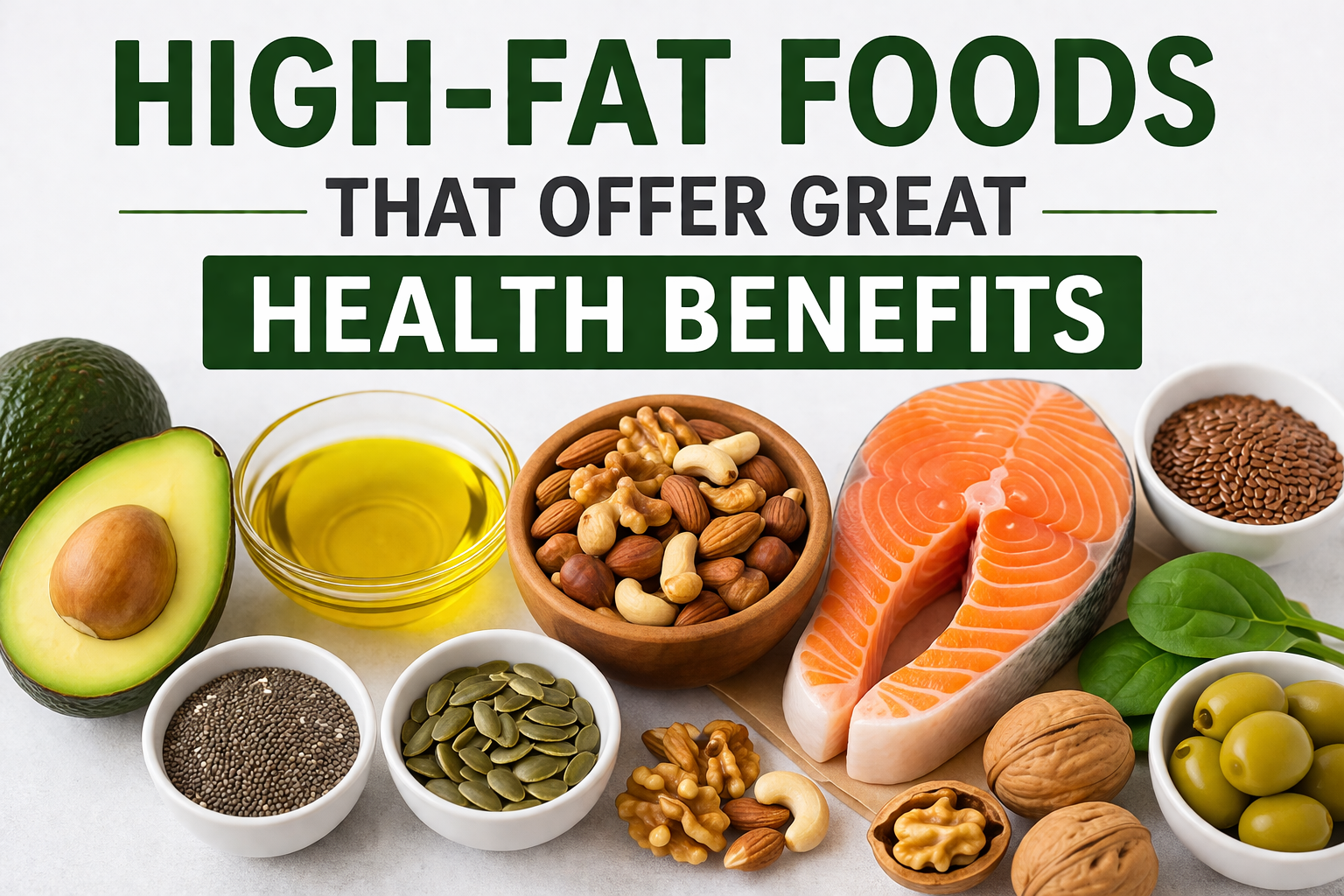
Foods high in fat are healthy when they mainly contain monounsaturated and polyunsaturated fats. These fats help your body absorb vitamins A, D, E, and K, support cell growth, and improve heart health by keeping cholesterol levels balanced as part of a whole-food diet.
For decades, dietary fat was viewed as the primary driver of weight gain and heart disease. This “fat-phobia” led to a surge in processed “low-fat” products that replaced natural lipids with refined sugars—a shift that did not consistently improve population health outcomes. Today, modern research has corrected the narrative: the right fats are not just “safe” to eat; they are foundational to human health.
In fact, studies show that diets rich in unsaturated fats can improve satiety and long-term diet adherence compared to standard low-fat diets. Your body depends on high-fat foods for energy, hormone production, and the structural integrity of your brain, which is approximately 60% fat. Embracing nutrient-dense sources allows you to prioritize fullness and protect your long-term wellness.
In this guide, we simplify the “good vs. bad” fat debate. We provide a list of healthy high fat foods, explain how to incorporate them into a weight-loss plan, and examine the science behind why these lipids deserve a place on your plate.
Key Takeaways
- Quality is Critical: The biological impact of fat depends on its source—whole foods are superior to processed oils.
- The Satiety Factor: Fat-rich foods digest slowly, helping regulate hunger and support calorie management.
- Brain & Heart Shield: Omega-3 fatty acids are essential for cognitive health and reducing systemic inflammation.
- Metabolic Context: Fats work best when they replace refined carbohydrates rather than being added to a high-calorie diet.
The Science: Good Fats vs. Bad Fats
To understand the benefits of healthy fats, we must look at their molecular structure. Not all lipids behave the same way once they enter your system.
Unsaturated Fats: The Heart-Healthy Choice
Found primarily in plants and seafood, these fats are typically liquid at room temperature.
- Monounsaturated Fats (MUFAs): Prevalent in olive oil and avocados, these may help improve insulin sensitivity.
- Polyunsaturated Fats (PUFAs): These include essential Omega-3 and Omega-6 fatty acids. Because your body cannot produce them, you must get them from your diet.
Saturated Fats: A Modern Perspective
Saturated fats, found in animal products and tropical oils, were once thought to be the primary cause of heart disease. However, a major reassessment in the Journal of the American College of Cardiology suggests that saturated fats do not appear to significantly increase cardiovascular risk for most people when consumed in moderation as part of a balanced diet.
Trans Fats: The Industrial Exception
Artificial trans fats (partially hydrogenated oils) are industrial byproducts linked to systemic inflammation. These are the only fats universally recognized as harmful and should be avoided.
Top 10 High-Fat Diet Foods List (Science-Backed):
When building a healthy meal plan, prioritize whole, minimally processed high-fat foods. Research consistently shows that the type of fat matters more than total fat intake. Below is a science-backed list of high-fat foods with nutritional data, practical serving sizes, and evidence-based benefits.
1. Avocados
Avocados are rich in monounsaturated fats, particularly oleic acid, which has been linked to heart health.
- Nutritional Data: ~15g fat per 100g
- Serving Guide: ½ medium avocado (~75g)
- Research Insight: Studies suggest that avocado consumption may help improve lipid profiles and increase HDL (“good”) cholesterol.
- Benefit: Enhances absorption of fat-soluble nutrients like vitamins A, D, E, and K from other foods.
2. Fatty Fish (Salmon, Mackerel, Sardines)
Fatty fish are among the best sources of long-chain omega-3 fatty acids (EPA & DHA).
- Nutritional Data: ~13g fat per 100g (salmon)
- Serving Guide: 3.5 oz (100g) cooked
- Research Insight: Large cohort studies link regular fish intake with a reduced risk of cardiovascular disease and cognitive decline.
- Benefit: Supports brain function, reduces inflammation, and promotes heart health.
3. Extra Virgin Olive Oil (EVOO)
A key component of the Mediterranean diet, widely studied for longevity and heart health.
- Nutritional Data: 100g fat per 100g
- Serving Guide: 1 tablespoon (15 ml)
- Research Insight: Clinical studies show EVOO contains polyphenols like oleocanthal, associated with anti-inflammatory effects similar to mild NSAIDs.
- Benefit: May reduce oxidative stress and support cardiovascular health.
4. Walnuts
Walnuts are uniquely high in alpha-linolenic acid (ALA), a plant-based omega-3 fat.
- Nutritional Data: ~65g fat per 100g
- Serving Guide: ~28g (small handful)
- Research Insight: Research indicates walnut consumption may improve gut microbiota diversity and heart health markers.
- Benefit: Supports digestive health and may reduce inflammation.
5. Whole Eggs
Whole eggs provide a balanced mix of fats, protein, and micronutrients, especially in the yolk.
- Nutritional Data: ~11g fat per 100g
- Serving Guide: 2 large eggs
- Research Insight: Eggs are a leading dietary source of choline, essential for brain and liver function.
- Benefit: Supports cognitive health and helps maintain satiety.
6. Chia Seeds
Chia seeds are rich in omega-3 fatty acids, fiber, and minerals.
- Nutritional Data: ~31g fat per 100g
- Serving Guide: 2 tablespoons (~28g)
- Research Insight: High soluble fiber content may help improve satiety and regulate blood sugar levels.
- Benefit: Promotes fullness and supports digestive health.
7. Dark Chocolate (70%+ Cocoa)
High-quality dark chocolate contains beneficial fats along with powerful antioxidants.
- Nutritional Data: ~43g fat per 100g
- Serving Guide: 1 oz (~28g)
- Research Insight: Cocoa flavonoids have been linked to improved blood flow and reduced blood pressure in clinical studies.
- Benefit: Supports heart health when consumed in moderation.
8. Almonds
Almonds are a rich source of healthy fats, vitamin E, and magnesium.
- Nutritional Data: ~50g fat per 100g
- Serving Guide: ~28g (small handful)
- Research Insight: Studies show almonds may help improve glycemic control and reduce LDL cholesterol.
- Benefit: Supports heart health and stabilizes blood sugar levels.
9. Full-Fat Greek Yogurt
Full-fat dairy provides beneficial fatty acids along with protein and probiotics.
- Nutritional Data: ~5g fat per 100g
- Serving Guide: ¾ cup (~170g)
- Research Insight: Fermented dairy products are associated with improved gut health and metabolic markers.
- Benefit: Supports digestion, muscle maintenance, and overall metabolic health.
10. Flaxseeds
Flaxseeds are a powerful plant-based source of omega-3s and lignans.
- Nutritional Data: ~42g fat per 100g
- Serving Guide: 1–2 tablespoons (ground)
- Research Insight: Lignans in flaxseeds may help support hormonal balance and reduce inflammation.
- Benefit: Promotes digestive health and may support heart health.
Best Healthy Fats to Eat Daily by Goal
Different fats offer unique advantages depending on your physical needs. Use the comparison table below to choose the right foods for your specific lifestyle goals:
| Goal | Best Choices | Why it Works |
| Weight Loss | Avocado, Chia Seeds | High fiber + fat creates maximum satiety. |
| Brain Health | Salmon, Walnuts, Eggs | Rich in DHA, ALA, and Choline for cognitive function. |
| Heart Health | EVOO, Almonds, Flax | High in MUFAs and Vitamin E to protect arteries. |
| Metabolic Health | Greek Yogurt, Sardines | Balanced protein and fat stabilize blood sugar. |
Weight Loss: Incorporating Healthy Fats Strategically
It is a common misconception that eating fat automatically leads to fat storage. However, using healthy fats for weight loss effectively requires an understanding of energy density. Fat contains 9 calories per gram, compared to 4 calories in protein and carbs.
Healthy fats support weight-loss strategies by:
- Hormonal Control: Fat triggers cholecystokinin (CCK), a hormone that signals fullness to the brain.
- Glycemic Stability: Including foods high in healthy fats in a meal slows the digestion of carbohydrates, preventing insulin spikes that lead to hunger crashes.
The Strategy: To see results, use these fats to replace refined carbohydrates (like white bread or sugary snacks) rather than simply adding them on top of your current diet.
Expert Insight: The Food Matrix
Emerging research suggests that the “food matrix”—how nutrients interact within a whole food—matters more than isolated fat content. For example, the fat in cheese may affect your health differently than the same amount of fat in butter because of the presence of calcium and protein structures.
Who Should Be Careful with High-Fat Foods?
While beneficial for most, high-fat intake requires caution for certain individuals:
- Gallbladder Issues: Bile is needed to emulsify fat. Those with gallstones or a removed gallbladder may experience digestive distress with high-fat meals.
- Pancreatitis: This condition involves inflammation of the pancreas and usually requires a medically supervised low-fat diet.
- Hyperlipidemia: A small percentage of “hyper-responders” may see a sharp rise in LDL cholesterol on high-fat diets. If you have a family history of high cholesterol, consult a physician.
Frequently Asked Questions:
1. Can high-fat foods help me lose weight?
Yes, primarily by increasing satiety. When you feel satisfied, you are less likely to overeat throughout the day, making it easier to maintain a calorie deficit.
2. Which fats are best for heart health?
Focus on monounsaturated fats (extra virgin olive oil) and Omega-3 polyunsaturated fats (fatty fish). These are the most well-supported by cardiovascular research.
3. How much fat should I eat per day?
General guidelines suggest that 20% to 35% of your total daily calories should come from fat. On a 2,000-calorie diet, this is roughly 44 to 77 grams of fat per day.
4. What high-fat foods should I avoid?
Avoid “trans fats” found in partially hydrogenated oils, often used in commercial baked goods and fried fast foods. Also, limit processed meats high in sodium and poor-quality saturated fats.
5. Is saturated fat always bad for you?
No. Whole-food sources of saturated fat, like eggs or yogurt, can be part of a healthy diet for most people. The key is to limit industrial trans fats and focus on variety.
Final Thoughts
Modern nutrition has moved past the fear of fat. By prioritizing nutrient-dense, whole-food sources like avocados, fatty fish, and olive oil, you provide your body with the essential building blocks it needs for a sharp mind and a resilient heart.
The best diet is one that is sustainable and satisfying. Start by making simple swaps—like using olive oil instead of butter for your vegetables—and experience the benefits of these powerful foods for yourself.
Sources & References
- Harvard T.H. Chan School of Public Health (2023): “Fats and Cholesterol: Out with the Bad, In with the Good.”
- Journal of the American College of Cardiology (2020): “Saturated Fats and Health: A Reassessment and Proposal for Food-Based Recommendations.”
- Mayo Clinic (2024): “Mediterranean Diet for Heart Health.”
Author: Maverick Simon D, MD-Nutrition Research Writer with a focus on evidence-based dietary science.
Medically Reviewed By:
Dr. Sarah Mitchell, MD, is a board-certified endocrinologist specializing in insulin resistance, metabolic health, and diabetes prevention. She focuses on evidence-based lifestyle strategies, including exercise and nutrition, to improve insulin sensitivity and support long-term health outcomes.
Disclaimer: This article is for informational purposes only and does not constitute medical advice. Always consult with a healthcare professional before making significant changes to your diet.