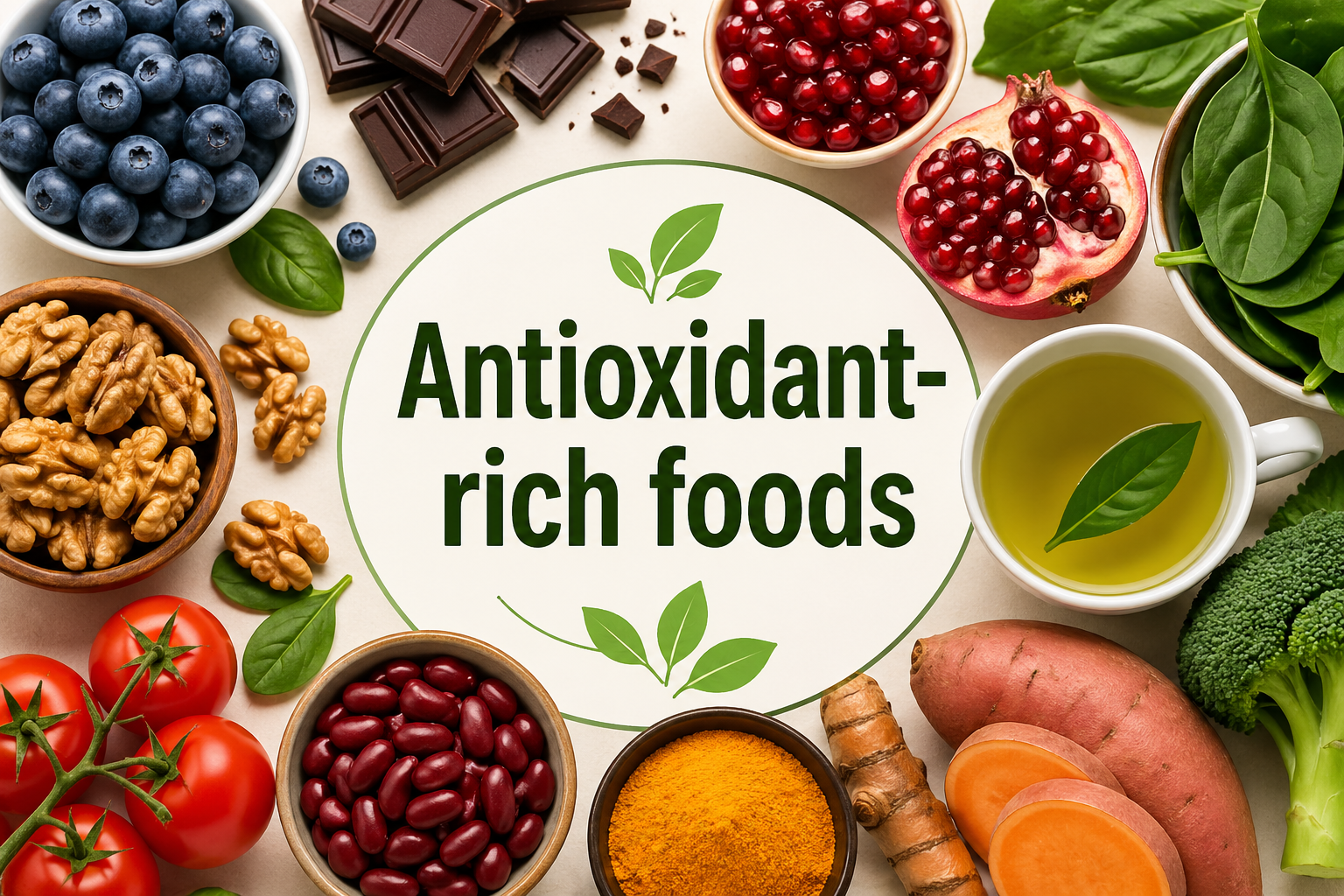
Antioxidant-rich foods are natural foods packed with compounds like polyphenols, flavonoids, carotenoids, and vitamins that help neutralize free radicals, reduce oxidative stress, and support better overall health.
Imagine leaving a piece of metal in the rain. Over time, it rusts—a slow process that weakens its structure. A similar process happens inside your body every day. This biological “rusting” is called oxidative stress, and it occurs when unstable molecules known as free radicals damage healthy cells. Although invisible, this process plays a major role in aging and chronic inflammation.
Many people assume the solution lies in expensive supplements. In reality, the most powerful protection often comes from whole foods. Through the food matrix—the natural interaction of nutrients in fruits, vegetables, nuts, and spices—your body receives thousands of antioxidant compounds that work together to defend your cells.
Antioxidants are not a single nutrient but a diverse team of protective compounds. Each one helps neutralize different types of free radicals. By eating a variety of foods rich in antioxidants, you create a broad defense system that supports immunity, brain health, and vibrant skin.
In this guide, you’ll learn how oxidative stress affects your body and discover 11 science-backed foods high in antioxidants. You’ll also find practical tips for adding them to your diet and maximizing their protective benefits.
Key Takeaways
- Broad Spectrum Defense: No single food provides every antioxidant; a “rainbow” diet is essential for full cellular protection.
- Whole Food Superiority: Natural antioxidant sources are generally more bioavailable and effective than synthetic supplements.
- Skin Protection: Consuming antioxidant foods for skin can help reduce risk factors associated with UV damage and aging.
- Consistency is Key: Small, daily servings of high-antioxidant foods provide better protection than occasional “superfood” binges.
The Science: Free Radicals and Oxidative Stress
To understand why you need antioxidant-dense foods, you first need to understand the enemy. Free radicals are unstable atoms. They are produced during normal metabolism. They also come from environmental stressors like pollution, cigarette smoke, and UV radiation.
Because free radicals have an unpaired electron, they are “electron hunters.” They scavenge your body and steal electrons from your healthy cell membranes and DNA. This theft causes a chain reaction of damage known as oxidative stress.
When oxidative stress becomes chronic, it triggers the body’s inflammatory response. This is why many health experts categorize the best options as anti-inflammatory antioxidant foods. By providing the missing electron that free radicals crave, These compounds help stop damage before it starts. They effectively “extinguish” the inflammatory fire.
11 Science-Backed Best Antioxidant Foods
The following list highlights the top antioxidant-rich foods that fight free radical damage. This selection is based on laboratory antioxidant measurements and clinical nutrition research.
1. Blueberries – Anthocyanin Powerhouse
Blueberries are among the best Antioxidant-Rich Foods because they contain anthocyanins, potent flavonoids that help neutralize free radicals. Research suggests anthocyanin-rich berries may support brain function, protect blood vessels, and lower inflammation. Add blueberries to smoothies, oatmeal, or yogurt for an easy antioxidant boost.
2. Dark Chocolate – Cocoa Flavonoid Shield
Dark chocolate contains cocoa flavonoids, especially flavanols and catechins, that help fight oxidative stress. Studies link moderate dark chocolate intake with improved circulation and better heart health. Choosing a small portion of 70% cocoa dark chocolate makes a satisfying snack with antioxidant benefits.
3. Spinach – Leafy Green Cellular Defender
Spinach delivers lutein, beta-carotene, vitamin C, and kaempferol, making it one of the most effective antioxidant greens. Research shows carotenoid-rich vegetables may support immunity and reduce inflammation. Add spinach to salads, soups, omelets, or smoothies to increase daily nutrient protection.
4. Walnuts – Polyphenol and Vitamin E Combo
Walnuts provide polyphenols, vitamin E, and omega-3 fats that help protect cells from oxidative wear. Nutrition studies suggest walnuts may support heart and brain health while lowering inflammatory markers. Enjoy a small handful as a snack or sprinkle them over breakfast bowls.
5. Tomatoes – Lycopene for Tissue Protection
Tomatoes are rich in lycopene, a red carotenoid known for reducing oxidative tissue damage. Research links lycopene intake with improved skin and cardiovascular support. Cooked tomatoes offer even better lycopene absorption, so sauces, soups, and roasted tomatoes are excellent choices.
6. Green Tea – Catechin-Based Free Radical Fighter
Green tea is packed with catechins, especially EGCG, which help improve the body’s antioxidant defense. Studies show regular green tea intake may lower inflammation and support metabolism. Swapping sugary drinks for one or two cups of green tea is a simple wellness upgrade.
7. Red Beans – Underrated Antioxidant Giant
Red beans contain polyphenols, flavonoids, and anthocyanins that help fight free radical damage. Legume research suggests these antioxidants may support blood sugar balance and digestive health. Add red beans to soups, curries, salads, or grain bowls for a filling antioxidant-rich meal.
8. Turmeric – Curcumin Anti-Inflammatory Booster
Turmeric contains curcumin, a powerful antioxidant compound studied for reducing inflammation and oxidative stress. Research shows curcumin may help support immunity and joint comfort. Stir turmeric into curries, soups, or warm milk, preferably with black pepper for better absorption.
9. Pomegranate – Punicalagin Rich Superfruit
Pomegranate is loaded with punicalagins, anthocyanins, and vitamin C, giving it strong antioxidant activity. Studies suggest pomegranate may support circulation and lower inflammatory stress. Enjoy fresh pomegranate seeds as a snack or add them to smoothies and salads.
10. Broccoli – Sulforaphane Detox Support
Broccoli provides sulforaphane, vitamin C, and glucosinolates that help the body activate natural detox defenses. Research on cruciferous vegetables shows these compounds may protect cells from oxidative damage. Steam or roast broccoli regularly to support long-term immune and tissue health.
11. Sweet Potatoes – Beta-Carotene Immune Defender
Sweet potatoes are rich in beta-carotene, vitamin C, and protective carotenoids that support immunity and skin health. Research shows beta-carotene helps reduce oxidative wear and supports healthy vision. Roast or bake sweet potatoes for a naturally sweet antioxidant-rich side dish.
Signs Your Body Needs More Antioxidants
How do you know if oxidative stress is taking a toll? While you should always consult a professional, these subtle signs may suggest your body needs more natural antioxidant sources:
- Chronic Fatigue: Constant tiredness despite sleeping well.
- Frequent Illness: Catching every cold or virus that goes around.
- Dull Skin: A loss of natural glow or premature fine lines.
- Slow Recovery: Muscles staying sore for a long time after exercise.
- Brain Fog: Difficulty concentrating or feeling “fuzzy” throughout the day.
Improving your intake of antioxidant-dense foods can help address these issues by reducing the cellular stress that drains your energy.
Nutritional Comparison: Antioxidant Density
| Food Item | Key Antioxidant | Primary Goal | Recommended Serving |
| Blueberries | Anthocyanins | Brain & Cognitive Health | 1 Cup |
| Green Tea | EGCG | Metabolism & Heart | 2–3 Cups |
| Pomegranates | Punicalagins | Artery & Heart Health | 1/2 Cup Seeds |
| Turmeric | Curcumin | Joint & Inflammation | 1 tsp (with pepper) |
| Tomatoes | Lycopene | Skin & Heart Health | 1 Cup (Cooked) |
| Dark Choco | Flavanols | Mood & Blood Pressure | 1 Ounce |
How to Maximize Antioxidants in Your Diet
Preparation is just as important as the food itself. To truly boost cellular health naturally, follow these evidence-based tips:
- Don’t Overcook: High heat destroys delicate antioxidants like Vitamin C. Use steaming or light stir-frying instead of long boiling.
- Keep the Skins: The majority of antioxidants in apples, grapes, and potatoes are found in the skin.
- Add Healthy Fats: Many antioxidants are fat-soluble. Always pair greens or tomatoes with a healthy fat for maximum absorption.
- Buy Frozen: Frozen berries are picked at peak ripeness. They often have more antioxidants than fresh berries that have sat on a shelf for a week.
- Store Properly: Keep your produce in cool, dark places. Oxygen and light cause antioxidants to degrade over time.
Frequently Asked Questions:
What is the strongest antioxidant food?
Blueberries are often considered one of the strongest antioxidant foods because they contain high levels of anthocyanins, powerful flavonoids that help fight oxidative stress. Other top contenders include pomegranate, dark chocolate, green tea, and turmeric due to their concentrated protective compounds.
What are the 10 most powerful antioxidants?
The most powerful antioxidants commonly found in foods include anthocyanins, flavonoids, catechins, lycopene, curcumin, beta-carotene, lutein, vitamin C, vitamin E, and selenium. These compounds help neutralize free radicals, lower inflammation, and support long-term cellular health naturally.
What are the big 3 antioxidants?
The big three antioxidant vitamins are vitamin C, vitamin E, and beta-carotene. These nutrients are widely studied for protecting cells from oxidative damage, supporting immunity, and reducing inflammation. They are naturally abundant in colorful fruits, vegetables, nuts, and seeds.
Should you avoid antioxidants during chemo?
Doctors often advise caution with high-dose antioxidant supplements during chemotherapy because they may interfere with how some cancer treatments destroy damaged cells. Major cancer guidance recommends discussing any antioxidant vitamin or supplement with an oncologist before use, though antioxidant-rich whole foods are often treated differently.
Should you get antioxidants from food or supplements?
Most experts recommend getting antioxidants from whole foods instead of supplements. Fruits, vegetables, nuts, beans, and tea provide antioxidants alongside fiber and phytonutrients, while supplements can deliver isolated high doses that may not offer the same balanced health protection.
Can antioxidants improve skin and immunity?
Yes, antioxidants can support healthier skin and stronger immunity by reducing inflammation and protecting cells from environmental stress. Nutrients like vitamin C, beta-carotene, and polyphenols help maintain collagen, strengthen immune defenses, and slow oxidative damage linked to premature aging.
How do antioxidant-rich foods reduce free radical damage?
Antioxidant-rich foods reduce free radical damage by donating electrons to unstable molecules before they harm healthy cells. This process lowers oxidative stress, protects tissues, and helps reduce chronic inflammation that contributes to aging, weakened immunity, and long-term disease risk.
Which fruit has the most antioxidants?
Blueberries are widely recognized as one of the highest antioxidant fruits, especially for their anthocyanin concentration. Pomegranate, blackberries, cranberries, and dark cherries also rank very high because they contain dense levels of polyphenols and inflammation-fighting plant pigments.
Final Thoughts
The battle against oxidative stress is a lifelong marathon. Every time you choose a handful of berries over a processed snack, you give your cells the tools they need to thrive.
You don’t need a perfect diet to see benefits. Start small: add one antioxidant food to every meal today. Over time, these shifts lead to better immunity, clearer skin, and long-term vitality. Your future health begins with the next bite.
Sources & References
- Harvard T.H. Chan School of Public Health (2023): “Antioxidants: Fresh is Best.”
- Journal of Agricultural and Food Chemistry (2021): “Comparative analysis of common fruits and vegetables.”
- National Institutes of Health (NIH): “Antioxidants: In Depth.”
- Mayo Clinic (2024): “The role of antioxidants in preventing chronic disease.”
Medically Reviewed By:
Dr. Sarah Mitchell, MD, is a board-certified endocrinologist specializing in insulin resistance, metabolic health, and diabetes prevention. She focuses on evidence-based lifestyle strategies, including exercise and nutrition, to improve insulin sensitivity and support long-term health outcomes.
Medical Disclaimer
The information provided in this article is for educational and informational purposes only and is not intended as medical advice. Always consult a qualified healthcare professional before making changes to your diet, exercise routine, supplements, or medical treatment.
Last Updated: April 28, 2026