

You are about to walk into a big meeting, or an argument is heating up, and someone says, “Take a deep breath.” It is classic advice, but does deep breathing actually work? For many people the answer is a cautious yes: slow, gentle breathing can help with feelings of stress, though the effects are usually modest and vary from person to person.
The question is fair, because “just breathe” can sound like a wellness slogan. Research suggests that controlled breathing can influence the body’s stress response, mood, and relaxation. At the same time, some well-designed studies show that its benefits are smaller or less clear-cut than popular claims suggest.
This guide explains how deep breathing works, what the research does and does not show, and which techniques are worth trying. You will also learn why it sometimes falls flat and when it is wise to seek professional support. If you want a broader overview first, see our guide to the benefits of deep breathing.
Does Deep Breathing Actually Work?
Short answer: Deep breathing can help some people feel calmer and manage everyday stress, but it is not a cure for anxiety disorders, depression, or any medical condition. Its effects are generally modest, and they differ from person to person.
Slow, controlled breathing may influence the autonomic nervous system, which regulates heart rate, blood pressure, and the body’s stress and relaxation responses. The National Center for Complementary and Integrative Health (NCCIH) lists deep breathing among relaxation techniques meant to bring on the body’s natural relaxation response. It also notes that evidence for specific health conditions is limited.
Breathing exercises tend to work better as a regular practice than as a one-time fix. Think of them as a skill you build, much like stretching or learning to meditate. Practice makes it easier to use the technique when stress rises.
Realistic expectations matter. Some people feel calmer within minutes, while others notice little change or find that focusing on their breath feels awkward. Neither response means you are doing something wrong.
How Deep Breathing Works Inside Your Body
The Connection Between Breathing and the Nervous System
When you feel threatened or pressured, the sympathetic nervous system triggers the fight-or-flight response. According to NCCIH, heart rate and breathing rate rise, blood pressure goes up, and stress hormones are released. The parasympathetic nervous system supports the opposite state, often called rest and recovery, which NCCIH describes as the relaxation response.
Breathing is unusual because it happens automatically but can also be controlled on purpose. A systematic review of breathing practices describes a two-way relationship in which stress changes breathing patterns and breathing patterns may influence stress. The nervous system is not a simple on/off switch, so these effects are best seen as a shift in balance.
Why Slow Breathing May Help You Feel Calmer
Respiratory rate is the number of breaths you take per minute. Slowing it down may affect heart rate variability (HRV), which is the natural variation in time between heartbeats. Higher HRV is often associated with flexible, well-regulated autonomic function.
A 2024 meta-analysis of 31 studies found that slow-paced breathing was associated with immediate increases in HRV and reductions in systolic blood pressure in nonclinical groups. These are short-term changes, and they do not automatically translate into lasting health benefits.
The Role of the Diaphragm
The diaphragm is a dome-shaped muscle at the base of the lungs. In diaphragmatic breathing, it moves downward as you inhale, so your abdomen rises while your upper chest stays relatively still. Cleveland Clinic describes this as belly breathing.
Shallow chest breathing relies more on the upper chest and shoulders. Watching your belly move can be a useful cue that your breathing is relaxed. Importantly, a deeper breath does not mean a bigger or more forceful one. Gentle and unforced is the goal.
What Does Scientific Research Say About Deep Breathing?
Research on Stress and Anxiety
A 2023 meta-analysis of randomized controlled trials looked at breathwork and mental health. Across 12 trials with 785 adults, breathwork was associated with lower self-reported stress. Anxiety (20 trials) and depressive symptoms (18 trials) showed similar small-to-moderate improvements, although most studies carried a moderate risk of bias.
A 2019 systematic review of diaphragmatic breathing reached a hopeful but cautious conclusion. It included only three studies, and the authors could not pool the results because the studies differed so much. Findings suggested that diaphragmatic breathing may reduce stress, but the evidence base was small.
It also helps to separate short-term relaxation from lasting mental health change. Feeling calmer after ten minutes is real and valuable. It is not the same as treating an anxiety disorder over months or years.
Many of these studies measure how people feel, which matters because stress is a personal experience. But self-reports can be shaped by expectation and by the simple act of taking a quiet break. This is one reason researchers use control groups, and why the findings are described as promising rather than proven.
Research on Heart Rate and Blood Pressure
A 2019 meta-analysis of 17 trials in people with hypertension or prehypertension found that slow breathing lowered systolic blood pressure by about 5.6 mmHg and diastolic pressure by about 3 mmHg. The results varied widely between studies. A 2022 review of device-guided slow breathing did not find a significant reduction compared with usual care.
Taken together, slow breathing may offer a modest blood pressure benefit for some people, especially with repeated practice. It does not replace prescribed treatment. If you have high blood pressure, our guides on high blood pressure and how to lower blood pressure offer more context, and your clinician should guide any changes to your plan.
What Researchers Still Don’t Know
Some of the most useful findings are the humbling ones. In a randomized placebo-controlled trial of 400 adults, people practiced slow coherent breathing (about 5.5 breaths per minute) or a control breathing pattern (12 breaths per minute) for about 10 minutes daily over four weeks. Stress, anxiety, depression, and wellbeing improved in both groups, but the slower breathing did not outperform the control.
The authors suggested several possible explanations, including a low dose and a control pattern that may itself have been beneficial. In other words, the trial does not show that breathing is useless. It shows that the benefit may come from slow, mindful breathing in general rather than from one special rhythm.
Other gaps remain. Studies use different protocols, practice lengths, and populations. A small 2020 study in 12 adults with chronic stroke found that slow breathing increased some HRV measures during a single session, yet the blood pressure difference between slow and typical breathing was not statistically significant. Long-term evidence and the best techniques are still being studied, and results cannot be generalized to everyone.
What Are the Real Benefits of Deep Breathing?
Deep breathing is best viewed as a supportive self-care tool, not a medical treatment. Possible benefits include:
- Stress reduction: It may lower feelings of tension and support relaxation.
- Anxiety management: It can help some people manage momentary anxiety and emotional overwhelm. For background, see what anxiety is.
- Emotional regulation: It creates a brief pause before you react to a stressful situation.
- Focus and mental clarity: It may help settle attention and reduce distraction.
- Sleep preparation: It can support a calming bedtime routine. Our guide to how to improve sleep covers other helpful habits.
- Physical relaxation: It may ease the muscle tension that often accompanies stress.
These benefits are generally supportive rather than guaranteed medical outcomes. They may also be stronger when combined with other habits, such as movement, good sleep, and social connection. NCCIH notes that relaxation techniques may be most effective when practiced regularly and combined with good nutrition, regular exercise, and a strong support system.
It is also worth being honest about what the evidence cannot yet tell us. Most trials measure how people feel (self-reported stress or anxiety), and feelings can be influenced by expectation, attention, and simply taking a quiet break. That does not make the benefit imaginary. It does mean that a calmer mood after breathing is real for the person experiencing it, while the exact reason it happens is still being studied.
Where breathing seems most useful is in the moment, as a way to interrupt a stress spiral. Used this way, it fits alongside other approaches such as exercise, healthy habits, and talking with someone you trust.
Which Deep Breathing Techniques Actually Work?
No single technique has been proven best. The NHS recommends gentle, comfortable breathing practiced regularly, so choose the method that feels natural to you.
Diaphragmatic Breathing
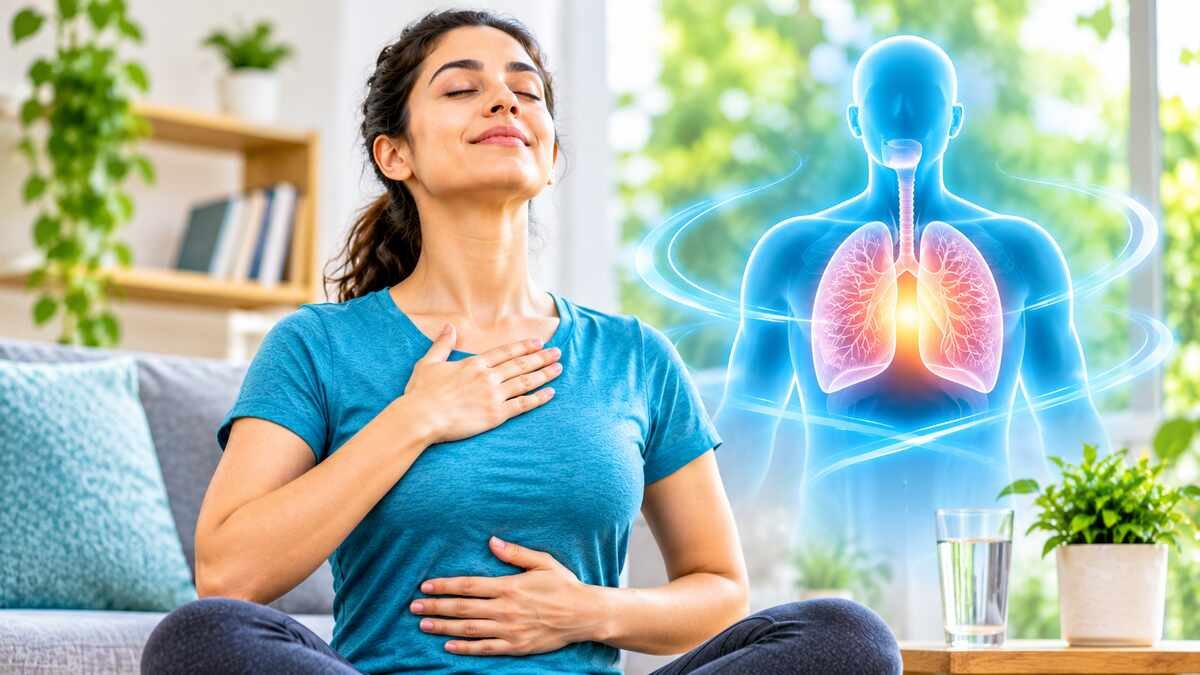
Place one hand on your chest and the other on your abdomen. Breathe gently in through your nose and let your abdomen expand while your upper chest stays relatively still. Then exhale slowly without forcing the breath.
Slow Breathing
Practice a comfortable, slower rhythm than usual. Avoid excessively deep inhalations, because overbreathing can cause lightheadedness. Stop if you feel dizzy or uncomfortable.
Box Breathing
Box breathing uses four equal parts: inhale, hold, exhale, and hold again, usually for four counts each. The breath holds are optional and may not suit everyone, so skip them if they feel uncomfortable. You can also use shorter counts.
Extended Exhalation Breathing
Gently make your exhale a little longer than your inhale, for example in for four counts and out for six. Comfort matters more than rigid timing. If counting makes you tense, drop it and simply let the breath out slowly.
How to Practice Deep Breathing for Maximum Benefit
A short, regular practice is more useful than a long, forced one. Here is a simple beginner routine:
- Sit comfortably with your shoulders relaxed.
- Start with normal, easy breathing for a few breaths.
- Inhale gently through your nose.
- Allow your abdomen to move naturally.
- Exhale slowly and comfortably.
- Continue for 2 to 5 minutes, and increase the time gradually if it feels good.
Aim for once or twice a day, and use the technique before situations you expect to be stressful. Linking it to a daily habit, such as your morning coffee or a short walk, can help it stick. Our article on the benefits of a morning walk is one way to build that routine.
Avoid forceful breathing and long breath holds. NCCIH notes that relaxation techniques are skills, and people who practice them regularly are more likely to benefit.
What to Expect in the First Few Weeks
In the first few sessions, the exercise may feel unnatural. Cleveland Clinic notes that diaphragmatic breathing can take extra effort at first and may feel tiring, and that lying down can make it easier to learn. That awkwardness usually fades with practice.
Rather than judging each session, notice general trends over a few weeks. You might find it easier to settle after a stressful call, or to wind down before bed. If you notice no change after consistent practice, that is useful information too, and a different relaxation method or professional guidance may suit you better.
Why Deep Breathing Sometimes Doesn’t Work
If breathing exercises have not helped you, you are not alone. Common reasons include:
- Breathing too deeply or too quickly
- Trying to force relaxation
- Expecting immediate relief from severe anxiety
- Practicing inconsistently
- Becoming overly focused on breathing sensations
- Using breathing as the only approach to persistent mental health symptoms
Some people feel more anxious when they pay close attention to their breath. If that happens, try grounding exercises, a gentle walk, or focusing on external sensations such as sounds or the feeling of your feet on the floor. For ideas, see our article on exercise and mental health.
If anxiety or low mood is persistent or interferes with daily life, breathing exercises should not be your only strategy. Learn more about therapy and talk with a healthcare professional.
Is Deep Breathing Safe for Everyone?
Gentle breathing exercises are generally low risk for healthy adults. NCCIH reports that relaxation techniques are generally considered safe, with no negative side effects in most studies. It also mentions rare reports that certain relaxation techniques may worsen symptoms in people with epilepsy, certain psychiatric conditions, or a history of abuse or trauma.
Overbreathing can cause dizziness, tingling, or lightheadedness. If this happens, stop, return to normal breathing, and sit or lie down until you feel normal. You can read more about what causes dizziness.
People with respiratory or cardiovascular conditions should seek personalized guidance if they are unsure. Cleveland Clinic suggests talking with your provider if you have a condition such as COPD, asthma, or anxiety. Breathing exercises should complement medical care, not replace it. Chest pain or severe shortness of breath needs prompt attention; see our guides on chest pain and shortness of breath.
Frequently Asked Questions
Does deep breathing really reduce stress?
It may. A meta-analysis of randomized trials linked breathwork to lower self-reported stress, although the effect was small to moderate. Controlled breathing can reduce perceived stress and promote relaxation for many people, but results vary.
How long does deep breathing take to work?
Some people feel calmer within a few minutes. Consistent practice may be more useful for ongoing stress management. The NHS suggests practicing for a few minutes at a time, and doing it regularly.
Can deep breathing stop a panic attack?
It may help some people feel more settled, but it is not guaranteed to stop panic. Gentle, slow breathing is usually more appropriate than forceful breath control, which can worsen lightheadedness. If panic attacks recur, professional support can help; see our guide to panic attacks.
Is deep breathing better than meditation?
Neither is universally better. Deep breathing is one technique that can be used during meditation, and both aim to build calm and attention. Many people find that breathing is a simpler starting point.
How many times a day should you practice deep breathing?
A practical starting point is a few minutes once or twice daily, adjusted to your comfort and needs. Cleveland Clinic suggests more frequent short sessions when first learning diaphragmatic breathing. Stop if you feel dizzy and return to normal breathing.
The Bottom Line: Does Deep Breathing Actually Work?
Deep breathing has credible scientific support for certain stress and relaxation outcomes, so it is not just a wellness myth. Its effects are generally modest and vary by person, and some high-quality trials show that slower is not always better than simply breathing mindfully. Gentle, consistent practice is more realistic than expecting a miracle. If you have persistent anxiety or other symptoms, seek professional support and use breathing as one tool among many.
For more ideas, explore our guide on how to reduce stress.
Sources
- National Center for Complementary and Integrative Health. 5 Things To Know About Relaxation Techniques for Stress
- National Center for Complementary and Integrative Health. Stress and Relaxation Techniques
- NHS. Breathing exercises for stress
- Cleveland Clinic. Diaphragmatic Breathing
- Fincham GW, et al. Effect of breathwork on stress and mental health: a meta-analysis of randomised-controlled trials. Scientific Reports. 2023.
- Effect of coherent breathing on mental health and wellbeing: a randomised placebo-controlled trial. Scientific Reports. 2023.
- Hopper SI, et al. Effectiveness of diaphragmatic breathing for reducing physiological and psychological stress in adults: a quantitative systematic review. JBI Database of Systematic Reviews and Implementation Reports. 2019.
- Chaddha A, et al. Device and non-device-guided slow breathing to reduce blood pressure: a systematic review and meta-analysis. Complementary Therapies in Medicine. 2019.
- de Freitas Gonçalves KS, et al. Device- and non-device-guided slow breathing in hypertension: a systematic review and meta-analysis. Health Science Reports. 2022.
- The effect of slow-paced breathing on cardiovascular and emotion functions: a meta-analysis and systematic review. Mindfulness. 2024.
- Breathing practices for stress and anxiety reduction: conceptual framework of implementation guidelines based on a systematic review. PMC.
- Slow-paced breathing and autonomic function in people post-stroke. Frontiers in Physiology. 2020.
Medical Disclaimer: This article is for general information and education only. It is not medical advice, and it does not replace care from a doctor or other qualified health professional. Breathing exercises affect people differently, and they are not a treatment or cure for any condition. Talk with a healthcare professional about your own health, especially if you have a breathing, heart, or mental health condition, or if you feel dizzy, unwell, or distressed.
1 thought on “Does Deep Breathing Actually Work? What Science Says About Stress, Anxiety, and Health”
Comments are closed.