
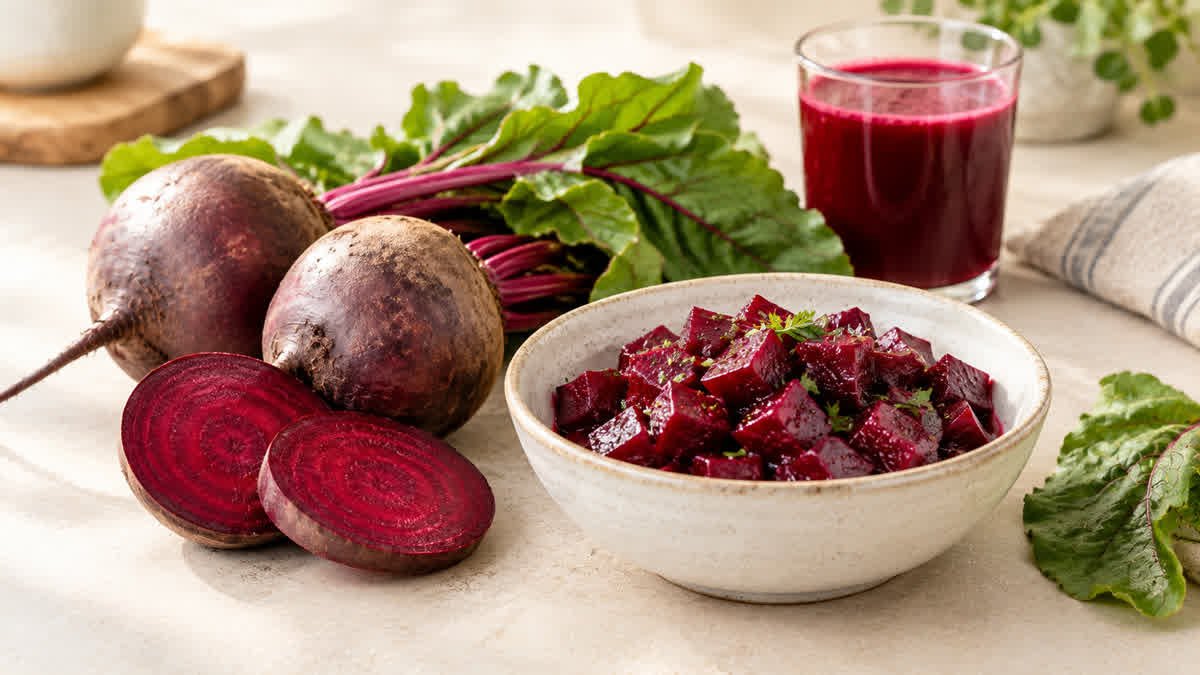

Beetroot is a nutritious vegetable that many people with acid reflux can eat without trouble, but it is not an established treatment for reflux or GERD. There is little direct research on beetroot and reflux symptoms, so whether it feels comfortable for you depends mostly on your own tolerance, the portion, and how it is prepared.
Beetroot (also called beets in the U.S.) provides fiber, folate, potassium, dietary nitrate, and plant pigments called betalains. None of these has been shown to treat or prevent reflux. Current GERD guidance generally focuses on finding your personal food triggers rather than assuming a single food is universally good or bad.
This guide explains what acid reflux and GERD are, what beetroot provides, how acidity fits in, and when beetroot or beetroot juice might bother some people. It also covers practical ways to eat beetroot, other common triggers, lifestyle habits that help, and when to see a doctor. The information is general and does not replace individualized medical advice.
What Is Acid Reflux and GERD?
Acid reflux happens when stomach contents flow back into the esophagus, the tube that carries food to the stomach. Common symptoms include heartburn, regurgitation, a sour or bitter taste, and discomfort after meals, according to the National Institute of Diabetes and Digestive and Kidney Diseases (NIDDK).
Occasional reflux is common. Gastroesophageal reflux disease (GERD) is a more persistent form in which repeated reflux causes troublesome symptoms or complications. The American College of Gastroenterology (ACG) describes GERD as a chronic condition.
Reflux is not simply a matter of having too much stomach acid. It involves how stomach contents move upward and how sensitive the esophagus is. That is why eating an “alkaline” food will not automatically neutralize reflux. For more background, see our guide to what causes acid reflux.
Beetroot Nutrition: What Does Beetroot Provide?
Beetroot is a root vegetable with a useful mix of nutrients. According to USDA FoodData Central, raw beets provide dietary fiber, folate, and potassium, along with natural carbohydrates and smaller amounts of other vitamins and minerals.
It also contains naturally occurring nitrate, betalain pigments, and other plant compounds. Whole beetroot can contribute to a nutrient-dense, balanced diet. You can read more in our guide to beetroot health benefits.
These nutrients support overall nutrition. They do not directly treat GERD, and the fiber in beetroot does not cure acid reflux.
So, Is Beetroot Good for Acid Reflux?
Beetroot is not an established treatment for acid reflux, but many people can include it as part of a balanced diet. There is limited research that looks specifically at beetroot and reflux, and major GERD guidance does not list beetroot as a standard treatment.
Individual food triggers vary. A food that causes no symptoms in one person may aggravate them in another. The NIDDK’s eating, diet, and nutrition guidance recommends paying attention to the foods and drinks that worsen your own symptoms rather than eliminating every possible trigger.
What the evidence says: There is currently insufficient evidence to say that beetroot improves acid reflux. Beetroot also does not appear in major GERD dietary guidance as a food that everyone with reflux must avoid.
Is Beetroot Acidic?
Beetroot tastes earthy and slightly sweet, and like most vegetables it contains naturally occurring organic acids. But a food’s acidity and its ability to trigger reflux are not the same thing.
GERD symptoms depend on stomach contents moving backward and on individual sensitivity, not just on whether a food is acidic. Some people react to foods that are not acidic at all, such as high-fat meals. Others tolerate acidic foods well.
So it is not accurate to say “beetroot is alkaline, so it stops reflux,” and it is equally inaccurate to say “beetroot is acidic, so it causes GERD.” Your own symptoms are a more reliable guide than labels like acidic or alkaline.
Can Beetroot Cause Heartburn or Acid Reflux?
For some people it may. There is no strong evidence that beetroot universally causes heartburn, but individual reactions are possible. Here are common reasons someone might notice symptoms after a beetroot meal.
Portion Size
A large meal is harder on reflux than a modest serving for many people. Eating a very big portion of any food can increase symptoms.
Preparation and Add-Ons
Beetroot served with rich sauces, lots of oil, spicy ingredients, or acidic dressings may be more likely to cause trouble than plain cooked beetroot. The culprit may be the dressing rather than the vegetable.
Individual Sensitivity
The ACG guideline notes that dietary triggers are not the same for everyone and that evidence for restricting many specific foods is limited. If plain beetroot consistently coincides with your symptoms, treat it as a personal trigger instead of assuming it is harmful for everyone. Our article on what makes acid reflux worse offers more context.
What About Beetroot Juice and Acid Reflux?
Beetroot juice is a different product from whole beetroot, and it is not a proven reflux remedy.
| Whole beetroot | Beetroot juice |
|---|---|
| Contains fiber | Much less fiber |
| Requires chewing | Easy to drink quickly |
| Usually eaten as part of a meal | Can be a concentrated drink |
| Naturally nutrient-rich | Can provide concentrated beetroot compounds |
Juice is not automatically better for reflux. Some people tolerate a small amount, while others notice symptoms. Added ingredients matter too. Citrus, ginger, spicy ingredients, or lots of sugar may change how a juice sits.
Because whole beetroot fits easily into a balanced meal and provides fiber, it is generally the more practical choice. See our guide to eating beetroot every day for more on whole beetroot versus juice.
Could Beetroot’s Fiber Help Digestion?
Fiber supports normal digestive health, and beetroot can add fiber to your diet. Our list of high-fiber foods shows other options.
There is no strong evidence that beetroot’s fiber specifically treats GERD. “Beetroot improves digestion, so it prevents acid reflux” is not a supported conclusion. Also, increasing fiber suddenly can cause gas or bloating in some people, so build up gradually. If bloating is a concern, see our article on acid reflux and bloating.
How to Eat Beetroot if You Have Acid Reflux
You do not need a restrictive reflux diet. These steps help you test your own tolerance.
Start With a Modest Serving
If beetroot is new to you, begin with a small portion so you can see how you feel. There is no established serving size for people with reflux.
Choose Simple Preparations
Steamed, roasted, or boiled beetroot, or plain cooked beetroot added to a balanced meal, are easy places to start.
Be Cautious With Common Reflux Triggers
Avoid automatically pairing beetroot with large amounts of chili, spicy sauces, high-fat dressings, tomato-based sauces, or citrus-heavy dressings. These are better-established potential triggers than beetroot itself. The NIDDK lists acidic foods, spicy foods, and high-fat foods among those commonly associated with worsening symptoms.
Pay Attention to Timing
If your reflux happens at night, try to finish meals at least three hours before lying down, as the NIDDK suggests. A big dinner shortly before bed can worsen symptoms no matter what is in it.
Beetroot Meal Ideas for People Monitoring Reflux Triggers
These are simple food ideas, not reflux cures.
- Plain roasted beetroot with mild herbs.
- A beetroot and leafy green salad with a gentle, non-acidic dressing (see our guide to leafy green vegetables).
- Beetroot with whole grains and a lean protein.
- A warm beetroot and vegetable bowl.
- Plain cooked beetroot alongside other foods you already tolerate.
For broader meal ideas, see our guide to what makes a balanced diet.
Foods Commonly Associated With Acid Reflux
It helps to keep beetroot in perspective. According to the NIDDK, foods and drinks commonly associated with worse GERD symptoms include:
- citrus fruits and tomatoes,
- alcohol,
- chocolate,
- coffee and other caffeinated drinks,
- high-fat foods,
- mint, and
- spicy foods.
The ACG guideline similarly discusses avoiding personally identified triggers. These are common associations, not universal rules, and you do not need to cut out all of them. For another vegetable that may come up, see our article on ginger and acid reflux.
Other Lifestyle Habits That Can Affect Reflux
Food is only one piece. The NIDDK and ACG both emphasize lifestyle measures, including:
- avoiding meals close to bedtime,
- identifying your own food triggers,
- keeping a healthy overall eating pattern,
- avoiding smoking, and
- raising the head of the bed if you have nighttime symptoms and your clinician recommends it.
Weight management may help some people, but it is not a universal solution. A healthcare professional can tell you whether it applies to you. Our guide to managing acid reflux at home has more practical tips.
When Should You See a Doctor About Acid Reflux?
Talk with a healthcare professional if:
- reflux happens often,
- symptoms continue despite lifestyle changes,
- you need over-the-counter medicine regularly,
- symptoms interfere with sleep or daily life,
- swallowing becomes difficult or food feels stuck,
- you notice signs of bleeding, such as black or bloody stools or vomit, or
- you lose weight without trying.
The ACG notes that frequent heartburn, such as two or more times a week, can warrant medical evaluation. Symptoms alone do not confirm GERD, so a clinician can sort out the cause. Read more in our guides on when to see a doctor for acid reflux and acid reflux treatment options.
Chest pain should not automatically be blamed on heartburn. Seek emergency care for severe or unexplained chest pain, especially with shortness of breath, sweating, or pain spreading to the arm, jaw, or back.
Beetroot and Acid Reflux: Myth vs. Fact
| Claim | Verdict |
|---|---|
| Beetroot cures acid reflux | Myth |
| Everyone with GERD needs to avoid beetroot | Myth |
| Beetroot can be part of a balanced diet | Generally reasonable |
| Beetroot juice is a proven reflux treatment | Not supported |
| Food triggers can differ between people | Supported |
| Spicy, high-fat, and certain acidic foods may worsen symptoms | Supported as a common association |
| Eating close to bedtime can worsen nighttime reflux | Supported |
Frequently Asked Questions
Is Beetroot Good for Acid Reflux?
It is not an established treatment, but many people tolerate it as part of a balanced diet. Pay attention to how you feel after eating it.
Can I Eat Beetroot if I Have GERD?
Yes, if it does not trigger your symptoms. Individual tolerance matters more than any general food list, as the NIDDK explains.
Does Beetroot Cause Heartburn?
There is no strong evidence that beetroot universally causes heartburn. Some people may still react to it, especially with large portions or trigger-heavy dressings.
Is Beetroot Acidic?
It contains natural organic acids, like most vegetables. A food’s acidity alone does not determine whether you will get reflux symptoms.
Is Beetroot Juice Good for Acid Reflux?
There is not enough evidence to recommend beetroot juice as a reflux treatment. Some people tolerate it and some do not.
Can Beetroot Reduce Stomach Acid?
No good evidence shows that beetroot reduces stomach acid or treats GERD.
Is Cooked Beetroot Better Than Raw for Acid Reflux?
Neither is universally better. Preparation, portion size, and personal tolerance matter most.
Can I Eat Beetroot Before Bed?
If you have nighttime reflux, avoid eating for about three hours before lying down, per NIDDK guidance. That applies to any food, including beetroot.
The Bottom Line: Is Beetroot Good for Acid Reflux?
Beetroot is a nutritious vegetable, but it should not be described as an acid reflux treatment. There is limited direct evidence connecting beetroot with improvement in GERD, and many people can include it in their diet without problems.
Individual tolerance matters, and preparation, portion size, and accompanying ingredients can change how a meal feels. If you have frequent or persistent reflux, talk with a healthcare professional rather than relying on diet alone. Beetroot can be part of a balanced diet for many people with acid reflux, and the most useful approach is to watch your own symptoms while following evidence-based reflux management advice.
For related reading, see our guide to living with acid reflux and our article on beetroot and blood sugar.
Sources
- National Institute of Diabetes and Digestive and Kidney Diseases. Eating, Diet, & Nutrition for GER & GERD
- National Institute of Diabetes and Digestive and Kidney Diseases. Acid Reflux (GER & GERD) in Adults
- Katz PO, et al. ACG Clinical Guideline for the Diagnosis and Management of Gastroesophageal Reflux Disease. American College of Gastroenterology.
- U.S. Department of Agriculture. FoodData Central
Medical Disclaimer: This article is for general information and education only. It is not medical advice and does not replace care from a doctor or other qualified healthcare professional. Everyone’s health needs are different, so please talk with your healthcare provider before changing your diet or treatment. Never stop prescribed reflux medicine without medical guidance. If you have severe chest pain, trouble breathing, trouble swallowing, or vomiting that will not stop, seek emergency care right away.