
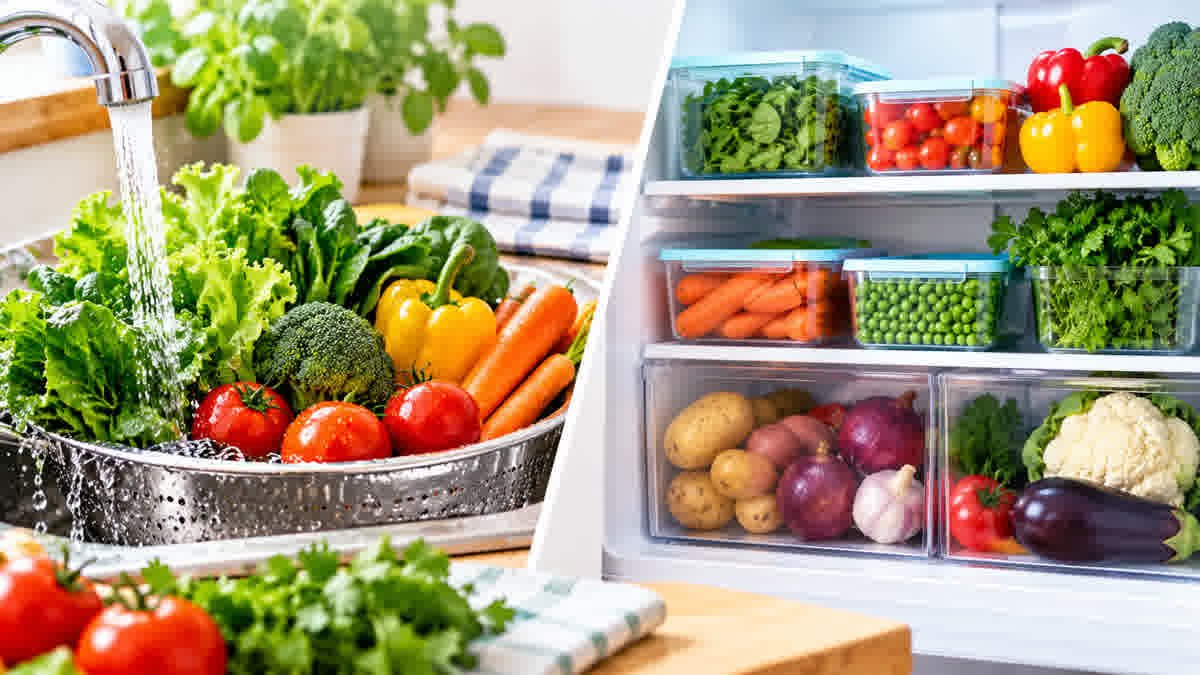

You carry home a big bag of fresh vegetables on the weekend, with plans for curries, soups, and salads all week. By Wednesday, the spinach is slimy, the coriander has gone limp, and a few tomatoes have turned soft. It is a common frustration, and it costs money, time, and good food.
The good news is that most of this waste is preventable. Storing vegetables well comes down to a few habits: controlling moisture, using the right temperature, handling produce gently, and keeping it clean. Washing and storing are also two different tasks. Each vegetable has its own needs, and a single method will not work for all of them.
This guide explains how to wash vegetables safely, when to wash them, and how to store common vegetables such as spinach, coriander, potatoes, onions, tomatoes, eggplant, okra, cauliflower, and green chilies. You will also find tips for organizing a crowded refrigerator, planning a weekly vegetable menu, and knowing when produce should go in the bin.
How to Wash Vegetables Safely
Rinse vegetables under cool running water shortly before you eat, cut, or cook them. The U.S. Food and Drug Administration (FDA) recommends this approach for fresh produce, along with clean hands and clean surfaces. Washing helps reduce dirt and microorganisms, though it cannot guarantee that produce is free of every harmful germ.
Start with clean hands and surfaces
Wash your hands with soap and water for at least 20 seconds before handling produce. Clean your cutting boards, knives, and countertops too, since bacteria can move from dirty surfaces onto clean vegetables. Use separate cutting boards for raw meat, poultry, and seafood whenever you can.
Rinse under running water
Follow these steps for most vegetables:
- Wash your hands and clean your work area.
- Trim away any bruised or damaged spots.
- Hold the vegetable under cool running water and rub it gently with your hands.
- Scrub firm vegetables such as potatoes, carrots, and cucumbers with a clean produce brush.
- Dry the vegetable with a clean cloth or paper towel.
Wash vegetables even if you plan to peel them. Dirt and germs on the skin can transfer to the flesh when you cut through it with a knife. Health Canada offers similar guidance, including washing items that are usually peeled, such as cucumbers.
Avoid common washing mistakes
Do not wash vegetables with soap, detergent, or bleach. These products are not meant for food, and they can leave residues. The FDA also advises against using commercial produce washes, because they are not shown to be safer than plain water.
Avoid soaking vegetables in a sink of standing water, since the sink itself can carry bacteria. Drying produce after washing may further reduce surface germs, according to the FDA. Remember that washing lowers risk but does not eliminate it, and cooking adds another layer of protection for vegetables that you do not eat raw.
Should You Wash Vegetables Before Storing Them?
Most vegetables are best washed shortly before use, because excess moisture can encourage spoilage. Leafy greens are the main exception: they can be washed before storage if you dry them thoroughly and keep them in a clean container.
Why most vegetables should stay dry until use
Water left on the surface creates a damp environment where mold and bacteria grow more easily. That is why washing everything the moment you get home often backfires, especially for vegetables like tomatoes, okra, cauliflower, and mushrooms. Washing does not make vegetables spoil on its own. Leftover moisture does.
If your vegetables arrive muddy, such as potatoes or carrots, brush off loose soil and wash them properly before cooking. Wet produce that has been stored sealed in a bag is where problems usually begin.
The leafy-green exception
Spinach, lettuce, and other tender greens spoil quickly and can be hard to wash when you are rushing to cook. Rinsing them ahead of time can save effort during the week. The key is drying them well with a clean towel, a salad spinner, or paper towels.
Store the dry leaves in a clean container lined with a paper towel to absorb moisture. Keep the lid slightly open or loose if condensation builds up. Health Canada notes that leafy greens and fresh herbs can carry bacteria, so they need careful cleaning, drying, and storage.
What about pre-washed vegetables?
If a package says the vegetables are pre-washed or ready to eat, follow the label directions. The FDA says these products generally do not need to be washed again. Rewashing at home can actually add risk if your sink, hands, or tools are not clean.
Store them in the original package or a clean container, and keep them away from raw meat. Always check the use-by date. The right washing habit depends on the vegetable and how you plan to store it.
How to Store Different Vegetables to Keep Them Fresh
Store vegetables according to their type. Keep most uncut vegetables dry until preparation, refrigerate perishable produce, and store items such as whole potatoes and dry onions in a cool, dry, well-ventilated place. The USDA notes that potatoes, sweet potatoes, and dry onions should not be refrigerated and do best in dry storage at about 60 to 70°F.
Use the table below as a quick reference. It is general guidance only, and variety, ripeness, room temperature, and local climate can all change how long produce lasts.
| Vegetable | General storage approach | Practical tip |
|---|---|---|
| Spinach and leafy greens | Refrigerate | Keep clean and manage excess moisture |
| Coriander and fresh herbs | Usually refrigerate, depending on the herb | Remove damaged leaves and avoid soggy storage |
| Potatoes | Cool, dark, dry, ventilated place | Keep away from excess moisture |
| Sweet potatoes | Cool, dry storage | Do not assume they need the same conditions as potatoes |
| Carrots | Refrigerate | Remove leafy tops if attached and store appropriately |
| Tomatoes | Depends on ripeness and desired quality | Let unripe tomatoes ripen before deciding on refrigeration |
| Cucumbers | Store according to temperature and freshness needs | Keep dry and check regularly for soft spots |
| Onions | Cool, dry, ventilated place when whole and dry | Keep separate from damp storage areas |
| Garlic | Cool, dry, ventilated place when whole | Refrigerate cut or prepared garlic as appropriate |
| Eggplant and okra | Usually best used while fresh; refrigeration may help | Avoid crushing and check for soft or damaged areas |
| Cauliflower and broccoli | Refrigerate | Keep dry and use before quality declines |
Leafy greens and fresh herbs
Spinach, lettuce, coriander, mint, and similar greens wilt fast. Remove any yellowed, slimy, or damaged leaves first, since one spoiled leaf can speed up decay in the rest. Then refrigerate the greens in a container or bag that controls moisture, with a dry paper towel to absorb extra water.
For coriander, some people trim the stem ends and stand the bunch in a jar with a little water, loosely covered, in the refrigerator. Others wrap it in a dry paper towel inside a container. Both approaches work for many households, but change the towel or water if it becomes soggy. Not every herb behaves the same way, and basil, for example, often does not like cold.
To learn more about why these foods are worth buying, read about the health benefits of leafy green vegetables.
Root vegetables
Potatoes generally keep best in a cool, dark, well-ventilated spot, away from onions and damp areas. Sweet potatoes also prefer cool, dry storage and should not go in the refrigerator, according to the USDA. Check both regularly for sprouting, soft spots, or green patches, and discard badly affected ones.
Carrots and beetroot usually do better in the refrigerator. Cut off any leafy tops, since they draw moisture out of the root, and store the roots in a container or perforated bag. If you want ideas for using them, see these beetroot health benefits.
Tomatoes, eggplant, and cucumbers
Tomatoes depend on ripeness. Keep unripe ones at room temperature, out of direct sun, until they ripen. Once ripe, they can be used within a few days or moved to the refrigerator if you cannot eat them in time, though cold can dull their flavor and soften their texture. Health Canada also offers tomato-specific food safety guidance.
Eggplant and okra are often best used soon after purchase. They can be sensitive to cold, so a short stay in the refrigerator, loosely wrapped and dry, may help only if you need to hold them for a few days. Cucumbers can also suffer from cold damage, so store them dry, handle them gently, and check often for soft spots.
Onions, garlic, and chilies
Whole, dry onions and whole garlic bulbs keep best in a cool, dry, ventilated place, such as a mesh bag or basket. Do not store them in sealed plastic bags or near damp areas. Once an onion is cut or peeled, put it in a covered container in the refrigerator and use it soon. Prepared garlic, including chopped or crushed garlic, should also be refrigerated.
Green chilies often last well in a paper-lined container or paper bag in the refrigerator, as long as they stay dry. Remove any soft or moldy ones right away so they do not affect the rest.
Because conditions vary, treat any storage time you read as an estimate rather than a promise.
How to Organize Your Refrigerator for Vegetable Storage
A well-organized refrigerator protects both food safety and freshness. Set it up so perishable vegetables stay cold, dry, and separate from raw animal foods.
Keep the refrigerator at a safe temperature
The FDA recommends keeping perishable fresh produce at 40°F (4°C) or below. A simple refrigerator thermometer can confirm your actual temperature, since built-in dials are not always accurate. The USDA also notes that temperatures vary inside a refrigerator, with colder zones near the back and warmer ones near the door.
Choose the right bags and containers
Use clean containers, perforated produce bags, or reusable bags with some airflow. Tightly sealed containers can trap moisture and speed up spoilage, so line them with a paper towel and leave a small gap when needed. Wash reusable containers regularly.
Prevent cross-contamination
Keep vegetables away from raw meat, poultry, and seafood. Store raw animal foods on the lowest shelf, in sealed containers, so juices cannot drip onto produce. Refrigerate cut or peeled vegetables promptly in covered containers, within two hours, as both the FDA and Health Canada advise. Discard any produce that has touched raw meat juices unless you plan to cook it thoroughly.
The USDA also points out that some fruits release ethylene gas, which can make nearby vegetables deteriorate faster. If space allows, keep ripening fruits separate from sensitive vegetables such as leafy greens and cauliflower.
Avoid overcrowding
A packed refrigerator limits air circulation and makes it easy to lose track of what you have. Leave a little space around containers, and place older items where you can see them. If your fridge is small, buy smaller amounts more often, and use clear containers so you can spot problems at a glance.
Practical Ways to Reduce Vegetable Waste at Home
You can reduce vegetable waste by planning meals before shopping, storing each vegetable correctly, keeping older produce visible, and using highly perishable vegetables first. Freeze suitable vegetables before they spoil, following safe preparation instructions. None of this requires perfection.
Buy the right amount
Plan a few meals before you shop, and check what you already have. Buy delicate items like spinach, coriander, and tomatoes in amounts your household can realistically use within a few days. Sturdier vegetables, such as potatoes, onions, carrots, and cabbage, are better for stocking up. Looking at nutrient-dense foods can also help you decide which items deserve a place in your basket.
Use the first-in, first-out method
When you unpack groceries, move older vegetables to the front and place new ones behind them. Take a quick look through your refrigerator and pantry every two or three days. Anything starting to soften can be cooked first.
Give leftover vegetables a purpose
Soft or slightly tired vegetables still work well in cooked dishes. Use them in soups, curries, stir-fries, omelets, fried rice, lentil dishes, or mixed vegetable sabzi. Our guides on how to eat more vegetables and raw vs. cooked vegetables offer more ideas.
Freezing can also rescue produce before it spoils. Many vegetables need to be blanched first, and each type has its own method, so follow tested guidance from a reliable source such as a university extension service. You can read more about frozen vegetables and how they compare nutritionally.
Create a weekly vegetable plan
Use the most fragile vegetables early in the week. Spinach, coriander, mushrooms, and ripe tomatoes can go into your first few meals. Save longer-lasting vegetables like cabbage, carrots, potatoes, onions, and cauliflower for later days.
A simple plan like this makes it easier to include a wider range of healthy foods in your daily diet without throwing money away.
How to Tell Whether Vegetables Are Still Good to Eat
Mild wilting or slight softness usually means a drop in quality rather than automatic spoilage. Clear signs of rot, mold, sliminess, or a bad smell mean the vegetable should be thrown out.
Signs of quality loss
Limp spinach, slightly soft carrots, or a wrinkled tomato can often still be used. Wash them, trim away any damaged parts, and cook them soon, ideally in soups, curries, or sautés. If the rest of the vegetable looks, feels, and smells normal, it is generally fine to use.
When to throw vegetables away
Discard vegetables that show any of these signs:
- Visible rot or large dark, mushy areas
- Extensive mold
- Sliminess or leaking liquid
- An unusual, unpleasant odor
- Mold on soft vegetables, since mold can spread beyond what you can see
Do not taste suspicious produce to check whether it is safe. If you are unsure, throw it out.
Food safety comes first
Appearance alone cannot guarantee that a vegetable is safe. Harmful bacteria do not always change how food looks or smells. Trimming a small bruise from an otherwise firm, healthy vegetable is fine, but trimming does not make spoiled or moldy produce safe.
Refrigerate cut produce promptly, wash your hands and tools, and keep raw animal foods away from vegetables. People who are pregnant, older, very young, or have weakened immune systems should be especially careful with produce and speak with a healthcare professional if they have questions.
Frequently Asked Questions
Should you wash vegetables as soon as you buy them?
In most cases, no. Washing shortly before use helps avoid extra moisture that can promote spoilage. Leafy greens are an exception if you dry them thoroughly and store them in a clean container. Follow package directions on pre-washed products (FDA).
Does washing vegetables make them spoil faster?
Washing itself does not cause spoilage, but leftover moisture can. Vegetables stored wet or in sealed containers often decay faster. If you wash ahead, dry the vegetables well and use paper towels or a breathable container to absorb extra water.
How do you keep leafy greens fresh for longer?
Remove damaged leaves, dry the greens thoroughly, and refrigerate them in a clean container lined with a paper towel. Replace the towel if it becomes damp. Keeping them away from ripening fruit may also help, as ethylene gas can speed up deterioration (USDA).
Which vegetables should not be refrigerated?
The USDA lists potatoes, sweet potatoes, and dry onions as items for dry storage rather than the refrigerator. Whole garlic also keeps best in a cool, dry, ventilated place. Tomatoes depend on ripeness, so let unripe ones ripen at room temperature first (USDA).
Can you store cut vegetables in the refrigerator?
Yes, and you should. Refrigerate cut or peeled vegetables promptly, within two hours, in covered containers at 40°F (4°C) or below. Use them within a few days, and discard them if they develop an odor, slime, or other signs of spoilage (FDA).
Is it safe to freeze vegetables before they spoil?
Freezing is a useful way to save vegetables that you cannot use in time, as long as they are still fresh and in good condition. Many types need blanching first for best quality. Follow a trusted extension or food safety guide for each vegetable.
Final Takeaway
A few simple habits can make a real difference. Wash vegetables safely before preparing them, keep most uncut produce dry until needed, and store each vegetable according to its own needs. Refrigerate perishable and cut produce promptly, and plan meals around what should be used first.
You do not need a perfect system. Small changes in how you wash, store, and plan can help your household get more value from the vegetables you buy, and bring more fresh food to the table.
Sources
- U.S. Food and Drug Administration. Selecting and Serving Produce Safely
- Health Canada. Food Safety for Fruits and Vegetables
- Health Canada. Safe Food Storage
- U.S. Department of Agriculture, Food and Nutrition Service. Storing Fresh Produce
Medical Disclaimer: This article is for general educational purposes only and is not medical advice. It does not replace guidance from a doctor, dietitian, or other qualified healthcare professional. If you have a health condition, a weakened immune system, or questions about food safety, please talk with a healthcare professional. If you think you have a foodborne illness, contact a healthcare provider.