
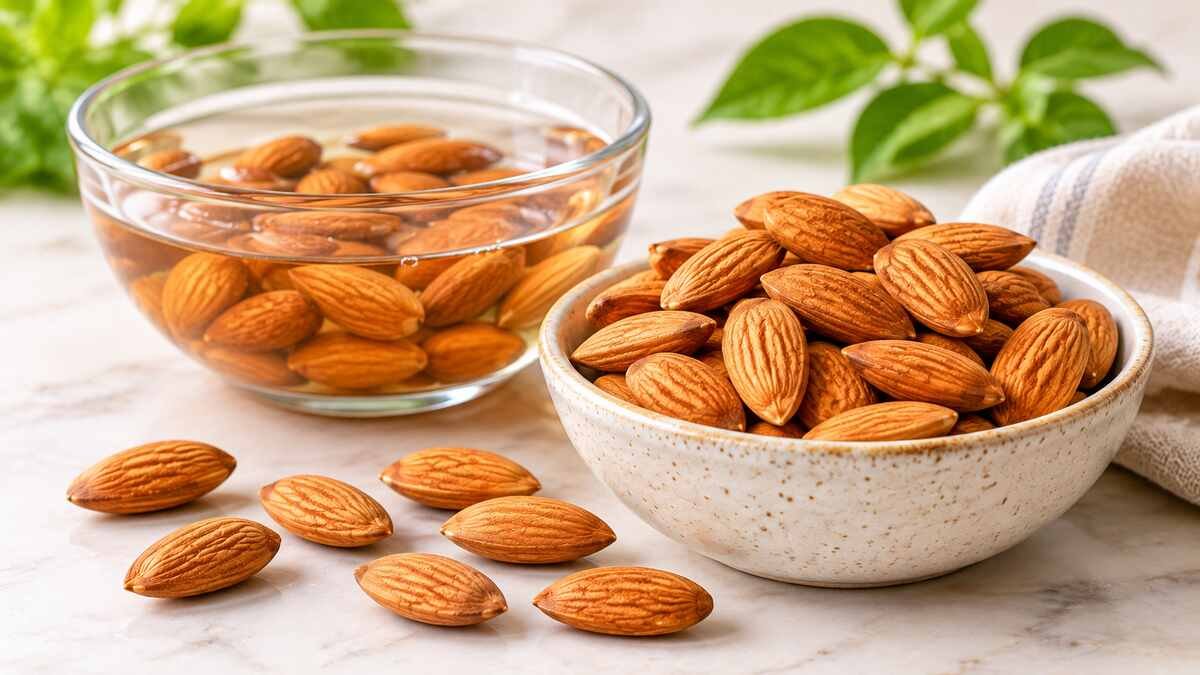

Soaked almonds have become a familiar part of morning wellness routines, especially among people interested in traditional food practices. The idea is simple: leave raw almonds in water for several hours, then eat them softened, often with the skins removed. Popular claims suggest this makes almonds easier to digest and more nutritious, which is why so many people search for soaking almonds benefits.
Almonds are nutrient-dense on their own, providing vitamin E, magnesium, fiber, plant protein, and unsaturated fats. That raises a fair question: does soaking actually make them healthier than raw almonds, or are some of the benefits exaggerated? The research gives a more nuanced answer than most wellness posts suggest.
In this guide, you will learn what soaked almonds are, which benefits are real, and which claims lack strong evidence. You will also find a safe step-by-step soaking method, advice on peeling and portion size, and answers to common questions. Soaking can be a pleasant preparation choice, but it is not a health requirement.
What Are Soaked Almonds?
Soaked almonds are raw almonds that have been left in water for a period of time, usually a few hours or overnight. During this time, the almonds absorb water, become softer, and their skins loosen. The practice is traditional in many South Asian households, where soaked almonds are often eaten in the morning.
You may also see “activated” almonds sold in stores. These are almonds that have been soaked and then dried, often with claims about improved nutrition or digestion. Home-soaked almonds are fresh and moist, while commercially activated almonds are usually dehydrated again.
Soaking changes texture and moisture content, but it does not automatically make almonds nutritionally superior. For general nutrition details, see our guide to almonds health benefits.
Potential Benefits of Soaking Almonds: What the Evidence Shows
To understand soaking almonds benefits, it helps to separate two things: the benefits of almonds in general, and the benefits that come specifically from soaking them. Many popular claims blur the two.
Quick answer: Soaking almonds mainly makes them softer and changes how they taste and feel. Research has not shown that soaking meaningfully improves digestion or mineral absorption. Most of the nutritional value comes from the almonds themselves, whether raw or soaked.
1. Makes almonds softer and easier to chew
As almonds absorb water, they become noticeably softer. Some people who find raw almonds too hard or crunchy prefer this texture. A softer almond is easier to bite into, but that does not necessarily mean it is easier to digest.
2. May be more convenient for certain people
People who have difficulty chewing very hard foods may find softened almonds more comfortable. This is a practical advantage related to texture, not a treatment for any dental or digestive condition. If you have chewing or swallowing difficulties, a healthcare professional can advise on safe food textures.
3. Provides the nutritional benefits of almonds
Almonds naturally contain several valuable nutrients:
- Vitamin E
- Magnesium
- Plant-based protein
- Dietary fiber
- Unsaturated fats
- Antioxidant compounds
These nutrients are already present in raw almonds. Soaking is not what creates them. A 1-ounce serving of almonds provides roughly 164 calories, about 14 grams of fat, about 6 grams of protein, and around 3 to 4 grams of fiber, according to USDA-based nutrition data.
4. Phytic acid: What soaking does and does not change
Phytic acid (phytate) is a naturally occurring compound in nuts, seeds, grains, and legumes. It can bind certain minerals, such as iron and zinc, which is why it is sometimes called an antinutrient. Many wellness sources claim that soaking removes phytic acid and boosts mineral absorption.
Research does not support this claim for almonds. A randomized crossover trial published in the European Journal of Nutrition found that soaking did not reduce phytate in whole almonds, and phytate was actually measured as slightly higher in whole soaked almonds than in unsoaked ones. A 2020 study in Food Chemistry found no evidence that common soaking methods were an effective way to reduce phytate or improve nutrient bioavailability in several nuts, as summarized by Nuts for Life.
It is also worth keeping perspective. Phytic acid is not harmful for most people eating a varied diet. If you are concerned about iron intake, see our article on almonds and iron deficiency.
5. Supports a heart-healthy eating pattern
Almonds provide unsaturated fats, fiber, and vitamin E, and they can fit into a balanced, heart-conscious diet. These potential benefits relate to eating almonds overall, not to a proven special effect of soaking. You can learn more in our guides to almonds and healthy fats and heart-healthy foods.
6. Offers a convenient addition to breakfast
Soaked almonds are easy to add to oatmeal, plain yogurt, smoothies, and fruit bowls. Nuts can make a meal more satisfying, and the soft texture blends well with creamy foods. The benefit here is variety and convenience, not a special energy boost.
7. Makes almonds easier to use in recipes
Softened almonds can be chopped into porridge, blended into smoothies, or mashed into a simple paste for breakfast dishes. Texture preferences strongly influence what people actually eat, so a form you enjoy is more likely to become a regular habit.
A note on digestion: In the same randomized crossover trial, soaking did not improve gastrointestinal tolerance or acceptance, and flatulence was rated higher after eating soaked whole almonds than unsoaked ones. For this reason, it is not accurate to say soaking automatically makes almonds easier to digest. If almonds bother your stomach, our article on whether almonds are good for acid reflux may help.
Soaked Almonds vs. Raw Almonds: Which Is Healthier?
Quick answer: Both raw and soaked almonds are nutritious, and there is not enough evidence that soaking provides substantial nutritional advantages. The better choice depends on texture preference, convenience, and how you plan to eat them.
| Feature | Raw almonds | Soaked almonds |
|---|---|---|
| Texture | Firm and crunchy | Softer |
| Moisture | Naturally low | Higher |
| Vitamin E | Naturally present | Naturally present |
| Healthy fats | Present | Present |
| Fiber | Present | Present |
| Preparation | Ready to eat | Requires soaking |
| Phytic acid | Naturally present | No meaningful reduction shown |
| Storage | Pantry-friendly | Needs refrigeration |
Are soaked almonds more nutritious? Not according to current evidence. Do raw almonds contain more nutrients? Per almond, the nutrients are essentially the same, though soaked almonds weigh more because of absorbed water. Does soaking improve mineral absorption? Studies have not shown this.
For everyday eating, raw almonds are simpler and keep well. Soaked almonds are a matter of preference. For more on choosing between nut types, see our overview of the health benefits of nuts.
How to Soak Almonds Overnight: Step-by-Step Method
Quick answer: Rinse raw almonds, cover them with drinking water in a clean container, refrigerate for about 4 to 8 hours, then drain and rinse. Eat promptly or keep refrigerated in a covered container.
What you need
- 10 to 20 raw almonds, or the amount you plan to eat
- A clean glass or food-safe container
- Drinking-quality water
- A refrigerator
Step-by-step instructions
- Choose good-quality almonds. Select clean, fresh, unsalted almonds.
- Rinse them. Wash the almonds under clean running water.
- Place them in a container. Add the almonds to a clean bowl or glass jar.
- Add drinking water. Cover the almonds completely.
- Refrigerate. Keep the container covered in the refrigerator while soaking.
- Drain and rinse. Discard the soaking water and rinse the almonds.
- Peel if you prefer. Gently squeeze each almond to slip off the skin.
- Eat or store safely. Eat promptly, or keep them in a clean, covered container in the refrigerator.
A short, refrigerated soak is the safer approach compared with leaving almonds in water overnight on the counter. Food-safety research on soaking and drying almond kernels examined how foodborne pathogens behave during soaking, and University of Illinois Extension notes that long soaks, particularly at room temperature, have been linked to increased Salmonella growth in some research.
How Long Should You Soak Almonds?
Quick answer: About 4 to 8 hours is enough for noticeably softer almonds. There is no scientifically established ideal soaking time for maximum health benefits.
| Soaking duration | What to expect |
|---|---|
| 2 to 4 hours | Some softening |
| 4 to 8 hours | Noticeably softer texture |
| Overnight | Traditional preparation; keep refrigerated |
| 12 to 24 hours | Prolonged soaking; no established nutritional advantage |
Soaking time mostly affects texture. Longer soaking does not mean greater benefits, and it adds food-safety risk if the almonds are not kept cold. Refrigeration matters because it slows microbial growth.
Should You Remove Almond Skin After Soaking?
Quick answer: Peeling is optional. Almond skins contain fiber and plant compounds, and there is no strong evidence that removing them improves digestion or nutrient absorption.
After soaking, the skins loosen and slip off easily. Some people prefer peeled almonds because the texture is smoother and the taste is milder. Others leave the skins on to keep the extra fiber. Treat peeling as a personal preference, not a nutritional requirement.
How Many Soaked Almonds Should You Eat Per Day?
Quick answer: A common serving is about 1 ounce (28 grams), or roughly 23 almonds. Many people eat fewer, such as 5 to 10, which is also reasonable.
Almonds are energy-dense, so portion size matters. A moderate serving fits into most balanced diets, but individual needs depend on your overall calorie intake and eating patterns. Eating soaked almonds regularly in moderation matters more than following a rigid morning almond-counting routine. For general guidance, see how many nuts you should eat every day.
Best Time to Eat Soaked Almonds
There is no single best time. Common choices include:
- In the morning with breakfast
- As a mid-morning snack
- Alongside yogurt or fruit
- Before or after physical activity as part of a balanced snack (see our article on nuts for energy before and after exercise)
Do you need to eat soaked almonds on an empty stomach? There is no strong evidence that eating them first thing in the morning offers a special health advantage. Choose the time that fits your routine and feels comfortable.
Common Mistakes to Avoid When Soaking Almonds
- Soaking at room temperature for too long. Keep soaking almonds in the refrigerator.
- Using unclean containers. Start with a clean, food-safe container.
- Using questionable water. Use drinking-quality water.
- Assuming longer soaking is better. More time adds risk, not proven benefits.
- Storing wet almonds for too many days. Eat them promptly or keep them refrigerated for a short time only.
- Treating soaked almonds as a replacement for a balanced diet. They are one food among many.
- Assuming peeled almonds are always healthier. The skin provides fiber and plant compounds.
Building steady healthy habits around overall diet quality will do more for your health than any single preparation method.
Who Should Be Careful About Eating Soaked Almonds?
- People with almond or tree nut allergies. Soaking does not remove almond allergens or make almonds safe for someone with an allergy. Severe allergic reactions need emergency medical care.
- People who feel discomfort after eating almonds. Consider smaller portions or talk with a healthcare professional.
- People on calorie-controlled diets. Almonds are energy-dense, so measure portions.
- People with specific dietary restrictions. Follow guidance from a qualified healthcare professional or dietitian.
Frequently Asked Questions About Soaking Almonds
What are the main benefits of soaking almonds?
Soaking softens almonds and makes them easier to chew. However, substantial additional nutritional benefits have not been established, and most of the nutrition comes from the almonds themselves.
Is it better to eat soaked almonds or raw almonds?
Both are nutritious, so the best choice depends on personal preference and convenience. There is not enough evidence that soaked almonds are healthier overall.
Can I soak almonds overnight?
Yes, but use a covered container in the refrigerator rather than leaving them at room temperature. University of Illinois Extension notes that long soaks at room temperature may increase bacterial growth.
Should I peel almonds after soaking?
Peeling is optional. The skin contains fiber and plant compounds, so leaving it on is perfectly fine.
How many soaked almonds should I eat daily?
About 23 almonds (28 grams) is a commonly used serving reference, though many people eat fewer. Your ideal amount depends on your overall diet and calorie needs.
Does soaking almonds remove phytic acid?
Research has not shown a meaningful reduction. A randomized crossover trial found no reduction in phytate after soaking whole almonds, and soaking has not been shown to improve mineral bioavailability.
Can I drink almond soaking water?
It is better to discard the soaking water and rinse the almonds before eating them. The water can carry residue from the almond surface and may support bacterial growth if left out.
Do soaked almonds improve digestion?
There is insufficient evidence that soaking improves gastrointestinal tolerance compared with unsoaked almonds. In one trial, soaking did not improve tolerance, as described in the European Journal of Nutrition study.
Final Thoughts: Are Soaked Almonds Worth Adding to Your Diet?
Soaked almonds can be a convenient and enjoyable way to include nutrient-rich nuts in everyday meals. They offer a softer texture and fit easily into breakfast or snack routines.
However, many popular claims about improved digestion, mineral absorption, and enhanced nutrition are not strongly supported by current research. Whether raw or soaked, almonds contribute valuable nutrients to a balanced eating pattern.
Focus on portion size, food safety, and consistency rather than treating soaking as a necessary health ritual.
Sources
- Taylor H, et al. The effects of ‘activating’ almonds on consumer acceptance and gastrointestinal tolerance. European Journal of Nutrition, 2018.
- Kumari S, et al. Does ‘activating’ nuts affect nutrient bioavailability? Food Chemistry, 2020.
- Nuts for Life. Nut processing research summary.
- Feng Y, et al. Growth and survival of foodborne pathogens during soaking and drying of almond kernels. Journal of Food Protection, 2020.
- University of Illinois Extension. Nuts need food safety too.
- University Hospitals (USDA-based data). Nutrition facts: almonds, 1 oz (23 whole kernels).
Medical Disclaimer: This article is for informational purposes only and is not a substitute for professional medical advice, diagnosis, or treatment. Talk with a qualified healthcare professional before making significant changes to your diet, especially if you have a tree nut allergy, a digestive condition, or follow a medically prescribed eating plan.
1 thought on “How to Soak Almonds: Benefits, Methods, and Nutrition Facts”
Comments are closed.