
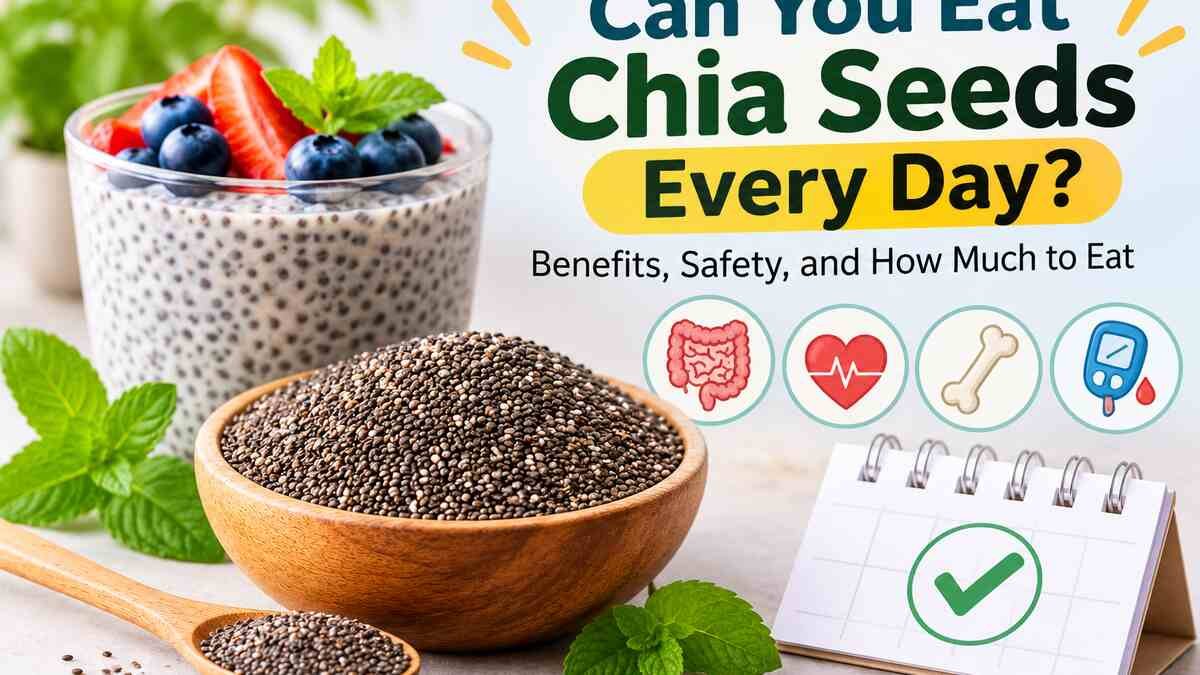

Yes, most people can eat chia seeds every day as part of a varied diet. These tiny seeds blend into oatmeal, yogurt, smoothies, and baked goods without changing the flavor much. That ease makes them a popular daily habit.
Chia seeds provide fiber, plant-based omega-3 fatty acids, protein, and minerals such as calcium and magnesium. They also absorb a lot of liquid and are packed with fiber, which means portion size, preparation, and your own digestive tolerance all matter. Eating them daily is optional, not a requirement for good health.
This guide explains what happens when you eat chia seeds regularly, how much is reasonable, and the best ways to prepare them. You will also find side effects, safety tips, and answers to common questions. If you want a broader overview first, start with our guide to chia seeds health benefits.
Can You Eat Chia Seeds Every Day?
Quick answer: Yes, moderate amounts of chia seeds can be part of a daily diet for most people. A common serving is about 1 to 2 tablespoons, mixed into liquid or moist foods. Start small, drink enough fluids, and avoid eating dry chia seeds by themselves.
Chia seeds are generally suitable for regular use as part of a balanced diet. Memorial Sloan Kettering notes that small studies suggest chia is well tolerated when used properly. Still, eating them every day is not essential, and no single food is necessary for good health.
Moderation matters because chia seeds are a concentrated source of fiber, and they swell when they meet liquid. People who are not used to high-fiber foods may need to introduce them gradually.
What Happens When You Eat Chia Seeds Every Day?
Regular chia seed intake changes a few things about your daily nutrition. The effects are modest and depend on the rest of your diet.
Your Daily Fiber Intake Increases
Chia seeds are a concentrated source of dietary fiber, with roughly 10 to 11 grams in a 2-tablespoon serving. Fiber supports regular bowel movements and digestive function. Northwestern Medicine points out that many Americans fall short of daily fiber goals, so adding seeds like chia can help close that gap.
When chia seeds meet liquid, they form a gel. That gel is the reason soaked chia seeds feel thick and pudding-like.
You Get Plant-Based Omega-3 Fatty Acids
The main omega-3 fat in chia seeds is alpha-linolenic acid (ALA). Your body cannot make ALA, so it must come from food. ALA is different from EPA and DHA, the omega-3 fats found in fatty fish and other seafood.
You can read more in our guide to omega-3 fatty acids and our overview of healthy fats.
You Add Protein and Minerals to Meals
A serving also supplies some protein, plus calcium, magnesium, phosphorus, and other minerals. These nutrients support normal body functions, such as muscle activity and bone structure. Chia seeds alone cannot correct a nutrient deficiency, but they can add to a varied diet. Browse our list of nutrient-dense foods for more options.
Potential Benefits of Eating Chia Seeds Every Day
Nutrition facts are well established. Evidence for specific health outcomes is weaker. A 2018 systematic review of human trials rated the quality of the evidence as low or very low, and a 2024 analysis in overweight adults found no significant changes in most cholesterol and blood sugar measures. Keep that context in mind as you read the list.
1. Supports Digestive Health
The fiber in chia seeds adds bulk to stool and supports bowel regularity. Increase your intake gradually to limit gas and bloating. Fiber also works best with enough fluid. See our tips to improve gut health for related habits.
2. Helps Increase Daily Fiber Intake
Many people benefit from eating more fiber-rich foods. Chia seeds can complement fruits, vegetables, legumes, and whole grains. Try pairing them with other high-fiber foods for digestive health rather than relying on one ingredient.
3. Provides Plant-Based Omega-3 Fats
ALA contributes to your essential fat intake, which is useful if you eat little fish. This does not mean chia seeds guarantee lower cholesterol or prevent heart disease. The research on cholesterol is mixed.
4. May Help Support Fullness
Fiber absorbs liquid and forms a gel-like texture, which can make meals feel more satisfying. Feeling full is not the same as losing weight. Memorial Sloan Kettering notes that a clinical trial found chia did not affect weight loss.
5. Contributes to Bone-Supporting Nutrients
Chia seeds contain calcium, phosphorus, and magnesium, which play roles in normal bone health. Your overall diet matters more than any single ingredient. For more ideas, see our list of calcium-rich foods.
6. Adds Antioxidants to Your Diet
Chia seeds contain antioxidant plant compounds. In laboratory research, antioxidants can help limit oxidative damage to cells. That does not prove the same benefit in people, so treat this as a promising area of study rather than a guaranteed result.
How Much Chia Seeds Should You Eat Every Day?
No medically established daily amount exists for chia seeds. A serving in recipes and nutrition guidance is often about 1 to 2 tablespoons.
Understanding a Typical Serving
Two tablespoons (about 28 grams) provide roughly:
| Nutrient | Approximate amount |
|---|---|
| Calories | 140 |
| Protein | 4 g |
| Dietary fiber | 11 g |
| Unsaturated fat | 7 g |
Values vary slightly by product and database. Check your package label.
Start With a Smaller Amount
If you are not used to high-fiber foods, begin with about a teaspoon or a tablespoon. Increase slowly based on how your digestion feels. Treat the serving size as a practical guide, not a prescription.
Best Ways to Eat Chia Seeds Every Day
Chia seeds have a mild taste, so they fit into many meals. Mixing them into moist foods also helps them soften.
Add Chia Seeds to Oatmeal or Cereal
Stir a small amount into hot oatmeal, overnight oats, or whole-grain cereal. Top with fruit and nuts for a balanced breakfast.
Make Chia Pudding
Combine chia seeds with milk or a suitable plant-based alternative and let them absorb the liquid in the refrigerator. Choose unsweetened options and add fresh fruit for flavor.
Blend Them Into Smoothies
Chia seeds add fiber and texture to smoothies. Blend them with fruit, yogurt, or other ingredients you enjoy, and let the drink sit a few minutes to thicken.
Mix Them Into Yogurt or Salads
Stir soaked chia seeds into yogurt, or sprinkle a small amount over moist foods. They also work in soups and dressings.
Use Chia Seeds in Baking
Add them to muffins, breads, and homemade recipes. The Harvard T.H. Chan School of Public Health notes that chia gel can replace eggs in some baking recipes.
Possible Side Effects of Eating Chia Seeds Every Day
Chia seeds are nutritious, but they do not suit everyone in every form or amount.
Bloating and Gas
A sudden jump in fiber can cause bloating, gas, or abdominal discomfort. Add chia seeds gradually rather than eating large amounts at once.
Constipation or Digestive Discomfort
Too much fiber without enough fluid may worsen constipation for some people. Drink water throughout the day, and pay attention to how your body responds. Our guide to natural remedies for constipation explains how fiber and fluids work together.
Choking or Swallowing Difficulties
Dry chia seeds absorb liquid and expand. Memorial Sloan Kettering advises never eating dry chia seeds on their own and describes a case report of seeds expanding in a man’s throat that required emergency treatment. Mix them well into liquid or moist foods and let them soak before eating.
Allergic Reactions
Chia seed allergies are uncommon but possible. Stop eating them and seek medical care if you notice hives, swelling, or trouble breathing.
Eating More Than Your Body Tolerates
More is not automatically better. Chia seeds should complement a varied diet, not replace other nutritious foods.
Who Should Be Cautious About Eating Chia Seeds Daily?
Most people can use chia seeds safely, but some groups may want individualized advice.
People With Swallowing Difficulties
The expansion risk is higher if swallowing is difficult. Choose a well-soaked preparation, such as pudding, and ask a healthcare professional before using chia seeds.
People With Digestive Conditions
Some gastrointestinal conditions call for individualized advice about high-fiber foods. That does not mean everyone with a digestive condition must avoid chia seeds. Talk with your healthcare team about what works for you.
People Taking Medication or Managing Health Conditions
Memorial Sloan Kettering lists blood pressure medication as a reason for caution. If you take medicine or manage a condition, discuss any substantial dietary change with your healthcare professional. Ordinary food portions do not automatically cause medication interactions. Our guide on chia seeds and type 2 diabetes covers this topic for people managing blood sugar.
Tips for Adding Chia Seeds to a Balanced Diet
- Start with a small amount and increase gradually.
- Mix chia seeds with liquid or moist foods.
- Drink enough fluids throughout the day.
- Include other fiber sources, such as vegetables, fruits, beans, and whole grains.
- Choose plain chia seeds, and check packaged products for added sugar.
- Store seeds in a sealed container in a cool, dry place.
- Remember that daily chia seeds are optional.
Browse our list of healthy foods to include in your diet for more variety.
Frequently Asked Questions About Eating Chia Seeds Every Day
Is it safe to eat chia seeds every day?
For most people, moderate daily amounts are generally suitable. They work best when you tolerate the fiber and prepare the seeds in liquid or moist foods. Check with a healthcare professional if you have swallowing problems, a digestive condition, or medication concerns.
What is the best time to eat chia seeds?
No scientifically established best time exists. You can include them at breakfast, lunch, or any other meal. Pick the time that fits your routine and digestion.
Can you eat chia seeds without soaking them?
You can mix them into moist foods such as yogurt or oatmeal, but swallowing dry spoonfuls is not recommended. The Harvard Chan School advises eating seeds that have been soaked or mixed with a moist food, because they swell as they absorb liquid.
Can you eat chia seeds twice a day?
It depends on your total amount, your other fiber sources, and your tolerance. More frequent servings do not necessarily bring extra benefits. If you want to eat them more than once a day, keep each portion small and drink plenty of fluids.
Do chia seeds need to be ground?
Not usually. The Harvard Chan School notes that whole chia seeds are absorbed and digested well, unlike flaxseeds. Some people grind them for texture, which is a personal choice.
What happens if you eat too many chia seeds?
Eating a lot, especially suddenly, may cause bloating, gas, constipation, or other digestive discomfort. Not drinking enough fluid can make this worse. Scale back to a smaller amount if you notice symptoms.
Conclusion: Should You Make Chia Seeds Part of Your Daily Diet?
Most people can enjoy chia seeds every day in moderate amounts. They provide fiber, ALA omega-3 fats, protein, and minerals, and they are easy to add to everyday meals. Good habits matter more than the seeds themselves: increase your intake slowly, prepare them with liquid, and drink enough water.
Chia seeds can be a useful addition, but they are not essential, and their health benefits should not be overstated. A varied diet built on whole foods is what supports long-term health. If you have a medical condition or take medication, ask your healthcare professional or a registered dietitian how chia seeds fit into your plan.
Sources
- Harvard T.H. Chan School of Public Health. Chia Seeds: The Nutrition Source.
- Harvard Health Publishing. Chia seed benefits: What you need to know.
- MedlinePlus. Healthy food trends: Chia seeds.
- Northwestern Medicine. Health Benefits of Chia Seeds and Flaxseeds: Which Should You Choose?
- Memorial Sloan Kettering Cancer Center. Chia: Purported Benefits, Side Effects & More.
- Teoh SL, Lai NM, Vanichkulpitak P, et al. Clinical evidence on dietary supplementation with chia seed: a systematic review and meta-analysis. Nutrition Reviews. 2018.
- Karimi M, Pirzad S, Shirsalimi N, et al. Effects of chia seed supplementation on cardiometabolic health in overweight subjects: a systematic review and meta-analysis of RCTs. Nutrition & Metabolism. 2024.
Medical Disclaimer: This article is for general educational purposes only and is not a substitute for professional medical advice, diagnosis, or treatment. Nutrition needs vary from person to person. Talk with your doctor or a registered dietitian before making major changes to your diet, especially if you have a medical condition, trouble swallowing, a food allergy, or take medication. Never stop or change prescribed medicine without medical guidance.
1 thought on “Can You Eat Chia Seeds Every Day? Benefits, Safety, and How Much to Eat”
Comments are closed.