
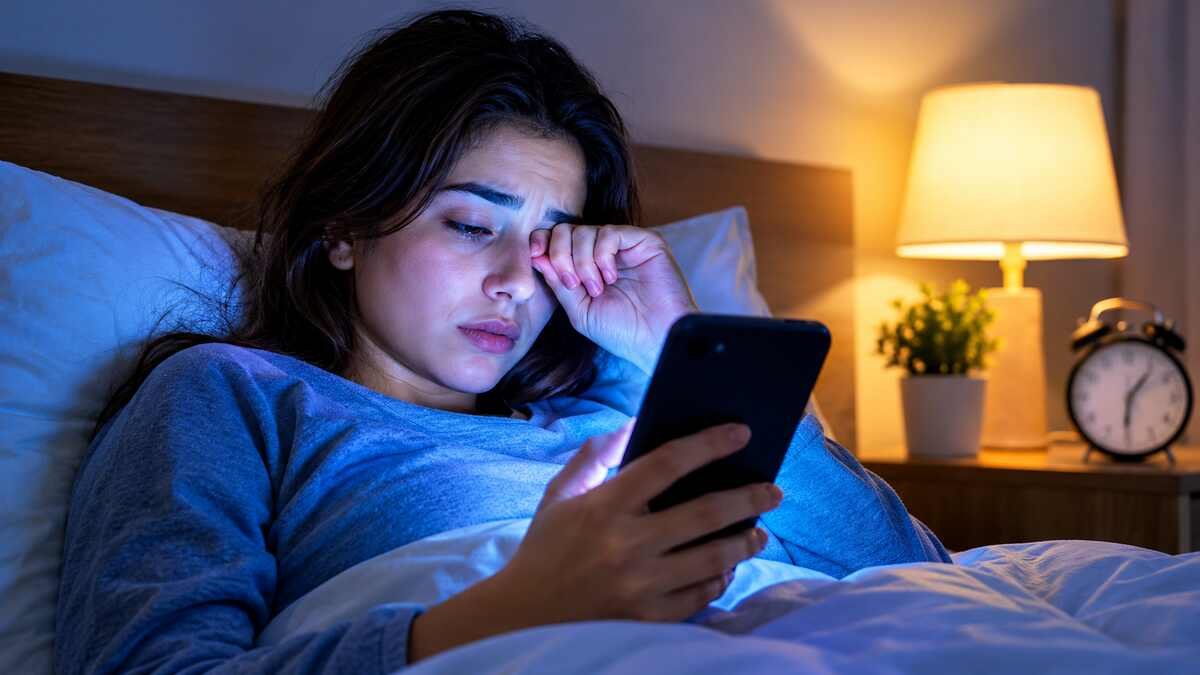

You spend hours looking at your computer during the day and scrolling through your phone at night. When bedtime arrives, your eyes feel tired, but your mind is still buzzing. It is natural to wonder whether screen fatigue could be one reason you are struggling to fall asleep.
Screen fatigue may contribute to trouble falling asleep, especially when you use digital devices close to bedtime. Evening light exposure, stimulating content, and a delayed bedtime can all play a role, and eye discomfort can make it harder to relax. Still, screen fatigue is not the only possible explanation for sleep problems, and it is not the direct cause for everyone.
This guide explains what screen fatigue is, how screens may affect your body clock and your mind, and how to tell whether your habits might be getting in the way of sleep. You will also find practical steps to ease eye discomfort and wind down more easily, plus guidance on when to talk with a healthcare professional. The information is general and is not personal medical advice.
What Is Screen Fatigue?
Screen fatigue is a general term for tiredness or discomfort linked to long periods of digital screen use. It is not a formal medical diagnosis. It is closely related to digital eye strain, also called computer vision syndrome, which the American Optometric Association describes as a group of eye and vision problems tied to computer, tablet, e-reader, and phone use.
The term can cover eye symptoms as well as the mental tiredness that often follows a long day on devices. It helps to keep these two ideas separate. Tired eyes and a tired brain are not the same thing, and they can affect sleep in different ways. For a deeper look at how screen-related eye discomfort works, see our guide on whether screen fatigue can cause eye strain.
Common Symptoms of Screen Fatigue
Symptoms vary from person to person. You may notice:
- Tired, aching, or uncomfortable eyes
- Dryness or irritation
- Blurred vision after long screen sessions
- Headaches, often around the forehead or temples
- Difficulty concentrating
- Neck and shoulder discomfort
- Mental exhaustion after extended screen exposure
Our article on the early signs of screen fatigue explains how these symptoms typically show up. If headaches are a main concern, our guide on what causes headaches covers other possible triggers.
What Causes Screen Fatigue?
Several factors often combine. According to the American Academy of Ophthalmology, people tend to blink less often while using screens, which can contribute to dry, irritated eyes. Other contributors include:
- Prolonged close-up focusing
- Screen glare and unsuitable brightness
- Poor posture and viewing distance
- Long stretches without visual breaks
Our guide on the common causes of screen fatigue goes deeper into each one. The American Academy of Ophthalmology also notes that digital eye discomfort is more closely tied to how people use their devices than to blue light damaging the eyes.
Can Screen Fatigue Cause Trouble Falling Asleep?
Yes, it can contribute, particularly when you use digital devices near bedtime. However, screen fatigue itself is not necessarily the direct cause. It is more accurate to say that several screen-related factors can make it harder to relax and feel ready for sleep.
Three connections stand out:
- Physical discomfort. Dry, irritated, or strained eyes can make it harder to settle in and relax before bed.
- Mental stimulation. Social media, work messages, gaming, and emotionally engaging content can keep your brain alert.
- Disrupted sleep timing. Evening screen exposure may interfere with your body’s natural preparation for sleep, and it often pushes bedtime later.
These connections show an association between screen habits and sleep difficulty. They do not prove that screens are always the cause, and individual experiences differ.
Why Your Eyes Feel Tired but Your Brain Stays Awake
Physical eye tiredness is not the same as sleepiness. After several hours of screen use, your eyes can feel heavy and sore while your mind stays switched on. Videos, notifications, conversations, and work tasks can all keep your brain engaged.
This mismatch is why some people say they feel “tired but wired.” Your eye muscles may be ready to rest, but your brain is still processing information. Taking a real break from screens can help the two catch up with each other.
Does Screen Fatigue Affect Everyone the Same Way?
No. Individual differences matter. Your screen habits, bedtime routine, stress level, and any existing sleep problems all shape the experience. Some people can use a phone before bed and fall asleep easily, while others notice a clear effect.
Not everyone who has screen fatigue will develop insomnia, and screen fatigue is only one possible piece of the puzzle. If your sleep trouble is ongoing, it is worth looking at the bigger picture. Our guide on what causes poor sleep outlines many other factors.
How Does Blue Light Affect Your Sleep Cycle?
Blue light is part of visible light and is given off by the sun, LED lighting, and digital screens. The sun is by far the largest source. Still, light exposure at night can influence your body’s internal clock.
Understanding Melatonin and Your Body Clock
Melatonin is a hormone that helps signal to your body that it is time to sleep. Natural darkness in the evening supports its release, while bright light can reduce it. Your body clock, known as the circadian rhythm, uses light cues to keep your sleep and wake times on track.
Because of this, the timing of light exposure matters. Bright light late in the evening can send a mixed message about whether it is time to wind down.
Why Blue Light at Night May Make Falling Asleep Harder
Screens give off blue wavelengths that can influence alertness and your internal clock. Bright light exposure in the evening may delay your natural preparation for sleep, which can make it harder to feel sleepy at your usual time. How strongly this affects you depends on factors such as brightness, how close the screen is, and how long you use it.
Research on this topic is still developing, and effects vary from person to person. For that reason, it is wise to see evening light as one possible contributor, not a guaranteed cause.
Is Blue Light the Only Reason Screens Affect Sleep?
No. Blue light is only part of the picture. Other screen-related factors can matter just as much, including:
- Watching exciting or emotionally intense videos
- Replying to work emails
- Playing games before bed
- Scrolling through social media
- Staying up later than planned
It is also important not to confuse sleep effects with eye damage. The American Academy of Ophthalmology states that blue light from ordinary screens has not been shown to damage the eyes. Digital eye strain is more closely linked to viewing habits, such as reduced blinking and long close-up focusing, than to blue light itself.
Signs Your Screen Habits May Be Affecting Your Sleep
Certain patterns may suggest a link between your evening screen use and trouble falling asleep. You might notice that:
- You do not feel sleepy after using your phone at night
- You often stay up later than intended while watching videos
- Your eyes feel tired or irritated before bedtime
- You feel mentally alert even though your body is tired
- You wake up unrefreshed after repeatedly delaying bedtime
- Falling asleep gets easier when you cut back on evening screen use
These patterns may point to a connection, but they cannot establish a diagnosis. A simple way to learn more is to track your evening screen habits and your sleep for one or two weeks. Jot down when you stop using screens, when you go to bed, and how long it takes to fall asleep. Patterns often become clearer on paper.
Our article on the early signs of poor sleep can also help you recognize when sleep trouble may need more attention.
How to Reduce Screen Fatigue and Fall Asleep More Easily
Small changes can help with both eye comfort and sleep readiness. You do not need to try everything at once. These steps may help many people, but results vary. For more eye-focused tips, see our guide on how to manage screen fatigue at home.
1. Reduce Screen Time Before Bed
Create a screen-free wind-down period before sleep. If avoiding screens for a long time feels hard, start by cutting back during the last 30 to 60 minutes before bed. You can lengthen it gradually as it becomes a habit.
2. Use Night Mode or Warm Display Settings
Warmer colors and lower brightness can make evening screen use more comfortable. Night mode does not remove all possible effects of screen exposure, though. Cutting back on overall use and stimulating content may matter more.
3. Follow the 20-20-20 Rule
Every 20 minutes, look at something about 20 feet away for at least 20 seconds. This gives your eyes a break from sustained close-up focusing and may help reduce visual discomfort. The Mayo Clinic lists it among its self-care suggestions for eyestrain.
4. Adjust Screen Brightness and Viewing Distance
Match your screen brightness to the room, and avoid glare from windows and lamps. Keep the screen at a comfortable distance, and position it so your neck and eyes are not strained. Our guide on screen fatigue treatment options explains these adjustments in more detail.
5. Avoid Stimulating Content Before Bedtime
Try to skip intense gaming, stressful news, work emails, and upsetting social media content late in the evening. Relaxing alternatives can work better. Reading a printed book or listening to calming audio are good examples. If stress is part of the picture, our guide on how to reduce stress offers ideas you can use before bedtime.
6. Maintain a Consistent Sleep Schedule
Go to bed and wake up at roughly the same time each day. A regular routine can help support your body’s natural sleep-wake rhythm. Our tips on how to improve sleep cover this in more detail.
7. Create a Comfortable Sleeping Environment
A few simple changes can help:
- Keep the bedroom dark.
- Maintain a comfortable temperature.
- Reduce unnecessary noise.
- Avoid using the bed for long phone-scrolling sessions.
When Should You Seek Medical Advice for Sleep Problems?
Persistent sleep difficulties should not automatically be blamed on screen fatigue. Consider talking with a healthcare professional if:
- Trouble falling asleep continues despite changes to your screen habits
- Sleep problems regularly interfere with work, school, or daily life
- Daytime tiredness becomes persistent
- You wake often during the night
- Sleep difficulty comes with significant anxiety, low mood, or other concerning symptoms
- You have possible signs of sleep apnea, such as loud snoring, gasping, or pauses in breathing
Many other factors can affect sleep. These include stress and anxiety, irregular sleep schedules, caffeine, chronic insomnia, certain medications, and other medical or sleep-related conditions. A healthcare professional can help find the cause and recommend suitable care. For more on what treatment may involve, see our article on poor sleep treatment options.
If your eyes stay uncomfortable even after changing your habits, an eye exam can help. Our guide on when to see a doctor for screen fatigue explains the warning signs.
Frequently Asked Questions About Screen Fatigue and Sleep
Can screen fatigue make you feel sleepy but unable to fall asleep?
Yes, physical tiredness and mental alertness can happen at the same time. Long screen use may contribute through eye discomfort, evening light exposure, and stimulating content. Taking a real break from screens before bed may help your mind catch up with your body.
How long before bed should I stop using screens?
Cutting back during the last 30 to 60 minutes before bedtime is a practical starting point. Some people may benefit from a longer screen-free period. Choose a window you can stick with, since consistency matters more than perfection.
Does blue light cause insomnia?
Evening blue light exposure may affect your body clock and sleep readiness, but insomnia has many possible causes. Blue light should not be seen as the sole cause. The American Academy of Ophthalmology also notes that ordinary screen blue light has not been shown to damage the eyes.
Can screen fatigue cause headaches and eye strain?
Yes. Extended screen use can contribute to temporary eye discomfort, dryness, blurred vision, and headaches, as described by the American Optometric Association. Headaches can also have other causes, so frequent or severe ones should be checked.
Does night mode help you sleep better?
Night mode may reduce blue light exposure and make viewing more comfortable, but it is not a complete solution. Reducing overall screen time and avoiding stimulating content before bed may matter just as much.
Can reducing screen time improve sleep quality?
For some people, cutting back on evening screen use helps them fall asleep more easily, especially when it replaces stimulating activities or late-night device use. Results differ from person to person. If sleep problems continue, a healthcare professional can help.
Final Thoughts: Give Your Eyes and Brain Time to Rest
Screen fatigue and late-night device use may contribute to trouble falling asleep, but they are not the only possible explanations. Taking regular breaks during the day, cutting back on screens before bed, and avoiding stimulating content late at night can all help. Consistent sleep habits matter too, and our guide to healthy habits can help you build them.
If problems persist, talk with a healthcare professional. Small changes to your daily screen habits can be a useful starting point for a healthier bedtime routine.
Sources
- American Academy of Ophthalmology. Computer Usage and Eye Strain
- American Academy of Ophthalmology. Blue Light and Digital Eye Strain
- American Optometric Association. Computer Vision Syndrome
- Mayo Clinic. Eyestrain: Symptoms and Causes
Medical Disclaimer: This article is for general information and education only. It is not medical advice and does not replace an exam, diagnosis, or treatment from a qualified healthcare professional. Always talk with an eye doctor, sleep specialist, or other clinician about your symptoms or before starting new treatments. If you have sudden vision changes, severe eye pain, or a painful red eye, seek urgent medical care.
1 thought on “Can Screen Fatigue Cause Trouble Falling Asleep?”
Comments are closed.