
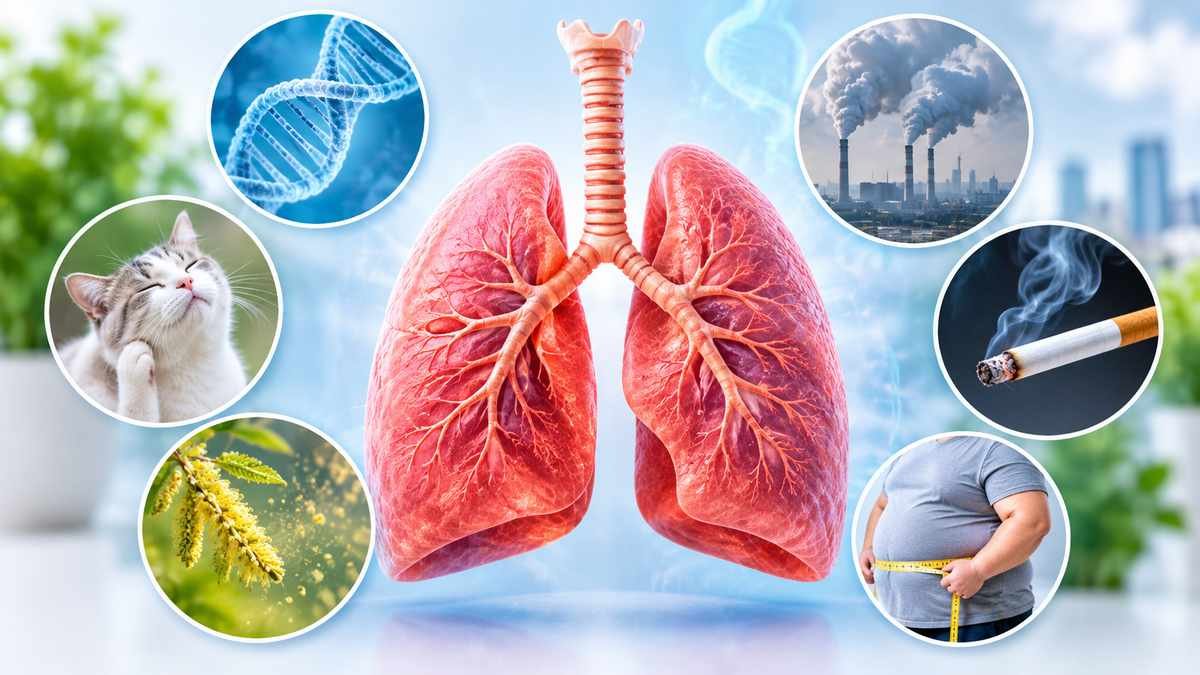

Why do some people develop asthma during childhood while others have breathing problems for the first time as adults? The answer lies in a complex mix of genetics, immune system responses, and environmental exposures. Researchers have identified many asthma risk factors, but no single cause explains every case.
Asthma is a chronic condition in which the airways become inflamed and narrow, which can lead to coughing, wheezing, chest tightness, and shortness of breath. It often begins in childhood, yet it can first appear at any age. Understanding what raises the likelihood of developing asthma can help you recognize patterns in your family, home, and workplace.
This guide explains the main genetic, allergic, environmental, early-life, lifestyle, and occupational factors linked to asthma, and how they differ from symptom triggers. Having one or more risk factors does not mean you will definitely develop asthma, and many people with asthma have none that are obvious. For information on how the condition is managed once it develops, see our guide to asthma treatment options.
Quick Answer: What Are the Main Risk Factors for Asthma?
Asthma risk factors include family history, genetic susceptibility, allergies, exposure to tobacco smoke, air pollution, respiratory infections, occupational chemicals, and obesity. Premature birth and certain early-life environmental exposures may also increase the likelihood of developing asthma. However, having these risk factors does not mean a person will necessarily develop the condition.
What Is Asthma and How Does It Develop?
Before looking at individual risk factors, it helps to understand what happens in the lungs and why researchers describe asthma as a multifactorial condition.
What Happens in the Airways During Asthma?
In asthma, the lining of the airways becomes inflamed and the airway walls swell. The muscles around the airways can tighten, and the airways may make extra mucus. The airways also become unusually sensitive to certain substances, a feature called airway hyperresponsiveness. Together, these changes reduce airflow and make breathing harder. For more on the sensation, see our overview of shortness of breath.
How Does Asthma Develop?
Current evidence suggests that asthma develops when the normal growth or function of the lungs and immune system is disturbed by environmental exposures in people who are biologically susceptible. A 2025 review in the Medical Journal of Australia notes that the timing of exposures, individual susceptibility, and the body’s biological response all matter.
Childhood-onset asthma is often linked to allergic (atopic) pathways. Adult-onset asthma is more varied, and it is more often non-allergic and linked to factors such as workplace exposures, smoking, or obesity.
Is There One Specific Cause of Asthma?
No. The National Heart, Lung, and Blood Institute (NHLBI) states that the exact causes of asthma are unknown and may differ from person to person. Different combinations of inherited and environmental factors may contribute in different people.
Genetic Risk Factors and Family History of Asthma
Genetics play a real but incomplete role in asthma. Inherited susceptibility interacts with the environment rather than acting alone.
Is Asthma Hereditary?
Asthma often runs in families. According to the American Lung Association, a person with a parent who has asthma is three to six times more likely to develop it than someone without an affected parent. NHLBI adds that having a mother with asthma may raise a child’s risk more than having an affected father.
Family patterns can reflect shared genes, shared homes, or both. Researchers have found many gene variants linked to asthma, but no single “asthma gene.” That is why asthma does not follow a simple inheritance pattern. Even among identical twins, one can develop asthma while the other does not, which shows that genes alone do not decide the outcome.
Genetic Predisposition and Immune System Responses
Inherited differences can influence how the immune system responds to allergens and how the airways react to irritants. One important concept is atopy, an inherited tendency to develop allergic conditions such as hay fever, eczema, and allergic asthma. Atopy is associated with a higher risk of asthma, although many people with atopy never develop it.
Genes can also shape how strongly a person responds to pollution. NIH-supported research found that people with asthma who carry certain genetic variants had more intense symptoms after exposure to traffic pollution.
Can You Develop Asthma Without a Family History?
Yes. Many people with asthma have no known family history. In these cases, environmental exposures, allergic conditions, infections, or other biological factors may play a larger role. Not knowing of a relative with asthma is not a reason to dismiss new breathing symptoms.
Allergies and Immune System Conditions That Increase Asthma Risk
The link between allergies and asthma is one of the best established. Still, most people with allergies do not develop asthma, and some people with asthma have no allergies.
Allergic Rhinitis and Hay Fever
Allergic rhinitis (hay fever) is an allergic reaction in the nose, often to pollen, dust mites, mold, or pet dander. It causes sneezing, congestion, and itching. People with allergic rhinitis have a higher chance of also having asthma, and the two conditions often occur together. Doctors sometimes describe this as “one airway, one disease.”
Eczema and Atopic Dermatitis
Eczema (atopic dermatitis) is an allergic skin condition. It is part of the atopic family of conditions, and children with eczema are more likely to develop asthma later. NHLBI notes that this is especially true for children with close relatives who have asthma or allergies. Many children with eczema never develop asthma, however.
Food Allergies and Asthma
Food allergies do not automatically cause asthma. They can, however, occur alongside it, and severe allergic reactions can involve breathing difficulty. Removing foods from the diet has not been shown to prevent asthma, so avoid eliminating foods without medical advice.
What Is Allergic Asthma?
Allergic asthma is asthma in which exposure to specific allergens, such as pollen or dust mites, drives airway inflammation. It is the most common type of asthma, particularly in children. Non-allergic asthma also occurs and may be triggered by infections, irritants, or exercise. NHLBI notes that the more things a person is allergic to, the higher the risk of asthma.
Environmental Risk Factors That May Contribute to Asthma
Environmental exposures are among the most studied and, in some cases, the most modifiable asthma risk factors. Many studies show associations rather than proof of direct cause, so the language below is intentionally careful.
1. Air Pollution
Traffic-related pollution, fine particulate matter (PM2.5), nitrogen dioxide, ozone, and smoke are all linked to asthma. The National Institute of Environmental Health Sciences (NIEHS) reports that exposure to PM2.5 and nitrogen dioxide in the first three years of life was associated with more cases of asthma in early and middle childhood. The American Lung Association also notes that people who grow up or live in urban areas have a higher risk.
In fast-growing cities, including many in South Asia, traffic emissions, construction dust, and industrial pollution can all add to the burden. A single day of poor air does not cause asthma, but long-term or early-life exposure appears to matter more.
2. Tobacco Smoke and Secondhand Smoke
Exposure to cigarette smoke during pregnancy or in a child’s first years raises the risk of early-life asthma symptoms and may affect lung growth, according to NHLBI. The World Health Organization (WHO) also identifies tobacco smoke as a risk factor in both childhood and adulthood.
Smoke-free homes and cars are among the most practical protective steps. Vaping and other inhaled irritants may also harm the airways, but the evidence on their role in causing new asthma is still emerging, so it should be considered less established than the evidence on tobacco smoke.
3. Indoor Allergens and Household Pollutants
Dust mites, mold, damp housing, pet allergens, cockroach allergens, and chemical fumes from some cleaning products affect indoor air. Poor ventilation can make these exposures worse. Some of these, such as dampness and mold, are linked to asthma development. Others are better established as triggers that worsen symptoms in people who already have asthma.
4. Outdoor Allergens and Pollen
Tree, grass, and weed pollen and outdoor mold spores can cause allergic sensitization in susceptible people. Once someone is sensitized, continued exposure may drive airway inflammation. Changing seasons and a warming climate may lengthen pollen seasons, and NHLBI lists climate change among factors that may contribute to asthma onset through air pollution and allergen exposure.
Early-Life and Childhood Risk Factors for Asthma
The lungs and immune system develop rapidly during pregnancy and early childhood, so exposures in this window can have lasting effects.
Premature Birth and Low Birth Weight
Babies born prematurely have lungs that are still developing, and prematurity is associated with a higher risk of later wheezing and asthma, especially if breathing support was needed. Low birth weight has also been linked to a higher risk.
Respiratory Infections During Early Childhood
Young children who have frequent viral respiratory infections are at higher risk of developing asthma symptoms early in life, per NHLBI. Severe infections such as bronchiolitis have been specifically linked to later asthma. This does not mean every cold causes asthma. Most children recover without long-term breathing problems.
Exposure to Smoke During Pregnancy and Childhood
Prenatal and early childhood exposure to tobacco smoke may affect developing lungs and is one of the clearest modifiable risks in this group.
Early Childhood Environmental Exposure
Indoor air quality, mold and dampness, outdoor pollution, and allergens can all shape early respiratory health. Researchers are also studying the “hygiene hypothesis,” which suggests that early exposure to a variety of microbes may help the immune system develop. NHLBI notes that such exposures may either raise or lower risk.
Early-life risk factors do not determine a child’s future health with certainty. Most children with these exposures do not develop asthma. For information about sudden breathing difficulty in children, see our guide to shortness of breath.
Lifestyle and Health Factors Associated With Asthma Risk
Some personal health factors are also linked to asthma. These are associations, and they should be understood without blame.
Obesity and Excess Body Weight
Research consistently links obesity with a higher risk of asthma in both children and adults. The American Lung Association notes that the reasons are unclear, but low-grade inflammation and mechanical effects on breathing may play a part. Obesity can also make asthma harder to control.
This does not mean everyone with obesity will develop asthma, and many people with asthma have a typical weight. Our guide to weight management offers general, non-judgmental information.
Physical Activity and Respiratory Health
Exercise can trigger symptoms in people who already have asthma, which is called exercise-induced bronchoconstriction. That is different from exercise causing asthma, and physical activity should not automatically be avoided. People with well-managed asthma are generally encouraged to stay active. See the benefits of exercise for general guidance.
Smoking and Vaping Habits
Active smoking irritates the airways and is associated with a higher risk of developing asthma, particularly in adults. Quitting is one of the most valuable steps for lung health.
Diet and Nutrition
Some studies link frequent fast food intake with higher asthma risk and fruit and vegetable intake with lower risk, according to the Global Asthma Report. These are associations, and no food or supplement has been proven to prevent asthma. A general healthy diet supports overall health but should not replace medical care.
Occupational Risk Factors: Can Your Workplace Increase Asthma Risk?
Work can be a hidden source of asthma risk. Exposure to chemicals or dusts on the job may cause asthma in susceptible people, a condition called occupational asthma.
Workplace Chemicals and Irritants
Examples include isocyanates (used in some paints and foams), solvents, paint fumes, chemical sprays, and certain cleaning products. High exposure in poorly ventilated spaces increases concern.
Workplace Dust and Biological Materials
Flour dust in bakeries, wood dust, agricultural dust, animal proteins, textile fibers, and some laboratory substances can also sensitize the airways. NHLBI notes that chemical irritants and industrial dusts at work may raise the risk of asthma in susceptible people.
What Is Occupational Asthma?
Occupational asthma is asthma caused by workplace exposures. Symptoms may improve on days off or on vacation and worsen during work, although patterns vary. Early assessment and reducing exposure matter, because continued exposure can make the condition more persistent. If you notice this pattern, discuss it with a clinician and your employer’s occupational health team.
Adult-Onset Asthma: Can You Develop Asthma Later in Life?
Yes. Asthma often starts in childhood, but it can also appear for the first time in adults, a pattern known as adult-onset or late-onset asthma. NHLBI notes it occurs particularly in women.
Factors associated with adult-onset asthma include workplace exposures, tobacco smoke, air pollution, obesity, allergic conditions, respiratory illness, and hormonal changes, which are still being studied. Because heart disease, chronic obstructive pulmonary disease (COPD), and other conditions can cause similar symptoms, new breathing problems need proper clinical assessment. Do not assume the cause. If chest discomfort comes with breathlessness, read about when chest pain is an emergency.
Asthma Risk Factors vs. Asthma Triggers: What’s the Difference?
These terms are often confused, but they mean different things.
What Are Asthma Risk Factors?
Risk factors are characteristics or exposures linked to a greater likelihood of developing asthma. Examples include family history, allergic conditions, childhood smoke exposure, workplace sensitizers, and air pollution.
What Are Asthma Triggers?
Triggers are substances or situations that set off or worsen symptoms in someone who already has asthma. Common examples include pollen, dust mites, cold air, exercise, respiratory infections, emotional stress, and tobacco smoke. NHLBI lists these among common triggers.
Can Something Be Both a Risk Factor and a Trigger?
Yes. Tobacco smoke, air pollution, and some allergens can contribute to the development of asthma and also worsen symptoms in people who have it. Still, the two ideas are not interchangeable. Knowing the difference helps you decide whether you are trying to lower the chance of developing asthma or to control symptoms you already have. A persistent cough can have many causes, so symptoms always need professional evaluation.
Can You Reduce Your Risk of Developing Asthma?
There is no guaranteed way to prevent asthma. NHLBI states that there is no way to prevent it entirely. However, reducing certain exposures may support respiratory health, and these steps are broadly useful anyway.
Reduce Exposure to Tobacco Smoke
Keep homes, vehicles, and other indoor spaces smoke-free, especially during pregnancy and around children. If you smoke, ask a healthcare professional about quitting support.
Improve Indoor Air Quality
Address dampness and mold, ventilate rooms appropriately, and reduce indoor pollutants. Follow product directions when using cleaning chemicals, and avoid mixing them. NIEHS also suggests tactics such as regular vacuuming to reduce allergens at home.
Minimize Harmful Environmental Exposures
Where possible, limit avoidable exposure to traffic pollution, industrial chemicals, and workplace irritants. Use ventilation and protective equipment as recommended at work.
Support Healthy Lung Development in Children
Keep pregnancy and early childhood smoke-free, seek appropriate medical care for respiratory infections, maintain a healthy living environment, and attend regular pediatric visits.
Maintain Overall Health
Avoiding smoking and supporting a healthy weight are broad health measures. See our guides on preventive health and how to live a healthy lifestyle. These steps may lower some risks, but they cannot remove all genetic or environmental risk.
Frequently Asked Questions About Asthma Risk Factors
What are the biggest risk factors for asthma?
Family history, allergic conditions, exposure to tobacco smoke and air pollution, and certain early-life factors such as prematurity and severe infections are among the most commonly cited. The American Lung Association also lists obesity and workplace exposures. Risk varies from person to person.
Is asthma hereditary?
Genetics contribute to asthma susceptibility, but asthma does not follow a simple inheritance pattern. Having a parent with asthma raises risk, yet many people with a family history never develop it. Environmental exposures also matter.
Can air pollution cause asthma?
Long-term or early-life exposure to air pollution is associated with a higher risk of developing asthma, particularly in susceptible people. NIEHS reports links with traffic-related pollutants such as PM2.5 and nitrogen dioxide. Short-term exposure more often worsens symptoms in people who already have asthma.
Can you develop asthma as an adult?
Yes. Asthma can appear at any age, including adulthood. New breathing symptoms should be evaluated, since other conditions can look similar.
Does obesity increase asthma risk?
Obesity is associated with a higher risk of asthma and can make it harder to control. The relationship is complex, and it does not mean that everyone with obesity will develop asthma.
Can asthma be prevented?
Asthma cannot always be prevented. Reducing exposure to risks such as tobacco smoke, indoor mold, and workplace irritants may support respiratory health, but it cannot guarantee that asthma will not develop.
Are asthma risk factors the same as asthma triggers?
No. Risk factors are linked to developing asthma, while triggers cause or worsen symptoms in people who already have it. Some exposures, such as tobacco smoke, can be both.
Conclusion: Understanding What Increases Your Risk of Asthma
Asthma develops through a combination of genetic, environmental, and lifestyle-related factors. Family history, allergies, and early-life and workplace exposures all play a role, and both childhood and adult-onset asthma are possible. Some exposures can be reduced, but risk factors never guarantee the condition.
If you or your child has persistent coughing, wheezing, chest tightness, or breathing difficulty, talk with a qualified healthcare professional.
Sources
- World Health Organization. Asthma fact sheet.
- National Heart, Lung, and Blood Institute. Asthma causes and triggers.
- National Institute of Environmental Health Sciences. Asthma and environmental health.
- American Lung Association. Asthma causes and risk factors.
- Centers for Disease Control and Prevention. Asthma resources.
- Evans DJ, Sly PD, Foster P, Donovan C. Who gets asthma, and why? Medical Journal of Australia, 2025.
- Eapen AA, Shankhwar S, von Mutius E, Johnson CC. Environmental risk factors and asthma primary prevention: from birth cohort studies to clinical trials. Journal of Allergy and Clinical Immunology, 2025.
- Global Asthma Network. The Global Asthma Report: factors affecting asthma.
Medical Disclaimer: This article is for general educational purposes only and is not medical advice. It cannot tell you whether you will develop asthma or diagnose any condition. Please talk with a doctor or other qualified healthcare professional about your own risks and symptoms. If you or someone else has severe trouble breathing, blue or gray lips, confusion, or symptoms that are quickly getting worse, call 911 or your local emergency number right away.
3 thoughts on “Asthma Risk Factors Explained: What Increases Your Risk of Developing Asthma?”
Comments are closed.