
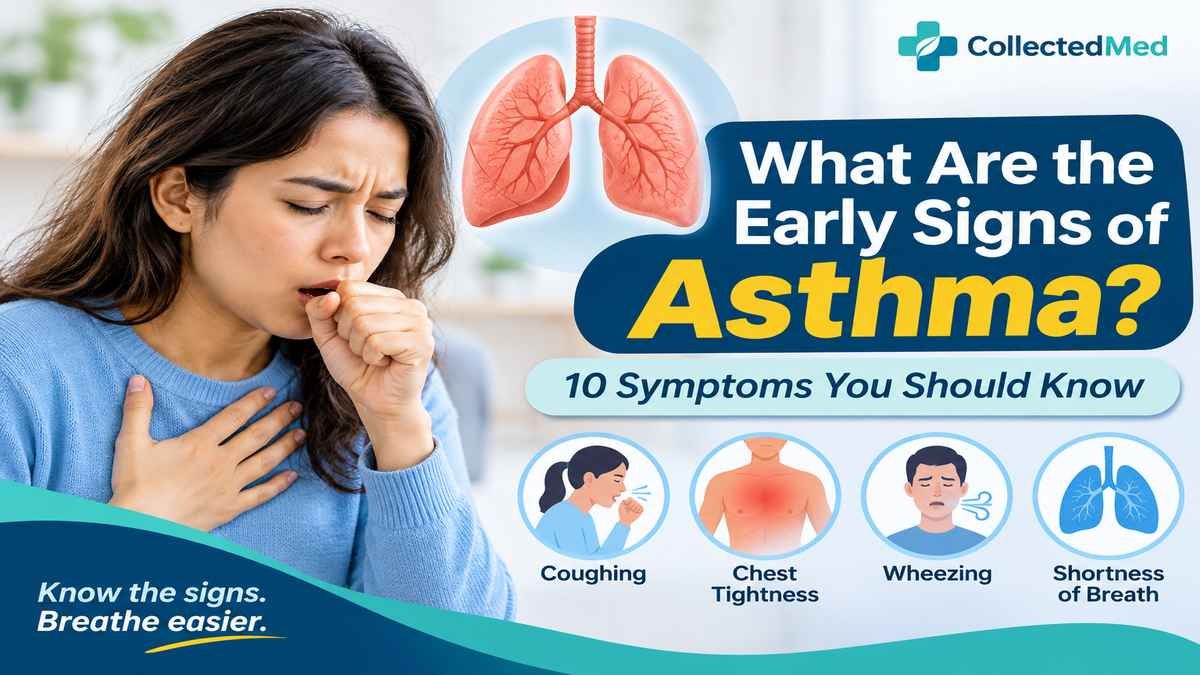

Asthma is a chronic lung condition that inflames and narrows the airways, making it harder for air to move in and out. The early signs of asthma are easy to brush off. A cough that lingers, a faint whistle when you breathe out, or a tight chest after a jog can seem like a cold, seasonal allergies, or simply being out of shape.
Asthma symptoms do not always arrive all at once. They can build slowly, appear only at night or during exercise, or fade for weeks before returning. That pattern is one reason the condition is often missed or mistaken for something else, even though the World Health Organization describes asthma as affecting both children and adults and as the most common chronic disease among children.
This guide explains the early signs of asthma, how symptoms differ in adults and children, common triggers, how doctors confirm a diagnosis, and when to seek care. It offers general education, not a diagnosis, so a healthcare professional should evaluate any breathing symptoms that keep coming back.
What Is Asthma and How Does It Affect Your Airways?
Asthma is a long-term condition that affects the airways, the tubes that carry air into and out of your lungs. In people with asthma, these airways are inflamed and unusually sensitive. When they meet a trigger, such as pollen, smoke, cold air, or a respiratory infection, they can react in several ways at once.
The muscles around the airways can tighten. The airway lining can swell, and cells inside the airways can produce extra mucus. The National Heart, Lung, and Blood Institute (NHLBI) explains that this chain reaction narrows the airways and can cause symptoms each time they become inflamed.
The CDC describes the same process: during an attack, the sides of the airways swell and the passages shrink, so less air gets through. People often describe the feeling as breathing through a narrow straw.
Symptoms can range from mild to severe, and they can change over time. According to the CDC, asthma is present all the time, but attacks happen only when something irritates the lungs. Researchers do not fully understand why some people develop asthma, and you can read more about what causes asthma and how common asthma is in our related guides.
What Are the Early Signs of Asthma?
Early asthma symptoms can be mild, occasional, and different from one person to the next. The CDC and the NHS both list coughing, wheezing, breathlessness, and chest tightness among the main symptoms. Not everyone experiences all ten signs below. Some people notice only one or two, and many of these symptoms overlap with other medical conditions.
1. Persistent or Recurring Cough
A dry or recurring cough can be an early sign of asthma. It often gets worse at night or early in the morning, and it may flare with exercise, cold air, or contact with allergens. Some people have cough-predominant asthma, with little or no wheezing.
A cough alone does not confirm asthma, because many other conditions cause one. Our guide on what causes a cough explains other possibilities.
2. Wheezing When Breathing
Wheezing is a high-pitched whistling sound, most often heard when breathing out. It happens when air moves through narrowed airways. It may become more noticeable during physical activity or a respiratory infection.
Not everyone with asthma wheezes, so the absence of wheezing does not rule asthma out.
3. Shortness of Breath
You may feel as if you cannot get enough air, either during exercise or during everyday tasks such as climbing stairs. During a flare-up, breathlessness can occur even at rest.
Recurrent or unexplained breathlessness should be medically evaluated. Our overview of shortness of breath covers other common causes.
4. Chest Tightness or Pressure
Some people describe a squeezing, heavy, or tight sensation in the chest. The NHS notes that it can feel like a band tightening around the chest. It may occur alongside coughing or breathlessness and can worsen at night or after exposure to triggers.
Chest pain or pressure has many possible causes, including heart-related ones, so it should not automatically be blamed on asthma. See our guides on chest pain and when chest pain is an emergency.
5. Frequent Nighttime Coughing
Asthma symptoms often get worse during the night. The NHLBI notes that asthma-related coughing is often worse at night and can make sleep difficult. Some people notice symptoms mainly when lying down or waking up.
Repeated nighttime symptoms are worth discussing with a healthcare professional.
6. Getting Tired or Breathless During Exercise
Physical activity can trigger asthma symptoms. You may struggle to keep up with your usual routine, or develop coughing, wheezing, or chest tightness during or after activity.
Exercise-related breathing trouble should not automatically be dismissed as poor fitness. Regular movement still matters for overall health, and the NHS advises getting guidance on exercising safely if exercise sets off your symptoms. Our guide to the benefits of exercise offers general background.
7. Frequent Respiratory Symptoms
Repeated episodes of coughing or wheezing may point to asthma. So can symptoms that linger after a respiratory infection, or breathing problems that return after contact with irritants or allergens.
These patterns can also have other explanations, which is why recurring respiratory symptoms deserve a proper evaluation rather than guesswork.
8. Difficulty Breathing in Cold Air
Cold, dry air can irritate sensitive airways. The WHO lists cold air among the factors that can bring on asthma symptoms. Breathing outdoors in cold weather may cause coughing or chest tightness, and exercising in the cold may make symptoms more likely.
9. Symptoms After Exposure to Allergens
Dust mites, pollen, mold, and pet allergens can trigger coughing, wheezing, and breathlessness in susceptible people. Allergic asthma is one recognized pattern of the condition.
If you notice breathing symptoms that follow exposure to a specific allergen, write down what you were doing and where you were. That detail can help a clinician later.
10. Symptoms That Come and Go
Asthma symptoms can vary over time. You may feel completely normal between episodes and notice symptoms only after a trigger. The NHLBI explains that symptoms can be mild and settle on their own, while at other times they continue to get worse.
Symptoms that come and go do not necessarily mean the condition is harmless. Treating symptoms early, under a healthcare professional’s guidance, helps prevent them from becoming severe.
Early Signs of Asthma in Adults vs. Children
Asthma can look different depending on age. Adults can usually describe what they feel, while young children often cannot, so caregivers may need to watch for behavior and patterns instead.
Early Signs of Asthma in Adults
In adults, early signs often include:
- Recurrent coughing at night or early in the morning
- Wheezing or chest tightness during exercise
- Breathlessness during routine activities
- Symptoms linked to workplace or environmental exposures, such as dust, fumes, or chemicals
Asthma can develop in adulthood, even in people who never had it as children. The NHS notes that some people first get symptoms when they are older, and that asthma is often a long-term condition for people whose symptoms begin in adulthood. Our article on how long asthma lasts looks at this in more detail.
Early Signs of Asthma in Children
In children, early signs may include:
- Frequent coughing, especially at night
- Coughing or wheezing while playing
- Getting tired sooner than other children during physical activity
- Repeated breathing difficulties during respiratory infections
- Trouble keeping up with normal play
Young children may not be able to describe chest tightness or breathing discomfort clearly. The CDC points out that it can be hard to tell whether a child under age 5 has asthma, and MedlinePlus notes that some children are more likely to have symptoms at night. A pediatrician can help sort out whether symptoms point to asthma.
When Do Early Asthma Symptoms Usually Appear?
Asthma symptoms tend to show up in particular situations. Noticing the pattern can help you and your healthcare professional understand what may be going on. Symptoms often appear:
- During exercise or physical activity
- At night or early in the morning
- During seasonal allergy periods
- After exposure to dust, smoke, or air pollution
- During or after respiratory infections
- When breathing cold or dry air
Some people have symptoms only occasionally, while others have them regularly. The NHLBI notes that how often symptoms occur can depend on the severity of the asthma and on exposure to allergens, so some people have symptoms every day and others only a few days a year.
Symptoms may also be more noticeable during certain seasons or in certain environments, such as a dusty room or a day with poor air quality.
What Triggers Early Asthma Symptoms?
Triggers are things that can set off or worsen asthma symptoms. They differ from person to person, so something that bothers one person may have no effect on another. The CDC stresses that knowing your own triggers and how to avoid them is a key part of controlling asthma.
Common Asthma Triggers
- Dust mites
- Pollen
- Mold and damp indoor spaces
- Pet dander and other animal allergens
- Tobacco smoke, including secondhand smoke
- Air pollution, including wildfire smoke
- Cold air
- Respiratory infections such as colds, flu, and RSV
- Physical exercise
- Strong fragrances and chemical irritants
- Acid reflux, which the CDC also lists as a possible trigger (see what causes acid reflux)
Being exposed to a trigger does not necessarily mean someone has asthma. Many people cough or feel short of breath around smoke or during a bad cold without having the condition. A healthcare professional can help you identify your individual triggers, and our guide to asthma risk factors explains who may be more likely to develop asthma.
How Is Asthma Diagnosed?
Symptoms alone are not enough to diagnose asthma. Several conditions can cause similar symptoms, so clinicians combine information from different sources. A confirmed diagnosis relies on a consistent pattern of symptoms together with evidence of variable airflow limitation on lung testing, as described in this StatPearls clinical review.
A typical evaluation may include:
- Medical history and symptom patterns: when symptoms occur, what seems to set them off, and whether asthma, allergies, or eczema run in your family.
- Physical examination: a clinician listens to your breathing and checks for signs of allergies or other conditions.
- Spirometry: a breathing test that measures how much air you can blow out and how fast. It is a common way to assess lung function.
- Bronchodilator testing: spirometry is repeated after you inhale a quick-acting medicine. Airflow that improves afterward supports a diagnosis of asthma.
- Additional tests when appropriate: these may include peak expiratory flow monitoring, allergy testing, or a FeNO test, which measures a marker of airway inflammation in your breath.
Diagnosing asthma in young children can be harder. They may not be able to perform standard lung function tests reliably, so the NHS notes that a child may be given an asthma inhaler on a trial basis to see whether it relieves symptoms until they are old enough to be tested.
Because symptoms often change over time, one normal test does not always rule asthma out. That is another reason to seek professional evaluation when symptoms keep returning. Our article on how asthma is diagnosed walks through the process in more detail.
When Should You See a Doctor About Possible Asthma?
The NHS advises seeing a healthcare professional if you think you or your child may have asthma, because several conditions cause similar symptoms and a correct diagnosis guides the right treatment. Consider scheduling an appointment if you notice:
- Repeated coughing without an obvious cause
- Wheezing that happens more than once
- Frequent nighttime coughing
- Breathlessness during routine activities
- Recurrent chest tightness
- Breathing symptoms that interfere with sleep, school, work, or exercise
If you already have an asthma diagnosis, contact your healthcare professional when symptoms worsen or when your quick-relief inhaler seems less effective or is needed more often than usual.
When Is Asthma a Medical Emergency?
Severe asthma attacks can be life-threatening. The NHLBI states that severe attacks may require emergency care. Warning signs of a severe attack include:
- Severe difficulty breathing
- Trouble speaking in complete sentences because of breathlessness
- Rapidly worsening symptoms
- Blue or gray lips or fingernails
- Visible pulling in of the skin around the ribs or neck, or extreme exhaustion
- Little or no improvement after using prescribed quick-relief medication
If you or someone else has these signs, call 911 or your local emergency number right away. Follow your prescribed asthma action plan while help is on the way. The NHS suggests sitting upright and trying to stay calm while using a reliever inhaler if you have one. If you do not have an asthma diagnosis and develop sudden severe breathing difficulty or chest pain, treat it as an emergency. Our guide on when chest pain is an emergency lists other urgent warning signs.
How Can You Manage and Reduce Asthma Symptoms?
Lifestyle steps can support asthma care, but they do not replace medical treatment. The Global Initiative for Asthma (GINA) emphasizes that asthma management is not one-size-fits-all and should be personalized and reviewed regularly, as summarized in this GINA strategy overview.
Identify and Avoid Personal Triggers
Once you know what sets off your symptoms, you can often reduce exposure. The CDC suggests practical steps such as washing bedding weekly, keeping indoor humidity low, fixing leaks to prevent mold, and checking air quality forecasts. Never allow smoking around someone with asthma.
Follow Your Asthma Treatment Plan
If you are diagnosed, your healthcare professional may prescribe medicine and a written action plan. Key points include:
- Use inhalers exactly as prescribed, and ask for a demonstration of the correct technique.
- Understand the difference between quick-relief medicines, which ease symptoms when they flare, and long-term controller medicines, which help reduce airway inflammation.
- Attend follow-up appointments so your plan can be adjusted.
To learn more, see our overview of asthma treatment options.
Monitor Your Symptoms
A simple symptom diary can make appointments more productive. Consider recording:
- When symptoms occur
- Possible triggers
- Nighttime coughing or waking
- Exercise-related symptoms
- How often you use medication
Maintain a Healthy Lifestyle
General healthy habits can support your overall well-being alongside medical care. The NHS recommends not smoking, exercising regularly with guidance from your healthcare team, keeping to a healthy weight, and getting vaccinated, since infections such as the flu can make asthma symptoms worse.
For more everyday strategies, read our guides on how to manage asthma at home and whether asthma can be prevented.
Frequently Asked Questions About Early Signs of Asthma
What is usually the first sign of asthma?
A recurring cough, particularly at night, early in the morning, or after exercise, is often among the first signs. The CDC lists coughing at night or early in the morning with wheezing, breathlessness, and chest tightness as typical asthma symptoms. Symptoms vary from person to person, and a cough alone does not establish a diagnosis.
Can you have asthma without wheezing?
Yes. Some people with asthma have coughing, chest tightness, or shortness of breath without noticeable wheezing. The NHLBI notes that asthma symptoms differ between people and can change over time.
Can asthma develop suddenly in adults?
Yes. Asthma can first appear in adulthood, although symptoms may also develop gradually. The NHS notes that some people get asthma symptoms for the first time when they are older. See a healthcare professional if new breathing symptoms keep returning.
What does mild asthma feel like?
Mild asthma may cause occasional coughing, wheezing, chest tightness, or shortness of breath, often after exposure to a trigger. Between episodes, many people feel normal. Mild symptoms still deserve attention, because the NHLBI stresses that treating symptoms early helps keep them from getting worse.
Can asthma symptoms come and go?
Yes. Asthma symptoms can vary over time, with periods of few or no symptoms between episodes. They may return with a trigger, a respiratory infection, or a change in season. Symptom-free periods do not mean the underlying condition has disappeared.
How do doctors confirm asthma?
Doctors assess symptoms, medical history, and lung function. Spirometry is a commonly used test, often repeated after a quick-acting inhaled medicine to see whether airflow improves, as described in this clinical review. Other tests may be added depending on the person’s age and situation.
Final Thoughts: Recognizing the Early Signs of Asthma
Asthma symptoms can start mildly. Recurring coughing, wheezing, chest tightness, and shortness of breath deserve attention, especially when they appear at night, during exercise, or after contact with a trigger.
Symptoms vary with individual triggers and circumstances, and many overlap with other conditions. Early medical evaluation can help identify asthma and guide appropriate treatment. Severe breathing difficulty requires immediate emergency care.
If you or your child have breathing symptoms that keep coming back, consider talking with a healthcare professional. Writing down when symptoms occur and what seems to set them off can make that conversation more useful.
Sources
- World Health Organization: Asthma fact sheet
- National Heart, Lung, and Blood Institute: Asthma
- Centers for Disease Control and Prevention: About Asthma
- Centers for Disease Control and Prevention: Controlling Asthma Triggers
- NHS: Asthma
- NHS: Asthma attacks
- Global Initiative for Asthma (GINA): Official website
- GINA Strategy 2021: Executive summary and rationale for key changes
- StatPearls: Asthma
- MedlinePlus: Asthma in children
Medical Disclaimer: This article is for general educational purposes only and is not medical advice. It cannot diagnose any condition or replace the care of a qualified healthcare professional. Always talk with your doctor about your symptoms, treatment, and personal health needs. If you think you or someone else is having a medical emergency, such as severe trouble breathing, call 911 or your local emergency number right away.
2 thoughts on “What Are the Early Signs of Asthma? 10 Symptoms to Know”
Comments are closed.