
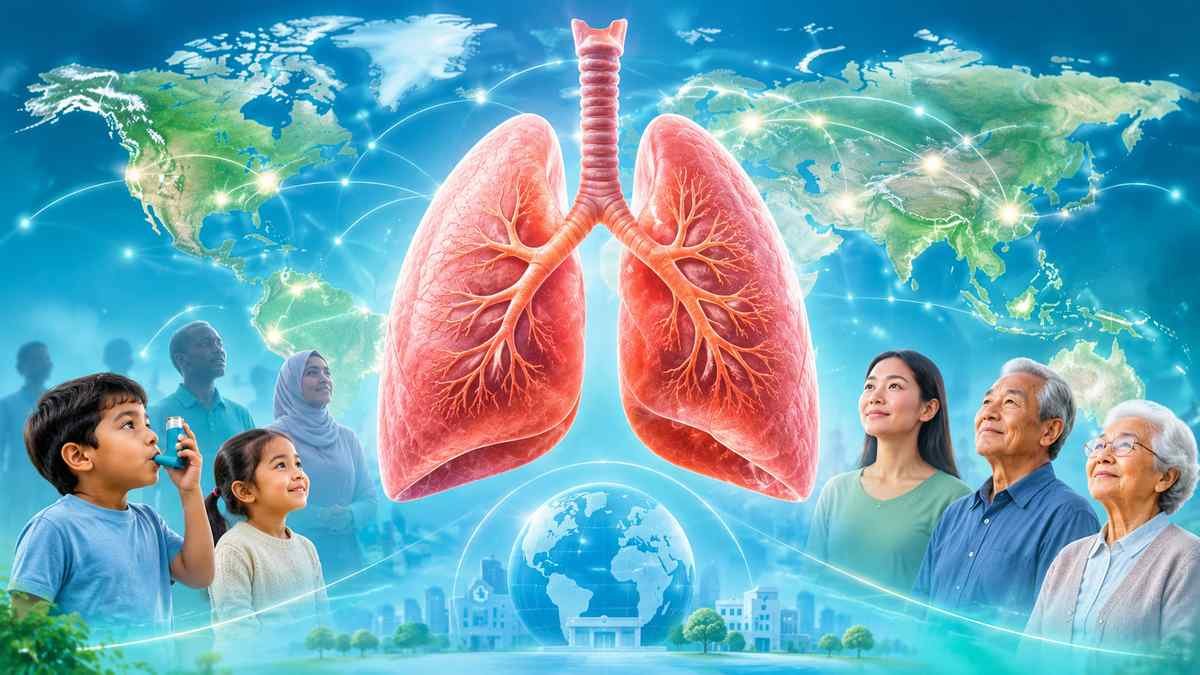

How common is asthma, and how many people are living with it around the world? The World Health Organization (WHO) estimates that asthma affected about 363 million people in 2023. That makes it one of the most widespread chronic respiratory conditions on the planet.
Asthma inflames and narrows the airways, which can cause wheezing, coughing, chest tightness, and shortness of breath. It affects children and adults in every region, though the numbers differ by country, age group, and how asthma is measured. Those differences can make statistics confusing, so this guide explains what each figure means and where it comes from.
Below, you will find global estimates, childhood and adult asthma, examples from the United States, Europe, and Asia, and what researchers know about trends over time. We also cover who is most affected and why asthma matters for public health. For related reading, see our guides on asthma risk factors and whether asthma can be prevented.
Quick Answer: How Common Is Asthma?
Asthma is a common chronic respiratory disease affecting an estimated 363 million people worldwide in 2023, according to the WHO. It affects both children and adults, with prevalence varying across countries and populations.
How Common Is Asthma Worldwide?
Asthma affects hundreds of millions of people. The WHO asthma fact sheet (updated April 2026) reports that asthma affected an estimated 363 million people in 2023 and caused 442,000 deaths. WHO classifies it as a major noncommunicable disease and notes that it is the most common chronic disease among children.
The 363 million figure refers to the estimated number of people affected in 2023. It is not a 2026 prevalence figure, even though WHO published it in 2026.
Global Asthma Burden at a Glance
| Measure | Estimate | Year | Source |
|---|---|---|---|
| People living with asthma worldwide | 363 million | 2023 | WHO |
| Asthma-related deaths worldwide | 442,000 | 2023 | WHO |
Why Do Global Estimates Differ?
You may see other numbers online. An earlier analysis from the Global Burden of Disease (GBD) Study 2021, published in The Lancet Respiratory Medicine, estimated about 260 million people with asthma in 2021. WHO’s newer figure draws on GBD 2023.
Differences come from updated data, modeling methods, and definitions. Many countries also lack high-quality surveys, and diagnosis rates vary with access to testing. Treat any global figure as an estimate and always check the year.
How Common Is Asthma in Children?
Asthma is a leading chronic condition in childhood, and it is a significant concern for pediatric healthcare. It often begins in infancy or early childhood, although some children are diagnosed later.
Childhood Asthma Prevalence
Exact rates vary widely across countries and studies. In the United States, the CDC reported that 6.5% of children under 18 had current asthma in 2024, based on the National Health Interview Survey. That is a national example and should not be read as a global rate.
Childhood asthma can disrupt sleep, school attendance, sports, and daily activities. Wheezing and recurring cough are common symptoms, but they need appropriate assessment. For more on breathing symptoms, see our guides to shortness of breath and what causes a cough.
Why Is Asthma Common Among Children?
Several factors may contribute, and no single factor explains every case:
- Family history and genetic susceptibility
- Allergic conditions such as eczema and hay fever
- Tobacco smoke exposure
- Air pollution
- Respiratory infections in early life
- Indoor allergens and environmental irritants
Wheezing in young children does not always mean asthma. Many toddlers wheeze with viral infections and later stop. A healthcare professional should evaluate repeated symptoms.
How Common Is Asthma in Adults?
Asthma is not only a childhood disease. WHO states that it affects both children and adults, so it is a lifelong public health concern.
Some adults carry asthma from childhood. Others develop it for the first time later in life, sometimes after age 30 or even older. In the United States, the CDC reported that 8.6% of adults had current asthma in 2024.
Occupational exposures, smoking, air pollution, allergies, and respiratory irritants may all play a part. Adult asthma can also be mistaken for other conditions, such as recurring bronchitis, chronic obstructive pulmonary disease (COPD), or heart problems.
Can Adults Develop Asthma for the First Time?
Yes. Adult-onset asthma is well recognized. Persistent coughing, wheezing, chest tightness, or breathing difficulty should be evaluated by a healthcare professional rather than assumed to be age-related or a lingering cold. Our guide to asthma risk factors explains why asthma can start at different ages.
Asthma Statistics by Country and Region
Comparing countries is hard. Studies differ in how they define asthma (for example, doctor-diagnosed asthma, wheeze in the past 12 months, or current asthma), which age groups they include, and when they were done. The examples below are labeled with their sources and years.
Asthma in the United States
CDC survey data are among the most detailed. In 2024, the National Health Interview Survey found:
| US population | Current asthma, 2024 |
|---|---|
| Children under 18 | 6.5% |
| Adults 18 and older | 8.6% |
Source: CDC/NCHS FastStats. These are US figures, not worldwide estimates.
Rates differ by group. According to the HHS Office of Minority Health, which uses CDC data, current asthma in 2024 was 10.3% among Black children and 9.8% among Black adults, compared with 6.5% and 8.6% in the overall population. Social and environmental conditions, not biology alone, help explain these gaps.
Asthma in Europe
Europe has no single rate. An older review in European Respiratory Review reported that asthma prevalence in the European Union was about 8.2% in adults and 9.4% in children. That review is more than a decade old, so treat these as historical estimates.
Prevalence varies between and within countries because of differences in healthcare systems, diagnostic practice, environment, and lifestyle. Childhood and adult statistics also differ. For this reason, ranking European countries without consistent, comparable data would be misleading.
Asthma in Asia
Asthma is an important respiratory health issue across Asia, where urban air pollution, traffic emissions, and household air pollution from solid fuels are significant concerns. A 2026 Lancet Respiratory Medicine analysis found that smoking and ambient particulate matter were leading risk factors for chronic respiratory disease across Asia, and that household air pollution from solid fuels was especially notable in South Asia.
The GBD 2021 analysis also found that the age-standardized asthma burden (measured in disability-adjusted life-years) was highest in South Asia.
Bangladesh offers a useful example, but the data must be read carefully:
- A 1999 national survey published in the International Journal of Epidemiology found that 6.9% of people reported wheeze in the previous 12 months, with higher rates among children aged 5 to 14 (7.3%) than adults aged 15 to 44 (5.3%).
- A 2023 BMJ Open study of one rural area, using self-reported asthma among adults, found an overall prevalence of 4.2%.
These studies used different methods, ages, and places, so they cannot be compared directly or treated as a national trend.
Asthma in Low- and Middle-Income Countries
WHO reports that most asthma-related deaths occur in low- and lower-middle-income countries, where under-diagnosis and under-treatment are major challenges. Barriers include limited access to diagnostic testing, a shortage of trained providers, and the cost or unavailability of inhalers.
In 2023, bronchodilators were available in public primary healthcare facilities in fewer than two thirds of low- and lower-middle-income countries, and steroid inhalers in fewer than half, according to WHO. Affordable, reliable access to treatment is therefore a central part of reducing the global burden.
Is Asthma Becoming More Common?
The answer depends on the country, age group, and how asthma is measured. Asthma prevalence rose in many places in the late 20th century, but recent global trends are more mixed.
The GBD 2021 analysis estimated that global asthma cases fell from 287 million in 1990 to 238 million in 2005, then rose to 260 million in 2021. Over the same period, age-standardized prevalence (which adjusts for population size and age) fell by about 40%. The study projected about 275 million cases by 2050, mainly because of population growth, with age-standardized rates expected to remain stable.
Several things can influence reported numbers:
- Population growth and aging
- Urbanization and changing environmental exposures
- Air pollution and lifestyle changes
- Better awareness, testing, and reporting
Why Are More People Being Diagnosed With Asthma?
A rise in diagnosed cases does not always mean the disease itself is increasing at the same rate. Better awareness, easier access to testing, and changes in diagnostic practice can all raise the number of people who receive a diagnosis. This is why it is inaccurate to say asthma is rising everywhere.
Who Is Most Likely to Have Asthma?
Some groups have a higher chance of developing asthma. These are associations, and having a risk factor does not mean a person will develop the condition.
Children and Teenagers
Asthma often starts in childhood. Symptoms can limit physical activity and school attendance, and family history and early-life exposures can contribute to risk.
People With a Family History of Asthma
WHO notes that asthma is more likely when a close relative, such as a parent or sibling, has it. Family history does not guarantee that someone will develop asthma.
People With Allergic Conditions
Allergic rhinitis (hay fever) and eczema are linked to a higher risk. Allergies and asthma are related but not identical, and many people with allergies never develop asthma.
People Exposed to Air Pollution
Polluted air, smoke, dust, and fumes can irritate the airways. WHO identifies air pollution as an important risk factor that can cause new cases and worsen existing disease.
People With Occupational Exposure
Work-related asthma can develop after exposure to industrial chemicals, cleaning products, dust, or fumes. Workplace safety measures such as ventilation and protective equipment are important.
Why Is Asthma So Common?
Researchers have not found one explanation for asthma’s worldwide burden. Instead, many factors interact. According to WHO, these include:
- Genetic susceptibility and family history
- Other allergic conditions and immune responses
- Urbanization, which is associated with higher asthma prevalence
- Early-life factors such as low birth weight, prematurity, tobacco smoke exposure, and viral respiratory infections
- Indoor and outdoor air pollution, dust mites, mold, and workplace chemicals
- Overweight and obesity
The 2025 GBD analysis estimated that modifiable risk factors (high body mass index, occupational asthmagens, smoking, and nitrogen dioxide pollution) were responsible for about 29.9% of the global asthma burden, with high body mass index the largest contributor. Genetics and other factors account for the remainder.
How Does Asthma Affect Public Health?
Asthma’s effects reach beyond symptoms. WHO notes that people with under-treated asthma may have sleep problems, daytime tiredness, and poor concentration. Families may miss school and work, with financial effects on households and communities.
Other impacts include:
- Emergency visits and hospital admissions
- Healthcare and medicine costs
- Lost productivity
- Reduced quality of life
- Deaths, which are most common where diagnosis and treatment are limited
WHO estimated 442,000 asthma-related deaths in 2023. With appropriate diagnosis and treatment, many people can control symptoms and stay active, so the gap in access to care is a major priority.
Can Asthma Be Managed Despite Being So Common?
Yes. Asthma is a chronic condition that cannot be cured, but it can often be controlled with the right care. WHO notes that inhaled steroids reduce airway inflammation and lower the risk of severe attacks.
Key parts of asthma care include:
- Treatment prescribed by a healthcare professional, often including an inhaled corticosteroid-containing medicine
- Identifying and avoiding personal triggers
- Learning correct inhaler technique
- Regular medical follow-ups
- A written asthma action plan, such as the CDC’s templates
Treatment is not identical for everyone, and it should be individualized by a clinician. Our guide to asthma treatment options explains the main medicines and inhalers. If you have recurring cough, wheeze, or breathlessness, see a healthcare professional rather than waiting.
Frequently Asked Questions About How Common Asthma Is
How common is asthma worldwide?
According to the WHO, an estimated 363 million people were affected by asthma in 2023. This makes it a major global respiratory health concern. Other estimates differ because they use different years and methods.
Is asthma more common in children or adults?
Asthma affects both age groups, and the answer varies by country and measurement method. In the United States, 2024 CDC data showed current asthma in 6.5% of children and 8.6% of adults. Other countries may show different patterns.
What percentage of the population has asthma?
No single percentage applies everywhere. For example, the CDC reported that 8.6% of US adults and 6.5% of US children had current asthma in 2024. Rates in other countries depend on local data.
Which country has the highest asthma rate?
Rankings depend on the data source, age group, and definition of asthma, so no country can be named reliably without comparable international evidence. WHO notes that most asthma deaths, as opposed to cases, occur in low- and lower-middle-income countries.
Is asthma becoming more common?
Trends differ by country and population. The GBD 2021 analysis found that age-standardized global prevalence fell over three decades, even though total case numbers rose with population growth. Changes in diagnosis, urbanization, and environmental exposures can all influence reported numbers.
Can adults develop asthma?
Yes. Asthma can develop at any age, including adulthood, even in people with no childhood diagnosis. See our guide to asthma risk factors for factors linked to adult-onset asthma.
Is asthma a serious health problem?
It can be. Severe or poorly controlled asthma can cause serious breathing difficulties, emergency visits, and sometimes death. WHO notes that inhaled medicine can control symptoms and let people with asthma lead a normal, active life.
Final Thoughts: How Common Is Asthma?
Asthma affects hundreds of millions of people worldwide, and WHO estimated 363 million in 2023. Both children and adults are affected, and prevalence differs across countries and populations. Genetics, environmental conditions, and access to healthcare all shape the overall burden, and under-diagnosis and under-treatment remain major challenges.
Asthma is common, but with proper diagnosis, treatment, and ongoing management, many people can live healthy and active lives. For broader habits, see our guides on preventive health and how to live a healthy lifestyle.
Sources
- World Health Organization. Asthma fact sheet (28 April 2026).
- Centers for Disease Control and Prevention, National Center for Health Statistics. Asthma FastStats (National Health Interview Survey, 2024).
- Centers for Disease Control and Prevention. Asthma action plans.
- GBD 2021 Asthma and Allergic Diseases Collaborators. Global, regional, and national burden of asthma and atopic dermatitis, 1990 to 2021, and projections to 2050. The Lancet Respiratory Medicine, 2025.
- Burden of chronic respiratory disease in Asia, 1990 to 2023. The Lancet Respiratory Medicine, 2026.
- U.S. Department of Health and Human Services, Office of Minority Health. Asthma and African Americans.
- National and regional asthma programmes in Europe. European Respiratory Review, 2015.
- Hassan MR, et al. Self-reported asthma symptoms in children and adults of Bangladesh. International Journal of Epidemiology, 2002.
- Rakhshanda S, et al. Self-reported prevalence of asthma among adults in rural Bangladesh. BMJ Open, 2023.
- Global Initiative for Asthma. GINA reports.
Medical Disclaimer: This article is for general educational purposes only and is not medical advice. Statistics describe groups of people and cannot tell you whether you or your child has asthma. Please talk with a doctor or other qualified healthcare professional about your own symptoms and care. If you or someone else has severe trouble breathing, blue or gray lips, confusion, or symptoms that are quickly getting worse, call 911 or your local emergency number right away.
4 thoughts on “How Common Is Asthma? Global Statistics, Prevalence, and Who Is Most Affected”
Comments are closed.