
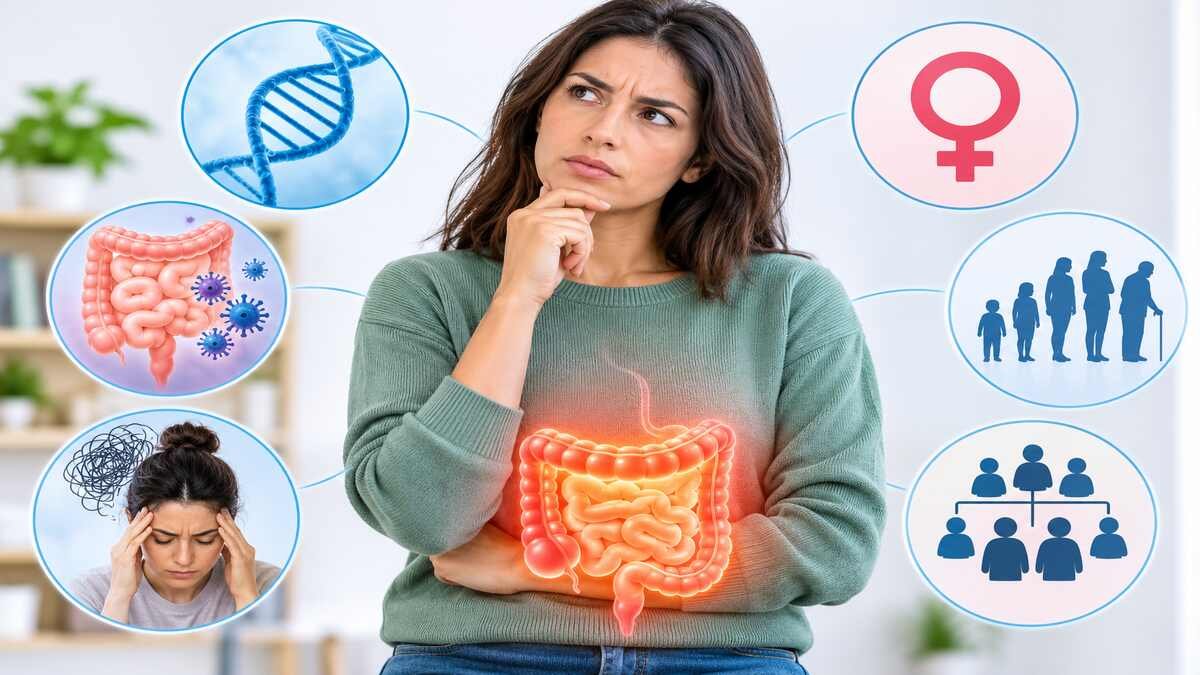

Why do some people develop recurring digestive problems while others go through life with few stomach troubles? It is a common question among people who have been diagnosed with irritable bowel syndrome (IBS), and among those who worry about their own risk. IBS is a common digestive disorder involving recurring abdominal pain and changes in bowel habits.
The exact cause of IBS is not fully understood. Research suggests that several factors may raise a person’s likelihood of developing it, including family history, past gastrointestinal infections, stressful life experiences, age, and biological sex. Having one or more of these risk factors does not mean you will definitely develop IBS, and many people with IBS have none that can be identified.
This guide explains the main IBS risk factors, how the gut-brain connection fits in, and how risk factors differ from symptom triggers. You will also learn when to speak with a doctor and what is known about reducing risk. It is general education and cannot predict your personal risk.
What are the main risk factors for IBS? The main risk factors associated with irritable bowel syndrome (IBS) include a family history of IBS, previous gastrointestinal infections, stressful or difficult life experiences, and biological sex. Genetic susceptibility and changes in gut-brain interactions may also contribute. Having these risk factors does not mean a person will definitely develop IBS.
What Is IBS?
IBS is a chronic disorder of gut-brain interaction. It involves recurring abdominal pain and changes in bowel movements, which may include constipation, diarrhea, or alternating episodes of both. Bloating and excess gas are also common. If you want a symptom-focused overview, see our guide to the early signs of IBS.
NIDDK explains that with IBS, symptoms occur without visible signs of damage or disease in the digestive tract. Symptoms can fluctuate and vary between people. IBS is also different from inflammatory bowel disease (IBD), such as Crohn’s disease or ulcerative colitis.
Researchers believe IBS develops through a mix of biological, genetic, environmental, and psychological influences. NIDDK says that a combination of problems may lead to IBS and that different factors may be responsible in different people. For more detail, see our article on what causes IBS.
What Are the Main Risk Factors for IBS?
A risk factor is something linked with a higher chance of developing a condition. It is not the same as a cause. The factors below are the ones most consistently discussed in medical sources.
1. Family History and Genetic Factors
IBS tends to appear more often in some families. NIDDK lists having a family member with IBS as a factor that can increase your chance of having it. A review of the genetics of IBS notes that family and twin studies support a heritable component, although estimates have varied widely.
Genetic differences may influence gut sensitivity, bowel movement patterns, and how the gut and brain communicate. Many genes, each with a small effect, are likely involved. Shared family habits, diet, and environment may also play a role, so it is hard to separate genes from upbringing.
IBS can run in families, but it is not a simple inherited condition caused by one gene. A family history raises susceptibility without guaranteeing that you will develop IBS.
2. Previous Gastrointestinal Infections
A severe infection of the digestive tract can increase the likelihood of developing IBS. When symptoms begin after such an infection, the condition is often called post-infectious IBS (PI-IBS). NIDDK lists having a severe infection in your digestive tract as a risk factor.
A systematic review and meta-analysis in Gastroenterology found that more than 10% of people who had infectious enteritis later developed IBS, a risk about four times higher than in people without such an infection. The authors also noted considerable variation between studies.
After an infection, changes in gut bacteria, intestinal immune activity, gut sensitivity, and gut movement may all contribute. The severity of the illness and individual susceptibility likely matter. Most people who have food poisoning or gastroenteritis do not go on to develop IBS.
Persistent symptoms after an infection should be evaluated by a healthcare professional rather than assumed to be IBS.
3. Biological Sex and Hormonal Influences
IBS is diagnosed more often in women than in men in many studies. NIDDK reports that women are up to two times more likely than men to develop IBS. The Nature Reviews Disease Primers review also names female sex as an important single risk factor.
Hormonal changes may influence digestive function and gut sensitivity. Some women notice that IBS symptoms shift during their periods, as NIDDK notes. Research on sex hormones and IBS is still ongoing.
Be cautious about drawing firm conclusions. Differences in diagnosis rates may partly reflect who seeks medical care, how symptoms are reported, and other factors, not only biology.
4. Age and IBS Susceptibility
IBS can affect people of any adult age, but it most often begins in younger adulthood. NIDDK states that people younger than age 50 are more likely to develop IBS than people older than 50.
IBS can still occur in older adults. However, new digestive symptoms later in life should be evaluated by a healthcare professional instead of being assumed to be IBS, since other conditions become more likely with age. Our guide on what causes abdominal pain covers other possibilities.
5. Stressful Life Experiences and Childhood Adversity
Difficult life experiences have been linked with a higher likelihood of IBS. NIDDK lists a history of stressful or difficult life events, such as abuse in childhood, among the factors that can increase the chance of having IBS.
Long-term stress may affect communication between the brain and the digestive system. It can also influence pain sensitivity and how the gut moves. Our guide on how to reduce stress offers practical coping ideas.
These links are associations, and stress is not considered the sole cause of IBS. Many people with IBS have not experienced trauma, and many people who have experienced it never develop IBS. No one should feel blamed for their symptoms.
6. Anxiety, Depression, and Other Mental Health Conditions
Anxiety and depression are reported more often among people with IBS. NIDDK includes anxiety, depression, and somatic symptom disorder among the mental health conditions that occur with IBS more often. Psychological distress may also be a risk factor for developing IBS after an infection, based on the Gastroenterology meta-analysis cited above.
The relationship works in both directions. Digestive symptoms can contribute to emotional distress, while stress and anxiety can worsen symptoms. See our guides on anxiety and depression for background.
This does not mean IBS is imaginary or purely psychological. IBS is a genuine digestive disorder involving complex gut-brain interactions.
How Does the Gut-Brain Connection Affect IBS Risk?
The digestive system and the brain communicate constantly through nerves, hormones, and immune signals. When this communication works differently than expected, bowel patterns and pain sensations may change. The Rome Foundation framework, described in a review in Gastroenterology, links these disorders to motility disturbance, visceral hypersensitivity, altered mucosal and immune function, altered gut microbiota, and altered central nervous system processing.
In practical terms, some people with IBS feel pain when a normal amount of gas or stool is in the gut. NIDDK notes that food may also move too slowly or too quickly through the digestive tract. Emotional stress can influence both digestion and pain perception.
These mechanisms help researchers understand why people with very different backgrounds can end up with IBS. They are still being studied, and they do not yet allow doctors to predict who will develop the condition.
Can Lifestyle and Environmental Factors Contribute to IBS?
It is important to separate factors that may help explain why someone develops IBS from factors that merely make existing symptoms worse. The evidence is much stronger for the second group than the first. Unhealthy eating, low activity, or “poor lifestyle” have not been shown to be direct causes of IBS.
Dietary Habits and Food Sensitivities
Certain foods can worsen symptoms in people who already have IBS. Food intolerances and sensitivities may matter for some individuals, and large meals or specific carbohydrates may affect symptoms. However, evidence does not show that any particular food causes IBS in everyone.
For general nutrition guidance, see our guide to what a balanced diet looks like.
Gut Microbiome Changes
The gut contains a complex community of microorganisms. Differences in gut bacteria have been observed in some people with IBS, and researchers are studying how these differences may affect digestion, gut sensitivity, and immune activity.
Microbiome differences vary between people and do not currently offer a simple way to predict who will get IBS. Learn more about the topic in our guides on how to improve gut health and probiotics.
Small Intestinal Bacterial Overgrowth (SIBO)
SIBO means an increase in the number, or a change in the type, of bacteria in the small intestine. NIDDK lists it among the problems that may be involved in IBS. It can cause bloating, discomfort, and changes in bowel habits, which overlap with IBS symptoms.
The relationship is complex. Not everyone with IBS has SIBO, and SIBO is not established as the cause of IBS.
IBS Risk Factors vs. IBS Triggers
Risk factors and triggers are often confused. A risk factor may raise the likelihood of developing IBS in the first place. A trigger may worsen symptoms in someone who already has IBS.
| Risk factors (may increase the likelihood of developing IBS) | Symptom triggers (may worsen symptoms in someone with IBS) |
|---|---|
| Family history | Certain foods |
| Previous gastrointestinal infection | Caffeine |
| Biological sex | Alcohol |
| Stressful life experiences | Stress and anxiety |
| Genetic susceptibility | Large meals or individual dietary triggers |
Some items can fit in both columns. Stress, for example, may be associated with developing IBS and may also worsen symptoms later.
A person may notice symptoms after eating a certain food without that food being the underlying cause of their IBS. A factor that triggers symptoms is not necessarily a factor that causes the condition. Our article on IBS treatment options explains how people manage triggers.
Can You Develop IBS Without Known Risk Factors?
Yes. Many people develop IBS without a family history, a past gut infection, or an obvious psychological risk factor. IBS has multiple potential contributors, and some of them may not be identifiable in any one person.
Genetics and environmental influences probably interact in ways researchers do not yet fully understand. Having no recognized risk factors does not rule out IBS. On the other hand, having risk factors does not mean you have it.
When Should You Speak to a Doctor?
Talk with a healthcare professional if you have persistent or recurring abdominal pain, ongoing constipation or diarrhea, or bowel changes that interfere with daily activities. New or worsening digestive symptoms, especially at an older age, deserve evaluation.
Seek medical attention promptly for:
- Blood in the stool or rectal bleeding
- Unexplained weight loss
- Iron-deficiency anemia
- Persistent or severe abdominal pain
NICE guidance lists unintentional and unexplained weight loss, bleeding from the rectum, and a family history of bowel or ovarian cancer as reasons to look for other causes. These signs should not be dismissed as IBS. See our guides on when abdominal pain is an emergency and common digestive problems.
This article is intended for adults. Children and teenagers with recurring digestive symptoms should see a healthcare professional with a parent or trusted adult.
How Is IBS Diagnosed?
There is no single test that confirms every case of IBS. NIDDK explains that doctors review your symptoms, your medical and family history, and perform a physical exam. They look for a symptom pattern and may order tests to rule out other conditions.
Doctors often use established criteria such as the Rome IV criteria. In general, these call for recurring abdominal pain linked to changes in bowel movements, with symptoms starting at least six months before diagnosis, as summarized in StatPearls. Blood or stool tests may be used to check for conditions such as celiac disease, infection, or IBD, and further testing may follow if warning signs are present.
Can You Reduce Your Risk of IBS?
There is currently no guaranteed way to prevent IBS, because its causes are not fully understood. Some general habits support digestive and overall health, but they have not been proven to prevent IBS in everyone.
- Practice good food and water hygiene to lower the chance of gut infections.
- Eat a balanced diet.
- Manage ongoing stress, and consider support when it feels overwhelming.
- Stay physically active (see the benefits of exercise).
- Seek medical care for digestive infections or symptoms that do not resolve.
The link between infection and IBS is one reason food safety matters, though the evidence does not show that hygiene alone can prevent IBS.
Frequently Asked Questions About IBS Risk Factors
Is IBS Genetic?
Genetics may contribute to IBS susceptibility, and people with a family history may have a higher likelihood of developing it. However, IBS is not caused by a single gene and is not simply inherited. NIDDK lists a family member with IBS as one factor that can increase your chance.
Can Stress Cause IBS?
Stress may influence gut-brain communication and may contribute to developing IBS or to symptom severity. It is not considered the sole cause. Many people with IBS have low stress levels, and many stressed people never develop IBS.
Who Is Most at Risk of Developing IBS?
People with a family history of IBS, a history of severe gastrointestinal infection, or difficult life experiences may be at higher risk. Women and people under 50 are also diagnosed more often, according to NIDDK. Risk factors only raise the odds and do not predict who will develop IBS.
Can a Stomach Infection Lead to IBS?
Yes, in some people. Post-infectious IBS can follow a gastrointestinal infection, but most people who have a stomach infection do not develop it, according to a meta-analysis in Gastroenterology.
Does IBS Affect Women More Than Men?
IBS is diagnosed more often in women in many populations. The reasons are not fully understood and may involve hormones, differences in reporting, and healthcare-seeking behavior. IBS affects men too.
Conclusion
The main risk factors associated with IBS include family history, genetic susceptibility, gastrointestinal infections, biological sex, age, and stressful life experiences. IBS usually involves several contributing factors, and having a risk factor does not guarantee that someone will develop the condition.
If you have persistent digestive symptoms, a medical assessment is the best way to find answers and rule out other causes.
Sources
- National Institute of Diabetes and Digestive and Kidney Diseases (NIDDK). Definition & Facts for Irritable Bowel Syndrome
- NIDDK. Symptoms & Causes of Irritable Bowel Syndrome
- NIDDK. Irritable Bowel Syndrome: all content (including diagnosis)
- Klem F, et al. Prevalence, Risk Factors, and Outcomes of Irritable Bowel Syndrome After Infectious Enteritis. Gastroenterology. 2017;152(5):1042-1054.
- Enck P, et al. Irritable bowel syndrome. Nat Rev Dis Primers. 2016;2:16014.
- Henström M, D’Amato M. Genetics of irritable bowel syndrome. Mol Cell Pediatr. 2016;3:7.
- Drossman DA. Functional Gastrointestinal Disorders: History, Pathophysiology, Clinical Features and Rome IV. Gastroenterology. 2016.
- National Institute for Health and Care Excellence (NICE). Information for the public: Diagnosing irritable bowel syndrome
- StatPearls. Irritable Bowel Syndrome. National Library of Medicine.
Medical Disclaimer: This article is for educational purposes only and does not replace professional medical advice, diagnosis, or treatment. Risk factors describe how likely something is in groups of people, not what will happen to you personally. Please talk with a qualified healthcare professional about persistent digestive symptoms. If you notice blood in your stool, unexplained weight loss, severe pain, or symptoms that worry you, seek medical care promptly.