

A little burning after a big dinner rarely feels like a medical event. Yet that small sign can mark the start of a pattern. If you have wondered what the early signs of acid reflux are, you are asking the right question at the right time.
Early signs range from the classic burn behind your breastbone to quieter clues, such as a hoarse morning voice or a nagging cough. Spotting them early helps you act before symptoms disrupt your sleep and daily life. Reflux ranks among the most common health issues adults face, so learning its warning signs is worth your time.
What Are the Early Signs of Acid Reflux? The Short Answer
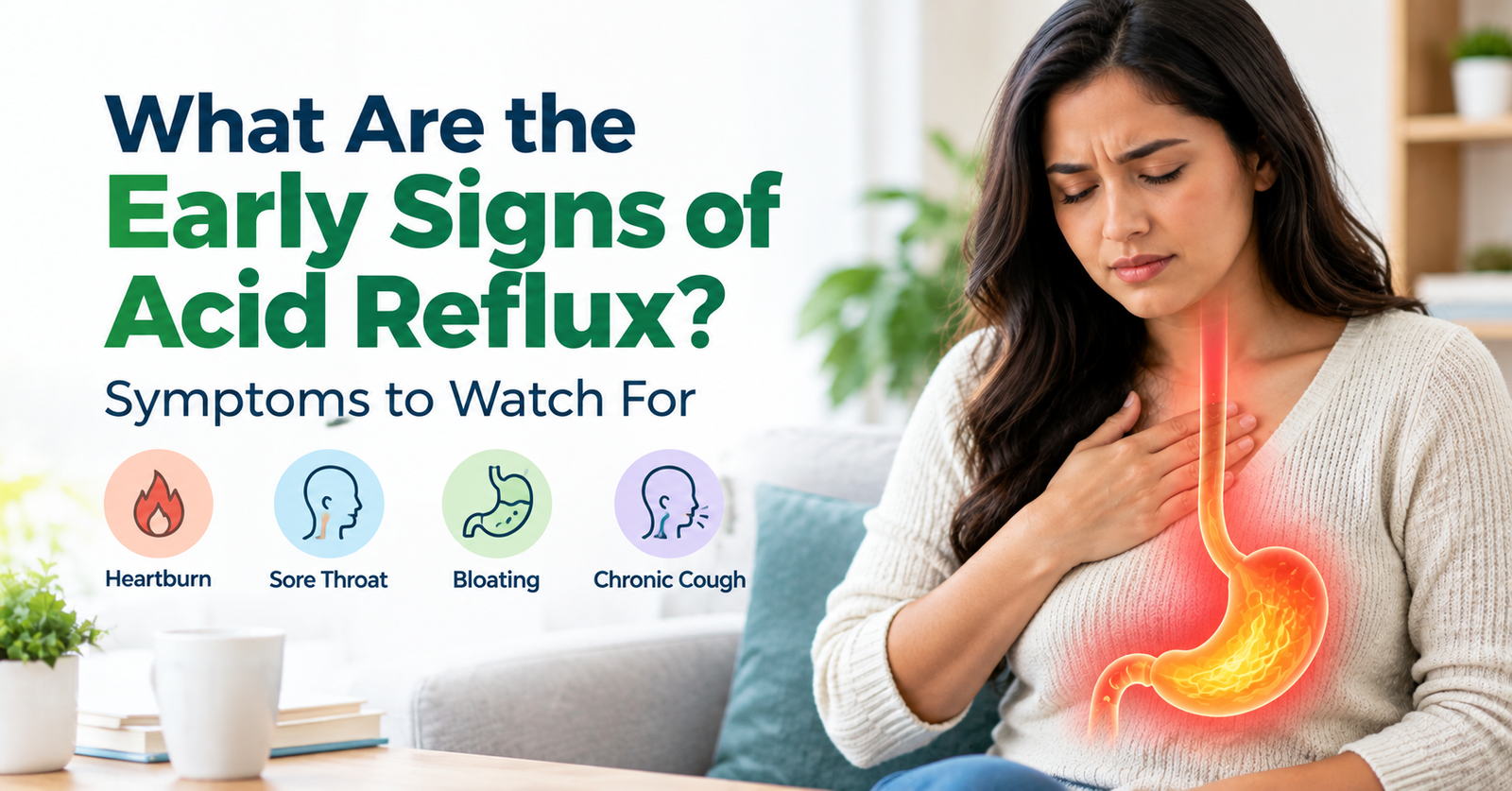
The most common early signs are heartburn and a sour or bitter taste in your mouth. Many people also notice bloating, burping, nausea, or discomfort in the chest or upper belly. Some people have quieter signs, such as throat clearing, hoarseness, or a dry cough, with no heartburn at all.
Watch for these clues:
- A burning feeling behind your breastbone
- A sour, bitter, or acidic taste
- Food or liquid that comes back up into your throat
- Bloating, burping, or a heavy, full feeling after meals
- Chest or upper belly discomfort
- Frequent throat clearing, hoarseness, or a lingering cough
- Symptoms that get worse when you lie down
Why Early Signs Appear
Your esophagus is the tube that carries food from your throat to your stomach. A ring of muscle at the bottom, called the lower esophageal sphincter (LES), works like a valve. It opens to let food through and closes to keep stomach contents down.
Reflux starts when this valve relaxes at the wrong time or stays weak. Stomach acid then splashes into the esophagus. Your stomach has a tough protective lining, but your esophagus does not, so the acid irritates it and causes symptoms.
Several factors raise your chances. Extra weight, pregnancy, smoking, large meals, and certain medicines all play a role. Our guide to acid reflux risk factors explains each one in detail.
Classic Early Signs
These signs are the ones most people recognize. They usually show up first.
Heartburn
Heartburn is the hallmark symptom. The National Institute of Diabetes and Digestive and Kidney Diseases (NIDDK) describes it as a painful, burning feeling in the middle of your chest, behind your breastbone. The burn can rise from the lower breastbone toward your throat.
Heartburn often follows a meal. It may feel worse at night or when you lie down. Despite the name, it has nothing to do with your heart.
Regurgitation and a Sour Taste
Regurgitation means stomach contents come back up into your throat or mouth. You may taste food or stomach acid. Many people describe a sour or bitter taste, especially after eating or when they bend over or lie down.
Burping, Bloating, and Fullness
Many people feel gassy, bloated, or full soon after they start eating. Frequent burping is also common. These signs are less specific, because many digestive problems cause them. Together with heartburn or regurgitation, they point toward reflux.
Chest or Upper Belly Discomfort
Reflux can cause pressure or aching in the chest or upper belly. NIDDK also lists nausea among the possible symptoms. Not all upper belly pain comes from reflux, so our guide on what abdominal pain feels like can help you describe what you feel.
Less Obvious Signs: Silent Reflux
Not everyone with reflux has heartburn. NIDDK notes that some adults with gastroesophageal reflux disease (GERD) have neither heartburn nor regurgitation. Instead, acid or stomach contents reach the throat and airways.
Doctors call this laryngopharyngeal reflux (LPR), or “silent reflux.” A medical review notes that many people with LPR lack classic heartburn and instead notice throat and voice symptoms.
Throat and Voice Changes
Watch for these throat clues:
- Hoarseness or a voice that tires easily
- Frequent throat clearing
- A sore throat, especially in the morning
- A feeling of a lump in the throat, called globus
- Extra mucus or a postnasal drip sensation
Chronic Cough and Breathing Changes
Reflux can trigger a dry cough that lingers for weeks. It may also worsen asthma or cause wheezing. The American Gastroenterological Association (AGA) lists cough, hoarseness, and asthma among the possible extraesophageal signs of reflux. Extraesophageal means outside the esophagus.
Mouth and Dental Clues
Acid that reaches your mouth can leave a sour taste. Over time, it can also wear down tooth enamel. Experts recognize dental erosion as a possible reflux syndrome. If your dentist mentions enamel wear and you also have reflux symptoms, share that with your doctor.
Sleep Disruption
Reflux often strikes at night. You may wake up coughing, choking, or with a burning throat. A large review found that GERD raises the odds of poor sleep quality, and the link works both ways.
A Note of Caution
These throat, cough, and mouth signs have many causes. Allergies, infections, smoking, voice overuse, and asthma can all produce them. The American College of Gastroenterology (ACG) notes that extraesophageal symptoms often overlap with other conditions. Your doctor may look for other causes before blaming reflux.
Patterns That Point to Reflux
Timing often tells you more than the symptom itself. Notice when and where your symptoms strike.
| Pattern | What you may notice | Why it happens |
|---|---|---|
| After large or fatty meals | Burning, fullness, bloating | A full stomach pushes acid upward |
| Lying down or at night | Burning, cough, sour taste | Gravity no longer holds acid down |
| Bending or lifting | Burning or a sour taste | Pressure on the stomach rises |
| After coffee, alcohol, or spicy food | Burning soon after | Some foods relax the valve or irritate the esophagus |
| Morning | Hoarse voice, sore throat, bitter taste | Acid may have reached the throat overnight |
Occasional Reflux vs. Early GERD
Almost everyone has reflux now and then. So when does an occasional sign become a warning?
How Often Is Too Often?
NIDDK explains that reflux happening more than twice a week for a few weeks could be GERD. A global consensus known as the Montreal definition uses a similar test. It counts mild symptoms on two or more days a week as troublesome. It also counts moderate to severe symptoms on one or more days a week.
Signs That Reflux Is Becoming a Pattern
Pay attention if you notice any of these:
- Symptoms return week after week
- Over-the-counter antacids become a routine
- Heartburn wakes you at night
- You avoid foods or plans because of symptoms
- Symptoms interfere with work or sleep
Any of these deserves attention, even if each episode feels mild.
Early Signs at Different Life Stages
Reflux can look different depending on your age and situation.
In Your 30s
Stress, fast eating, weight changes, and pregnancy often drive early reflux in this decade. Our guide to acid reflux in your 30s covers common triggers and fixes.
In Your 50s and Beyond
Reflux can start later in life, too. Hiatal hernias, slower digestion, and more medicines raise the odds with age. New reflux symptoms after age 50 deserve a medical review. Read more in our article on acid reflux in your 50s.
During Pregnancy
Heartburn is very common in pregnancy. Hormone changes relax the LES, and the growing uterus presses on the stomach. Ask your provider before you take any reflux medicine.
In Babies
Many babies spit up, and that is usually normal. See a pediatrician if your baby refuses feeds, gains weight slowly, vomits forcefully, or has trouble breathing.
Could It Be Something Else?
Several conditions share symptoms with early reflux. Sorting them out matters.
Heart Problems
Heartburn and a heart attack can feel alike. The ACG advises doctors to rule out heart disease in people with chest pain before they focus on reflux. Call your local emergency number if chest pain comes with shortness of breath, sweating, nausea, or pain that spreads to your arm, jaw, or back.
Other Digestive Problems
Indigestion, gastritis, ulcers, and gallbladder trouble can mimic reflux. Our overview of common digestive problems explains how they differ. Location, timing, and triggers often help tell them apart.
Throat and Lung Conditions
Allergies, postnasal drip, and respiratory infections can cause a chronic cough or throat clearing. So can smoking. A doctor can help decide whether reflux plays a role.
What to Do When You Notice Early Signs
Early action often keeps mild reflux from becoming a bigger problem. You can start at home.
Start With Daily Habits
Research and guidelines support these steps:
- Eat smaller meals and slow down.
- Stop eating two to three hours before bed.
- Raise the head of your bed by 6 to 8 inches if symptoms strike at night.
- Avoid smoking and limit alcohol.
- Wear looser clothing around your waist.
- Track foods that seem to trigger symptoms.
A review of lifestyle studies found that late evening meals increased acid exposure while lying down. Raising the head of the bed reduced it. For a full plan, see our guide on how to manage acid reflux at home.
Look at Your Weight
Extra belly weight raises pressure on the stomach. In a large study of women, reflux symptoms rose steadily with body mass index (BMI). Weight loss lowered them. If weight loss is a goal, our overview of weight loss trends in 2026 can help you choose steady methods.
Use Simple Remedies Wisely
Some people sip ginger tea for digestive comfort. The evidence for reflux is limited, and large amounts can irritate the stomach. Our article on whether ginger is good for health explains the pros and cons.
An antacid can ease an occasional flare. If you need antacids or other acid medicine for more than two weeks, see your doctor.
Keep a Symptom Diary
Write down what you eat, when symptoms start, and how severe they feel. Add your sleep position and any medicines. After two weeks, patterns often become clear. Bring the diary to your appointment.
Focus on Prevention
You cannot prevent every case of reflux. You can still lower your risk with healthy habits. Our guide on whether acid reflux can be prevented covers what works best.
When to See a Doctor
Early signs usually respond well to home care. Some symptoms need a professional.
Book an Appointment Soon If You Notice
- Trouble swallowing or pain when swallowing
- Unexplained weight loss or loss of appetite
- Ongoing vomiting
- A chronic cough, hoarseness, or wheezing
- Symptoms that continue despite over-the-counter medicine or lifestyle changes
- New reflux symptoms after age 50
Seek urgent care if you vomit blood or pass black, tarry stools. Both can signal bleeding in your digestive tract.
What to Expect at the Visit
Your doctor will ask about your symptoms and medical history. For classic heartburn and regurgitation without warning signs, the ACG recommends an eight-week trial of a proton pump inhibitor (PPI), which is a medicine that reduces stomach acid. Your doctor may order tests if you have warning signs or if symptoms persist. Our guide on how acid reflux is diagnosed explains each step.
Frequently Asked Questions
What is the very first sign of acid reflux?
Heartburn is the most common first sign. It feels like a burning sensation behind the breastbone, often after a meal. A sour taste in the mouth often comes with it.
Can you have acid reflux without heartburn?
Yes. Some people have reflux without heartburn or regurgitation. They may notice hoarseness, throat clearing, a chronic cough, or a lump-in-the-throat feeling instead.
Can acid reflux cause a sore throat or cough?
It can. Acid that reaches the throat or airways can irritate them. Many other conditions cause the same symptoms, so a doctor may check for other causes.
How often is too often for heartburn?
More than twice a week for a few weeks suggests GERD. Even one moderate to severe episode a week can count as troublesome. See a doctor if heartburn becomes regular.
Do early signs of acid reflux go away on their own?
Occasional reflux often fades when you avoid the trigger. If signs keep returning, they usually need habit changes and sometimes medicine. Early action tends to work best.
Key Takeaways
- The earliest signs are heartburn and a sour or bitter taste.
- Bloating, burping, nausea, and chest or upper belly discomfort also count.
- Silent reflux can cause hoarseness, throat clearing, and cough without heartburn.
- Timing gives clues: symptoms after meals, at night, or when bending point to reflux.
- Reflux more than twice a week for a few weeks may signal GERD.
- Trouble swallowing, weight loss, vomiting, bleeding, or chest pain with other symptoms need prompt care.
Early signs of acid reflux are easy to dismiss. Notice them, track them, and act on them. A few small changes now can spare you months of discomfort later.
This article offers general education and does not replace personal medical advice. Talk with a qualified healthcare professional about your symptoms and treatment.
Read our full Medical Disclaimer.
References
- National Institute of Diabetes and Digestive and Kidney Diseases. Symptoms & Causes of GER & GERD.
- National Institute of Diabetes and Digestive and Kidney Diseases. Acid Reflux (GER & GERD) in Adults.
- Katz PO, Dunbar KB, Schnoll-Sussman FH, et al. ACG Clinical Guideline for the Diagnosis and Management of Gastroesophageal Reflux Disease. Am J Gastroenterol. 2022;117(1):27-56.
- Vakil N, van Zanten SV, Kahrilas P, Dent J, Jones R. The Montreal Definition and Classification of Gastroesophageal Reflux Disease: A Global Evidence-Based Consensus. Am J Gastroenterol. 2006;101(8):1900-1920.
- AGA Clinical Practice Update on the Diagnosis and Management of Extraesophageal Gastroesophageal Reflux Disease: Expert Review. Clin Gastroenterol Hepatol. 2023.
- Laryngopharyngeal Reflux. StatPearls. National Center for Biotechnology Information.
- Mayo Clinic. Gastroesophageal Reflux Disease (GERD): Symptoms.
- Bidirectional Correlation Between Gastroesophageal Reflux Disease and Sleep Problems: A Systematic Review and Meta-Analysis. PeerJ. 2024.
- Ness-Jensen E, Hveem K, El-Serag H, Lagergren J. Lifestyle Intervention in Gastroesophageal Reflux Disease. Clin Gastroenterol Hepatol. 2016;14(2):175-182.
- Jacobson BC, Somers SC, Fuchs CS, Kelly CP, Camargo CA Jr. Body-Mass Index and Symptoms of Gastroesophageal Reflux in Women. N Engl J Med. 2006;354(22):2340-2348.