
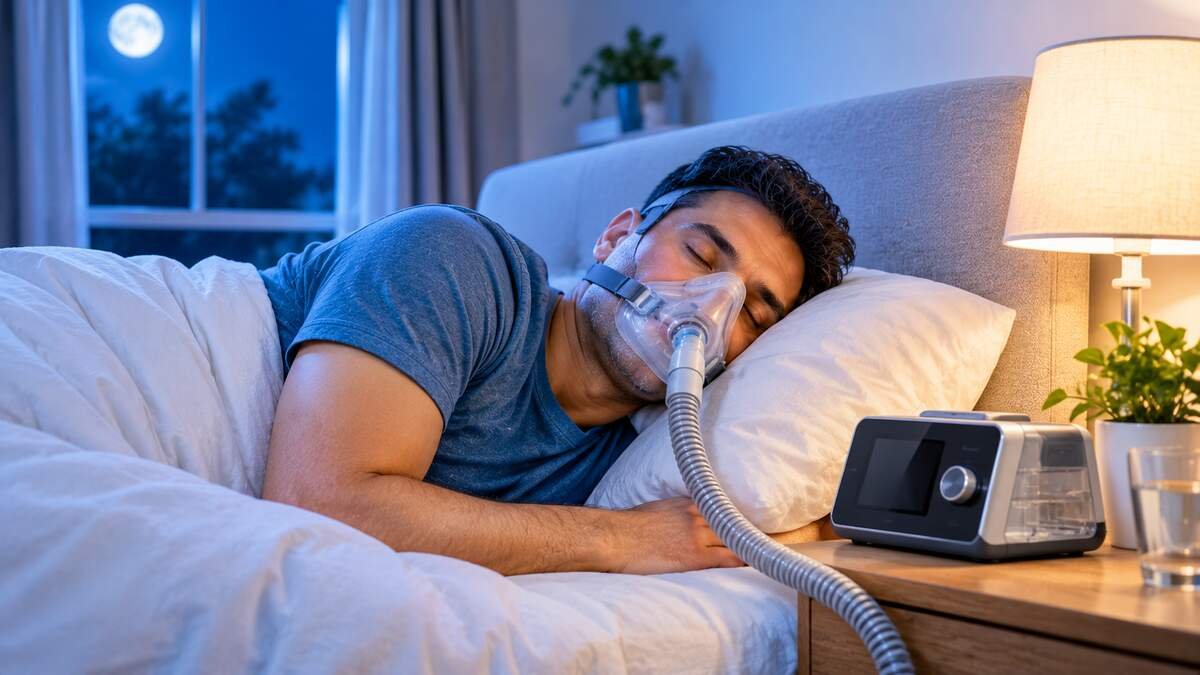

Sleep apnea is a condition in which breathing repeatedly pauses or becomes shallow during sleep. The most common form is obstructive sleep apnea (OSA), which happens when the upper airway narrows or becomes blocked. Typical signs include loud snoring, breathing pauses noticed by a bed partner, morning headaches, and daytime tiredness.
Can you manage sleep apnea at home? Home habits may help reduce some symptoms and can support your treatment, but they cannot reliably replace medical care. Moderate or severe sleep apnea often needs treatment such as positive airway pressure (PAP), and a proper diagnosis comes first. If you are not sure whether you have it, read our guide on how sleep apnea is diagnosed.
This article covers eight practical ways to manage sleep apnea at home, including sleeping position, daily routines, and CPAP care. It also explains what home remedies cannot do and when to contact a healthcare professional.
Can You Manage Sleep Apnea at Home?
Yes, in a supporting role. Everyday habits can make breathing during sleep easier for some people, and they can help you get more benefit from the treatment your clinician prescribes. They work best alongside professional care, not instead of it.
Here is what home management can and cannot do:
- Home habits may improve symptoms. Changes such as avoiding alcohol or sleeping on your side may help some people with obstructive sleep apnea.
- Mild OSA may respond to lifestyle changes. Some people with mild obstructive sleep apnea may benefit from changes their healthcare provider recommends.
- Moderate or severe OSA often needs more. The National Heart, Lung, and Blood Institute (NHLBI) describes PAP therapy as a common treatment, along with other options such as oral devices.
- Central sleep apnea is different. This type happens when the brain does not send the right signals for breathing, so its causes and treatments differ from OSA.
Relying on symptoms or home remedies alone can delay a diagnosis. Our articles on the early signs of sleep apnea and what causes sleep apnea can help you understand what to watch for. Treatment needs also differ between children and adults, so a clinician should guide any plan.
8 Practical Ways to Manage Sleep Apnea at Home
The table below summarizes the eight tips. Each one is explained in more detail afterward.
| # | Tip | Main idea |
|---|---|---|
| 1 | Try side sleeping | May reduce airway narrowing in some people |
| 2 | Keep a consistent sleep schedule | Supports better sleep quality |
| 3 | Avoid alcohol and review sedating medicines | Alcohol may worsen OSA |
| 4 | Stay physically active | Supports overall health |
| 5 | Discuss weight-related factors | Weight can be one contributing factor |
| 6 | Avoid smoking and airway irritants | Smoke can irritate the airway |
| 7 | Use your prescribed CPAP or PAP consistently | Helps keep the airway open |
| 8 | Keep equipment clean and maintained | Supports comfort and safe use |
1. Try Sleeping on Your Side
For some people with OSA, sleeping on the back lets the tongue and soft tissues fall toward the throat, which can narrow the airway. Sleeping on your side may reduce this effect. This is sometimes called positional therapy.
Supportive pillows or positioning aids may make side sleeping more comfortable. However, positional therapy does not work equally well for everyone. Ask your healthcare provider whether it is appropriate for you, especially if you have been prescribed other treatment.
2. Follow a Consistent Sleep Schedule
Going to bed and waking up at about the same time each day supports better sleep quality. A quiet, dark, and comfortable bedroom helps too, as does limiting stimulating activities close to bedtime. Our guides on how to build a sleep schedule and how to improve sleep offer practical steps.
Good sleep habits do not cure sleep apnea on their own. They support your overall rest and make it easier to stick with treatment.
3. Avoid Alcohol and Discuss Sedating Medicines With a Doctor
Alcohol can relax the muscles of the throat, which may make obstructive sleep apnea worse. The Mayo Clinic lists avoiding alcohol and certain sedating medicines among its self-care suggestions.
Some sleeping pills, sedatives, and other medicines may also affect breathing during sleep. Talk with your healthcare professional about every medicine you take. Do not stop a prescribed medicine on your own.
4. Maintain Regular Physical Activity
Regular movement supports general health and may help improve OSA symptoms in some people. Walking, cycling, swimming, or any activity you enjoy can work. Our guides to walking for health and the benefits of exercise can help you get started.
Choose a routine that fits your abilities and build it gradually. Exercise is a helpful habit, not a guaranteed cure.
5. Discuss Weight-Related Factors With a Healthcare Professional
Body weight can be one factor associated with obstructive sleep apnea, but it is not the only one. Anatomy, age, family history, and other health conditions also play a part, as described in our article on sleep apnea risk factors.
Not everyone with sleep apnea needs to lose weight. If weight is a contributing factor for you, a healthcare professional can give individualized guidance. Our overview of weight management covers general principles. Weight-related changes do not replace prescribed treatment.
6. Avoid Smoking and Reduce Airway Irritants
Smoking can irritate and inflame the upper airway. Try to avoid secondhand smoke and other irritating exposures where possible. If you want to quit, a healthcare professional can connect you with support.
Quitting smoking is good for your health in many ways, but it is unlikely to resolve sleep apnea by itself.
7. Use Your Prescribed CPAP or PAP Machine Consistently
PAP therapy uses gentle air pressure to help keep the airway open during sleep. According to the NHLBI, CPAP is a common treatment for sleep apnea. Following your prescribed plan every time you sleep, including naps, is what makes it work best.
Many people need time to adjust. Common problems include mask discomfort, dryness, and air leaks. Contact your sleep-care team or equipment provider for help with mask fitting or pressure concerns. Do not change pressure settings yourself.
8. Keep Your Sleep Equipment Clean and Well Maintained
Clean equipment is more comfortable and works better. Follow the manufacturer’s instructions for cleaning the mask, tubing, and humidifier, and use only compatible cleaning products. Check filters and replace parts on the recommended schedule.
If a mask or other part is damaged or no longer fits well, talk with your equipment provider or healthcare professional.
How to Make CPAP Therapy More Comfortable at Home
If you have been prescribed CPAP, small adjustments can make nightly use easier. The NHLBI’s guidance on living with sleep apnea notes that people may need help adjusting masks, humidification, or settings.
These steps may help:
- Get a well-fitting mask. A poor fit is a common cause of discomfort and leaks.
- Use humidification if dryness occurs. Use the options your care team has approved.
- Check for leaks without overtightening. Straps that are too tight can cause sore spots and may not fix the leak.
- Practice while awake. If your care team suggests it, wear the mask for short periods during the day to get used to it.
- Keep the machine and accessories clean. See tip 8 above.
- Report ongoing problems. Tell your provider about persistent congestion, dry mouth, claustrophobia, or discomfort.
- Bring your machine when you travel. Missing nights can interrupt treatment.
Important: Never stop CPAP therapy or change pressure settings without guidance from your healthcare professional.
What Home Remedies Cannot Do for Sleep Apnea
Home remedies may help reduce some sleep apnea symptoms, but they cannot reliably replace medical treatment. It helps to know their limits.
- Lifestyle changes cannot reliably eliminate every case of sleep apnea.
- Side sleeping may help some people, but it is not a universal treatment.
- General sleep hygiene improves sleep habits, but it does not necessarily prevent airway obstruction.
- Over-the-counter products marketed as sleep apnea cures should not replace proven treatment.
- Mouth exercises and oral devices should be discussed with qualified professionals.
- Phone apps and home monitoring gadgets are not a definitive diagnosis.
Also avoid using sleeping pills, unverified supplements, or unapproved devices as home treatments for sleep apnea. If something promises a quick fix, ask your healthcare professional before trying it.
When Should You Seek Medical Help?
Contact a healthcare professional if you notice signs that suggest sleep apnea or if your current plan is not working. The NHS advises seeking assessment for interrupted breathing, gasping during sleep, or ongoing daytime tiredness.
Watch for:
- Loud, frequent snoring along with other symptoms
- Pauses in breathing that someone else notices
- Gasping or choking during sleep
- Persistent daytime sleepiness
- Trouble concentrating or morning headaches
- Symptoms that continue despite following a treatment plan
- Difficulty using your prescribed CPAP equipment
Suspected sleep apnea should be assessed by a healthcare professional and may require a sleep study. Treatment choices may also be discussed in our guide to sleep apnea treatment options.
Seek urgent medical care if you have severe breathing difficulty while awake, chest pain, or another medical emergency.
Frequently Asked Questions About Managing Sleep Apnea at Home
Can sleep apnea go away with lifestyle changes?
Lifestyle changes may improve some cases of obstructive sleep apnea, but results vary from person to person. Regular medical follow-up is important to check whether your symptoms and treatment plan are working, as the NHLBI explains.
What is the best sleeping position for sleep apnea?
Side sleeping may help people whose symptoms get worse when they sleep on their backs. It is not effective for everyone, so ask your healthcare provider whether positional therapy suits you.
Can I manage sleep apnea without a CPAP machine?
Some people may have other treatment options that a clinician recommends, such as oral appliances or other therapies. If you have been prescribed CPAP, do not stop using it without medical guidance.
Does drinking water help sleep apnea?
Staying hydrated supports general health, but drinking water does not prevent the airway obstruction that causes OSA. It should not replace diagnosis or treatment.
Is it safe to use sleep apnea mouthpieces at home?
Oral appliances should be selected and fitted by qualified professionals. A randomly purchased device may not suit your needs and could cause problems, so talk with your healthcare provider first.
Can sleeping on my back make sleep apnea worse?
For some people with OSA, yes. Back sleeping can let soft tissues narrow the airway, though this does not happen to everyone.
Final Thoughts on Managing Sleep Apnea at Home
Home management can support better sleep and help control symptoms. The most useful habits include side sleeping when appropriate, a consistent sleep routine, regular activity, avoiding alcohol, and using your PAP device as prescribed.
Still, suspected or diagnosed sleep apnea needs proper medical assessment and follow-up. Talk with your healthcare professional about a personalized treatment plan that fits your health and your daily life.
Sources
- National Heart, Lung, and Blood Institute. Sleep Apnea: Treatment.
- National Heart, Lung, and Blood Institute. Living With Sleep Apnea.
- National Heart, Lung, and Blood Institute. CPAP.
- National Health Service (NHS). Sleep Apnoea.
- Mayo Clinic. Obstructive Sleep Apnea: Diagnosis and Treatment.
Medical Disclaimer: This article is for educational purposes only and should not replace professional medical advice, diagnosis, or treatment. If you suspect you have sleep apnea or are experiencing symptoms, consult a qualified healthcare professional. If you have severe breathing difficulty, chest pain, or another medical emergency, call 911 or your local emergency number right away.
2 thoughts on “How to Manage Sleep Apnea at Home: Practical Tips and Treatments”
Comments are closed.