
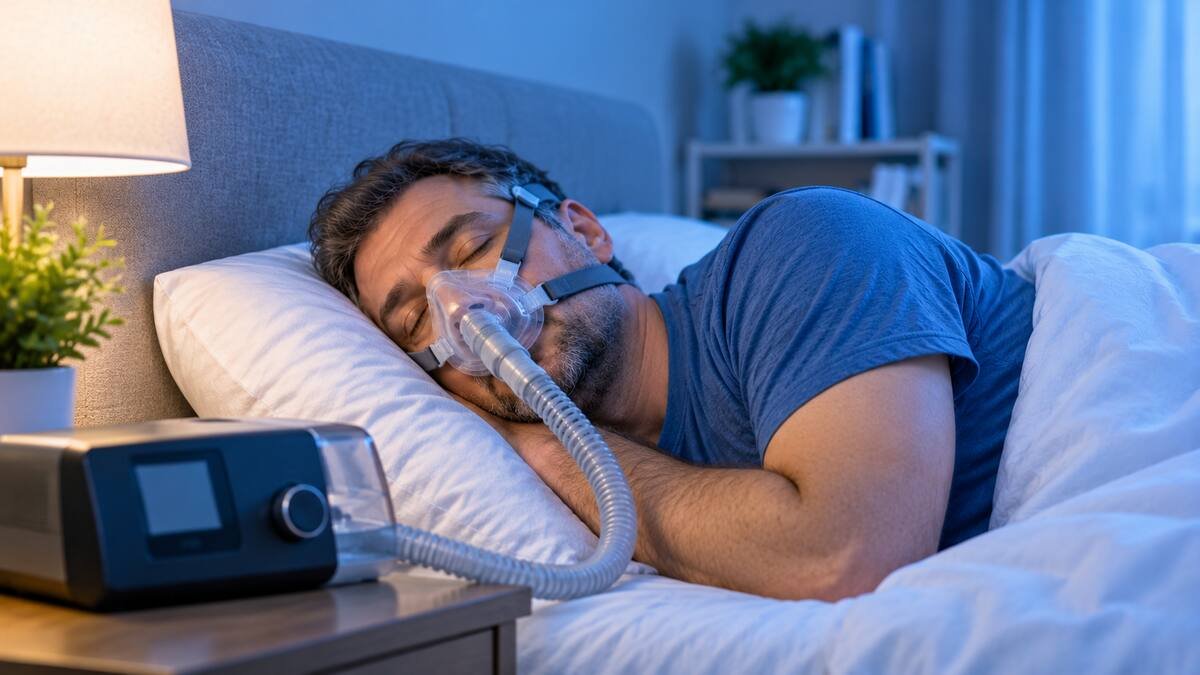

Does sleep apnea last a few weeks, a few months, or the rest of your life? It is one of the first questions people ask after a diagnosis or after a partner notices breathing pauses at night. Sleep apnea is a sleep-related breathing disorder in which breathing repeatedly stops or becomes shallow during sleep.
The question has two meanings. Individual breathing interruptions usually last seconds, while the condition itself can continue for months, years, or longer. Obstructive sleep apnea (OSA) often needs ongoing management, whereas some forms of central sleep apnea may improve when the underlying cause is treated.
This guide explains how long each breathing pause lasts, whether sleep apnea is temporary or lifelong, and how long treatment takes to help. You will also learn what affects duration, whether it can go away, and when to see a healthcare professional.
How Long Does Sleep Apnea Last?
Quick answer: Sleep apnea can last for months, years, or longer, depending on its type and underlying cause. Obstructive sleep apnea often requires long-term management, while some forms of central sleep apnea may improve when the underlying condition is treated. Appropriate medical care can help control symptoms.
There is no universal timeline. Some people live with sleep apnea for many years. Others improve after contributing medical or lifestyle factors change, and children often follow a different path from adults.
In adults, sleep apnea is generally managed as a long-term condition, although its severity and treatment needs can change over time. The NHLBI notes that a healthcare provider may talk with you about making lifelong healthy lifestyle changes alongside other treatments. Untreated obstructive sleep apnea tends to persist because the airway features behind it usually remain.
Treatment can control breathing interruptions while you sleep, but controlling a condition is not always the same as curing it.
How Long Does a Sleep Apnea Episode Last?
It helps to separate a single apnea event from the overall condition. During an apnea, airflow stops or drops sharply, and the brain briefly rouses the body so that normal breathing can resume. This cycle can repeat many times a night.
Under the American Academy of Sleep Medicine (AASM) scoring rules, an adult apnea is counted when airflow drops by at least 90% for 10 seconds or longer. In practice, events are often longer. One analysis of older adults in the MESA cohort found an average obstructive apnea duration of about 24 seconds during non-REM sleep, and some events last longer. Event length varies by person, sleep stage, and severity.
The apnea-hypopnea index (AHI) summarizes how often these events occur. It is the average number of apneas and hypopneas (partial airflow reductions) per hour of sleep. Our guide on how sleep apnea is diagnosed explains how clinicians use it.
Is Sleep Apnea Temporary or a Lifelong Condition?
Sleep apnea can be temporary in some situations, but it is often long-term.
Temporary or Potentially Reversible Cases
- Central sleep apnea (CSA) tied to a treatable condition: When the underlying problem improves, breathing control may improve too.
- Childhood obstructive sleep apnea: According to the Mayo Clinic, some children with mild to moderate OSA may outgrow it.
- Treatment-emergent central sleep apnea: Central events that appear after starting OSA treatment resolve over time in many people, as noted in the Merck Manual.
Long-Term Cases
- Persistent narrowing of the airway
- Anatomical differences in the upper airway
- Ongoing health conditions that contribute
- Age-related changes
- Symptoms returning when treatment or contributing factors change
Improvement does not automatically mean full recovery. See our article on whether sleep apnea can go away on its own for more.
How Long Does Each Type of Sleep Apnea Last?
1. Obstructive Sleep Apnea (OSA)
OSA happens when the upper airway becomes partly or fully blocked during sleep. Without treatment it often persists, because the contributing factors, such as airway anatomy and age, usually remain. Some contributing factors, such as body weight, can change, which may alter severity.
Many people need long-term treatment. Medical management can control breathing interruptions, and our guide to sleep apnea treatment options covers the main approaches.
2. Central Sleep Apnea (CSA)
CSA occurs when the brain does not consistently send the signals that regulate breathing during sleep. The NHLBI says certain health conditions that affect brain control of breathing can raise risk. Treating an underlying cause may improve some cases.
Duration varies a great deal between individuals, which is why medical assessment is important.
3. Treatment-Emergent Central Sleep Apnea
This form can appear when someone starts treatment for OSA. An editorial in the journal Sleep notes that most treatment-emergent central events resolve with ongoing CPAP, although some patients keep having them.
If central events persist, a sleep specialist can reassess the treatment plan. Do not change settings yourself.
How Long Does Sleep Apnea Last Without Treatment?
Untreated sleep apnea can continue for years, especially when the cause remains. There is no predictable expiration date.
Several things make it easy to overlook:
- Airway obstruction can recur every night.
- Symptoms rise and fall from week to week.
- Many people do not notice their own breathing pauses.
- Daytime tiredness can persist and be blamed on something else.
Over time, untreated sleep apnea can affect sleep quality and daytime alertness. The NHLBI reports that it may raise the risk for high blood pressure, diabetes, heart disease, and stroke. Waiting for symptoms to fade on their own is not a safe plan, so seek evaluation if you suspect sleep apnea. Our guide to the early signs of sleep apnea can help you spot them.
How Long Does It Take for Sleep Apnea Treatment to Work?
Response depends on the treatment and the person. A healthcare professional should evaluate whether your treatment is working.
1. CPAP Therapy
Continuous positive airway pressure (CPAP) uses gentle air pressure to keep the airway open. While the device is in use, breathing pauses can be controlled, and some people notice better sleep and less daytime sleepiness fairly soon. The NHLBI describes CPAP as a long-term treatment.
CPAP generally manages OSA rather than permanently removing its cause. Getting used to the mask can take time, so ask your care team for help with fit and comfort.
2. Oral Appliances
Certain dental devices reposition the jaw or tongue to reduce obstruction. They need proper fitting and follow-up. The NHLBI advises following up with a dental specialist after six months and then at least yearly.
3. Lifestyle Changes
Changes that address contributing factors, such as weight, alcohol, and smoking, can take time and do not guarantee full resolution. See our guide on how to manage sleep apnea at home.
4. Surgery
Selected procedures may improve airway obstruction depending on a person’s anatomy and health. The Mayo Clinic and your own clinician can explain whether surgery is an option.
What Factors Affect How Long Sleep Apnea Lasts?
1. Type of Sleep Apnea
OSA and CSA have different mechanisms, so their outlooks differ.
2. Age
Children and adults follow different patterns. Pediatric OSA is often linked to enlarged tonsils and adenoids, while adult OSA is more tied to anatomy, age, and weight.
3. Underlying Medical Conditions
Heart, neurological, and other health conditions may influence central sleep apnea in particular. Our article on what causes sleep apnea explains more.
4. Airway Anatomy
Structural features can keep obstructive sleep apnea going over the long term.
5. Treatment Consistency
Following an appropriate plan helps manage symptoms. The NICE guideline notes that lifestyle and sleep-habit changes can help prevent mild OSA from worsening, and CPAP is recommended for moderate or severe disease; see the NICE guideline.
6. Lifestyle and Environmental Factors
Sleep position, alcohol, smoking, and nasal congestion can influence symptoms. Our guide to sleep apnea risk factors lists more.
Can Sleep Apnea Go Away Over Time?
Sometimes. Some children improve as they grow. Treating an underlying cause may help certain cases of central sleep apnea. Changes in contributing factors may lessen obstructive sleep apnea severity in some adults.
Still, many adults continue to have sleep apnea despite improvements. Repeat sleep testing may be needed to confirm that it has resolved. Please keep one distinction in mind: symptom improvement is common, while complete resolution has to be confirmed by objective testing. Our article on whether sleep apnea can be prevented also covers factors you can influence.
How Do You Know If Sleep Apnea Is Improving?
Possible signs include:
- Less noticeable snoring
- Better perceived sleep quality
- Less daytime sleepiness
- Fewer breathing pauses reported by a partner
- Better daytime alertness
These changes are encouraging, but symptoms alone cannot confirm resolution. The NHLBI says you should schedule regular checkups to make sure treatment is working and that you may need to repeat your sleep study, especially after a large weight change. A repeat study may be recommended when it is clinically appropriate.
When Should You See a Doctor?
Seek evaluation if you notice:
- Frequent loud snoring
- Pauses in breathing that someone else has seen
- Waking up gasping or choking
- Persistent daytime tiredness
- Morning headaches
- Trouble concentrating
Children who snore regularly or breathe with difficulty during sleep also need appropriate evaluation. If you are already in treatment, talk with your healthcare professional before changing anything.
Frequently Asked Questions About How Long Sleep Apnea Lasts
Does sleep apnea last forever?
Sleep apnea can be a long-term condition, especially persistent obstructive sleep apnea in adults. However, some cases improve or resolve when underlying causes change, so a healthcare professional should guide expectations.
How long does a sleep apnea episode last?
An adult apnea event must last at least 10 seconds to be counted, according to AASM scoring rules. Many last longer, and the length varies between people and sleep stages.
Can sleep apnea last for years?
Yes. Untreated obstructive sleep apnea can persist for years, particularly when contributing factors remain.
How long does it take to recover from sleep apnea?
Recovery depends on the cause and treatment. Some symptoms may improve fairly soon with effective treatment, while long-term management may still be needed.
Can sleep apnea go away with treatment?
Treatment can control sleep apnea effectively. Control does not always mean a permanent cure, and symptoms may return if treatment stops.
Can children outgrow sleep apnea?
Some children with mild obstructive sleep apnea may improve as they grow, according to the Mayo Clinic. Medical follow-up is still important.
Does sleep apnea get worse over time?
It can become more severe if contributing factors such as weight or age change. Progression is not inevitable, though, and treatment can help.
Final Thoughts: How Long Does Sleep Apnea Last?
Sleep apnea does not have a fixed duration. Single breathing pauses last seconds, but the condition can continue for months, years, or longer. How long it lasts depends on the type, the cause, and how well treatment works.
Rather than waiting for symptoms to fade, seek a medical evaluation. Sleep apnea can often be managed effectively, and diagnosis and follow-up show whether it needs ongoing treatment or has improved.
Sources
- National Heart, Lung, and Blood Institute. Sleep Apnea Treatment.
- National Heart, Lung, and Blood Institute. Living With Sleep Apnea.
- National Heart, Lung, and Blood Institute. Sleep Apnea Causes and Risk Factors.
- National Heart, Lung, and Blood Institute. CPAP: What to Expect.
- American Academy of Sleep Medicine. Rules for scoring respiratory events in sleep. Journal of Clinical Sleep Medicine, 2012.
- Respiratory event duration and demographic and physiological factors (MESA). PubMed Central.
- Edwards BA, et al. Adapting our approach to treatment-emergent central sleep apnea. Sleep, 2013.
- Merck Manual Professional Version. Central Sleep Apnea.
- Mayo Clinic. Pediatric Sleep Apnea: Diagnosis and Treatment.
- Mayo Clinic. Sleep Apnea: Symptoms and Causes.
- National Institute for Health and Care Excellence (NICE). Obstructive sleep apnoea/hypopnoea syndrome (NG202).
Medical Disclaimer: This article is for educational purposes only and should not replace professional medical advice, diagnosis, or treatment. Do not stop or change prescribed treatment without talking with your healthcare professional. If you experience symptoms associated with sleep apnea, consult a qualified healthcare professional. If you have severe breathing difficulty, chest pain, or another medical emergency, call 911 or your local emergency number right away.
1 thought on “How Long Does Sleep Apnea Last? Duration & Treatment”
Comments are closed.