
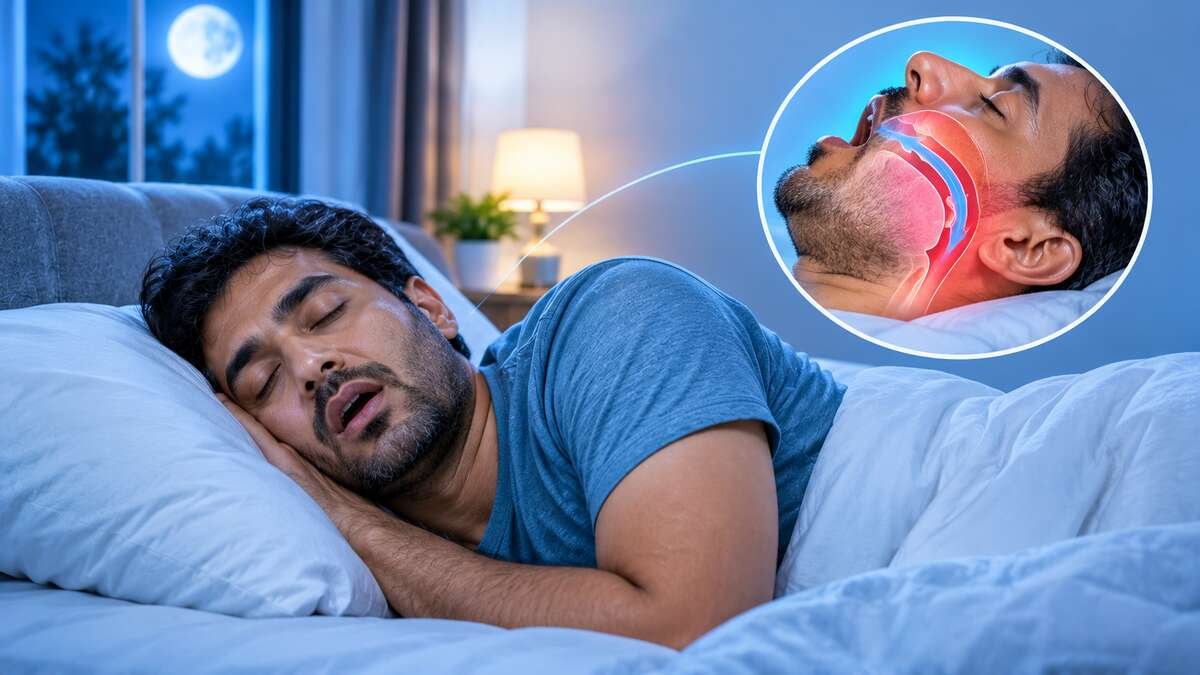

You go to bed at a reasonable hour, sleep for seven or eight hours, and still wake up feeling like you barely slept. Your coffee barely helps, and by mid-afternoon you are fighting to keep your eyes open. For some people, this pattern is more than a rough week. It can be one of the early signs of sleep apnea.
Sleep apnea is a sleep-related breathing disorder in which breathing repeatedly stops or becomes shallow during sleep. Symptoms often develop gradually, and many people do not realize anything is wrong because the interruptions happen while they are asleep. A bed partner or family member may notice loud snoring, gasping, or pauses in breathing before the person does.
This guide explains the most common early signs of sleep apnea, including some less obvious ones, and how symptoms can differ between people. It also covers how the condition is diagnosed and when to talk with a healthcare professional. It is general information, not a diagnosis.
What Is Sleep Apnea?
In sleep apnea, breathing pauses or becomes very shallow, sometimes many times an hour. Each interruption can briefly lower oxygen levels and pull you out of deep sleep, often without waking you fully. The National Heart, Lung, and Blood Institute (NHLBI) notes that you may not know you have the symptoms until someone tells you.
Over time, fragmented sleep can lead to daytime tiredness and trouble focusing. That is why recognizing the signs early matters. It gives you a chance to ask for an evaluation rather than assuming the problem is stress or a busy schedule.
The Main Types of Sleep Apnea
Obstructive sleep apnea (OSA) is the most common type. The upper airway becomes narrowed or blocked during sleep, usually because the throat muscles relax and the surrounding tissue restricts airflow.
Central sleep apnea (CSA) happens when the brain temporarily fails to send the right signals to the muscles that control breathing. Snoring is not typically a feature of central sleep apnea.
Complex (treatment-emergent) sleep apnea is a pattern in which central breathing events appear in someone being treated for obstructive sleep apnea. A sleep specialist can sort out which pattern is present. To learn more about why each type develops, see our guide to what causes sleep apnea.
What Are the Early Signs of Sleep Apnea?
Early signs can show up during sleep or throughout the day. Not everyone has all of them, and many have only a few. The most commonly reported signs are:
- Loud and frequent snoring
- Pauses in breathing during sleep
- Gasping, choking, or snorting at night
- Waking up feeling tired
- Excessive daytime sleepiness
- Morning headaches
- Dry mouth or sore throat in the morning
- Frequent nighttime awakenings
- Difficulty concentrating or remembering things
- Mood changes and irritability
No single sign confirms sleep apnea. Each one has other possible explanations, so the pattern matters more than any one symptom.
1. Loud and Frequent Snoring
When the airway narrows, air moving through it can make the tissues in the throat vibrate, which creates the sound of snoring. Loud, ongoing snoring is one of the most common signs of obstructive sleep apnea.
Not everyone who snores has sleep apnea. Snoring that comes with breathing pauses, gasping, or daytime sleepiness is more concerning and deserves attention.
2. Pauses in Breathing During Sleep
Breathing may repeatedly stop and restart during the night. A partner or family member is often the one who notices these quiet gaps, sometimes followed by a loud snort or gasp.
The sleeper usually does not remember these events. That is why asking someone who shares your room what they have observed can be so helpful.
3. Gasping, Choking, or Snorting at Night
Sudden gasping or choking sounds can happen when normal breathing resumes after a pause. They may wake you briefly, or you may not recall them at all.
An occasional startled gasp is usually nothing to worry about. Repeated episodes are worth mentioning to a healthcare professional.
4. Waking Up Feeling Tired
Interrupted sleep can keep you from reaching the deeper, more restorative stages. As a result, you may wake up unrefreshed even after a full night in bed.
Occasional tiredness is normal. Persistent morning tiredness that does not improve with better sleep habits is a reason to look deeper. Our article on waking up tired with no other symptoms explores other possible explanations.
5. Excessive Daytime Sleepiness
Disrupted nighttime sleep can affect how alert you feel during the day. You may struggle to stay awake during quiet activities such as reading, watching television, or sitting in meetings. NHLBI describes fighting sleepiness during the day as a common sign, and says you may notice it at work or even while driving.
Low energy that makes everyday tasks harder can also be a clue. If this sounds familiar, you may also want to read about what causes fatigue.
6. Morning Headaches
Recurring headaches when you wake up are associated with sleep apnea. They may be related to repeated drops in oxygen and disrupted sleep.
Headaches have many possible causes, so this sign alone does not point to sleep apnea. Headaches that happen repeatedly upon waking, especially with other sleep-related symptoms, deserve medical attention. See our overview of what causes headaches.
7. Dry Mouth or Sore Throat in the Morning
People with sleep apnea often breathe through the mouth during sleep, which can leave the mouth dry and the throat irritated in the morning. NHLBI lists dry mouth among the symptoms people may notice themselves.
These symptoms are common with colds, allergies, and dry air, so they do not establish a diagnosis on their own.
8. Frequent Nighttime Awakenings
Breathing disruptions can fragment sleep, causing you to wake repeatedly without knowing why. Some people also notice more trips to the bathroom at night.
Waking often is common and has many causes. If it comes with snoring or gasping, mention the full picture to your healthcare professional. For other possible explanations, see what causes poor sleep.
9. Difficulty Concentrating or Remembering Things
Poor sleep quality can affect attention, learning, and memory. You may find it hard to focus on work, follow conversations, or finish daily tasks. The Mayo Clinic lists difficulty concentrating among the common signs of obstructive sleep apnea.
Many things can affect focus, so this sign is best viewed alongside the others.
10. Mood Changes and Irritability
Long-term sleep disruption can make you more irritable and affect your emotional well-being. Mood swings, low mood, or a short temper may show up before you connect them to your sleep.
Persistent mood changes deserve attention, but they should not be automatically blamed on sleep apnea. They can have many causes. If your mood is a concern, a healthcare professional can help sort out the reasons.
Early Signs of Sleep Apnea During the Day vs. at Night
It can help to sort symptoms by when they occur. Here is a simple comparison:
| Signs during sleep | Signs during the day |
|---|---|
| Loud snoring | Excessive sleepiness |
| Breathing pauses | Persistent tiredness |
| Gasping or choking | Morning headaches |
| Restless sleep | Difficulty concentrating |
| Frequent awakenings | Irritability |
| Dry mouth upon waking | Memory difficulties |
These symptoms can overlap, and some people notice only a few. Others may have almost no nighttime signs and mainly feel tired and unfocused during the day.
Are Sleep Apnea Symptoms Different in Men and Women?
Symptom patterns can vary, but they cannot tell you whether someone has the condition. Sleep apnea can occur in anyone.
Common Symptoms in Men
Men often report or are told about:
- Loud snoring
- Witnessed breathing interruptions
- Gasping or choking during sleep
- Excessive daytime sleepiness
NHLBI notes that frequent loud snoring is more common in men.
Common Symptoms in Women
Women may have less obvious or less frequently reported symptoms, including:
- Persistent fatigue
- Insomnia or trouble staying asleep
- Morning headaches
- Mood changes
- Snoring that is quieter or less noticed
Because these symptoms overlap with other conditions, sleep apnea may be overlooked in some women. If you feel exhausted despite adequate sleep, it is reasonable to raise sleep apnea as a possibility.
What Are the Risk Factors for Sleep Apnea?
Several factors can raise the likelihood of developing sleep apnea:
- A family history of sleep apnea
- Older age
- Certain airway features, such as a narrow airway
- Enlarged tonsils or other airway structures
- Nasal congestion
- Certain medical conditions, including high blood pressure and type 2 diabetes
- Excess body weight, which is one possible risk factor for obstructive sleep apnea
Having risk factors does not guarantee that someone will develop sleep apnea, and people without obvious risk factors can have it too. For a deeper look, read our guide to sleep apnea risk factors.
Can You Have Sleep Apnea Without Snoring?
Yes. Not everyone with sleep apnea snores. Some people mainly notice daytime fatigue, headaches, insomnia, or trouble concentrating.
Central sleep apnea may follow a different pattern. NHLBI notes that snoring does not typically happen with central sleep apnea. For these reasons, the absence of loud snoring does not rule out sleep apnea.
How Is Sleep Apnea Diagnosed?
A healthcare professional diagnoses sleep apnea using several pieces of information. According to NHLBI, doctors diagnose it based on medical and family histories, a physical exam, and sleep study results.
Medical Evaluation
Your clinician will ask about your symptoms and sleep history, and they may ask what a bed partner or family member has noticed. They will also review your medical history and risk factors. Your primary care provider may evaluate you first and then decide whether you need a sleep specialist.
Sleep Study (Polysomnography)
An overnight sleep study records breathing patterns, oxygen levels, and other sleep-related measures. It is usually done in a sleep center. Some people may qualify for a home sleep apnea test instead.
Symptoms and online questionnaires cannot confirm a diagnosis. Only appropriate testing and a professional evaluation can do that.
When Should You See a Doctor About Sleep Apnea Symptoms?
Consider making an appointment if you notice:
- Persistent loud snoring with breathing pauses
- Repeated gasping or choking at night
- Excessive daytime sleepiness
- Regular morning headaches along with other sleep-related symptoms
- Waking up unrefreshed again and again
- Concerns raised by a family member or sleeping partner
NHLBI also advises talking with your doctor about breathing problems during sleep even if you do not feel sleepy during the day.
A safety note: If you have significant daytime sleepiness, avoid driving or other activities that require alertness until you have been evaluated. Falling asleep at the wheel can be dangerous.
If your child snores often or seems to struggle to breathe in sleep, bring it up with a pediatric healthcare professional. NHLBI notes that children with sleep apnea may be overactive and may have bedwetting, worsening asthma, or trouble paying attention in school.
What Happens If Sleep Apnea Goes Untreated?
It helps to understand why evaluation is worthwhile. Untreated sleep apnea can lead to ongoing sleep disruption, daytime fatigue, reduced alertness, and trouble concentrating.
NHLBI also notes that sleep apnea may raise the risk for high blood pressure, diabetes, heart disease, and stroke. This does not mean these problems are certain. It means that recognizing and treating sleep apnea is a meaningful step for your health. Effective options exist, and you can read about them in our guide to sleep apnea treatment options.
Frequently Asked Questions About Early Signs of Sleep Apnea
1. What is usually the first sign of sleep apnea?
Loud, frequent snoring is a common early warning sign, especially when it comes with breathing pauses or gasping. Daytime sleepiness is another early sign that many people notice first. See the NHLBI symptoms overview.
2. Can you have sleep apnea without knowing it?
Yes. Breathing interruptions happen during sleep, so many people are unaware of them until someone else notices. NHLBI explains that most people with sleep apnea do not know they have it.
3. Can sleep apnea cause morning headaches?
Yes. Morning headaches are a recognized symptom, although they can have several other causes. A healthcare professional can help sort out the reason.
4. Can sleep apnea make you tired all day?
Yes. Repeated sleep interruptions can contribute to excessive daytime sleepiness and persistent fatigue. Building a steady routine, such as with a sleep schedule, supports sleep but does not replace evaluation for sleep apnea.
5. Is snoring always a sign of sleep apnea?
No. Snoring can occur without sleep apnea. Loud, persistent snoring combined with gasping, breathing pauses, or daytime sleepiness warrants evaluation.
6. Can sleep apnea occur in people who are not overweight?
Yes. Body weight is only one risk factor. Airway anatomy, age, family history, and other factors can also contribute. See the Mayo Clinic overview.
7. How do doctors confirm sleep apnea?
A healthcare professional reviews your symptoms and medical history and may recommend a sleep study to confirm the diagnosis. The test can also show the type and severity.
Final Thoughts: Recognizing the Early Signs of Sleep Apnea
Sleep apnea can develop gradually and go unnoticed for a long time. Loud snoring, breathing pauses, gasping, morning headaches, and daytime sleepiness are important warning signs, though not everyone experiences the same ones.
Recognizing these signs is the first step toward getting an appropriate medical evaluation. If symptoms keep showing up, talk with a qualified healthcare professional rather than trying to diagnose yourself. Supporting healthy sleep, including through morning walks and sleep and our tips on how to improve sleep, is worthwhile, and getting medical guidance when you need it is just as important.
Sources
- National Heart, Lung, and Blood Institute: Sleep Apnea Symptoms
- National Heart, Lung, and Blood Institute: Sleep Apnea Overview
- National Heart, Lung, and Blood Institute: Sleep Apnea Causes and Risk Factors
- Mayo Clinic: Sleep Apnea Symptoms and Causes
Medical Disclaimer: This article is for informational and educational purposes only and should not replace professional medical advice, diagnosis, or treatment. Consult a qualified healthcare professional if you have concerns about sleep apnea or persistent sleep-related symptoms. If you think you are having a medical emergency, call your local emergency number right away.
8 thoughts on “Early Signs of Sleep Apnea: 10 Warning Symptoms to Know”
Comments are closed.